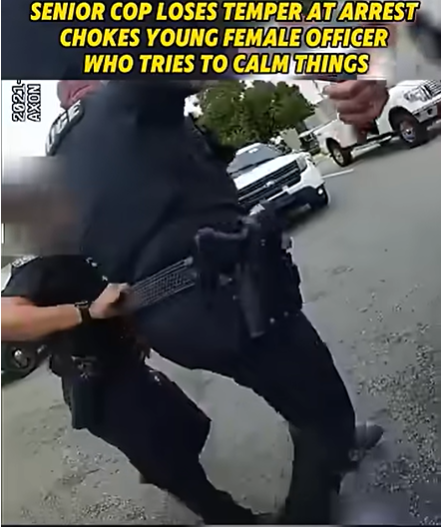
A police bodycam video captures a disturbing moment during what appears to be the aftermath of a violent dispute, where officers are working to place a suspect into the back of a police cruiser. At first, the scene appears to be focused on the suspect, who is already handcuffed but still refusing to fully cooperate. He appears upset about the way the handcuffs are positioned and repeatedly complains that officers are pulling at his wrists. The officers around him are trying to get him into the vehicle, but the process is tense, loud, and physically difficult. What begins as a struggle between police and a suspect soon becomes something much more serious when a senior officer arrives and turns the situation into a confrontation between members of the same department.
The suspect has already been taken into custody, and the main goal at that point should be to place him safely into the cruiser and bring the scene under control. He is not calm, and he resists entering the back seat. He demands that officers stop pulling at his cuffs, saying that they are hurting him. Whether his complaint is exaggerated or genuine, the officers appear to be dealing with a common challenge during arrests: a person in handcuffs refusing to sit or slide into the back of the vehicle. These situations can be frustrating for officers, especially when the suspect is angry or verbally combative, but they still require control, patience, and careful handling.
The tension rises when a sergeant arrives on the scene. Instead of bringing calm authority to the situation, he appears to escalate it almost immediately. As a senior officer, his presence should ideally help organize the scene and guide the younger officers toward a safer resolution. But his approach is aggressive. He forces his way toward the suspect, holding a can of pepper spray and demanding that the suspect look at him. His tone and body language suggest intimidation rather than de-escalation. He explicitly threatens the suspect with physical harm for being disrespectful, turning what could have been a difficult but manageable arrest into an even more hostile interaction.
The suspect quickly complies after the sergeant’s threat. He gets fully into the back of the police vehicle, which should have ended the immediate problem. At that point, the goal had been achieved. The suspect was inside the cruiser, restrained, and no longer outside resisting the officers’ efforts. A calmer response from the sergeant would have been to step away, close the door, and allow the scene to settle. Instead, he continues leaning into the vehicle and verbally berating the suspect even after the suspect has complied. This is where the situation becomes especially concerning, because the sergeant’s behavior appears less about gaining compliance and more about continuing to dominate the suspect.
The young female officer nearby seems to recognize that the situation is moving in the wrong direction. She steps forward and tries to pull the sergeant away from the vehicle by grabbing his duty belt. Her action appears to be an attempt to de-escalate and create distance between the sergeant and the suspect. She is not attacking him or interfering with an arrest in the usual sense. Instead, she appears to be trying to stop a fellow officer, and a superior, from continuing a confrontation that is no longer necessary. That decision takes courage because police departments are hierarchical, and challenging a senior officer in the middle of a scene can be difficult.
Her intervention should have been a moment for the sergeant to pause and regain control of himself. A fellow officer physically pulling him back should have signaled that he had gone too far. Instead, he reacts with sudden anger. He spins around, grabs the female officer by the neck, and forces her backward against the police car. The moment is shocking because the aggression is no longer directed at the suspect. It is directed at another officer, someone on the same scene, wearing the same uniform, and trying to prevent further escalation.
That physical reaction changes the entire meaning of the video. The suspect’s resistance is no longer the most troubling part of the scene. The focus shifts to the sergeant’s loss of control and the way he treats a subordinate officer who attempted to de-escalate. Police officers are expected to maintain discipline under pressure. They are trained to deal with angry suspects, stressful scenes, insults, resistance, and chaotic environments. A senior officer is expected to model that discipline. In this case, the sergeant appears to do the opposite. He lets anger take over and uses force against a colleague.
The female officer’s action stands out because it reflects the kind of intervention many departments say they want from officers. Modern policing often emphasizes the duty to intervene when another officer is acting improperly or escalating unnecessarily. That duty is not only about stopping excessive force against civilians. It is also about protecting the integrity of the scene, preventing misconduct, and keeping everyone safe. The young officer appears to understand that the sergeant’s behavior is becoming dangerous. By pulling him away, she tries to stop the situation from worsening.
Her position is difficult because she is facing not only a tense arrest but also the authority of a superior. Many officers, especially younger or less experienced ones, might hesitate to touch or challenge a sergeant in front of others. They might worry about retaliation, discipline, or being accused of undermining command. But she acts anyway. That makes her response significant. She seems to prioritize de-escalation over rank, which is exactly what accountability requires in high-pressure moments.
The sergeant’s reaction is troubling because it sends the opposite message. Instead of accepting correction, he responds with force. That kind of behavior can discourage other officers from intervening in the future. If a young officer sees that stepping in against a senior officer can lead to being physically attacked or punished, it creates a chilling effect. Officers may become less willing to stop misconduct, even when they know something is wrong. That is why incidents like this matter beyond the individuals involved. They affect the culture of a department.
The suspect, meanwhile, had already complied before the confrontation between officers occurred. This detail is important because it removes the possible justification that the sergeant needed to keep applying pressure to gain compliance. The suspect entered the vehicle after being threatened. Once he was inside, the threat had served its purpose, whether appropriate or not. Continuing to lean in and berate him only extended the conflict. The female officer’s intervention came at a point when the scene needed to calm down, not intensify.
The video also shows how quickly a lack of emotional control can turn a police scene unstable. Officers deal with people at some of the worst moments of their lives. That work requires emotional restraint. A suspect may yell, insult, resist, or refuse to cooperate. But officers are given authority precisely because they are expected to respond with professionalism rather than personal anger. When an officer, especially a sergeant, becomes emotionally driven, the risk of unnecessary force increases. The scene becomes less about law enforcement and more about ego, frustration, and dominance.
The sergeant’s threat toward the suspect is also important. Threatening physical harm for disrespect is not the same as giving lawful commands for safety. Officers can use force when necessary, but disrespect alone should not be the reason. A suspect may be rude or defiant, but police authority does not exist to punish disrespect in the moment. It exists to enforce the law, protect the public, and maintain safety. When the sergeant frames the issue around disrespect, it suggests that his reaction is personal rather than strictly professional.
That is likely why the female officer felt the need to step in. She may have seen that the suspect was already secured and that the sergeant’s continued aggression was no longer serving a law enforcement purpose. Her response was physical, but it appeared directed at preventing further escalation, not creating it. She pulled him away from the vehicle because the situation inside the open cruiser door was becoming unnecessary and potentially dangerous.
The moment he turns on her is deeply serious because it reveals a breakdown of control within the police team itself. Officers rely on each other during arrests. They have to trust that the person beside them will act with discipline and protect the scene. When a senior officer suddenly grabs a fellow officer by the neck and slams her backward against a vehicle, that trust is damaged. It sends a message that the danger on scene may not only come from suspects but also from uncontrolled behavior within the ranks.
For viewers, the scene is likely upsetting because the female officer appears to be doing the right thing. She tries to stop the sergeant from continuing a pointless confrontation. She acts quickly, likely to prevent the suspect from being sprayed or harmed unnecessarily. Instead of being supported, she becomes the target of the sergeant’s anger. That reversal makes the video feel especially unjust. The person trying to calm the scene is punished by the person making it worse.
The other officers on scene are placed in a difficult position as well. They witness a superior officer put hands on a fellow officer. In that moment, they must decide how to respond. Do they step in? Do they separate them? Do they stay silent because the aggressor outranks them? These are the kinds of moments that test whether a department’s values are real or only words written in policy manuals. Accountability is easy to support in theory. It is much harder when the person acting wrongly has rank and authority.
The incident also raises questions about leadership. A sergeant is not just another officer at the scene. A sergeant is supposed to supervise, guide, and set the tone. When a sergeant arrives, the situation should become more organized, not more volatile. The sergeant’s behavior in this video appears to do the opposite. His arrival increases the tension, his threats force compliance through fear, and his continued aggression leads to a physical confrontation with another officer. That is a failure of leadership in a moment when leadership was needed most.
The suspect’s initial resistance should not be ignored. He was refusing to enter the cruiser, and officers had to deal with that. But resistance from a suspect does not give officers permission to abandon professionalism. Once a suspect is handcuffed and being placed in a vehicle, the priority is control and safety. Officers must use only the level of force needed to complete the task. If the suspect is complaining about cuffs, officers can check positioning when safe, explain what needs to happen, and move the process forward. Turning the moment into a personal confrontation only increases the risk.
The young female officer’s decision to intervene can be seen as an example of what policing should encourage. Good officers should not simply stand by when another officer is escalating without need. They should step in before something worse happens. That protects suspects, protects officers, protects departments, and protects public trust. Her action may have prevented the sergeant from using pepper spray or continuing verbal aggression in a way that could have led to more force. The fact that she was met with violence from her own supervisor makes the incident even more serious.
The video also reflects a broader issue in law enforcement culture: the challenge of correcting misconduct from within. It is one thing for a civilian to complain after an incident. It is another thing for an officer to intervene during the incident itself. Internal intervention is often the fastest way to prevent harm. But it requires a culture where officers know they will be protected for doing the right thing. If officers fear retaliation for stopping a superior, then misconduct becomes harder to prevent.
The sergeant’s physical reaction undermines that kind of culture. By attacking the officer who pulled him back, he demonstrates exactly why many officers may hesitate to intervene. Rank, anger, and fear can silence people. But silence can allow situations to become worse. That is why the female officer’s action matters so much. She did not wait until after the fact. She responded in real time.
For the public, videos like this can damage trust in police departments. People expect officers to control suspects, but they also expect officers to control themselves. When a senior officer appears to threaten a handcuffed suspect and then physically attack another officer, viewers may wonder what happens when cameras are not recording. Bodycam footage is powerful because it shows not only the official version of events but also the human behavior behind the badge. In this case, the footage captures a moment that is hard to explain away as simple stress.
The incident also shows how important de-escalation is, not just with civilians but within police teams. De-escalation is often discussed as something officers do to calm suspects, but officers may also need to de-escalate each other. Stress, adrenaline, anger, and frustration can affect anyone. A good team recognizes when one member is losing control and steps in before the scene becomes worse. The female officer did exactly that. She saw a superior leaning into the vehicle and continuing to berate a suspect who had already complied, and she acted to stop it.
Her action was forceful because the situation required immediate separation. She grabbed the sergeant’s belt and pulled him back, which may look abrupt, but it appears to be aimed at preventing further conflict inside the vehicle. In fast-moving police scenes, officers often use physical contact to move each other out of danger or redirect attention. The key difference is purpose. Her purpose appeared to be de-escalation. His response appeared to be retaliation.
The suspect’s role becomes secondary once the sergeant attacks the officer. That shift matters because it shows how misconduct can derail an entire police response. The original arrest may have been justified. The suspect may have been involved in a violent dispute. He may have resisted entering the cruiser. But none of that excuses the sergeant’s behavior toward a fellow officer. When officers act improperly, they can turn an otherwise lawful arrest into a scandal, a disciplinary issue, or even a legal case.
The scene also raises concerns about the emotional demands placed on younger officers. A young officer who witnesses a supervisor acting aggressively may feel torn between duty and career survival. If she does nothing, she may allow harm. If she intervenes, she risks backlash. In this case, she chose intervention. That choice likely required confidence and moral clarity. It also exposed her to danger from someone who should have been helping her maintain control.
The sergeant’s behavior toward the suspect before the physical confrontation is also relevant because it shows the buildup. He does not simply react badly out of nowhere. He arrives with pepper spray visible, demands the suspect’s attention, threatens him, and continues berating him even after compliance. The physical attack on the officer appears to be part of a larger pattern of escalation in that moment. He seems unable or unwilling to step back once the scene no longer requires that level of intensity.
A well-managed arrest depends on officers knowing when to increase pressure and when to reduce it. There may be moments where firm commands are necessary. There may be moments where force is necessary. But once compliance is achieved, the pressure should usually decrease. Continuing to threaten or verbally attack a restrained person can create more problems than it solves. It can provoke renewed resistance, increase complaints, and make officers look punitive rather than professional.
The female officer’s intervention prevented the sergeant from remaining in that heightened state over the suspect. Her action can be viewed as a protective measure for everyone involved. It protected the suspect from further escalation. It protected the department from a potentially worse use-of-force incident. It protected the other officers from being drawn into unnecessary conflict. Unfortunately, the sergeant’s reaction turned that protective act into a separate act of aggression.
The video is also a reminder that police accountability is not only about punishing officers after misconduct occurs. It is about creating systems where misconduct is stopped early. That includes training officers to recognize escalation, empowering them to intervene regardless of rank, and making clear that retaliation against an intervening officer is unacceptable. A department that truly values accountability would see the female officer’s action as a sign of professionalism, not disloyalty.
The suspect’s quick compliance after the sergeant’s threat may make some people argue that the tactic worked. But that misses the larger issue. Getting compliance is not the only measure of proper policing. The way compliance is achieved matters. If a suspect complies because a senior officer threatens harm for disrespect, and then that officer continues the confrontation anyway, the tactic becomes questionable. Policing is not simply about forcing people to obey. It is about using lawful, reasonable, and controlled methods to achieve safety.
The confrontation between the sergeant and the female officer becomes the defining moment because it reveals who was actually trying to bring the scene under control. The young officer attempted to end the unnecessary conflict. The sergeant responded by creating a new one. That contrast is powerful. It shows that rank does not always equal good judgment, and that sometimes the person with less authority may be the one acting with more professionalism.
By the end of the incident, the suspect is inside the cruiser, but the scene has been overshadowed by the sergeant’s actions. The original arrest is no longer the main story. The main story becomes the senior officer’s aggressive behavior and the courage of the officer who tried to stop him. The video leaves viewers with a clear impression that the situation could have ended much sooner and more safely if the sergeant had stepped back once the suspect complied.
The incident ultimately serves as a lesson about power, restraint, and accountability. Police officers are given authority to use force when necessary, but that authority must be controlled. A senior officer should not use rank as a shield for anger. A suspect’s disrespect should not trigger threats of harm. A subordinate officer should not be attacked for trying to de-escalate. And a department should not tolerate a culture where officers fear intervening against misconduct.
What makes the video so striking is that it captures two very different versions of policing in the same moment. One version is aggressive, personal, and driven by intimidation. The other is calm enough to recognize that the scene needs to be pulled back before it becomes worse. The young female officer represents the second version when she steps forward and removes the sergeant from the vehicle. The sergeant’s reaction represents the danger of unchecked authority. Together, the moment becomes a powerful example of why de-escalation and duty-to-intervene policies are not just ideas on paper. They can matter in real time, in the middle of a chaotic scene, when one officer’s decision can prevent harm and another officer’s lack of control can create it.