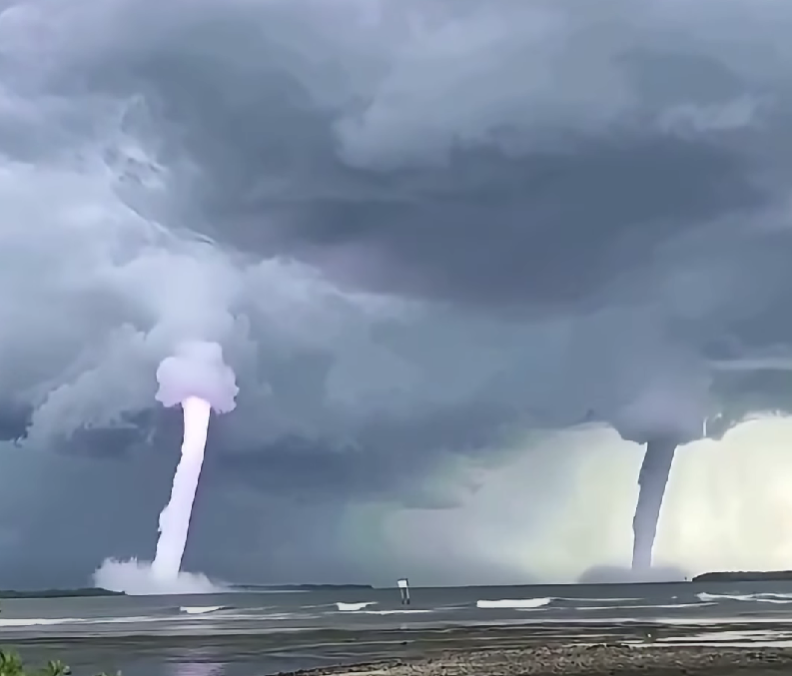
An alarming headline began circulating online claiming that two marine storms had occurred only minutes earlier near an unnamed location. The wording created the impression of a rapidly developing coastal emergency, one involving violent winds, heavy rain, dangerous seas and vessels struggling offshore. Yet the article attached to the headline did not identify the country, coastline, harbour or body of water involved. It even retained the placeholder “[location]” in its opening paragraph, making it impossible to connect the report to a specific, independently verifiable weather event.
The absence of basic details is important. A genuine breaking-weather report should normally tell readers where the danger is occurring, when observations were made, which official agency issued the alert and what type of warning is in force. It should also distinguish between confirmed incidents and potential risks. Without a location, timestamp, storm name, forecast office, radar image, coastguard statement or emergency bulletin, readers cannot determine whether the warning applies to them or whether the event happened at all.
The article was published on July 5, 2026, but its language repeatedly described the storms as having happened “minutes ago.” Nearly identical versions of the text appeared on other websites, also using the same missing-location placeholder. That pattern strongly suggests that the story was circulated as generic viral content rather than developed from a clearly documented local emergency. The dramatic headline may attract attention, but the underlying text does not provide enough evidence to support a factual report about two identifiable storms.
This does not mean the dangers described are imaginary. Sudden marine weather can be extremely serious. Strong thunderstorms over coastal waters can produce damaging gusts, high waves, lightning, hail, waterspouts and sharply reduced visibility. Conditions can change faster at sea than people on shore may realise, especially when small boats are operating far from safe harbour. A routine fishing trip or recreational outing can become dangerous when wind direction shifts, waves steepen and rain hides the coastline.
However, responsible reporting must separate general truth from a specific claim. It is true that marine storms can threaten vessels and coastal communities. It is not established that two particular storms struck an unnamed region at the moment suggested by the viral headline. The most accurate way to discuss the story is therefore to treat it as an unverified alert while explaining what people should look for when a real marine-weather emergency develops.
The term “marine storm” itself is broad and informal. Weather agencies normally use more precise products based on expected wind speed, storm type, duration and location. The United States National Weather Service, for example, issues small-craft advisories, gale warnings, storm warnings, hurricane-force wind warnings and special marine warnings. A special marine warning generally covers dangerous, short-duration conditions such as powerful thunderstorm winds, hail or waterspouts affecting coastal and near-shore waters.
Those labels matter because they communicate different levels and kinds of risk. A small-craft advisory may indicate conditions that are especially dangerous for smaller vessels or inexperienced operators. A gale warning signals stronger winds capable of creating hazardous seas. A storm warning represents a more severe wind threat. A special marine warning may be issued quickly when a dangerous thunderstorm develops or moves over water, sometimes giving boaters only a limited period to respond.
When two hazardous weather systems occur close together, the danger can become harder to assess. One storm may weaken while another strengthens nearby. Their rain bands or wind fields may overlap, creating irregular waves and rapidly changing visibility. Mariners who believe the first storm has passed may leave shelter only to encounter the second. Forecasts may also change as new radar, satellite, buoy and ship observations become available.
At sea, wind speed is only one part of the risk. The direction and duration of the wind can determine how large and steep waves become. A strong wind blowing against an existing current can produce short, sharp seas that are particularly uncomfortable and dangerous for small vessels. Swells generated far away can arrive while local skies remain relatively clear. A boat operator may therefore face hazardous water even when the storm itself is not visible.
Heavy rainfall creates another serious problem by reducing visibility. A crew may lose sight of landmarks, other boats, channel markers or harbour entrances. Electronic navigation equipment can help, but it does not remove the need for judgement, training and situational awareness. Rain can also hide floating debris or make it harder for rescuers to locate a vessel in distress.
Lightning is especially dangerous on open water because boats and their equipment can become prominent exposed objects. Thunderstorms can also generate sudden downdrafts, sharp wind shifts and waterspouts. A vessel that was moving safely moments earlier may be pushed off course or struck by a breaking wave after the wind changes. People on exposed decks can be injured, while unsecured equipment may become a hazard.
Ports and harbour authorities may restrict movement when forecasts indicate severe conditions. These decisions can affect fishing fleets, ferries, cargo ships, cruise operations, tour boats and recreational marinas. Closing a port is economically disruptive, but the purpose is to reduce the chance that vessels will enter or leave during conditions that make navigation unsafe. Authorities may also require larger ships to adjust moorings, seek shelter or move before winds become too strong.
The viral article claims that ports were closed and sea travel suspended, but it does not name a single port or transport operator. It also says that several vessels experienced difficulties without identifying the boats, rescue agencies or locations involved. Those omissions prevent independent confirmation. In a real emergency, such details may initially be limited, but officials normally provide at least a defined area and an agency responsible for the warning.
Coastal residents face risks that differ from those confronting crews offshore. Strong winds can damage roofs, trees, signs and power lines. Large waves can overtop sea walls, flood roads and throw debris onto promenades. When low atmospheric pressure and strong onshore winds push seawater towards the coast, water levels may rise above the normal tide. Wave action on top of that elevated water can make flooding and structural damage worse.
Storm surge is particularly dangerous because it is not simply one large wave that arrives and disappears. It is an abnormal rise in water level that can move inland, especially across low, flat coastal ground. The effect depends on the storm’s size, intensity, speed, track, angle of approach and the shape of the coastline and seabed. Bays, rivers, barrier islands and tidal conditions can all influence which communities face the greatest danger.
A storm does not need to pass directly over a beach to create hazardous surf. Systems far offshore can send wave energy across great distances, producing powerful breakers and rip currents under skies that may appear calm. This is one reason people should not rely only on what they see from a hotel window or shoreline. Official surf forecasts and local warning flags may identify dangers that are not obvious to an untrained observer.
People sometimes approach piers, rocks or sea walls during storms to record dramatic videos. That behaviour can place them in serious danger. A sequence of smaller waves may be followed by a much larger one that sweeps across an exposed surface. Wet rocks become slippery, and powerful water can knock a person down or pull them into rough seas. Emergency crews may then have to risk their own safety attempting a rescue.
The safest response depends on the official warning and local instructions. Mariners who have not departed should generally reconsider or postpone their plans when hazardous conditions are forecast. Boats already at sea may need to seek the nearest suitable harbour, change course or prepare for worsening weather, depending on the vessel, distance and professional guidance available. People should not improvise complex decisions from a viral social-media post.
Boat owners preparing for severe weather should act before conditions become dangerous. Mooring lines, anchors, covers and loose equipment may need attention while docks are still safe to access. Smaller craft that can be removed from the water may need to be stored away from flood-prone locations. Once strong winds and waves arrive, attempting to save property can expose people to risks far greater than the value of the vessel.
Life jackets, communication equipment and distress signals are essential parts of boating safety, but they are not substitutes for avoiding hazardous weather. A properly fitted life jacket can improve survival chances if someone enters the water. A marine radio, emergency beacon or other signalling device can help rescuers locate a vessel. Yet rescue operations may be delayed or impossible during the most violent conditions, making early decisions especially important. The US Coast Guard advises boaters to monitor official weather warnings, remain off the water during dangerous conditions and secure vessels and loose equipment before storms arrive.
Coastal households should also prepare before a storm reaches its peak. Loose outdoor objects can become airborne in strong winds. Vehicles parked in low areas may be damaged by saltwater flooding. Important documents, medicine, charging equipment and emergency supplies should be accessible if authorities advise evacuation or if electricity fails. Residents should know which roads flood first and where official shelters are located.
Evacuation orders should never be judged by the apparent calm outside one particular home. Coastal flooding can begin in another neighbourhood, and escape routes may become blocked before water reaches the property itself. Emergency managers consider forecasts, tides, drainage, infrastructure and the time required to move residents. Leaving early may feel unnecessary, but waiting for visible danger can make safe travel more difficult.
The original article advises readers to follow official updates, which is sensible, but it does not direct them to any relevant authority. A useful report should name the national meteorological service, coastguard, emergency-management agency or local government responsible for the affected region. Readers should be able to check the warning at its source rather than relying on repeated headlines that provide no location.
Official alerts typically include a defined geographic area, start and end time, expected conditions and recommended actions. Forecasts can change, so readers should check when an alert was issued and whether it remains active. Screenshots and reposted messages may continue circulating after a warning has expired. The phrase “minutes ago” is particularly unreliable when attached to an article that can remain online for days, weeks or months.
Images can also create a misleading sense of certainty. A photograph of huge waves or a dark storm cloud may be genuine while still coming from another country, another year or a completely different weather system. Unless the source identifies when and where the image was captured, it should not be treated as proof of the event described in the headline. Reverse-image searches and official media releases can sometimes reveal whether a dramatic picture has been reused.
The rapid spread of vague emergency stories can create several kinds of harm. People in unrelated locations may become frightened because they cannot tell where the danger is. Others may share the post believing they are helping, causing the unsupported claim to reach even more readers. At the same time, repeated exposure to exaggerated warnings can make audiences less likely to trust genuine alerts when a real emergency occurs.
Misinformation can also interfere with emergency communication. During severe weather, official agencies need residents to focus on accurate instructions concerning shelter, evacuation, road closures and rescue contacts. A flood of unverified posts can overwhelm local information channels and generate unnecessary calls. Reporters and social-media users should therefore avoid adding specific casualties, damaged vessels or rescue operations unless those details have been confirmed.
A strong breaking-news article would answer several basic questions. Where are the storms? What time did they develop? How were they detected? Which warnings were issued? What wind speeds or wave heights were observed or forecast? Which ports or routes were affected? Have emergency services confirmed any rescues, injuries or damage? What should people in the defined area do now?
The Smart Bear Media post answers none of these questions with specific information. Its references to authorities, officials, meteorologists, emergency crews and vessels remain anonymous. The missing “[location]” placeholder is a particularly clear warning that the text was not completed as a location-specific report. Readers should therefore avoid presenting it as confirmation that two storms struck a real community on July 5.
A responsible expanded account can still explain why the scenario attracts attention. Coastal economies often depend on predictable access to the sea. Fishing crews may lose income when boats remain tied to the dock. Ferry cancellations can isolate island communities or interrupt commuting. Cargo delays can affect shops and factories. Tourism operators may cancel diving, sailing and wildlife excursions, while hotels and restaurants face sudden changes in visitor numbers.
These disruptions can continue after the wind weakens. Harbour channels may need inspection for debris or shifting sediment. Navigation aids can be damaged. Docks, sea walls and electrical systems may require safety checks. Fishing gear may be lost, and vessels can suffer damage even when they remain moored. Authorities may keep beaches or ports closed while assessing currents, water quality and structural hazards.
Emergency crews must balance urgency with the safety of rescuers. Launching a rescue boat or helicopter into severe weather can expose additional lives to danger. The location of the vessel, number of people aboard, available flotation, sea state and visibility all influence the response. This is why mariners are encouraged to provide accurate voyage plans and maintain working communication equipment before an emergency occurs.
Communities with strong preparation systems are better able to manage these events. Weather services monitor satellite, radar, buoy and ship data. Port authorities communicate with commercial operators. Coastguards coordinate search-and-rescue resources. Local governments identify flood zones and shelters. Broadcasters and mobile-alert systems deliver warnings. None of these measures can remove the storm, but together they can reduce confusion and give people time to act.
Climate and coastal development can influence how much damage a storm causes, but the outcome of any single event depends on many local factors. Homes built close to the shoreline, ageing drainage systems, disappearing dunes and crowded evacuation routes can increase vulnerability. Strong building standards, restored wetlands, elevated infrastructure and clear emergency planning can improve resilience.
After a storm, attention should remain focused on verified information. Floodwater may contain debris, sewage, fuel or damaged electrical equipment. Roads that appear passable can be weakened or covered by moving water. Beaches may contain sharp debris, and currents may remain dangerous. Residents should wait for official clearance before returning to evacuated areas or entering closed coastal zones.
Damage reports should also be treated carefully during the first hours. Early estimates may change as crews reach isolated areas and inspect vessels or buildings. A lack of confirmed injuries does not always mean everyone has been accounted for. Conversely, rumours of missing people or sinking boats can spread before authorities establish what happened. Responsible updates should clearly label preliminary information.
The phrase “two storms” may sound more alarming than one, but the number alone does not determine the danger. A compact thunderstorm producing a violent gust near a crowded harbour could be more immediately hazardous than two weaker systems far offshore. The storms’ intensity, movement, distance from land and interaction with tides and waves matter more than a dramatic count in a headline.
Readers should also understand that warnings are not predictions of guaranteed damage at every point inside an alert area. They indicate that hazardous conditions are occurring, expected or possible according to the specific product. One harbour may experience severe gusts while another nearby sees only heavy rain. This uncertainty is not evidence that forecasters were wrong; it reflects the changing nature of weather and the need to warn a broader area before the exact path is known.
At the same time, people should not dismiss an official warning because an earlier storm caused little damage in their neighbourhood. Each system is different. Tide levels, soil saturation, wind direction and the condition of local infrastructure may change the outcome. Preparedness is based on potential consequences, not on the assumption that the next event will repeat the last one.
The most useful lesson from the viral report is therefore not that two confirmed storms suddenly struck an unknown coast. That claim remains unsupported. The lesson is that vague emergency content should prompt verification, not panic. Readers should identify the location, check the publication date, find the official warning and look for confirmation from recognised weather and maritime agencies.
For publishers, accuracy should come before urgency. A story should not use “just occurred” or “minutes ago” unless the time can be established and the article will be updated as the situation changes. Placeholders should never remain in a published report. Authorities should be named, quotations attributed and locations specified. When facts are uncertain, the article should say so directly.
For readers, one of the best protections against misleading weather stories is to pause before sharing. A few seconds spent checking whether the location is named can prevent the spread of a false alarm. Searching the official weather service for the area, checking local emergency channels and comparing reports from established news organisations can provide a clearer picture.
When a genuine marine warning is active, the response should be calm and practical. People on land should stay away from exposed coastal areas, monitor evacuation instructions and avoid flooded roads. Boaters should follow professional maritime guidance, remain in safe harbour when advised and ensure everyone aboard has appropriate safety equipment. Travellers should check ferries, ports and tour operators before beginning a journey.
When no official warning can be found and the article provides only anonymous claims, it should not be treated as breaking news. That conclusion does not minimise the dangers of severe weather. It protects the credibility of real alerts and helps communities direct attention towards information that can genuinely keep people safe.
The sea can change quickly, and coastal storms deserve respect. Powerful wind, waves and flooding can disrupt entire communities and place both mariners and rescuers in danger. But fear should be guided by evidence. A missing location, recycled text and an unsupported “minutes ago” headline are not enough to establish that an emergency occurred.
Until a recognised authority identifies the affected area and confirms the conditions, the claim of two newly occurring marine storms remains unverified. Readers should resist filling the gaps with guesses. The responsible message is clear: take official marine warnings seriously, prepare early when danger is confirmed and never mistake a dramatic but incomplete post for a reliable emergency bulletin.