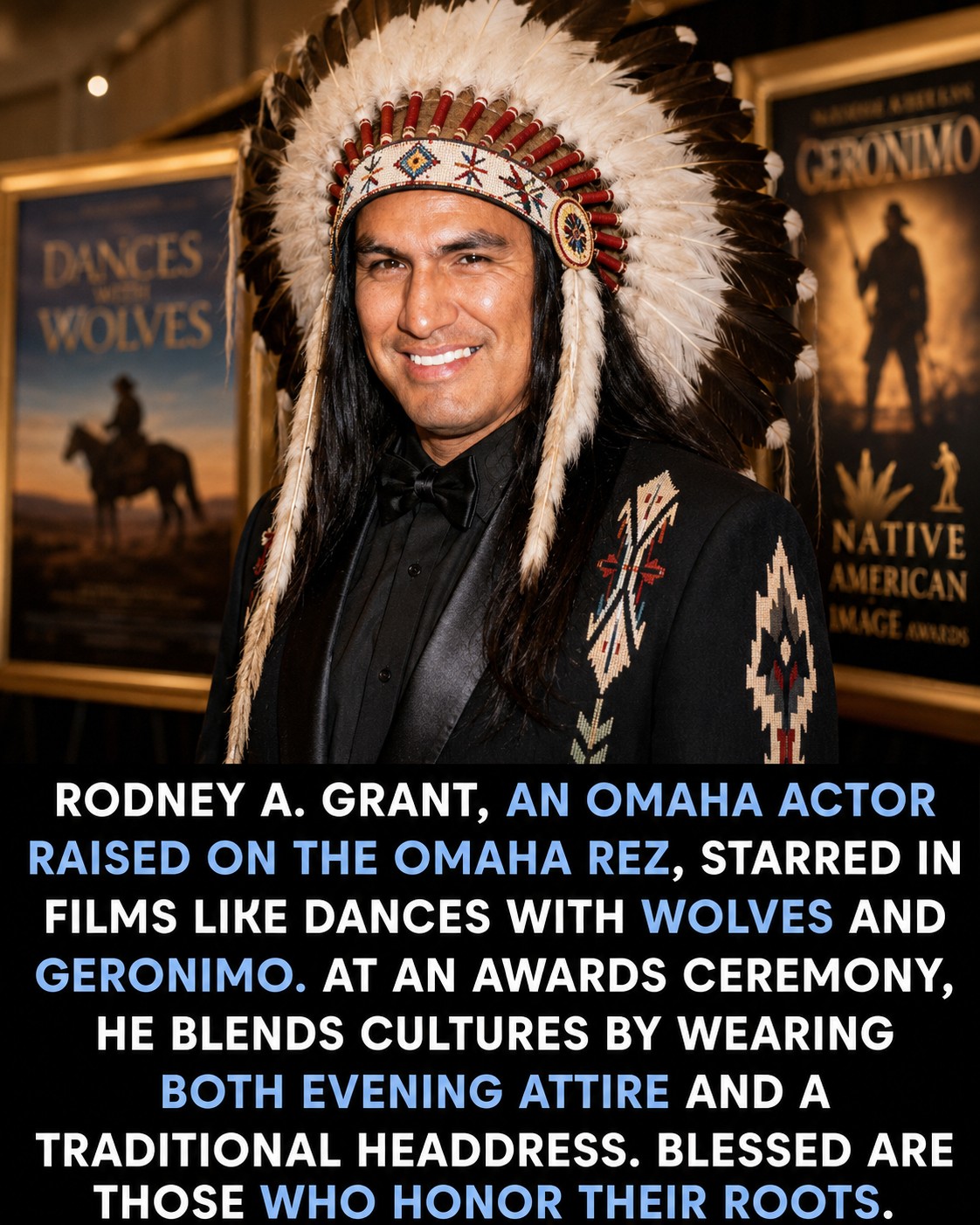
Rodney A. Grant, an Omaha actor raised on the Omaha Reservation, stands as a remarkable figure in Hollywood, representing the intersection of culture, heritage, and mainstream entertainment. Known for his iconic roles in films such as Dances with Wolves and Geronimo, Grant has consistently brought depth, authenticity, and dignity to the portrayal of Native American characters, helping to reshape the way Indigenous peoples are represented in cinema. His work goes beyond acting; it is an ongoing statement about the value of cultural preservation, visibility, and pride in the face of historical marginalization.
Throughout his career, Rodney has faced the challenge of navigating two worlds: the expectations of mainstream Hollywood and the cultural values of his Omaha heritage. In an industry historically dominated by stereotypes and misrepresentation, Indigenous actors often encounter pressure to conform to preconceived images of Native identity. Grant, however, has chosen a different path, integrating his culture into his public life and performances. His portrayals of Indigenous characters are informed not only by his acting skill but by lived experience, ancestral knowledge, and a commitment to honoring his community’s traditions. This authenticity has made his performances memorable, resonating with audiences both within and beyond Native communities.
One of the most striking examples of Grant’s dedication to cultural representation occurred at an awards ceremony, where he merged traditional heritage with modern glamour. He appeared wearing formal evening attire complemented by a traditional Native American headdress—a powerful visual statement symbolizing pride, resilience, and continuity. By doing so, Grant publicly embraced both his professional achievements and his cultural identity. In a single gesture, he challenged the notion that success in mainstream spaces requires erasure or compromise of Indigenous heritage. Instead, he demonstrated that honoring one’s roots can coexist with, and even enhance, contemporary accomplishments.
This act was not only symbolic; it carried deep cultural and personal significance. For the Omaha people, headdresses are sacred, representing leadership, respect, and spiritual connection. Grant’s choice to wear one at a public, high-profile event highlighted the importance of carrying cultural responsibility into every sphere of life. It also provided a powerful example for young Indigenous people watching from across the country, affirming that they need not hide their heritage to succeed or be recognized. Through this action, Grant reinforced the message that embracing one’s culture is a source of strength, not limitation.
Grant’s career has consistently reflected this integration of heritage and professional achievement. In Dances with Wolves, his portrayal of Native characters brought nuance, dignity, and authenticity to roles that might otherwise have been reduced to stereotypes. His deep understanding of Indigenous histories and cultural practices allowed him to add layers of realism to his performances, educating audiences subtly while entertaining them. Similarly, in Geronimo, Grant helped communicate complex narratives of resistance, leadership, and survival, ensuring that Indigenous perspectives were represented with depth and respect. Each performance serves as both artistic achievement and cultural advocacy, reflecting the broader role that Indigenous actors play in shaping media narratives.
Beyond the screen, Grant’s public appearances, interviews, and advocacy work demonstrate his commitment to Indigenous visibility. He frequently speaks about the importance of storytelling, representation, and cultural pride, emphasizing the role of media in shaping perceptions of Native communities. By leveraging his platform, Grant not only amplifies Omaha voices but also challenges audiences to reconsider long-held stereotypes, encouraging a broader appreciation of Indigenous cultures. His influence extends into education, mentoring, and community engagement, inspiring future generations of Native actors, filmmakers, and cultural leaders.
Rodney A. Grant’s blending of cultures is particularly significant in a broader societal context. Indigenous communities have historically faced erasure, marginalization, and misrepresentation, with media often depicting them through a lens of exoticism or historical caricature. Grant’s approach demonstrates that identity is not a limitation to success but a source of power. By wearing both evening attire and a traditional headdress, he embodies a bridge between worlds, showing that it is possible to excel in contemporary spaces while maintaining fidelity to ancestral heritage. This synthesis resonates with audiences because it communicates authenticity, pride, and integrity in ways that transcend language and cultural boundaries.
Moreover, Grant’s work illustrates the importance of personal agency in representation. In an industry where Indigenous characters are often written or cast without consultation with the communities they depict, he has asserted the authority of lived experience. His performances are informed by cultural knowledge, familial teachings, and historical awareness, ensuring that Native narratives are portrayed accurately and respectfully. This approach empowers both audiences and fellow Indigenous actors, reinforcing the idea that cultural representation is most effective when guided by those who live the experience.
The impact of Grant’s visibility extends far beyond Hollywood. By embracing his Omaha heritage openly, he reinforces the value of cultural continuity for communities that have historically faced cultural suppression. Young people witnessing his success are reminded that their traditions, languages, and histories are sources of pride and identity, not obstacles to achievement. His example fosters resilience, encouraging Indigenous youth to pursue their ambitions while remaining grounded in ancestral knowledge and values. In doing so, Grant contributes to the long-term preservation and celebration of Native culture, ensuring that it continues to thrive across generations.
Furthermore, Rodney’s actions invite reflection on broader societal dynamics. His presence at awards ceremonies wearing a traditional headdress challenges non-Indigenous audiences to confront assumptions about what constitutes “formal” attire, professionalism, or cultural expression. It provokes dialogue about inclusion, diversity, and respect, highlighting the ways in which Indigenous voices and symbols can enrich mainstream culture. By centering his heritage in public spaces, Grant redefines standards of visibility and success, showing that cultural pride can be a source of influence, inspiration, and societal contribution.
Ultimately, Rodney A. Grant’s career and public persona exemplify the powerful intersection of artistry, heritage, and advocacy. His performances in Dances with Wolves, Geronimo, and other works demonstrate how Indigenous stories can be told with authenticity, nuance, and impact. His public appearances, including the blending of evening attire with traditional regalia, provide a model for integrating cultural identity into professional life. Together, these achievements underscore the enduring importance of representation, cultural pride, and visibility in shaping both personal and collective narratives.
Grant’s journey reminds us that honoring one’s roots is not merely a private act; it is a form of leadership and education. By carrying his Omaha identity into public, professional, and artistic spaces, he elevates Indigenous culture, challenges stereotypes, and inspires both Indigenous and non-Indigenous audiences alike. His example reinforces the idea that success and cultural fidelity are not mutually exclusive—they are mutually reinforcing. The strength of his heritage, the depth of his artistry, and the courage to assert both publicly make Rodney A. Grant not only a celebrated actor but also a cultural ambassador, a mentor, and a symbol of the enduring resilience of Native communities.
Rodney A. Grant’s journey as an actor and cultural advocate demonstrates the multifaceted ways in which Indigenous identity can intersect with contemporary life while remaining deeply rooted in tradition. Born and raised on the Omaha Reservation, Grant’s early life was shaped by a close connection to his community, the teachings of elders, and the rhythms of reservation life. These formative experiences instilled a profound sense of cultural pride and identity that would later guide his approach to acting and public representation. For Grant, storytelling was not only a profession but also a means of preserving and communicating Omaha traditions to a wider audience, bridging the gap between Indigenous knowledge systems and mainstream media.
In Hollywood, Grant faced the challenge of representing Indigenous peoples in an industry historically dominated by stereotypes, caricatures, and limited opportunities. Indigenous actors were often cast in roles that reduced Native identities to a few visual or behavioral traits, ignoring the rich diversity and depth of culture, history, and experience. Grant’s approach subverted these expectations. By drawing on his lived experiences and deep cultural knowledge, he infused his roles with authenticity, dignity, and nuance. His performances were informed by the values, ethics, and historical awareness of the Omaha people, creating characters that were complex, human, and reflective of real Indigenous experiences.
Dances with Wolves, one of Grant’s most recognized films, serves as a key example of this approach. The film, set during the 19th century on the American plains, sought to portray Native communities with greater historical and cultural accuracy than many previous Westerns. Grant’s participation brought an authenticity that resonated both within and outside Indigenous communities. His understanding of ceremony, social structure, and cultural norms allowed him to move beyond superficial representation, providing audiences with a glimpse into the lives, traditions, and humanity of Native peoples. By integrating cultural knowledge into his performance, Grant helped challenge the mainstream perception of Indigenous peoples as historical relics or passive figures, emphasizing their agency, resilience, and rich traditions.
Similarly, in Geronimo, Grant’s work highlighted the leadership, complexity, and resistance of Native figures in historical contexts. The film depicted the struggles and resilience of Indigenous leaders, including Geronimo himself, within the broader context of colonization and military conflict. Grant’s portrayals were informed by an understanding of Indigenous histories and cultural frameworks, ensuring that the narratives presented were both accurate and respectful. By embodying these roles, Grant elevated Indigenous voices and experiences in spaces where they had historically been silenced or misrepresented, reinforcing the importance of Indigenous perspectives in shaping historical narratives.
One of the most striking examples of Grant’s public advocacy for cultural visibility occurred at an awards ceremony, where he wore formal evening attire combined with a traditional Omaha headdress. This deliberate fusion of contemporary and ancestral dress served as a powerful statement about identity, resilience, and representation. In a world where professional success often pressures individuals to conform to dominant cultural norms, Grant’s choice emphasized that one could honor heritage while engaging in modern professional life. The visual impact of a traditional headdress paired with formal attire challenged viewers’ assumptions about cultural expression, professionalism, and Indigenous identity, demonstrating that cultural pride can coexist with, and even enhance, public achievement.
The headdress itself carries profound cultural and spiritual significance within Omaha and broader Plains traditions. Traditionally, headdresses symbolize leadership, honor, and community service, often earned through acts of bravery, wisdom, or service to the people. By wearing the headdress publicly, Grant invoked these ancestral values, connecting his personal and professional achievements to the legacy of his community. The choice was not merely aesthetic; it was an assertion of responsibility, respect, and continuity. Grant’s actions highlight the ways in which cultural symbols can communicate layered meanings, offering a bridge between generations, traditions, and contemporary audiences.
Grant’s visibility and advocacy have broader implications for representation in media. Indigenous communities have long struggled with limited and stereotypical portrayals in film and television. By occupying high-profile roles and public spaces with cultural authenticity, Grant not only challenges these stereotypes but also provides young Indigenous audiences with role models who reflect both professional success and cultural fidelity. His example demonstrates that Indigenous identity is not a barrier to achievement; it is a source of strength, perspective, and authority. This modeling encourages youth to pursue their aspirations while remaining deeply connected to cultural roots, ensuring that Indigenous knowledge, language, and practices continue to thrive across generations.
In addition to his on-screen work, Grant engages in mentorship, community education, and advocacy efforts. He participates in programs that promote arts education, storytelling, and cultural preservation, ensuring that young Native actors and community members have access to opportunities that were historically denied. His work emphasizes the importance of teaching both craft and cultural responsibility, fostering a new generation of Indigenous artists who can navigate professional spaces while preserving and elevating their heritage. This holistic approach integrates performance, cultural continuity, and leadership, demonstrating how professional success can support community resilience and cultural sustainability.
Grant’s approach also underscores the importance of agency in cultural representation. Indigenous actors often face externally imposed narratives or roles that fail to reflect lived experiences or cultural realities. By choosing projects carefully, contributing cultural knowledge, and asserting authority over the portrayal of Indigenous characters, Grant exercises control over how his community is represented. This agency is vital not only for accuracy but for the empowerment of Indigenous communities, ensuring that media portrayals are respectful, nuanced, and aligned with the values and perspectives of the people being represented.
The intersection of Grant’s cultural identity and professional career also invites reflection on the broader societal implications of visibility. Representation in media is not solely symbolic; it shapes perceptions, informs cultural understanding, and influences policy, education, and social attitudes. Grant’s presence challenges audiences to reconsider assumptions about Native identity, history, and contemporary experience. It encourages dialogue about the persistence of culture, the importance of historical accuracy, and the value of Indigenous knowledge in shaping collective understanding. His work exemplifies how representation can be both educational and transformative, bridging gaps between communities and fostering greater empathy and awareness.
Moreover, Grant’s career highlights the enduring resilience of Indigenous communities in the face of systemic challenges. The Omaha people, like many Native nations, have navigated centuries of colonialism, displacement, and cultural suppression. Yet through art, storytelling, ceremony, and advocacy, they have maintained identity, knowledge, and community cohesion. Grant’s achievements are not only personal milestones but also collective victories, reflecting the strength, creativity, and perseverance of his ancestors. Each performance, public appearance, and act of cultural advocacy reinforces the continuity of Omaha traditions and asserts the relevance of Indigenous perspectives in contemporary society.
Through his work, Grant demonstrates that cultural pride and professional success are not mutually exclusive; rather, they are mutually reinforcing. Embracing heritage provides depth, perspective, and authenticity to his performances, while professional achievements amplify the visibility and impact of his culture. This dynamic creates a feedback loop in which personal, communal, and cultural growth are intertwined, offering a model for how Indigenous knowledge, identity, and artistry can coexist and thrive within modern professional contexts.
Grant’s integration of heritage into his career also resonates beyond the entertainment industry. It illustrates broader principles of cultural sustainability, identity affirmation, and ethical leadership. By embodying his heritage publicly, he models respect, responsibility, and pride, encouraging others to engage meaningfully with culture, history, and community. His actions demonstrate that cultural symbols, when approached thoughtfully, can serve as powerful vehicles for education, empowerment, and cross-cultural dialogue.
Ultimately, Rodney A. Grant’s life and career exemplify the enduring importance of honoring one’s roots while pursuing contemporary opportunities. His performances in Dances with Wolves, Geronimo, and other films highlight Indigenous histories and experiences with dignity and depth. His public persona, including the integration of traditional headdresses with formal attire, conveys a message of pride, responsibility, and cultural visibility. Through these efforts, Grant elevates Indigenous voices, educates broader audiences, and inspires younger generations to embrace both identity and ambition.
Grant’s legacy reminds us that cultural heritage is a source of strength and influence. By remaining true to his Omaha identity, he reinforces the value of Indigenous knowledge, storytelling, and community cohesion. His work underscores the importance of representation in shaping public understanding, challenging stereotypes, and promoting respect for cultural diversity. Through his artistry, advocacy, and public example, Rodney A. Grant demonstrates that honoring one’s roots is not only a personal choice—it is a contribution to the continuity, visibility, and empowerment of entire communities.
Rodney A. Grant’s commitment to honoring his Omaha heritage extends far beyond his film roles and public appearances. He actively engages with his community, mentoring young actors, participating in cultural programs, and advocating for the inclusion of Indigenous voices in media. By combining professional excellence with cultural advocacy, Grant exemplifies how public figures can leverage their visibility to support community resilience and cultural continuity. His mentorship provides guidance to aspiring Native actors, encouraging them to embrace their heritage while pursuing opportunities in mainstream entertainment, fostering a new generation of Indigenous storytellers who can navigate the intersection of culture and profession.
At the heart of Grant’s work is the understanding that representation matters. Hollywood and media historically marginalized Native perspectives, often erasing the diversity and richness of Indigenous cultures. By consistently portraying Indigenous characters with authenticity and dignity, Grant challenges these erasures and offers audiences a more accurate and respectful depiction of Native life. His performances in Dances with Wolves and Geronimo not only entertain but also educate, providing nuanced portrayals that counter stereotypes and highlight Indigenous leadership, resilience, and cultural knowledge. Each role serves as both art and advocacy, demonstrating the power of media to influence understanding and empathy.
Grant’s public appearances, especially those blending traditional regalia with contemporary attire, convey a powerful message about the integration of identity and professional life. Wearing a headdress alongside formal evening wear at awards ceremonies symbolizes the importance of embracing cultural roots while succeeding in contemporary spaces. This act resonates deeply with Indigenous youth, who may struggle with maintaining cultural identity while navigating modern educational and professional environments. Grant’s example affirms that Indigenous identity can be a source of pride and empowerment, inspiring younger generations to pursue their ambitions without compromising their heritage.
In addition to his acting and mentorship, Grant participates in advocacy that addresses broader systemic challenges faced by Indigenous communities. He highlights issues such as underrepresentation in media, misappropriation of culture, and the need for accurate historical narratives. By speaking publicly on these topics, Grant contributes to raising awareness, fostering understanding, and promoting policy and societal changes that respect Indigenous sovereignty and cultural heritage. His voice serves as a bridge between Native communities and mainstream audiences, encouraging dialogue that is both informative and transformative.
Cultural preservation is another key aspect of Grant’s work. Through storytelling, interviews, and ceremonial participation, he helps ensure that Omaha traditions remain vibrant and visible. He emphasizes the importance of oral history, language, and ceremonial practices, illustrating how these elements inform personal identity, community cohesion, and ethical frameworks. By integrating cultural education into his professional life, Grant demonstrates that honoring heritage is not only a personal choice but also a communal responsibility, reinforcing the intergenerational continuity that sustains Indigenous knowledge and identity.
The broader significance of Grant’s efforts lies in their capacity to reshape public perception and cultural discourse. Indigenous communities often face misrepresentation, marginalization, and historical erasure. Through his work, Grant challenges these patterns, providing an example of how Indigenous voices can occupy spaces historically dominated by dominant narratives. He shows that visibility, when coupled with authenticity and cultural grounding, can foster understanding, respect, and appreciation for Indigenous contributions to history, art, and society.
Ultimately, Rodney A. Grant’s life and career illustrate the power of integrating professional success with cultural fidelity. He demonstrates that embracing heritage, mentoring youth, advocating for community interests, and engaging in cultural preservation are mutually reinforcing practices that strengthen both individual identity and collective resilience. Grant’s example serves as a model for future generations, showing that Indigenous voices can thrive in mainstream spaces without sacrificing authenticity, and that honoring one’s roots is a powerful and transformative act in any context.