Skip to content

Best lifestory

Pocahontas’s Enduring Legacy From Powhatan Princess to 30,000 Descendants and Beyond

Posted on May 29, 2026 By admin No Comments on Pocahontas’s Enduring Legacy From Powhatan Princess to 30,000 Descendants and Beyond

The story of Pocahontas is far more than a tale of a young Native American woman in the early colonial era—it is a living narrative of cultural intersection, survival, and lineage that has reverberated through centuries. Pocahontas, born around 1596, was the daughter of Powhatan, the paramount chief of a network of tribal nations in what is now Virginia. From an early age, she navigated a world of complex diplomacy, tribal obligations, and the pressures of English colonists settling in Powhatan territory. Her actions and eventual marriage to John Rolfe in 1614 marked a moment of tentative peace between her people and the English settlers—a union that would carry symbolic and practical significance for generations.

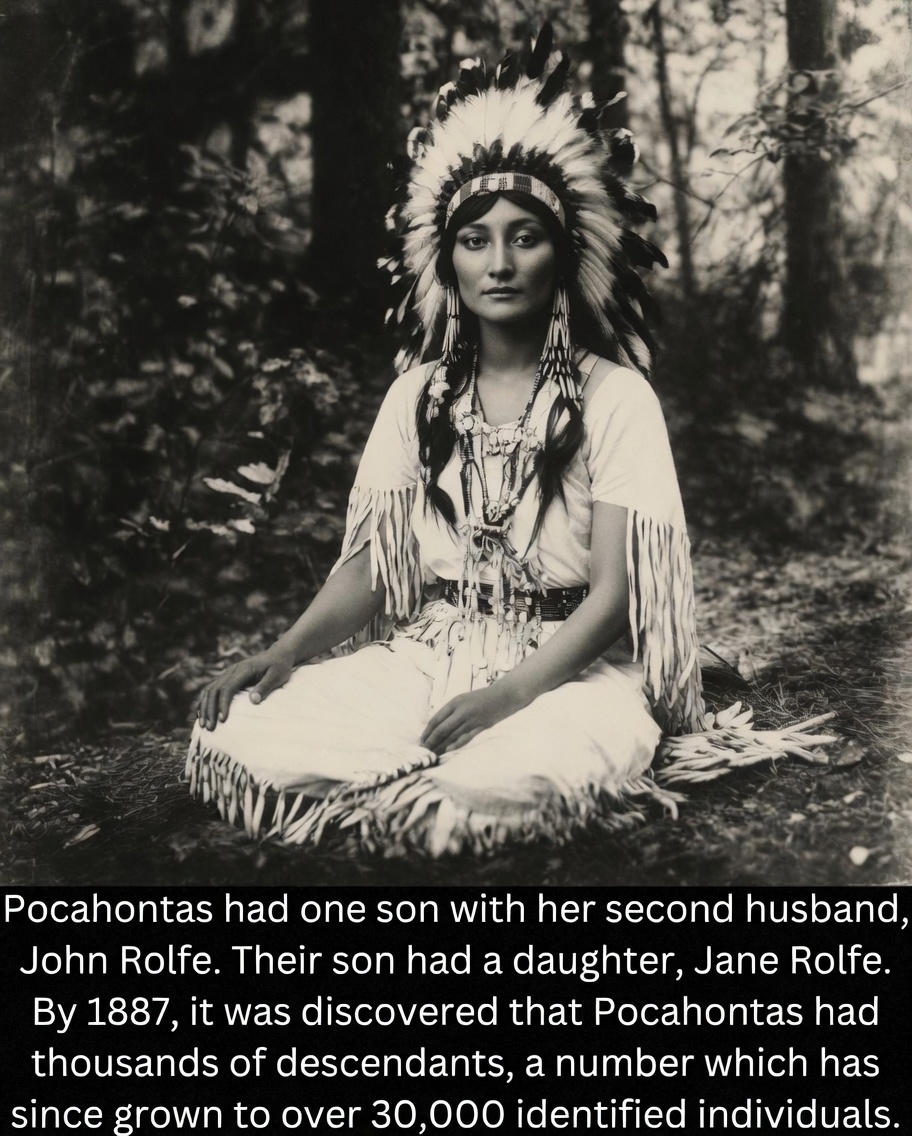
Their son, Thomas Rolfe, was born in 1615, inheriting both his father’s English lineage and his mother’s Native American heritage. Thomas’s life was shaped by these dual legacies, navigating between English colonial society and the culture of his Powhatan roots. His marriage and offspring, particularly his daughter Jane Rolfe, continued this line, establishing a genealogical bridge between early colonial America and modern generations. Over the centuries, the descendants of Pocahontas and John Rolfe expanded across the United States, intermarrying with a wide variety of families, contributing to the social, political, and cultural tapestry of the nation.

The revelation in 1887 that Pocahontas had thousands of descendants underscored the profound demographic impact of her lineage. As genealogical research progressed into the 20th and 21st centuries, this number grew to over 30,000 identified individuals, making Pocahontas one of the most historically documented Native American matriarchs in North America. These descendants encompass a diverse spectrum of social positions, including influential political figures, academics, and members of prominent American families, illustrating the extensive reach of her familial line. Notably, her lineage connects to numerous American historical figures, demonstrating how Indigenous heritage is deeply embedded in the country’s broader narrative.

Beyond sheer numbers, the cultural and symbolic resonance of Pocahontas’s descendants is profound. Each individual who traces ancestry to her represents a living connection to the Powhatan people and to early encounters between Indigenous populations and European colonists. This lineage embodies survival through adversity, reflecting how her family navigated the pressures of colonization, displacement, and cultural change. Pocahontas’s story and her descendants thus serve as a reminder of the enduring presence of Native American heritage in contemporary society, countering narratives that marginalize or erase Indigenous contributions.

Genealogists and historians have meticulously documented the descendants of Pocahontas, examining family trees, colonial records, and historical archives. These studies provide insights into how Native American ancestry intermingled with European settler populations, creating complex identities and diverse lineages. Through Thomas Rolfe and Jane Rolfe, the Powhatan legacy spread into various colonies, contributing to the multicultural fabric of the United States. The tracing of this lineage not only honors the historical significance of Pocahontas herself but also affirms the ongoing vitality of Native American cultural and familial traditions.

Moreover, the story of Pocahontas and her descendants holds pedagogical value, offering lessons about cultural adaptation, resilience, and the intersection of identities. Her life exemplifies how individuals can serve as bridges between societies, negotiating relationships that carry both risk and opportunity. The narrative encourages reflection on the ways historical figures influence not just their own era but also the generations that follow. Through her descendants, the cultural memory of the Powhatan people continues to thrive, demonstrating the importance of lineage in preserving identity and heritage.

In contemporary society, descendants of Pocahontas participate in honoring this heritage through cultural engagement, storytelling, and historical preservation. Many descendants actively research and share the history of the Powhatan nation, educating communities about the resilience, diplomacy, and contributions of Native Americans. Their efforts ensure that the story of Pocahontas is not confined to legend but is recognized as a tangible, living history with implications for understanding American identity as a whole. These descendants also play a critical role in challenging historical misconceptions, advocating for recognition of Native American experiences, and celebrating Indigenous contributions to society.

The legacy of Pocahontas’s lineage also intersects with discussions about representation and inclusion. By tracing her descendants, historians and cultural scholars highlight the interconnectedness of Indigenous heritage with broader national histories, underscoring the necessity of integrating these perspectives into mainstream narratives. Recognizing the vast number of her descendants emphasizes that Indigenous presence is not a relic of the past but a continuing, dynamic force shaping communities across the United States. This awareness fosters greater respect for Native American cultures and encourages engagement with ongoing issues of sovereignty, cultural preservation, and social justice.

In summary, the lineage of Pocahontas represents a remarkable confluence of history, culture, and identity. From her marriage to John Rolfe to the modern era, her descendants exemplify the enduring impact of Indigenous heritage in North America. This line not only provides a genealogical link to early colonial history but also serves as a symbol of resilience, adaptation, and cultural continuity. As scholars, descendants, and communities continue to explore and honor her legacy, the story of Pocahontas stands as a testament to the enduring influence of Native American history, reminding us of the profound ways in which past lives shape present and future generations.

The expansive legacy of Pocahontas, as traced through her descendants, provides a remarkable lens through which to explore the intersections of Native American and colonial histories. Beyond the immediate familial connections, her life reflects broader social, political, and cultural dynamics that shaped the early American landscape. Pocahontas’s marriage to John Rolfe in 1614 was more than a personal union—it was emblematic of the delicate negotiations between English colonists and the Powhatan Confederacy, highlighting the role of individuals in fostering peace amidst tension. Her son Thomas Rolfe, and his daughter Jane Rolfe, carried forward a heritage that intertwined Powhatan cultural identity with European colonial influence, a duality that has echoed through generations of descendants.

The genealogical studies conducted over the past century demonstrate the remarkable proliferation of Pocahontas’s lineage. As family trees were meticulously documented and cross-referenced with historical records, researchers began to map a network of descendants that spread across various regions of the United States. By the late 19th century, it was recognized that her descendants numbered in the thousands, and modern estimates place that figure at over 30,000. Each of these individuals embodies a living connection to early colonial interactions and the resilience of Indigenous heritage, offering tangible evidence of how personal histories intersect with broader national narratives.

Understanding Pocahontas’s lineage also invites reflection on the ways in which Native American identity has been preserved and transformed over time. Her descendants not only inherited biological ties to the Powhatan people but also the cultural legacies embedded in oral traditions, storytelling, and community practices. These cultural practices, whether through ceremonial observances, language preservation, or community rituals, have allowed subsequent generations to maintain a sense of identity even as societal pressures encouraged assimilation. The dual heritage of many descendants—both Native American and European—illustrates the complex interplay between colonization, cultural survival, and the creation of hybrid identities that have shaped American society in profound ways.

The historical significance of Pocahontas’s lineage extends beyond genealogy; it also underscores the importance of recognizing Indigenous agency in shaping early American history. While colonial narratives often minimized or overlooked the contributions of Native peoples, the survival and growth of Pocahontas’s family line highlight how Indigenous communities actively engaged with and adapted to changing social and political circumstances. Through strategic alliances, familial connections, and the transmission of cultural knowledge, her descendants became active participants in shaping the social fabric of emerging American colonies, illustrating the persistence and adaptability of Native American communities throughout periods of upheaval.

In contemporary terms, the story of Pocahontas and her descendants holds considerable cultural and educational value. It challenges conventional narratives that have long marginalized Indigenous perspectives, emphasizing the importance of acknowledging the continuity and presence of Native communities in American history. Educational initiatives and genealogical research into her lineage provide opportunities for broader public engagement with these histories, offering a means to foster understanding and appreciation for the contributions of Native Americans to the nation’s development. By celebrating the accomplishments and resilience of her descendants, communities can both honor historical memory and inspire future generations to explore their own cultural roots.

Furthermore, the legal, social, and cultural recognition of Pocahontas’s descendants has implications for Indigenous rights and representation. As the descendants continue to trace their heritage, they contribute to the documentation of Native American histories, which can be leveraged in contemporary efforts to secure tribal recognition, land rights, and cultural preservation initiatives. The acknowledgment of her descendants also serves as a reminder that Indigenous communities maintain a continuous and living presence in the United States, countering narratives that have historically positioned Native peoples as relics of the past. Through genealogical research and public engagement, these descendants help reaffirm the ongoing relevance and vitality of Indigenous identities.

The interconnectedness of Pocahontas’s family with broader historical events further enhances the significance of her legacy. Her descendants were witnesses to pivotal moments in American history, from colonial expansion and the American Revolution to westward migration and the Civil War. The survival and proliferation of her lineage during these transformative periods illustrate the resilience of Native American communities and their ability to navigate profound social changes while maintaining cultural continuity. By tracing these historical trajectories, scholars can gain insights into how familial and cultural networks influenced broader historical processes, contributing to a richer understanding of American history as a whole.

Cultural expressions associated with Pocahontas and her descendants continue to resonate in literature, art, and popular media. From historical novels and biographies to films and educational programming, her story has been adapted and reinterpreted across generations, often serving as a vehicle for exploring themes of cultural exchange, identity, and resilience. These representations, when informed by historical research and genealogical evidence, provide opportunities to engage wider audiences with the complexities of Native American histories, challenging stereotypes and encouraging nuanced understandings of Indigenous experiences.

In examining the legacy of Pocahontas, it is essential to recognize the dual nature of her story as both historical record and cultural symbol. Her personal experiences, as well as the documented achievements of her descendants, illustrate the interplay between individual agency and collective identity within Native American communities. This duality provides a framework for understanding how historical narratives are constructed, preserved, and transmitted across generations, highlighting the importance of integrating both genealogical evidence and oral traditions in the study of Indigenous histories.

The continued research into Pocahontas’s descendants also emphasizes the role of interdisciplinary approaches in historical scholarship. Combining genealogical methods, archival research, and DNA analysis allows historians to construct a more comprehensive understanding of her lineage and its significance. These methods not only validate historical claims but also foster greater inclusivity in the study of American history, recognizing the contributions and experiences of Indigenous peoples alongside those of European settlers. By integrating these perspectives, scholars can produce narratives that reflect the diversity and complexity of early American society, providing a more balanced and accurate historical record.

Beyond the academic realm, the legacy of Pocahontas serves as a source of inspiration and empowerment for contemporary Native American communities. Her story and the achievements of her descendants demonstrate the enduring strength and resilience of Indigenous peoples, offering role models for young individuals seeking to connect with their cultural heritage. Programs that highlight her lineage and its significance can foster pride in Indigenous identity, encourage participation in cultural preservation efforts, and promote leadership within communities. Through these initiatives, the story of Pocahontas becomes not only a historical account but also a catalyst for ongoing cultural engagement and community empowerment.

In conclusion, the lineage of Pocahontas exemplifies the enduring impact of one individual and her descendants on the historical, cultural, and social landscape of the United States. From her marriage to John Rolfe to the extensive network of descendants that spans centuries, her family embodies the resilience, adaptability, and cultural continuity of Native American communities. Through genealogical research, cultural preservation, and public engagement, the story of Pocahontas and her descendants continues to inform, inspire, and challenge conventional understandings of American history, ensuring that the legacy of the Powhatan people remains a living and dynamic part of the nation’s collective memory. By honoring her lineage and recognizing its significance, contemporary society can foster greater appreciation for Indigenous contributions, encourage cultural continuity, and affirm the vital presence of Native American communities in shaping the past, present, and future of the United States.

The ongoing significance of Pocahontas’s lineage is not confined solely to historical documentation or genealogical studies; it also resonates deeply within broader discussions of identity, cultural heritage, and the dynamics of historical memory. Each descendant of Pocahontas carries a living testament to the complex interplay of Indigenous and European histories, highlighting how intermarriage and cultural exchange shaped early colonial society. These descendants serve as bridges between two worlds—the Native American communities that predated European colonization and the emerging Anglo-American society that would eventually dominate the continent. Understanding this dual heritage allows historians and the public alike to see Pocahontas not merely as a symbolic figure but as a pivotal participant in a broader narrative of cultural survival and negotiation.

One aspect of her legacy that remains particularly striking is the manner in which her descendants have integrated into diverse sectors of American society while simultaneously maintaining a connection to their Native roots. Over the centuries, individuals tracing their lineage to Pocahontas have become influential figures in politics, academia, arts, and business. These accomplishments underscore the enduring vitality of her legacy, demonstrating that her lineage is not a static historical artifact but an active, living influence. Descendants who engage with public life today often cite their heritage as a source of inspiration and responsibility, embodying both the privileges and obligations of carrying forward the legacy of Pocahontas.

The cultural resonance of Pocahontas extends beyond her immediate family. Her story has been immortalized in literature, theater, and film, each medium contributing to public understanding and appreciation of her significance. Early accounts of Pocahontas’s life, including writings by John Smith and other colonial chroniclers, framed her as a figure of diplomacy and intrigue, but they often reflected the biases and assumptions of European observers. Modern interpretations, however, aim to provide a more nuanced and accurate portrayal, emphasizing her agency, cultural identity, and role as a connector between communities. The multiplicity of representations—from academic biographies to popular media adaptations—illustrates the layered ways in which her story has been remembered, reshaped, and communicated across generations.

In addition to historical and cultural analyses, the exploration of Pocahontas’s descendants opens up important discussions about the methodology and ethics of genealogical research. Documenting her lineage requires careful navigation of historical records, including colonial birth and marriage registries, church records, and wills, alongside oral histories preserved within Indigenous communities. Each source offers unique insights, yet each comes with limitations, biases, or gaps. By integrating these diverse forms of evidence, researchers can construct a more comprehensive picture of Pocahontas’s impact and the trajectories of her descendants. This approach underscores the importance of interdisciplinary methods in historical scholarship, combining genealogy, anthropology, and cultural studies to produce an enriched understanding of Indigenous history.

Moreover, Pocahontas’s lineage provides a lens for exploring broader themes of identity formation and cultural hybridity. Her descendants embody both Indigenous and European ancestries, navigating the interplay between inherited cultural norms, social expectations, and personal identity. This dual heritage often involves complex negotiations, as individuals balance the preservation of Native traditions with engagement in mainstream society. The persistence of Indigenous cultural practices among her descendants demonstrates the resilience and adaptability of Native communities, illustrating how cultural continuity can coexist with the realities of integration into broader national narratives.

The legal and political dimensions of Pocahontas’s legacy are equally compelling. Descendants who maintain connections to tribal communities often engage with contemporary issues such as land rights, sovereignty, and cultural preservation. These engagements highlight how historical lineage can intersect with modern advocacy, providing descendants with a platform to influence policy and protect community interests. For example, understanding the genealogical connections of Pocahontas’s family contributes to efforts to trace historical land ownership, assert tribal affiliations, and preserve traditional knowledge. Her lineage thus continues to play a role in the ongoing assertion of Indigenous rights and recognition within the United States.

Pocahontas’s story and her descendants also have profound implications for education and public history. Incorporating her narrative into curricula provides students with opportunities to explore the intersections of Indigenous and colonial histories, examining themes of diplomacy, cultural exchange, and resilience. Educational programs that highlight her descendants can foster a more inclusive understanding of early American history, emphasizing the contributions of Native communities and challenging Eurocentric narratives that have traditionally dominated historical discourse. By teaching students about her life and lineage, educators can cultivate a deeper appreciation for the complexities of history and the enduring influence of Indigenous peoples on the nation’s development.

Beyond formal education, Pocahontas’s descendants contribute to cultural preservation through participation in community initiatives, storytelling, and the arts. Many descendants engage in cultural programs that teach traditional crafts, music, and dance, ensuring that these practices are transmitted to future generations. These activities not only preserve cultural heritage but also provide spaces for community cohesion and identity affirmation. By maintaining and sharing these traditions, descendants honor the legacy of Pocahontas while reinforcing the relevance of Indigenous knowledge systems in contemporary society.

The global resonance of Pocahontas’s story further underscores her historical significance. She has become a symbol recognized not only in the United States but also internationally, representing Indigenous agency, resilience, and the possibilities of cross-cultural understanding. Her descendants, by extension, carry a legacy that transcends national boundaries, connecting diverse audiences with the narratives of the Powhatan people and the broader Indigenous experience. This global recognition enhances the cultural and educational impact of her lineage, providing opportunities for dialogue and exchange across cultures.

In summation, the legacy of Pocahontas and her descendants is multifaceted, encompassing historical, cultural, social, and educational dimensions. From her strategic role in fostering peace between the Powhatan Confederacy and English settlers to the extensive network of descendants who continue to influence American society, Pocahontas’s impact is enduring and profound. Her story exemplifies the resilience of Indigenous communities, the complexities of cultural identity, and the ways in which individual lives can shape broader historical trajectories. By studying her lineage, historians, educators, and the public gain a deeper understanding of the intertwined histories of Native Americans and European settlers, the processes of cultural survival, and the ongoing significance of Indigenous voices in shaping the nation’s past, present, and future. The continued exploration of her descendants’ lives and contributions ensures that Pocahontas’s legacy remains a living, dynamic force, enriching historical knowledge, cultural appreciation, and the recognition of Indigenous presence in America.

News

Post navigation

Previous Post: Echoes of the First Peoples Heritage, Resilience, and Legacy of Indigenous Nations
Next Post: Cherokee Women Warriors, Leaders, and Keepers of Culture Across Generations

Leave a Reply Cancel reply

Your email address will not be published. Required fields are marked *

Recent Posts

  • Police Bodycam Captures Incident as Woman Claims Excessive Force
  • Police Respond to Incident Involving Intoxicated Driver and Infant in Vehicle
  • Grandson Insists He’s the Victim During Police Investigation
  • Cop Funny moments
  • Police Respond After Woman Refuses to Follow the Rules

Copyright © 2026 Best lifestory.

Powered by PressBook WordPress theme