Skip to content

Best lifestory

Echoes of the First Peoples Heritage, Resilience, and Legacy of Indigenous Nations

Posted on May 29, 2026 By admin No Comments on Echoes of the First Peoples Heritage, Resilience, and Legacy of Indigenous Nations

Indigenous cultures across North America hold profound and deeply meaningful traditions surrounding life, death, and the cyclical nature of existence. Among the Sioux people, and exemplified by iconic figures such as the great warrior Crazy Horse, death was not seen as a final end but as a transformation and a return to the natural world. This philosophy influenced their mortuary practices, their interactions with the land, and the way they understood the interconnectedness of life. For the Sioux, every act in life and every practice surrounding death was a recognition of the broader cycle of nature, reflecting both spiritual beliefs and practical understanding of the environment in which they lived.

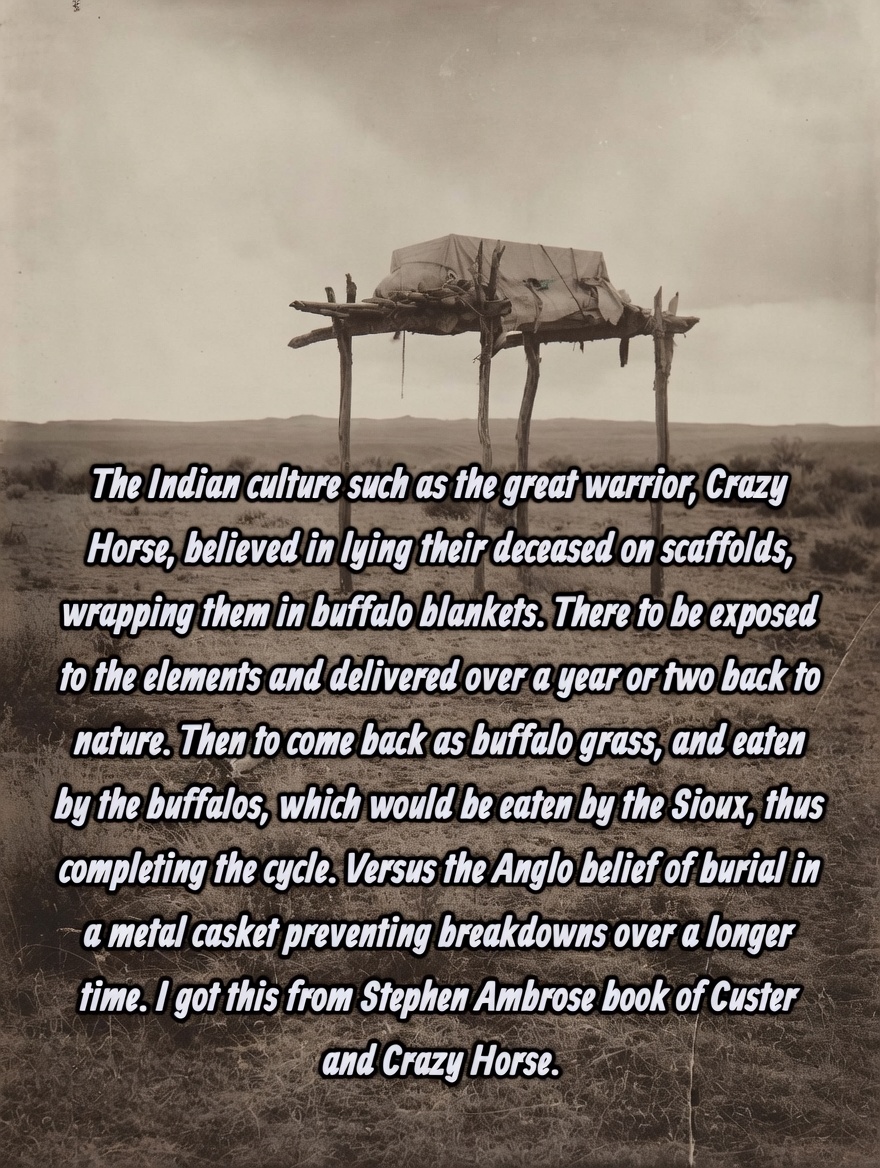
One of the most striking practices observed in Sioux culture was the use of scaffold burials. Unlike the Anglo-American tradition of interring the deceased in a coffin underground, Sioux people often laid their dead on elevated scaffolds constructed from wooden poles. The bodies were wrapped carefully in buffalo blankets, which were sacred items imbued with spiritual and cultural significance. This act served several purposes. Practically, it protected the body from immediate scavengers and the dampness of the ground. Spiritually, it allowed the deceased’s essence to remain close to the sky and the natural elements, connecting them to the sun, wind, and rain, which were understood as powerful forces within their cosmology.

Exposure on scaffolds could last for a year or more, during which time the natural elements would gradually decompose the body. This decomposition was not considered desecration but a sacred process. As the body returned to the earth, its nutrients nourished the land, allowing new life to flourish. This process reflected the Sioux belief in the cycle of life: the body became part of the grass, the grass fed the buffalo, and the buffalo in turn nourished the people. Such practices reinforced a philosophy of interdependence and ecological balance, emphasizing that death was an integral part of life and that human beings were inextricably connected to all other living things.

The scaffold burial also represented a public acknowledgment of the individual’s life and status within the community. In the case of prominent figures like Crazy Horse, this method of burial honored their contributions, valor, and spiritual significance. Placing them on a scaffold in a visible location allowed the community to observe rituals, offer prayers, and maintain a connection to the individual’s spirit. This communal aspect was vital in preserving the cultural memory of the deceased and transmitting their stories, teachings, and values to subsequent generations.

Buffalo blankets played a central role in these mortuary practices. Beyond their physical utility as warm coverings, buffalo blankets held spiritual significance. The buffalo was a sacred animal to the Sioux, providing sustenance, tools, and clothing while being central to their cosmology. Wrapping a body in a buffalo blanket symbolized both protection and respect, linking the deceased to the sacred animal and the wider spiritual world. The act demonstrated a deep understanding of symbolism, integrating physical, spiritual, and environmental considerations into a single ritual.

The Sioux worldview regarding death also emphasized transformation rather than permanence. The idea that a person’s physical body could return to the earth and continue to play a role in sustaining life was a reflection of their holistic understanding of existence. Humans, animals, plants, and natural forces were not separate entities but parts of a dynamic and interconnected system. By participating in this cycle through their burial practices, the Sioux affirmed their place within the ecosystem and acknowledged the enduring influence of every individual, even after death.

Contrasting this practice with Anglo-American burial customs highlights profound differences in worldview. In European-American traditions, the deceased were typically placed in a sealed coffin and interred in the ground. This method preserved the body for as long as possible, often emphasizing permanence and memorialization in a physical sense. However, it removed the body from the natural cycles of decomposition and reintegration into the environment. While these methods reflected cultural values around memory, respect, and individual legacy, they did not embody the same ecological and spiritual continuity that scaffold burials provided in Sioux culture.

Historically, scholars such as Stephen Ambrose have documented these Sioux practices, particularly in biographies and studies of figures like Crazy Horse and General Custer. Ambrose noted that scaffold burials were a deliberate choice grounded in deep spiritual meaning, rather than simply a pragmatic or aesthetic decision. By elevating the body and allowing it to return gradually to the earth, the Sioux ensured that the deceased remained part of the communal and ecological life of the tribe. This approach reflected centuries of accumulated wisdom and a worldview in which human life was inseparable from the natural world.

The cyclical philosophy of life and death also informed other aspects of Sioux culture. For example, oral traditions emphasized the importance of storytelling as a means of preserving history and transmitting values. Just as the physical body contributed to the natural cycle, stories contributed to the spiritual and cultural continuity of the community. Elders would pass down narratives of ancestors, heroic deeds, spiritual lessons, and survival strategies, ensuring that each generation maintained a strong connection to the past while navigating the present. This integration of ritual, ecology, and storytelling illustrates the holistic nature of Sioux cultural practices.

It is also important to recognize that these traditions were not static but evolved in response to environmental, social, and historical pressures. For instance, the arrival of European settlers, forced relocations, and the introduction of new diseases altered the contexts in which these practices could be carried out. Despite these challenges, the spiritual principles underlying scaffold burials and buffalo blanket rituals persisted. Even when adaptations were necessary, the focus on interconnectedness, respect for nature, and the cyclical understanding of life remained central to Sioux cultural identity.

The significance of these mortuary practices extends beyond historical observation. They provide insight into alternative understandings of death, ecology, and community. In modern times, there is growing interest in how Indigenous philosophies can inform sustainable living, environmental ethics, and holistic approaches to health and wellbeing. The Sioux example demonstrates how cultural practices can harmonize human life with ecological systems, highlighting lessons that remain relevant today. By studying and respecting these traditions, contemporary societies can gain a broader perspective on life, death, and the responsibilities humans have to the natural world.

Furthermore, these practices challenge assumptions about the universality of certain cultural norms regarding death. They show that beliefs about what constitutes respect, remembrance, and continuity vary widely across cultures. While Anglo-American practices emphasize preservation and individual memorialization, Sioux practices emphasize transformation, integration, and collective memory. Both approaches express deep values, but they operate within different cultural paradigms. Understanding these differences fosters cultural literacy, empathy, and a recognition of the richness and diversity of human experience.

In conclusion, the Sioux practice of placing their deceased on scaffolds, wrapped in buffalo blankets, is a profound expression of a worldview that intertwines life, death, and nature. Through these rituals, the Sioux honored their ancestors, sustained ecological cycles, and maintained a spiritual connection across generations. Figures like Crazy Horse exemplified these traditions, embodying the values, wisdom, and resilience of their communities. The contrast with Anglo-American burial practices underscores the cultural specificity of these traditions while highlighting universal themes of respect, remembrance, and the human desire to honor those who have passed.

By examining these practices, scholars, educators, and the broader public gain insight into Indigenous philosophies that integrate ecological awareness, community cohesion, and spiritual understanding. Scaffold burials and the use of buffalo blankets reflect a worldview that sees humans not as separate from nature but as participants in an ongoing cycle of life, death, and regeneration. These practices preserve cultural memory, reinforce communal bonds, and offer lessons that remain valuable for contemporary society. Through continued study, storytelling, and cultural preservation, the Sioux and other Indigenous peoples ensure that these traditions endure, providing inspiration and guidance for future generations.

The Sioux approach to death, epitomized by scaffold burials, illustrates a broader Indigenous worldview in which life, death, and the natural world are intimately connected. In these societies, every aspect of existence is understood as part of a continuous cycle, where humans, animals, plants, and spiritual forces are interdependent. This cyclical view stands in contrast to linear Western conceptions of life and death, which often emphasize permanence, separation, and individualism. For the Sioux, death is not an endpoint but a transformative phase in which the deceased continue to contribute to the community and the environment, maintaining a form of presence that supports ongoing life.

Scaffold burials were carefully orchestrated events that combined practical considerations with profound spiritual significance. Elders and community leaders oversaw the construction of scaffolds, ensuring that they were situated in appropriate locations that allowed for respect, visibility, and spiritual alignment. The positioning of the scaffolds was significant: many were placed on high ground, in open spaces, or near sacred sites, allowing the deceased to remain close to the sky, wind, and sun. These natural elements were considered essential in guiding the spirit and facilitating the decomposition process in a way that honored both the individual and the environment.

Buffalo blankets, used to wrap the deceased, were more than functional coverings; they symbolized protection, respect, and spiritual connection. The buffalo held central importance in Sioux culture as a provider of food, clothing, and tools, and it was considered sacred. By wrapping a body in buffalo hide, the Sioux created a direct link between the deceased and this revered animal, embedding the individual within the cycles of life that the buffalo represented. This practice ensured that the physical body would nourish the land and the animals, perpetuating life and reinforcing a worldview grounded in ecological reciprocity.

The temporal aspect of scaffold burials was equally meaningful. Bodies were exposed to natural elements for extended periods—often a year or more—allowing decomposition to occur gradually. This extended exposure was deliberate, as it gave time for the body to return to the earth naturally, feeding the soil and promoting the growth of new vegetation. Grass and other plants nourished by the decomposed remains would subsequently provide sustenance for the buffalo and other animals, which in turn supported human communities. This interconnected cycle exemplifies the Sioux understanding of life as a continuous loop, where death contributes directly to the sustenance of life, and the boundaries between the living and the dead are permeable.

Beyond ecological considerations, scaffold burials served critical social and cultural functions. They reinforced community cohesion by providing a space for collective mourning, reflection, and remembrance. Community members would gather around the scaffold, performing rituals, offering prayers, and sharing stories of the deceased. In the case of prominent figures like Crazy Horse, the rituals were even more elaborate, celebrating the individual’s contributions, courage, and spiritual significance. These communal ceremonies allowed for the transmission of knowledge, values, and cultural traditions from one generation to the next, ensuring that the collective memory of the community remained intact.

Storytelling was central to these practices. Elders narrated the histories of the deceased, their achievements, and their lessons learned, embedding the individual’s life within the broader tapestry of tribal knowledge. Oral histories functioned as both spiritual guides and educational tools, teaching younger generations about survival, ethics, leadership, and ecological balance. In this way, scaffold burials were not just funerary practices but pedagogical events that reinforced cultural continuity and social cohesion.

Contrasting the Sioux approach with Anglo-American burial practices reveals profound differences in philosophy and values. Western traditions often prioritize preservation and memorialization through coffins, caskets, and burial plots, focusing on permanence and the separation of the body from natural processes. While these methods reflect respect and commemoration, they do not engage with the ecological or spiritual dimensions that are central to Sioux practices. The Western approach seeks to halt decomposition and preserve the body indefinitely, emphasizing memory over transformation, while the Sioux approach embraces the natural cycle, allowing the deceased to reintegrate into the environment and contribute to the sustenance of life.

The philosophical underpinnings of these differing practices illuminate broader cultural paradigms. In Sioux cosmology, humans are part of a dynamic and interconnected system, where the health of the community, the land, and the animals are mutually dependent. Death is a phase within this system, a process that benefits the living and strengthens ecological and spiritual bonds. Anglo-American paradigms, by contrast, often emphasize individualism and linear progression, treating death as a final separation and focusing on memorialization through physical preservation. Both approaches express deep cultural values, but they operate within fundamentally different understandings of human existence and our relationship with the natural world.

The historical context of Sioux burial practices is also crucial. These traditions developed over centuries in the Great Plains, where the environment, wildlife, and seasonal cycles shaped daily life and spiritual understanding. The arrival of European settlers, the imposition of new political systems, and the introduction of foreign diseases disrupted these practices and threatened cultural continuity. Despite these challenges, Sioux communities preserved their mortuary traditions, adapting as necessary while maintaining the spiritual and ecological principles at their core. The resilience of these practices highlights the strength and persistence of cultural knowledge, even under conditions of extreme pressure and colonization.

Modern interest in Sioux burial practices extends beyond academic curiosity. Anthropologists, historians, and environmental scholars recognize the ecological wisdom embedded in these traditions, particularly in their emphasis on cycles of life, death, and regeneration. Scaffold burials exemplify sustainable practices that integrate human activity with ecological balance, offering insights into how cultural traditions can inform contemporary approaches to environmental stewardship. Additionally, Indigenous communities continue to practice and honor these traditions, ensuring that they remain living, evolving aspects of cultural identity rather than static historical artifacts.

The ethical dimensions of studying and representing Sioux practices are also significant. Scholars and educators must approach these traditions with respect, recognizing the spiritual significance and cultural sensitivity inherent in burial rites. Misrepresentation or commodification can diminish their meaning and disrespect the communities that maintain them. Collaborative research, informed consent, and active participation by Indigenous communities are essential to ensure that scholarship contributes to cultural preservation rather than exploitation.

Furthermore, these practices highlight the role of Indigenous knowledge systems in shaping understandings of health, spirituality, and ecology. By integrating observational knowledge, spiritual belief, and practical experience, the Sioux created comprehensive systems that guided both daily life and community-wide rituals. Scaffold burials illustrate the depth of this knowledge, encompassing ecological science, community dynamics, and spiritual philosophy. Recognizing and valuing these systems challenges dominant narratives that have historically marginalized Indigenous knowledge, emphasizing the contributions of Native communities to human understanding of life and nature.

The symbolic significance of scaffold burials extends to notions of resilience, identity, and intergenerational continuity. By adhering to these practices, Sioux communities affirm their connection to ancestors, the land, and the spiritual world. The act of returning to the earth through natural processes reinforces a sense of belonging, ensuring that each generation maintains continuity with the past while shaping the future. This continuity fosters identity formation, communal cohesion, and spiritual grounding, providing a framework for understanding human existence within a larger ecological and cosmic order.

In examining the role of prominent figures such as Crazy Horse, one sees how individual lives are woven into these broader cultural narratives. Leaders, warriors, and elders exemplify the values and principles of the community, serving as models for both living and commemorative practices. Scaffold burials for such figures were not only acts of reverence but also opportunities for teaching, reflection, and collective remembrance. They allowed the community to honor extraordinary contributions while embedding lessons in the fabric of cultural memory.

In conclusion, the Sioux practice of scaffold burials, the use of buffalo blankets, and the philosophical understanding of death as a transformative cycle represent a sophisticated integration of ecology, spirituality, and social cohesion. These traditions illustrate a worldview in which humans are inseparably linked to the natural world, where death is a continuation of life, and where communal and environmental responsibilities are intertwined. Figures like Crazy Horse embody these principles, demonstrating how cultural practices, individual lives, and ecological understanding converge to create a resilient and enduring society.

Scaffold burials, in particular, exemplify the interconnectedness of life, the reverence for ancestors, and the recognition of the natural cycles that sustain existence. Through careful observation, ritual, and storytelling, the Sioux ensured that these practices preserved identity, transmitted values, and reinforced the ecological balance of their environment. They remind us that death, far from being an endpoint, is an essential part of the life cycle, offering lessons in humility, respect, and continuity.

By studying and respecting these practices, contemporary society can gain valuable insights into alternative approaches to death, community, and ecology. Indigenous traditions, preserved through generations and validated by historical and cultural scholarship, offer wisdom that is as relevant today as it was centuries ago. The Sioux example challenges us to reconsider our assumptions about mortality, stewardship, and cultural continuity, providing a lens through which we can appreciate the profound knowledge embedded in Indigenous worldviews.

Continuing the discussion on Sioux scaffold burials and Indigenous philosophies of life and death, we can further explore the social, spiritual, and ecological dimensions of these practices and their relevance today.

Scaffold burials were not only practical and ecological but also deeply symbolic. The act of placing a body on a scaffold, elevated above the ground, carried profound spiritual meaning. It allowed the deceased to be closer to the sky, connecting them with celestial forces, the wind, and the sun—elements considered vital in guiding the spirit on its journey to the afterlife. This elevation symbolized a liminal state, a transitional phase between the world of the living and the spiritual realm, where the spirit could observe, interact, and continue to influence the living community. The Sioux believed that such proximity to nature and the elements helped ensure harmony between the human and spiritual worlds.

The timing and seasonal considerations in scaffold burials were also intentional. By exposing the body to the natural environment over several months, the Sioux allowed decomposition to occur naturally, integrating the remains into the ecosystem. This process transformed the body into nourishment for the earth, supporting the growth of buffalo grass and other vegetation, which in turn fed the animals that were essential to Sioux survival. This cyclical understanding of life, death, and renewal reinforces the Sioux belief in the interconnectedness of all living beings and the importance of maintaining balance within the ecosystem.

Community participation in scaffold burials strengthened social bonds and reinforced cultural continuity. The preparation of the body, the construction of the scaffold, and the accompanying rituals were communal activities, engaging elders, family members, and other members of the tribe. These events served as educational opportunities, passing knowledge about traditions, spiritual beliefs, and survival strategies to younger generations. Storytelling, in particular, played a crucial role, allowing elders to transmit lessons, histories, and moral guidance. This ensured that cultural values and knowledge remained alive, even in the face of external pressures such as colonization and forced assimilation.

Scaffold burials also exemplify a sophisticated understanding of ecological ethics. By allowing natural decomposition to occur and ensuring that the body contributed to the broader ecosystem, the Sioux demonstrated a respect for the environment and the principle of reciprocity. Human life was not viewed in isolation but as part of a broader network of relationships encompassing plants, animals, land, and spiritual entities. This ecological wisdom has contemporary relevance, offering lessons for sustainable practices and a deeper appreciation of our responsibilities toward the natural world.

News

Post navigation

Previous Post: The Enduring Legacy and Leadership of Indigenous Peoples in History, Culture, and Modern America
Next Post: Pocahontas’s Enduring Legacy From Powhatan Princess to 30,000 Descendants and Beyond

Leave a Reply Cancel reply

Your email address will not be published. Required fields are marked *

Recent Posts

  • Police Bodycam Captures Incident as Woman Claims Excessive Force
  • Police Respond to Incident Involving Intoxicated Driver and Infant in Vehicle
  • Grandson Insists He’s the Victim During Police Investigation
  • Cop Funny moments
  • Police Respond After Woman Refuses to Follow the Rules

Copyright © 2026 Best lifestory.

Powered by PressBook WordPress theme