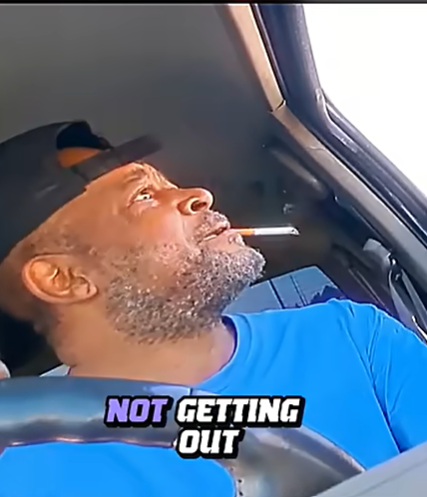
The video captures a tense traffic stop where a driver refuses to get out of his vehicle after being repeatedly ordered to do so by a police officer. What begins as a roadside interaction quickly becomes a heated disagreement over authority, suspicion, rights, and safety. The driver remains seated behind the wheel, visibly frustrated, while the officer continues insisting that he must step out. The central conflict is simple but serious: the officer says exiting the vehicle is mandatory, while the driver argues that the officer has not explained what crime he is suspected of committing.
From the start, the driver appears determined not to comply without a clear reason. He repeatedly asks what crime he has committed and challenges the officer to provide what he calls “reasonable articulable suspicion.” This phrase becomes the foundation of his argument. He is not simply refusing because he does not want to cooperate; he is claiming that the officer has not legally justified the command. In his view, unless the officer can explain a specific suspected crime or victim, the order to exit the vehicle is unnecessary and improper.
The officer, however, continues giving commands. He tells the driver to get out of the vehicle and later instructs him to keep his hands on the steering wheel. The driver follows the hand instruction while still refusing to exit. This creates an unusual contrast. He is not ignoring every command. He keeps his hands visible, likely because he understands that hand movement during a traffic stop can be viewed as a safety concern. At the same time, he draws a firm line at leaving the vehicle. He seems to believe that stepping out would mean accepting an order he considers unlawful.
The driver’s tone is confrontational but also fearful. He accuses the officer of escalating the situation and says he is not doing anything criminal. He also claims he fears for his safety, suggesting that the officer appeared close to drawing a taser. That moment adds emotional pressure to the encounter. From the driver’s perspective, he may feel trapped in a situation where refusing could lead to force, but complying could feel like surrendering his rights. From the officer’s perspective, a driver refusing to exit may create uncertainty and safety concerns.
The video highlights a moment where the officer’s body language appears to change after looking toward his dashcam. This detail becomes important because it suggests the officer may become more aware of being recorded or may reconsider how the situation appears on camera. Body cameras and dashcams often influence how viewers interpret police encounters because they create a visible record of tone, commands, movement, and reactions. In this case, the driver seems aware of the importance of documentation, and the camera becomes part of the tension.
The driver repeatedly frames the officer as a public servant, saying the officer works for him. This is a common argument in confrontational traffic stop videos, where drivers emphasize that police are government employees accountable to the public. However, saying this during a stop usually does not resolve the situation. The officer still has immediate authority on the roadside, and the driver still has to decide whether to comply or continue challenging the command. The statement may express frustration, but it does not reduce the tension.
As the exchange continues, the driver asks for a supervisor to be called to the scene. This request suggests that he no longer trusts the officer’s handling of the stop and wants another authority figure present. In many police encounters, requesting a supervisor is a way for a person to seek review or de-escalation. The driver may believe that a supervisor will agree that the officer has not explained enough. The officer, however, continues focusing on the immediate command: step out of the vehicle.
The disagreement over whether exiting the vehicle is optional becomes the heart of the video. The officer states that getting out is not a choice. The driver firmly disagrees and continues demanding a legal explanation. This creates a standoff. The officer is trying to establish control of the stop, while the driver is trying to force the officer to justify the order before he complies. Neither side appears willing to back down.
Traffic stops are already tense because they happen in unpredictable environments. The officer may not know who is inside the vehicle, whether there are weapons, whether the driver will flee, or whether other risks exist. The driver may not know why he was stopped, how far the officer will go, or whether the situation will become physical. When both sides feel unsafe, communication can break down quickly. That appears to be what happens here.
The driver’s argument that there is no crime and no victim shows that he believes the officer is acting without proper cause. He repeats this point to challenge the legitimacy of the stop or the order to exit. He seems to want the officer to identify a specific violation or accusation before he moves. But the officer may believe he has already given enough instruction or may not feel required to debate the issue at the roadside. This difference in expectations is what keeps the confrontation going.
The officer’s command to keep hands on the steering wheel is one of the few points where the driver complies. That matters because it shows the driver is aware of the officer’s safety concerns, even while arguing. Keeping hands visible can reduce the chance of a misunderstanding. But it does not resolve the officer’s concern about the driver staying inside the vehicle. The officer still wants him out, and the driver still refuses.
The driver’s mention of the taser adds a sense of danger to the video. Whether the officer actually reached for it or only appeared to move in that direction, the driver interprets the body language as threatening. This kind of perception can escalate fear quickly. When a driver believes an officer is preparing to use force, they may become more defensive and emotional. When an officer believes a driver is refusing lawful commands, the officer may become more forceful. That cycle can turn a verbal disagreement into a physical confrontation if it is not controlled.
The video also shows how legal language can enter everyday police encounters. The driver uses terms like “reasonable articulable suspicion,” which suggests he has some knowledge of legal concepts or has watched similar encounters before. He is trying to use that language to hold the officer accountable in the moment. However, legal arguments on the roadside often do not play out like courtroom arguments. Officers usually make decisions in the field, and disputes over legality are often handled later through complaints, attorneys, supervisors, or court proceedings.
The driver’s refusal may make viewers react in different ways. Some may see him as standing up for his rights and demanding accountability. Others may see him as making the situation more dangerous by refusing a direct police command. The video’s tension comes from that divide. The driver believes he is preventing unlawful escalation. The officer likely believes the driver is creating the escalation by refusing to exit. Both perspectives are visible in the interaction.
The image of the driver sitting with a cigarette in his mouth and looking upward adds to the impression that he is frustrated but determined. He does not appear ready to move. His posture suggests resistance, not panic. The text overlay “not getting out” summarizes his position clearly. He is making refusal the central point of the encounter. That refusal becomes the moment around which everything else revolves.
The officer’s repeated commands may also be a way of creating a clear record. If the situation later results in force, arrest, or a complaint, the footage will show that the officer gave the instruction multiple times. The driver’s repeated refusal will also be documented. Bodycam and dashcam footage can later be used to evaluate whether the officer acted properly and whether the driver complied. Both sides may be speaking partly for the record, knowing the cameras are capturing everything.
The driver’s request for a supervisor is one possible path toward de-escalation, but only if the officer agrees and the situation remains calm long enough for a supervisor to arrive. The problem is that the officer may not want to wait while the driver remains inside the vehicle. Officers often prefer to control the environment quickly, especially if they feel the vehicle itself creates safety risks. The driver, meanwhile, may believe waiting for a supervisor is exactly what should happen before he exits. This difference creates another deadlock.
The encounter also highlights the emotional impact of not knowing why something is happening. The driver repeatedly asks what crime he committed because he wants a reason. Without that reason, he views every command as suspicious or abusive. Whether the officer had a valid reason or not, failing to communicate it clearly can make the driver feel targeted. Clear explanation can sometimes calm a stop, but when both sides are already tense, even explanations may not be accepted.
The officer’s view may be that the driver does not get to decide which commands are valid during the stop. Once the officer orders him out, the officer expects compliance. The driver’s view is that the officer must justify the command before compliance is required. That disagreement is not easy to resolve in the moment because it involves legal authority and personal safety. The roadside is a poor place for a legal debate, yet that is exactly what the encounter becomes.
The driver’s statement that the officer is escalating the situation is also important. He is trying to shift responsibility for the tension back onto the officer. From his perspective, the officer is turning a stop into a confrontation by demanding he exit without explaining the crime. The officer may see it differently, believing the driver is escalating by refusing. This kind of blame exchange is common in tense police videos. Each side believes the other is causing the problem.
The mention of the dashcam adds another layer. When the officer looks toward it and his body language changes, viewers may interpret that as awareness, hesitation, or caution. Cameras can serve as silent witnesses. They can hold both officers and drivers accountable. If the officer was about to take a more forceful action, the presence of the camera may have influenced how he proceeded. If the driver was refusing commands, the camera also records that refusal.
The driver’s fear for his safety should not be ignored. Even if a viewer believes he should have complied, fear can be real in police encounters. People may worry that one wrong movement will lead to force. The driver keeping his hands on the wheel while arguing suggests he understands that danger. He may be trying to show that he is not a threat while still refusing to leave the car. That is a difficult balance because the officer may still view the refusal itself as a safety problem.
The officer’s instruction that exiting is mandatory may be based on his understanding of police authority during traffic stops. The driver challenges that understanding and insists the officer must first provide a specific reason. This back-and-forth is what gives the video its legal tension. It is not just shouting or emotional conflict. It is a disagreement about where police authority begins and where a driver’s refusal is protected.
The encounter also shows how quickly a traffic stop can become about control rather than the original reason for the stop. The summary does not specify why the driver was pulled over in the first place. Once the driver refuses to exit, that refusal becomes the focus. The original traffic issue fades into the background, replaced by the immediate question of whether the driver will obey the officer’s command. This happens often in police encounters: the response to the stop becomes more important than the stop itself.
The driver’s repeated request to identify a crime or victim suggests he may believe that police need a criminal accusation to continue. The officer may believe a traffic violation or safety concern is enough. Because the video summary does not provide the full legal context, it is best to focus on the conflict rather than declare who is legally correct. What is clear is that both sides are operating from different assumptions, and neither assumption is being resolved.
The situation feels especially tense because the driver is still inside the vehicle. A vehicle can be seen by police as both a protected space and a potential danger zone. The driver has access to the steering wheel, gear shift, and possibly unknown items inside. The officer may want him out to reduce those risks. The driver may want to stay inside because he feels safer there and believes leaving the vehicle gives the officer more control over him. This physical setup contributes heavily to the standoff.
The driver’s claim that there is no victim also shows how he is trying to define the situation morally, not just legally. He is saying that because no one has been harmed, the officer should not be escalating. The officer may not accept that reasoning because many traffic laws and police procedures do not require an immediate victim. Still, the driver uses the point to argue that the stop is unnecessary and unreasonable.
The officer’s body language, especially the possible movement toward a taser, becomes a major concern because force can change everything. Once force options appear, the encounter becomes more dangerous and emotionally charged. The driver’s fear may increase. The officer’s sense of needing control may increase. If no one de-escalates, the situation could quickly move from words to physical action. The video appears to capture that fragile moment before things either calm down or get worse.
The driver asking for a supervisor may be one of the more reasonable requests in the middle of the conflict, but it does not automatically pause the officer’s commands. Many departments allow people to request supervisors, but officers may still continue their actions if they believe immediate compliance is necessary. This can frustrate drivers who believe a supervisor should arrive before anything else happens. Again, the disagreement becomes about process and authority.
The driver’s statement that the officer works for him may reflect a belief in public accountability, but it may also irritate the officer. During a traffic stop, telling an officer that he works for the driver can sound confrontational, even if the broader idea of public service is true. It may make the officer feel challenged rather than respected. In tense encounters, wording matters. Even legally accurate statements can inflame the situation if delivered aggressively.
The video likely draws attention because it captures a common modern conflict: citizens recording or being recorded while challenging police authority in real time. The driver uses legal terms, demands a supervisor, points to a lack of crime, and refuses commands. The officer uses commands, safety instructions, and repeated insistence. The cameras record both. Viewers then debate whether this is accountability or obstruction, rights protection or unnecessary resistance.
The driver’s refusal to exit may also be risky regardless of his legal argument. In many real-world encounters, refusing a police order can lead to arrest or force, even if the legality is later debated. That does not mean every order is justified, but it means the immediate consequences can be serious. The video shows that risk clearly. The longer he refuses, the more likely the officer may move toward physical removal.
The officer’s challenge is to avoid unnecessary escalation while still maintaining control. If he waits too long, he may feel he is losing authority or increasing risk. If he acts too quickly, he may appear aggressive or unreasonable. The driver’s challenge is to protect what he believes are his rights without provoking a forceful response. Both positions are difficult, and the video shows how quickly they can clash.
The driver’s calm compliance with the hand instruction may have been an opportunity for de-escalation. It showed that he could follow some commands. The officer could possibly use that as a bridge to explain the stop more clearly. The driver could possibly use it to show he was not a threat while waiting for a supervisor. But the unresolved exit command keeps the tension alive. As long as that command remains refused, the stop cannot move forward peacefully.
The video also reminds viewers that tone and timing matter. A driver asking, “What crime have I committed?” can be a legitimate question. But if it is repeated over an officer’s commands, the officer may view it as refusal rather than inquiry. An officer saying, “Step out of the vehicle,” can be a lawful safety command in many contexts. But if repeated without explanation, the driver may view it as intimidation. Both sides may feel justified while making the situation worse.
The lack of a clear original reason for the stop in the summary leaves the audience focused on the confrontation itself. That can make the officer’s command feel unsupported to viewers who side with the driver. It can also make the driver’s refusal feel unjustified to viewers who assume the officer had a reason. Bodycam clips often create this problem because they may begin after important context has already happened. Without the full stop, the safest article stays centered on the visible dispute.
The driver’s fear of the taser is a turning point because it reveals that he believes the encounter could become violent. Whether that fear is reasonable depends on the full footage, but his statement matters because fear affects behavior. A fearful person may become more rigid, less willing to move, and more likely to argue. The officer may interpret that rigidity as defiance. This feedback loop can be dangerous.
The officer looking toward the dashcam may also suggest that he knows the encounter could be scrutinized. Police officers today often operate with the awareness that every action may be reviewed by supervisors, courts, media, or the public. That awareness can encourage professionalism, but it can also add pressure. The driver, too, seems to understand that the camera matters. The encounter becomes not only a roadside dispute but a recorded event that may later be judged by others.
The driver’s repeated claim that he is not engaging in criminal behavior is his attempt to keep the focus on the absence of wrongdoing. The officer’s repeated commands show that he is focused on compliance. Those are two different conversations happening at the same time. The driver wants justification. The officer wants obedience. Until one side addresses the other’s core concern, the argument continues.