Indigenous cultures across North America hold profound and deeply meaningful traditions surrounding life, death, and the cyclical nature of existence. Among the Sioux people, and exemplified by iconic figures such as the great warrior Crazy Horse, death was not seen as a final end but as a transformation and a return to the natural world. This philosophy influenced their mortuary practices, their interactions with the land, and the way they understood the interconnectedness of life. For the Sioux, every act in life and every practice surrounding death was a recognition of the broader cycle of nature, reflecting both spiritual beliefs and practical understanding of the environment in which they lived.
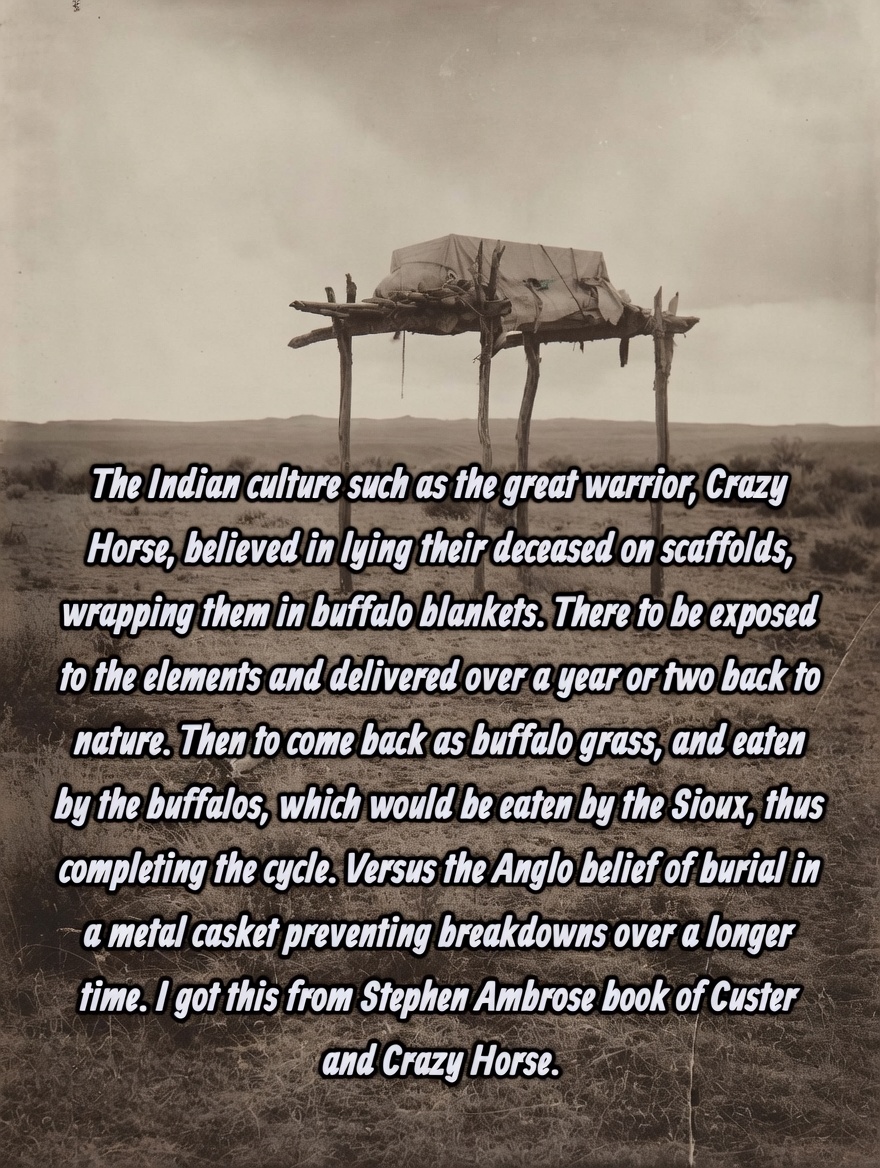
One of the most striking practices observed in Sioux culture was the use of scaffold burials. Unlike the Anglo-American tradition of interring the deceased in a coffin underground, Sioux people often laid their dead on elevated scaffolds constructed from wooden poles. The bodies were wrapped carefully in buffalo blankets, which were sacred items imbued with spiritual and cultural significance. This act served several purposes. Practically, it protected the body from immediate scavengers and the dampness of the ground. Spiritually, it allowed the deceased’s essence to remain close to the sky and the natural elements, connecting them to the sun, wind, and rain, which were understood as powerful forces within their cosmology.
Exposure on scaffolds could last for a year or more, during which time the natural elements would gradually decompose the body. This decomposition was not considered desecration but a sacred process. As the body returned to the earth, its nutrients nourished the land, allowing new life to flourish. This process reflected the Sioux belief in the cycle of life: the body became part of the grass, the grass fed the buffalo, and the buffalo in turn nourished the people. Such practices reinforced a philosophy of interdependence and ecological balance, emphasizing that death was an integral part of life and that human beings were inextricably connected to all other living things.
The scaffold burial also represented a public acknowledgment of the individual’s life and status within the community. In the case of prominent figures like Crazy Horse, this method of burial honored their contributions, valor, and spiritual significance. Placing them on a scaffold in a visible location allowed the community to observe rituals, offer prayers, and maintain a connection to the individual’s spirit. This communal aspect was vital in preserving the cultural memory of the deceased and transmitting their stories, teachings, and values to subsequent generations.
Buffalo blankets played a central role in these mortuary practices. Beyond their physical utility as warm coverings, buffalo blankets held spiritual significance. The buffalo was a sacred animal to the Sioux, providing sustenance, tools, and clothing while being central to their cosmology. Wrapping a body in a buffalo blanket symbolized both protection and respect, linking the deceased to the sacred animal and the wider spiritual world. The act demonstrated a deep understanding of symbolism, integrating physical, spiritual, and environmental considerations into a single ritual.
The Sioux worldview regarding death also emphasized transformation rather than permanence. The idea that a person’s physical body could return to the earth and continue to play a role in sustaining life was a reflection of their holistic understanding of existence. Humans, animals, plants, and natural forces were not separate entities but parts of a dynamic and interconnected system. By participating in this cycle through their burial practices, the Sioux affirmed their place within the ecosystem and acknowledged the enduring influence of every individual, even after death.
Contrasting this practice with Anglo-American burial customs highlights profound differences in worldview. In European-American traditions, the deceased were typically placed in a sealed coffin and interred in the ground. This method preserved the body for as long as possible, often emphasizing permanence and memorialization in a physical sense. However, it removed the body from the natural cycles of decomposition and reintegration into the environment. While these methods reflected cultural values around memory, respect, and individual legacy, they did not embody the same ecological and spiritual continuity that scaffold burials provided in Sioux culture.
Historically, scholars such as Stephen Ambrose have documented these Sioux practices, particularly in biographies and studies of figures like Crazy Horse and General Custer. Ambrose noted that scaffold burials were a deliberate choice grounded in deep spiritual meaning, rather than simply a pragmatic or aesthetic decision. By elevating the body and allowing it to return gradually to the earth, the Sioux ensured that the deceased remained part of the communal and ecological life of the tribe. This approach reflected centuries of accumulated wisdom and a worldview in which human life was inseparable from the natural world.
The cyclical philosophy of life and death also informed other aspects of Sioux culture. For example, oral traditions emphasized the importance of storytelling as a means of preserving history and transmitting values. Just as the physical body contributed to the natural cycle, stories contributed to the spiritual and cultural continuity of the community. Elders would pass down narratives of ancestors, heroic deeds, spiritual lessons, and survival strategies, ensuring that each generation maintained a strong connection to the past while navigating the present. This integration of ritual, ecology, and storytelling illustrates the holistic nature of Sioux cultural practices.
It is also important to recognize that these traditions were not static but evolved in response to environmental, social, and historical pressures. For instance, the arrival of European settlers, forced relocations, and the introduction of new diseases altered the contexts in which these practices could be carried out. Despite these challenges, the spiritual principles underlying scaffold burials and buffalo blanket rituals persisted. Even when adaptations were necessary, the focus on interconnectedness, respect for nature, and the cyclical understanding of life remained central to Sioux cultural identity.
The significance of these mortuary practices extends beyond historical observation. They provide insight into alternative understandings of death, ecology, and community. In modern times, there is growing interest in how Indigenous philosophies can inform sustainable living, environmental ethics, and holistic approaches to health and wellbeing. The Sioux example demonstrates how cultural practices can harmonize human life with ecological systems, highlighting lessons that remain relevant today. By studying and respecting these traditions, contemporary societies can gain a broader perspective on life, death, and the responsibilities humans have to the natural world.
Furthermore, these practices challenge assumptions about the universality of certain cultural norms regarding death. They show that beliefs about what constitutes respect, remembrance, and continuity vary widely across cultures. While Anglo-American practices emphasize preservation and individual memorialization, Sioux practices emphasize transformation, integration, and collective memory. Both approaches express deep values, but they operate within different cultural paradigms. Understanding these differences fosters cultural literacy, empathy, and a recognition of the richness and diversity of human experience.
In conclusion, the Sioux practice of placing their deceased on scaffolds, wrapped in buffalo blankets, is a profound expression of a worldview that intertwines life, death, and nature. Through these rituals, the Sioux honored their ancestors, sustained ecological cycles, and maintained a spiritual connection across generations. Figures like Crazy Horse exemplified these traditions, embodying the values, wisdom, and resilience of their communities. The contrast with Anglo-American burial practices underscores the cultural specificity of these traditions while highlighting universal themes of respect, remembrance, and the human desire to honor those who have passed.
By examining these practices, scholars, educators, and the broader public gain insight into Indigenous philosophies that integrate ecological awareness, community cohesion, and spiritual understanding. Scaffold burials and the use of buffalo blankets reflect a worldview that sees humans not as separate from nature but as participants in an ongoing cycle of life, death, and regeneration. These practices preserve cultural memory, reinforce communal bonds, and offer lessons that remain valuable for contemporary society. Through continued study, storytelling, and cultural preservation, the Sioux and other Indigenous peoples ensure that these traditions endure, providing inspiration and guidance for future generations.