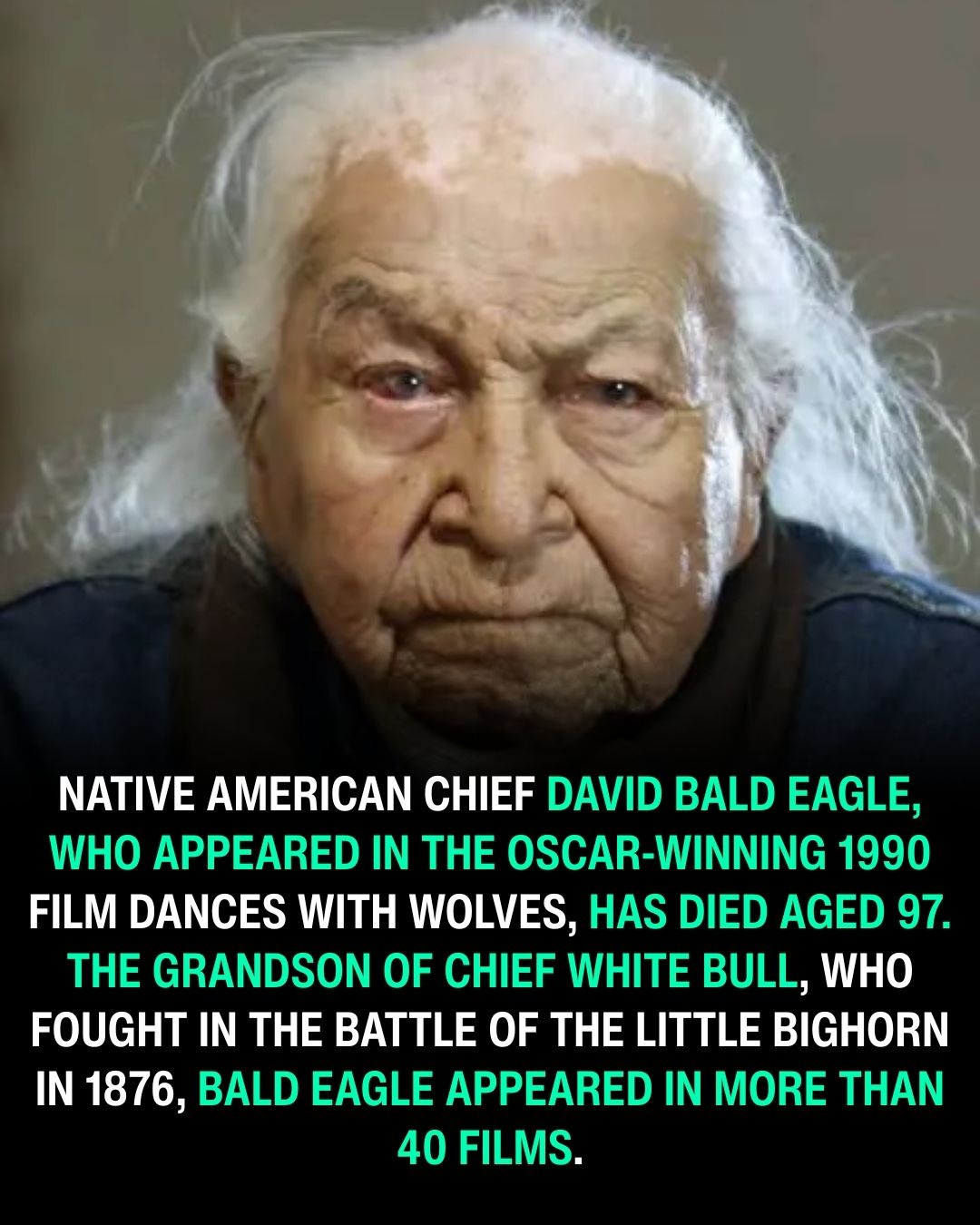
David Bald Eagle, whose presence commanded attention both on and off the screen, lived a life that bridged centuries, cultures, and experiences. Born into a world where Indigenous voices were often marginalized, he grew up carrying the weight and pride of his heritage while navigating a society in which Native Americans were rarely represented authentically in popular culture. Bald Eagle’s story is inseparable from the history of the Lakota people and the broader narrative of Native American resilience, connecting a legacy of warriors, treaties, struggles, and survival with the transformative power of storytelling and performance.
As the grandson of Chief White Bull, a participant in the historic Battle of the Little Bighorn alongside Sitting Bull, Bald Eagle inherited a living connection to a pivotal moment in American history. The battle itself, fought in 1876, symbolized both resistance and sovereignty, and its memory was carried forward through oral traditions, family stories, and cultural ceremonies. Growing up within this lineage, Bald Eagle was steeped in the values of bravery, community, and responsibility, traits that would later manifest in his approach to life, art, and advocacy. Every movement he made, every choice in service of storytelling, echoed the lessons of his ancestors.
Entering the world of cinema, Bald Eagle brought more than his presence; he brought authenticity. In an era when Native American characters were often portrayed as stereotypes, caricatures, or background figures, Bald Eagle imbued each role with depth, humanity, and dignity. His performance in the Academy Award-winning film Dances with Wolves remains iconic not only for the story it told but for the cultural authenticity he brought to the depiction of Lakota life. His movements, gestures, and expressions carried centuries of experience and cultural knowledge, allowing audiences to glimpse the complexities of Indigenous life with respect and nuance. Bald Eagle was more than an actor; he was a conduit through which the stories, histories, and traditions of his people were conveyed to the world.
Beyond the cinematic stage, Bald Eagle’s career spanned over 40 films and television productions, demonstrating remarkable versatility and enduring dedication. Each role he undertook was an opportunity to represent his people with pride, to resist the erasure of Native voices, and to challenge mainstream media’s simplistic portrayals. Even in productions where historical accuracy was less prioritized, Bald Eagle infused his characters with a moral center, grace, and cultural depth. He refused to allow the art form to reduce him or his heritage, asserting that Native American stories deserved to be told honestly and respectfully.
His influence extended beyond the camera. David Bald Eagle was revered as an elder and cultural ambassador within his community. Over the decades, he became a storyteller, educator, and representative of Lakota traditions, ceremonies, and history. His longevity allowed him to witness profound changes in the lives of Native peoples, from the challenges of assimilation and discrimination to the revival of cultural practices and the recognition of Indigenous contributions in broader society. He took on the role of bridging generations, teaching young people about the histories and values that had guided his ancestors, and inspiring them to maintain pride in their identity while navigating the modern world.
Throughout his life, Bald Eagle demonstrated resilience in multiple forms—physical, cultural, and emotional. Living to the age of 97, he witnessed nearly a century of change, from the continued struggles of Native communities to the evolution of Hollywood and the increasing opportunities for authentic representation. Yet, he remained committed to his principles and heritage, using both his visibility as an actor and his voice as a community elder to advocate for dignity, awareness, and respect. His work reinforced the notion that storytelling is not merely entertainment but a vital tool for preserving history, identity, and cultural continuity.
In addition to his acting, Bald Eagle participated in ceremonies, community events, and educational initiatives. He shared knowledge of Lakota language, songs, and dances, ensuring that these traditions were preserved for younger generations. His role as a cultural ambassador extended internationally, bringing attention to the richness of Lakota heritage and the ongoing contributions of Native Americans to art, culture, and history. Through his appearances and teachings, he demonstrated that the power of one individual could resonate across communities, bridging gaps of understanding and inspiring respect for Indigenous knowledge.
Bald Eagle’s life was also deeply intertwined with the history of Native American military service. Descended from a line of warriors, he embodied principles of courage, protection, and responsibility, demonstrating these traits not through combat but through leadership in cultural preservation and public engagement. Just as his grandfather had fought for sovereignty and survival, Bald Eagle fought through representation and storytelling, challenging stereotypes, educating audiences, and reclaiming narratives for his people. His career reflects a modern extension of the warrior ethos, adapted to cultural and artistic arenas.
His cinematic work in Dances with Wolves remains particularly significant. The film, set during the 19th century and portraying the interactions between white settlers and Native tribes, was groundbreaking for its attention to language, customs, and perspective. Bald Eagle’s performance lent credibility and emotional depth, embodying the dignity and resilience of his people. Viewers were offered an opportunity to witness Native culture with nuance, countering decades of reductive portrayals. His embodiment of these values on screen provided both a sense of historical continuity and a modern testament to the relevance of Native voices in shaping cultural narratives.
Moreover, Bald Eagle’s presence in more than 40 films extended his influence far beyond a single role. Each appearance became a platform for subtle education, for demonstrating authenticity, and for presenting Native characters as multi-dimensional, capable of agency, intelligence, and emotional depth. In doing so, he challenged long-standing Hollywood tropes, paving the way for future generations of Indigenous actors to portray their own cultures with respect and authority. His career illustrated that representation is not only about visibility but also about accuracy, integrity, and empowerment.
The historical significance of David Bald Eagle’s life is profound. As the grandson of Chief White Bull, he carried with him the memory of battles fought, treaties contested, and a people’s resilience in the face of colonization. Through his art and advocacy, he became a custodian of those histories, translating them into experiences that modern audiences could understand and empathize with. His work in film, television, and community engagement ensured that the stories of his ancestors remained alive, accessible, and honored.
Even in his later years, Bald Eagle continued to embody the principles that had guided him throughout life: courage, dignity, cultural pride, and a commitment to community. His long life allowed him to witness the evolving recognition of Native American contributions to both history and art. Through decades of service, storytelling, and mentorship, he ensured that the richness of Lakota culture was not forgotten, bridging historical experience with contemporary awareness.
David Bald Eagle’s passing at the age of 97 marks the conclusion of a remarkable life, yet his legacy endures. Through film, storytelling, mentorship, and public engagement, he ensured that the values, history, and culture of the Lakota Sioux continue to resonate. His life reminds us that courage is not only demonstrated on battlefields but also in the preservation of identity, the advocacy for truth, and the pursuit of dignity in every endeavor. He leaves behind a model of excellence, a blueprint for cultural stewardship, and an enduring testament to the power of Native voices in shaping history, culture, and art.
David Bald Eagle’s life extended far beyond the silver screen, deeply rooted in the cultural and historical legacy of the Lakota Sioux. Born into a lineage that traced directly to Chief White Bull, a leader who fought beside Sitting Bull at the Battle of the Little Bighorn in 1876, Bald Eagle carried a personal connection to pivotal moments in Native American history. This heritage imbued him with a profound sense of responsibility, honor, and resilience—qualities that informed both his public persona and his private life. He was a bridge between centuries, connecting the struggles and triumphs of his ancestors with the evolving realities of contemporary Native life.
The early years of Bald Eagle’s life were shaped by the teachings of his community. He absorbed stories of bravery, survival, and resistance passed down orally through generations. These narratives, rich in moral lessons and historical significance, emphasized the values of courage, loyalty, and protection of one’s people. From these formative experiences, Bald Eagle internalized a warrior ethos that would guide him throughout life, manifesting not in battlefields alone but in the defense of cultural heritage, the integrity of storytelling, and the dignity of representation. These principles were deeply embedded in his worldview, shaping his approach to performance, mentorship, and public engagement.
Entering the world of film during an era when Native Americans were frequently misrepresented or erased from mainstream media, Bald Eagle brought authenticity and gravitas to every role. His appearance in the Academy Award-winning film Dances with Wolves remains a landmark moment in cinema history, providing audiences with an unprecedented glimpse into Lakota culture. The film, which emphasized language, rituals, and community practices, gained credibility through his presence. His performance conveyed subtle nuances—gestures, posture, facial expressions—that reflected lived experience rather than constructed stereotypes. Through his craft, Bald Eagle demonstrated that authentic representation is both possible and essential, showing that Native Americans can convey their history and culture with depth, dignity, and emotional resonance.
His career spanned more than four decades, encompassing over 40 film and television projects. Each performance served not only as entertainment but also as cultural advocacy. Bald Eagle consistently brought respect and humanity to Indigenous roles, rejecting caricatured portrayals that had historically dominated Hollywood. In doing so, he provided a counter-narrative to centuries of misrepresentation, showing audiences the complexity, intelligence, and resilience of Native peoples. His influence extended beyond acting; by embodying authenticity, he educated viewers and inspired younger generations of Indigenous actors to pursue roles with integrity and pride.
Bald Eagle’s contribution to Native cultural preservation was equally significant outside of film. He served as an elder, storyteller, and educator within his community. He shared knowledge of Lakota language, rituals, and history, helping to ensure that these traditions were passed down to younger generations. In public forums and community events, he emphasized the importance of retaining cultural identity while navigating modern life. His commitment to teaching and mentorship was an extension of the same courage and responsibility that defined his ancestors—he understood that the survival of cultural memory required active participation and advocacy.
One of the most compelling aspects of Bald Eagle’s life was the interplay between his personal history and broader historical events. Being the grandson of Chief White Bull meant that he carried with him not only the lineage of a warrior but also the memory of colonial pressures, displacement, and the systemic challenges faced by Native Americans in the United States. He lived through decades of social change, witnessing both the marginalization and the resurgence of Indigenous communities. Through his films, his public appearances, and his work within his community, Bald Eagle became a living connection to these histories, embodying their lessons while actively shaping contemporary understanding of Native American identity.
Bald Eagle’s experiences in Hollywood also reflected larger patterns of representation and advocacy. During much of his career, Indigenous actors faced limited opportunities and often were restricted to roles that reinforced stereotypes. Bald Eagle navigated these limitations by carefully selecting roles that allowed him to present authentic portrayals, demonstrating the intellectual and emotional capacity of Native Americans. His performances were characterized by dignity, restraint, and subtlety, emphasizing cultural specificity and lived experience. By doing so, he contributed to a gradual transformation in the way Indigenous peoples were depicted in film and television.
His legacy in film is intertwined with his legacy as a cultural ambassador. Through performances, interviews, and mentorship, he highlighted the richness of Lakota heritage. Viewers could witness a culture of ritual, respect for the land, and communal responsibility—not as exoticized spectacle, but as living, vibrant tradition. Bald Eagle’s ability to communicate these cultural elements subtly, through the language of gesture, expression, and presence, reinforced the idea that Indigenous knowledge and perspectives are integral to understanding history and identity in the United States.
Beyond film, Bald Eagle’s contributions were personal and community-centered. He participated in ceremonial activities, shared oral histories, and guided younger members of his tribe in cultural practices. His longevity allowed him to serve as a repository of knowledge, a living link between historical events and modern cultural life. His storytelling was not merely entertainment; it was a pedagogical tool, teaching values of courage, integrity, and perseverance while reinforcing communal bonds.
David Bald Eagle’s life also exemplified the principle of resilience, both individual and collective. Over nearly a century, he endured personal challenges, societal marginalization, and the physical demands of performance and travel, yet he remained committed to his mission of cultural preservation. This resilience mirrored the broader experience of Native Americans who survived forced displacement, systemic oppression, and cultural erasure. Through his example, Bald Eagle demonstrated how resilience can be expressed not only in survival but in the active cultivation and transmission of cultural values.
His work in film, combined with his role as an elder and cultural ambassador, ensured that Lakota traditions and history reached audiences far beyond his community. Through each performance and public appearance, he educated, inspired, and challenged prevailing narratives. Audiences gained access to a nuanced portrayal of Indigenous life—its joys, struggles, and complexities—through a lens grounded in authenticity. Bald Eagle’s ability to weave personal history, cultural knowledge, and artistic expression created a powerful medium for understanding and empathy, bridging gaps between communities and fostering respect for Native American heritage.
The passing of David Bald Eagle at the age of 97 marks the conclusion of an extraordinary life, yet his legacy remains vibrant. His films continue to educate and inspire, his storytelling preserves the knowledge of generations, and his example provides a template for integrating cultural heritage with modern life. By living with integrity, advocating for authenticity, and demonstrating courage in all aspects of his work, Bald Eagle leaves a lasting impact on both Indigenous and non-Indigenous communities. His life serves as a reminder of the enduring power of storytelling, the importance of representation, and the capacity of one individual to honor a history while shaping the future.
Through nearly a century of life, Bald Eagle bore witness to profound historical, social, and cultural transformations. From the legacies of the Lakota Sioux and the memory of battles fought for survival and sovereignty, to the evolution of Hollywood and the representation of Indigenous peoples on screen, he inhabited a unique space at the intersection of history and modernity. His story demonstrates that the act of living with purpose—bridging the past with the present, honoring ancestors while educating future generations—can leave a profound imprint on culture and collective memory.
David Bald Eagle’s life was a tapestry of courage, culture, and storytelling, woven from threads of heritage, history, and artistry. In each role he portrayed, in each story he told, and in every act of mentorship and cultural preservation, he reinforced the values that shaped his ancestors and inspired countless others. His century-long life stands as a testament to the power of resilience, the enduring significance of Native traditions, and the transformative potential of authentic representation. The story of David Bald Eagle will continue to resonate, not merely as a record of achievements but as an ongoing inspiration, a reminder of what it means to live with courage, honor, and an unwavering commitment to preserving the soul of one’s culture.
Even as the years progressed, David Bald Eagle remained a vital link between the past and the present, a living repository of Lakota culture and history. His longevity provided a unique perspective: he had witnessed nearly a century of change, from the aftermath of historical injustices faced by Native Americans to the evolution of media and film representation. Throughout, he maintained a steadfast commitment to preserving his heritage, ensuring that the stories of his people—both triumphs and struggles—were shared authentically with audiences across generations. His life demonstrated that cultural preservation is not a static endeavor but an ongoing dialogue between the past and the present, mediated by memory, storytelling, and example.
Bald Eagle’s impact extended into education and advocacy. In schools, community centers, and cultural programs, he shared knowledge of traditional Lakota ceremonies, language, and philosophies. He emphasized the importance of understanding history from Indigenous perspectives, conveying lessons about resilience, honor, and interconnectedness with the natural world. These teachings offered more than cultural insight; they provided moral guidance and inspiration for young Native Americans navigating the complexities of contemporary society. By fostering pride in cultural identity, he helped ensure that future generations would maintain a connection to their roots while participating confidently in broader cultural and social spheres.
In his cinematic work, Bald Eagle’s presence brought credibility to projects seeking to portray Indigenous characters and histories with accuracy. His roles were rarely just performance; they were acts of cultural transmission. He understood that every gesture, inflection, and expression could convey not only narrative meaning but also the values, customs, and worldview of the Lakota people. This dedication to authenticity distinguished his work and left an enduring influence on how Indigenous characters are portrayed in film. By insisting on dignity and depth in each role, he challenged the entertainment industry to elevate its representation of Native Americans, creating a standard for respect and realism that continues to influence filmmakers today.
Bald Eagle’s life also highlighted the broader contributions of Native Americans to American society beyond the arts. Like his ancestors, who demonstrated courage and strategic acumen in historical conflicts, he exhibited leadership, wisdom, and resilience in his interactions both within his community and with the wider public. He served as a role model for civic engagement, demonstrating that leadership can manifest through cultural stewardship and education as much as through traditional positions of authority. His example reinforced the idea that preserving heritage and advocating for accurate representation are forms of leadership with lasting societal impact.
Furthermore, David Bald Eagle’s experiences underscored the interconnection between personal history and collective memory. Carrying the legacy of his grandfather, Chief White Bull, he embodied a lineage that had resisted colonization and fought for sovereignty. Through his life’s work, he honored that legacy by ensuring that the stories of his people were neither forgotten nor simplified. Whether in film, through public speaking, or in ceremonial leadership, he transmitted the values, lessons, and spirit of past generations to contemporary audiences. This continuity reinforced the cultural resilience of the Lakota and highlighted the importance of individual agency in preserving collective history.
His role as a storyteller was especially significant. Beyond scripted performances, Bald Eagle shared narratives rooted in lived experience and ancestral knowledge. These stories conveyed ethical principles, historical context, and spiritual insights, often inspiring listeners to reflect on their own responsibilities and connections to community and environment. In doing so, he positioned storytelling as both a cultural practice and a pedagogical tool, bridging the gap between entertainment, education, and cultural preservation. His ability to communicate these narratives with authenticity made him a respected figure both within Indigenous communities and among wider audiences interested in understanding Native history and culture.
Even in his final years, Bald Eagle’s presence continued to resonate. He participated in interviews, documentaries, and cultural initiatives, offering reflections on his career, his heritage, and the responsibilities that came with both. His commentary often intertwined personal anecdotes with broader cultural insights, providing a rare and invaluable perspective on nearly a century of social, cultural, and artistic evolution. Audiences listening to him could hear the weight of lived experience combined with a forward-looking optimism, a belief that cultural knowledge, once preserved and shared, could empower future generations.