@user106845305
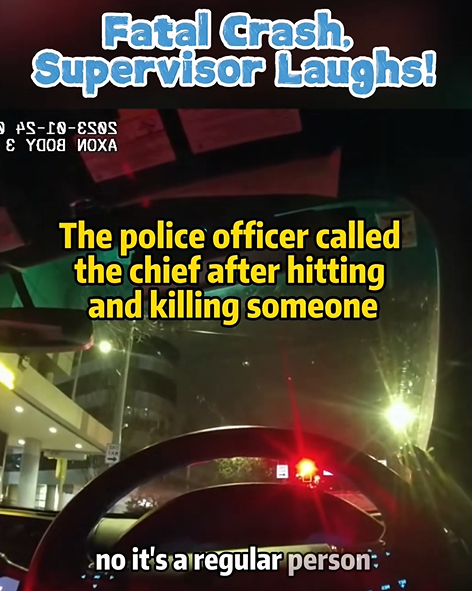
In a deeply troubling and widely publicized incident, a fatal traffic crash in Seattle brought to light not only the tragic loss of a young life but also the profoundly inappropriate behavior of law enforcement personnel in its immediate aftermath. The incident centers on a 26-year-old woman, Jaahnavi Kandula, who was killed when a police officer, Kevin, struck her vehicle during an emergency response. Footage and audio recordings captured from the patrol car of a police supervisor, Daniel, reveal a sequence of events that sparked widespread public outrage and prompted serious legal, professional, and institutional scrutiny. The case underscores the importance of professional conduct, ethical responsibility, and accountability in situations involving loss of life, particularly when law enforcement personnel are involved.
The crash itself occurred during the night under circumstances that required careful navigation and emergency response by the police officer. Officer Kevin was operating a patrol vehicle at high speed, and in the course of his duties, he struck Jaahnavi Kandula, resulting in her death. While accidents in emergency scenarios are sometimes legally mitigated due to situational exigencies, the true gravity of the incident is compounded by the conduct that followed. Within minutes of the crash, Daniel, a supervising officer, made a phone call discussing the fatality, and the content of this conversation revealed a shocking lack of professionalism, empathy, and respect for the victim.
During the conversation, Daniel made dismissive and highly inappropriate remarks, laughing as he discussed the incident. He suggested that the city could “just write a check” for $11,000 as if the human life lost could be quantified in monetary terms and then trivialized. He further stated that the victim had “limited value,” comments that are morally indefensible and deeply offensive. The fact that these remarks were captured on a body-worn camera and recorded in real time elevated the seriousness of the misconduct, as they provided incontrovertible evidence of both the content and the tone of his discussion. The supervisor only ceased the inappropriate commentary upon realizing that his microphone was still recording, highlighting a level of carelessness that exacerbated the public perception of insensitivity and negligence.
The leak of this audio triggered immediate public backlash, with citizens, advocacy groups, and community leaders expressing outrage over both the fatal crash and the subsequent commentary. The response was not merely symbolic: protests were organized, public statements were demanded, and the mayor, as well as the police chief, issued formal apologies acknowledging the inappropriate behavior and pledging accountability. This sequence of public response illustrates how incidents involving law enforcement are not contained to legal or administrative domains alone but carry significant societal implications, particularly when they involve human life and the perceived devaluation of a victim.
Professionally, the repercussions for the personnel involved were severe but varied in scope. Supervisor Daniel was initially placed on 30 days of unpaid leave and required to undergo retraining. However, after further review and in light of continued public pressure, he was ultimately terminated in July 2024. This action demonstrates the seriousness with which administrative oversight addresses failures in judgment, professional conduct, and ethical responsibility, particularly when public confidence in law enforcement is at stake. For Officer Kevin, the consequences were somewhat different. While he faced no criminal charges related to the fatal crash, he was fined $5,000 for violations associated with emergency driving. Additionally, his employment with the police department was terminated in January 2025, reflecting both the legal review of his actions and the broader institutional need to maintain public trust.
The civil dimension of the case further underscores the profound consequences of the incident. In September 2024, Kandula’s family filed a $110 million lawsuit against the city of Seattle and Officer Kevin. While the case was pending at the close of the video coverage, the lawsuit represents an attempt to seek accountability, compensation, and recognition of the human loss suffered by the family. Civil litigation in these contexts serves multiple purposes: it provides recourse for those directly affected, incentivizes institutional change, and publicly documents the seriousness of procedural or ethical failures. The combination of public outrage, administrative discipline, and civil action exemplifies how multifaceted accountability operates in high-profile cases involving law enforcement.
Analyzing the incident reveals critical themes in police oversight, crisis management, and professional ethics. First, the behavior of a supervising officer in the immediate aftermath of a fatality can have consequences as significant as the original operational incident. Daniel’s dismissive commentary not only caused public outrage but also highlighted failures in ethical judgment, situational awareness, and professional standards. Second, it underscores the necessity of training in post-incident protocol, emphasizing the importance of empathy, communication, and ethical behavior even under stress. Officers and supervisors must understand that their responses following critical incidents shape public perception, institutional trust, and legal outcomes as much as the operational decisions made during the event.
The psychological dimensions are equally important. Supervisor Daniel’s behavior demonstrates the dangers of detachment and normalization of harm within law enforcement cultures. Making flippant remarks about a human life immediately after a fatal incident reveals a lack of emotional intelligence and professional decorum, which can severely undermine public confidence. Conversely, the responses from the public, advocacy groups, and media reflect society’s expectation that law enforcement personnel not only enforce the law but also demonstrate ethical integrity, moral responsibility, and human compassion in high-stakes situations.
Legally, the incident highlights the interrelation of administrative, civil, and professional oversight mechanisms. While criminal liability was not pursued against Officer Kevin for the fatal crash, administrative termination, fines, and civil suits collectively enforced accountability. Supervisor Daniel’s termination and retraining reflect how agencies address behavior that, while not criminal, violates ethical, professional, or public trust standards. This multi-tiered approach ensures that law enforcement remains accountable across operational, administrative, and societal dimensions, reinforcing the principle that misconduct, negligence, or ethical lapses carry consequences.
Finally, the Seattle incident emphasizes the broader societal role of transparency, evidence, and public engagement. Bodycam recordings, audio evidence, and public reporting serve as critical mechanisms to ensure that incidents are evaluated objectively. They allow for independent review, inform public understanding, and provide material for both legal and administrative actions. The case illustrates how modern law enforcement operates in an environment of increased visibility, where public expectations for ethical conduct, accountability, and transparency are high, and deviations are swiftly scrutinized.
The Seattle fatal crash involving Officer Kevin and Supervisor Daniel is emblematic of the intersection between operational decision-making, ethical responsibility, and public trust in law enforcement. At the center of the controversy is the human life lost—26-year-old Jaahnavi Kandula—whose death became a flashpoint for examining not only the immediate actions of the responding officer but also the culture, oversight, and accountability within the police department. Kandula’s tragic death underscores the profound consequences that can arise from even momentary lapses in judgment, heightened risk-taking during emergency response, or mismanagement of operational procedures. From the moment of the crash, through the immediate aftermath and subsequent administrative, legal, and civil actions, the incident illustrates the complex dynamics of accountability in modern policing.
From a procedural standpoint, the incident highlights the challenges associated with emergency driving and high-speed police responses. Officer Kevin, responding to an operational scenario, navigated his vehicle in a manner that ultimately led to the fatal collision. Emergency response protocols allow for certain deviations from standard traffic regulations to ensure public safety, respond to urgent calls, and prevent harm to others. However, these exceptions do not absolve officers from responsibility if actions are deemed reckless, negligent, or disproportionate to the circumstances. The $5,000 fine imposed on Officer Kevin for emergency driving violations reflects this balance: while the law acknowledges the urgency of police responses, it simultaneously holds officers accountable for adherence to safety standards and professional judgment. Such measures serve to clarify the boundaries of lawful emergency operations and reinforce the principle that public safety cannot be compromised, even under high-pressure conditions.
The behavior of Supervisor Daniel in the immediate aftermath of the crash introduces a distinct ethical dimension to the case. Supervisors occupy a dual role: they must provide operational oversight, ensure adherence to policy, and act as a moral exemplar for subordinates. Daniel’s dismissive, flippant remarks about Kandula’s death violated not only ethical norms but also the fundamental principles of empathy, respect for human life, and professional responsibility. Suggesting that the city could “just write a check” and trivializing the victim’s value represents a profound failure of judgment, one that exacerbated public outrage and eroded trust in institutional oversight. These comments, captured inadvertently on body-worn camera audio, provided incontrovertible evidence of unprofessional behavior, illustrating the vital role of recording technology in ensuring transparency and accountability within law enforcement agencies.
Public reaction to the incident was swift and intense, underscoring the societal expectation that officers and supervisors conduct themselves ethically, especially in situations involving loss of life. Outrage manifested not only through protests and public statements but also in demands for administrative and legal action against those responsible. The mayor and police chief’s formal apologies reflected both recognition of the seriousness of the misconduct and an effort to restore public confidence. This incident highlights how law enforcement decisions, statements, and demeanor in the immediate aftermath of critical events carry enormous weight, shaping public perception and influencing institutional legitimacy. Ethical lapses or insensitivity during these moments can magnify the consequences of operational errors, emphasizing the need for professionalism under extreme pressure.
The civil lawsuit filed by Kandula’s family, totaling $110 million against both Officer Kevin and the city of Seattle, illustrates the legal mechanisms available to hold institutions and individuals accountable for harm caused by law enforcement actions. Civil litigation serves multiple functions: it seeks to compensate the victims’ families, provide a public record of accountability, and catalyze policy and procedural reform within the agencies involved. Civil suits, while separate from criminal or administrative proceedings, often compel departments to reevaluate training, supervision, and operational protocols. In this case, the lawsuit underscores the societal imperative to ensure that law enforcement officers are held to consistent standards of conduct, particularly when their actions result in the loss of life or serious injury.
Examining the psychological dimensions of the incident provides further insight into the behavior of both the officer and the supervisor. In the aftermath of a fatal crash, officers frequently experience intense emotional stress, including shock, guilt, and heightened cognitive load. These factors can influence behavior, communication, and decision-making. Supervisor Daniel’s inappropriate remarks may reflect a form of psychological coping mechanism, albeit expressed unprofessionally and insensitively, where humor or detachment is used to manage emotional stress. While this explanation does not excuse the behavior, it highlights the need for robust psychological support, counseling, and stress management protocols for law enforcement personnel involved in critical incidents. Agencies that provide such support are better positioned to mitigate the risk of misconduct or unprofessional behavior during high-stakes situations.
Institutionally, the incident prompts examination of systemic issues in police culture, supervision, and accountability. The fact that Daniel was initially given 30 days of unpaid leave and required retraining suggests that administrative review processes can sometimes delay decisive action or fail to address the full scope of misconduct. Public pressure ultimately led to his termination, demonstrating how societal oversight and media exposure can play a crucial role in ensuring accountability. Such dynamics reveal the importance of proactive institutional policies that prioritize ethical conduct, establish clear consequences for misconduct, and provide robust channels for review that do not rely solely on external scrutiny to enforce accountability.
The actions of Officer Kevin and the supervisory response also raise questions regarding the adequacy of training and operational preparedness. High-speed driving, emergency response maneuvers, and accident avoidance are critical components of law enforcement skill sets. Simultaneously, ethical training, crisis management, and post-incident communication are equally essential. The incident illustrates that deficiencies in any of these areas—whether procedural knowledge, situational judgment, or ethical reasoning—can result in compounded negative outcomes, including loss of life, public distrust, and legal consequences. Integrating comprehensive scenario-based training that addresses both operational and ethical challenges is essential for equipping officers and supervisors to manage emergencies safely, professionally, and ethically.
The societal and media response to the incident emphasizes the role of transparency in modern policing. The release of bodycam footage and audio recordings allowed the public to directly observe the misconduct and evaluate the responses of officers and supervisors. Such transparency is critical in fostering trust between law enforcement and the communities they serve. It also reinforces the principle that accountability is multidimensional: operational decisions, supervisory oversight, ethical conduct, and public communication all contribute to institutional legitimacy. The Seattle case illustrates that lapses in any of these dimensions can have cascading effects, including legal challenges, public outrage, and long-term damage to institutional credibility.
Ethically, the case underscores the fundamental importance of empathy and respect for human life in law enforcement. The comments made by Supervisor Daniel were not only inappropriate but ethically indefensible, reflecting a disregard for the dignity of the victim and her family. Ethical training must emphasize that the value of human life cannot be trivialized, and that words, tone, and demeanor matter as much as operational decisions in maintaining public trust and moral authority. This lesson extends beyond individual incidents, shaping departmental culture, policy enforcement, and the professional development of officers and supervisors.
Finally, the long-term implications of the Seattle fatal crash incident extend to policy reform, institutional accountability, and community engagement. The termination of both Daniel and Kevin, the civil lawsuit filed by Kandula’s family, and the public scrutiny surrounding the case collectively underscore the necessity of a multi-layered approach to accountability. Policies regarding emergency response driving, post-incident behavior, supervisory oversight, and ethical training must be continually evaluated and updated to prevent similar failures in judgment. Moreover, the incident highlights the importance of community engagement, transparent communication, and responsiveness to public concerns in maintaining trust and legitimacy within law enforcement institutions.
Beyond procedural and legal considerations, the Seattle fatal crash incident emphasizes the importance of post-incident conduct and crisis management for law enforcement supervisors. The immediate actions and communications of supervisory personnel play a critical role in shaping public perception, internal accountability, and institutional integrity. Supervisor Daniel’s flippant and dismissive remarks about the victim reveal the consequences of failing to maintain professionalism in emotionally charged circumstances. While officers may experience stress, shock, or cognitive overload following a fatal incident, these pressures do not absolve them of the responsibility to respond ethically, maintain empathy, and communicate with care. Agencies must ensure that supervisory personnel receive training specifically focused on post-incident communication, ethical decision-making, and crisis management, emphasizing that the handling of a situation after a critical event is just as important as the actions taken during the event itself.
The psychological dimensions of the incident are also notable. Both officers and supervisors are placed in extraordinarily high-stress environments where split-second decisions carry significant consequences. In such scenarios, cognitive overload, emotional arousal, and stress responses can influence judgment and behavior. Daniel’s inappropriate laughter and dehumanizing comments may reflect attempts to cope with the stress and emotional weight of the incident. However, these reactions highlight the need for robust psychological support, counseling, and structured debriefing for officers and supervisors following traumatic incidents. Such support mechanisms not only help personnel process events safely but also reduce the likelihood of unprofessional behavior, reinforce ethical standards, and safeguard public trust.
The incident also underscores the critical role of objective evidence in modern law enforcement accountability. The inadvertent recording of Daniel’s conversation via body-worn camera provided irrefutable evidence of unprofessional conduct. In the current era, technology serves as a vital tool for transparency, ensuring that both procedural decisions and post-incident behavior are documented for review by supervisors, legal authorities, and the public. Bodycams, audio recording, and video surveillance collectively create a system of checks and balances that protect the public, uphold ethical standards, and offer legal clarity. This incident exemplifies how objective evidence can serve as a corrective mechanism, revealing misconduct that might otherwise remain hidden or unchallenged.
The public’s reaction to the incident is another important aspect to consider. Outrage over the dismissive remarks made about a deceased individual reflects societal expectations regarding the ethical conduct of law enforcement personnel. Public trust is foundational to the legitimacy of policing institutions, and any perception of insensitivity, negligence, or misconduct can significantly erode confidence. The protests, demands for accountability, and public statements issued by the mayor and police chief following the incident illustrate the mechanisms through which communities assert influence and ensure that institutional failures are addressed. This interplay between law enforcement actions and public scrutiny highlights the importance of transparency, responsiveness, and ethical integrity in maintaining legitimacy and fostering community trust.
The legal and civil outcomes further illustrate the multi-layered accountability framework governing law enforcement conduct. Officer Kevin faced fines for emergency driving violations and was eventually terminated, while Supervisor Daniel was fired following public pressure and administrative review. Additionally, the civil lawsuit filed by Kandula’s family represents a separate avenue of accountability, seeking both redress for the family’s loss and systemic reform to prevent similar tragedies. These legal and administrative processes demonstrate the interconnected nature of accountability in policing: operational errors, supervisory misconduct, and institutional failures are addressed through multiple channels simultaneously, reinforcing the principle that misconduct cannot be insulated from consequences.
From a policy and training perspective, the incident emphasizes the need for comprehensive emergency response protocols, ethical oversight, and scenario-based training. Officers must be trained not only in the technical aspects of high-speed driving and accident avoidance but also in post-incident management, crisis communication, and emotional intelligence. Supervisors, in particular, must understand the weight of their words and decisions following critical events, recognizing that their behavior sets a tone for subordinates and shapes public perception. Scenario-based simulations, role-playing exercises, and bodycam review can provide invaluable learning opportunities, reinforcing best practices and highlighting the consequences of misjudgment or unprofessional conduct.
Finally, the incident underscores a broader societal lesson: accountability in law enforcement is not solely about operational compliance but also about ethical responsibility, human empathy, and institutional integrity. The Seattle fatal crash demonstrates how actions taken before, during, and after a critical incident collectively define public trust in policing. It illustrates that even a single failure of judgment—such as dehumanizing comments about a victim—can reverberate widely, influencing public perception, media coverage, legal proceedings, and institutional credibility. The incident also shows that transparency, technological documentation, and civic engagement are essential components of a robust system of accountability, ensuring that law enforcement personnel are held to the standards expected by both the public and the institutions they serve.