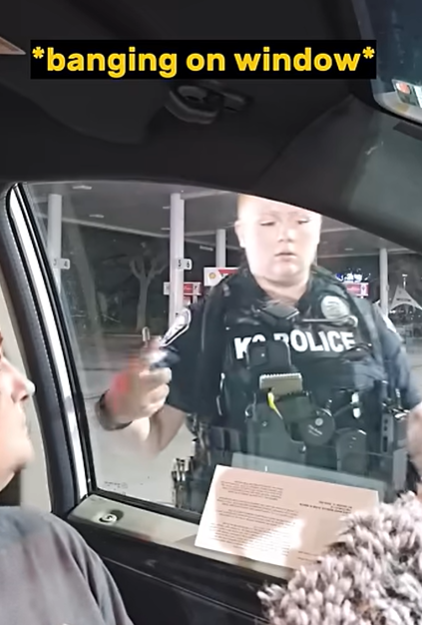
The K9 traffic stop dispute provides a complex scenario illustrating the intersection of law enforcement procedures, individual rights, and public scrutiny. The video captures a tense encounter between a police officer and a driver during a routine vehicle inspection involving a patrol dog. The interaction highlights the legal nuances of probable cause, the procedural authority of law enforcement, and the ways in which citizens assert and negotiate their constitutional protections during routine traffic stops.
The incident begins with a K9 officer approaching the vehicle, physically signaling the start of the interaction by banging on the window. The officer demands that the driver step out of the vehicle to allow the patrol dog to perform an exterior sniff, commonly known as a “free air sniff,” intended to detect the presence of illicit substances outside the vehicle. From a procedural standpoint, this type of sniff is generally considered permissible under established legal precedents, provided that it does not constitute an unreasonable search. However, the initiation of the encounter immediately sets the stage for tension, as the driver questions the necessity and legality of the search.
The driver’s response is characterized by a firm assertion of legal rights. She challenges the officer’s request, questioning whether probable cause is required for the sniff and expressing concern over the justification for the stop. The officer clarifies that probable cause is not required for a vehicle sniff conducted from outside the vehicle, reflecting the legal principle that a dog sniff conducted in public view is not considered a search under the Fourth Amendment. Despite this explanation, the driver’s skepticism and vocal challenge frame the encounter as confrontational. She complies with the directive to turn off the engine and exit the vehicle but labels the stop as “retaliatory,” suggesting that she perceives personal or legal overreach. This interaction demonstrates how legal knowledge, assertiveness, and situational awareness can shape the dynamics of a traffic stop, transforming a routine inspection into a complex negotiation of rights and authority.
Once outside the vehicle, the driver films the scene, narrating her understanding of the situation and expressing confidence that the vehicle contains no contraband. Her commentary, including a light-hearted acknowledgment of the possibility of false alerts on the door handles, reflects both a sense of agency and a form of digital documentation. The use of recording devices in these interactions has become increasingly prevalent, serving as a tool for accountability, evidence preservation, and public awareness. The driver’s recording underscores the evolving dynamics of civilian engagement in law enforcement interactions, where transparency and the documentation of procedural conduct influence both perception and behavior.
A secondary confrontation occurs when a second officer approaches, demanding the driver’s license and registration. The driver refuses to physically hand over the documents, asserting that she is legally obligated only to “present” them for visual inspection. This subtle yet significant distinction illustrates the legal nuances surrounding compliance during traffic stops. While law enforcement may request physical possession for convenience or procedural efficiency, the driver’s insistence on the minimum legal requirement emphasizes the boundaries of individual rights and the careful negotiation that can occur during these encounters. Such exchanges highlight the complex interplay between authority, legal interpretation, and citizen assertion, demonstrating that routine procedures are often fraught with nuanced challenges to personal and constitutional protections.
Throughout the encounter, the patrol dog conducts its sniffing procedure around the vehicle. Ultimately, the dog does not alert to the presence of any illicit substances, reinforcing the procedural integrity of the search while simultaneously validating the driver’s assertion of compliance with the law. The outcome demonstrates the balance between enforcement authority and evidentiary standards: the search was conducted in accordance with procedural norms, yet the absence of incriminating findings provides a real-world validation of the driver’s legal rights and expectations.
From a psychological perspective, the incident illustrates the dynamics of stress, authority, and compliance. The driver’s assertive questioning and calm, recorded narration reflect both situational awareness and confidence in her legal knowledge. The officers’ insistence on compliance, combined with procedural explanations, reflects an attempt to maintain authority, ensure safety, and adhere to departmental guidelines. The interaction captures the tension inherent in traffic stops involving K9 units, where legal rights, procedural authority, and individual perception intersect, creating a scenario that demands careful navigation of human behavior, communication, and situational judgment.
Societally, the encounter underscores the broader conversation about law enforcement accountability, public rights, and civilian engagement. The widespread availability of recording technology, such as dash cams and personal devices, has increased transparency and public oversight, allowing citizens to document interactions and assert their understanding of legal rights. This case illustrates the ways in which modern technology empowers individuals to participate actively in law enforcement oversight, providing both evidence for legal review and tools for public education.
The environmental and procedural context of the incident also influences the dynamics. The traffic stop occurs in a public, controlled environment, which allows officers to safely conduct the sniff while maintaining situational awareness. The presence of the K9 unit introduces additional procedural considerations, including handling, containment, and safety protocols. The structured approach ensures that searches remain legally compliant while also mitigating potential risks to both civilians and officers.
Ethically, the incident highlights the delicate balance between authority and respect for individual rights. The officers acted within their procedural guidelines, conducting a lawful exterior sniff. At the same time, the driver exercised her rights responsibly, asserting legal boundaries without escalating to aggression. This balanced dynamic illustrates how law enforcement and civilians can navigate legal frameworks with mutual accountability, demonstrating the importance of knowledge, communication, and ethical comportment in maintaining both safety and legitimacy.
Finally, the incident serves as a case study in procedural integrity, civilian empowerment, and the evolving nature of police-citizen interactions. The driver’s recording, assertive engagement, and adherence to legal rights exemplify responsible civilian participation, while the officers’ methodical approach underscores the necessity of procedural compliance and careful documentation. The combination of technology, legal knowledge, and situational awareness ensures that traffic stops can be conducted effectively, safely, and ethically, providing a framework for understanding how rights and authority intersect in contemporary law enforcement scenarios.
The K9 traffic stop dispute exemplifies a highly complex intersection of constitutional rights, law enforcement authority, civilian awareness, and procedural safeguards. At the heart of the incident is the driver’s insistence on asserting her legal rights in a high-stress, highly controlled police interaction. While K9 units are a common tool for detecting contraband, their use in routine traffic stops introduces specific legal and ethical considerations. The driver’s vocal challenge of the officer’s authority and her nuanced understanding of her obligations—presenting documents visually rather than physically handing them over—illustrates the growing awareness among the public of constitutional and statutory rights during interactions with law enforcement.
From a legal standpoint, the incident revolves around the Fourth Amendment principle, which protects citizens from unreasonable searches and seizures. Exterior K9 sniffs are generally considered non-intrusive searches if conducted from public spaces without manipulation of the vehicle. In this case, the officer argued that probable cause was not required, aligning with established legal precedent that canine sniffing of an exterior vehicle surface does not constitute a search in the traditional sense. The driver’s insistence on understanding this nuance demonstrates how citizens are increasingly knowledgeable about their legal boundaries and are capable of asserting these rights without escalating to hostility or aggression. This illustrates a critical evolution in police-citizen dynamics, where knowledge and awareness shape the interaction and influence outcomes.
The officer’s behavior, including banging on the window and demanding the driver exit the vehicle, represents standard procedural enforcement in K9 operations. The initial physical signal—the banging on the car—serves as a non-verbal command intended to assert authority and ensure compliance. However, this action also introduces psychological pressure, as drivers are forced to process both verbal and non-verbal cues under stress. Studies in psychology show that compliance behavior in high-pressure scenarios is influenced by perceived authority, immediate threat assessment, and cognitive load. The driver’s measured yet assertive response illustrates how awareness of rights can counteract coercive elements while maintaining procedural legitimacy. By recording the interaction, she both asserts her rights and documents the officer’s conduct, creating an evidentiary record that reinforces accountability.
The secondary confrontation with the second officer, who demanded that the driver physically hand over her license and registration, further highlights the legal gray areas often present in traffic enforcement. While officers may request physical submission for procedural efficiency, legally, drivers are only required to present documents for visual inspection. The driver’s refusal to hand over the documents reflects her understanding of this subtle yet important distinction, emphasizing that compliance and legal rights are not always synonymous. This aspect of the incident underscores the importance of both law enforcement training and public education: officers must understand the limits of their authority and the legal standards governing interactions, while civilians must recognize their rights and responsibilities during enforcement activities.
Psychologically, the dynamics of this stop reveal multiple stressors and cognitive processes at play. For the driver, asserting legal rights in a high-stress environment requires composure, situational awareness, and confidence. She navigated the tension without resorting to aggression, demonstrating executive functioning skills under duress. For the officers, maintaining authority and procedural compliance while encountering resistance introduces cognitive and emotional load. They must balance safety, legality, public perception, and operational efficiency, often making split-second decisions that can have lasting professional and legal consequences. The interaction serves as a real-world example of how high-pressure encounters test both procedural knowledge and emotional regulation.
The societal implications of the incident are equally profound. This stop highlights a broader cultural and legal trend toward citizen empowerment, transparency, and accountability in law enforcement interactions. The driver’s use of video recording is emblematic of a society in which the public increasingly leverages technology to document official actions, safeguard rights, and ensure procedural compliance. From a policy perspective, this shift necessitates that law enforcement agencies integrate considerations of technology, public scrutiny, and rights-based interactions into their training, standard operating procedures, and performance evaluations. The presence of recording devices fundamentally alters the dynamics of enforcement, creating an environment where transparency and accountability are continuously observable.
The procedural context of K9 vehicle inspections warrants further examination. Canine units serve as a specialized tool for detecting narcotics or other contraband, and their deployment in traffic stops is guided by legal standards and departmental protocols. Exterior sniffs are permissible without probable cause, but officers must conduct them in a manner that avoids unreasonable intrusion, physical manipulation of the vehicle, or violation of rights. In this incident, the dog conducted the sniff without alerting to the presence of illegal substances, validating both the procedural correctness of the search and the driver’s assertion of compliance. This outcome reinforces the dual function of K9 stops: ensuring public safety through investigative tools while providing a framework for legal oversight and review.
Ethically, the incident demonstrates the balance between authority and respect for individual rights. The officers maintained control of the situation, ensured that procedural standards were followed, and sought to conduct the search safely. Simultaneously, the driver exercised her legal rights responsibly, refusing to escalate to confrontation, documenting the encounter, and complying with visual inspection requirements. This interaction illustrates a model for law enforcement-citizen engagement where both parties act within the bounds of legal and ethical norms, creating a controlled and balanced environment that prioritizes safety, rights, and accountability.
The environmental factors of the stop also play a crucial role. The vehicle’s location, the presence of a K9 unit, and the visibility of the stop all shape behavior. Drivers in public or semi-public spaces may feel heightened vulnerability, while officers must consider bystander presence, potential hazards, and situational containment. In this instance, the physical positioning of the patrol car, the sidewalk, and surrounding areas allowed the officers to conduct the sniff safely, while the driver’s awareness of her environment enabled her to maintain control of her rights, observe the officers’ actions, and document the procedure. The interaction demonstrates how environmental awareness is critical for both procedural compliance and effective civilian engagement.
From a training perspective, this incident highlights several key lessons. Law enforcement officers must receive specialized instruction on legal nuances, citizen rights, communication strategies, and the psychological dynamics of compliance and resistance. Scenario-based training that simulates K9 traffic stops, high-stress decision-making, and recording by civilians can enhance officer preparedness, reduce the risk of procedural missteps, and improve engagement outcomes. For the public, awareness campaigns and educational programs about rights, responsibilities, and safe interactions with law enforcement can empower individuals to navigate encounters effectively without escalation or harm.
Finally, the incident illustrates broader societal and cultural dynamics regarding authority, transparency, and public trust. Video documentation ensures accountability, provides evidence for legal review, and educates both law enforcement and citizens on best practices. Civilians are increasingly aware of their rights and are empowered to assert them responsibly. Simultaneously, law enforcement agencies must adapt to this evolving landscape by emphasizing procedural correctness, communication skills, and ethical engagement, recognizing that public perception and legal compliance are critical in sustaining legitimacy and trust.
The K9 traffic stop dispute is thus a multifaceted event that demonstrates the interplay of legal knowledge, procedural enforcement, psychological dynamics, environmental awareness, technological transparency, and societal expectation. It serves as both a cautionary tale and a model for how citizens and law enforcement can navigate high-pressure encounters responsibly. The incident underscores that effective engagement requires preparation, understanding of rights and protocols, calm under pressure, and the judicious use of authority. By examining the event in depth, law enforcement agencies, policymakers, and community educators can glean critical insights into balancing safety, rights, and procedural integrity in modern policing.
The K9 traffic stop incident further illustrates the evolving dynamic between law enforcement authority and civilian legal awareness in contemporary society. As society becomes more informed about constitutional rights, citizens increasingly engage with law enforcement interactions assertively and knowledgeably. The driver’s insistence on presenting her license and registration visually, rather than physically handing over documents, demonstrates a nuanced understanding of legal obligations and highlights the changing expectations placed upon law enforcement to respect those boundaries. This scenario underscores the importance of ongoing public education about legal rights, ensuring that citizens can navigate encounters safely, ethically, and effectively while minimizing the risk of escalation.
The presence of the K9 unit introduces additional procedural and psychological dimensions. Police dogs are trained to detect contraband through olfactory cues, and their deployment is considered a non-invasive investigative tool when conducted from outside the vehicle. However, the visibility and physical presence of the canine can increase stress for drivers, particularly those who are aware of their rights or concerned about privacy and procedural overreach. The officer’s approach—banging on the window and demanding compliance—serves to assert authority, maintain control, and ensure that the dog can safely complete its inspection. The driver’s calm yet assertive reaction demonstrates the delicate balance between authority and rights, illustrating how educated civilians can maintain control of the encounter without engaging in confrontational behavior.
Psychologically, the interaction provides a real-world example of compliance and resistance dynamics. High-stress encounters trigger heightened arousal, rapid cognitive processing, and instinctive behavioral responses. The driver’s decision to record the interaction while verbally asserting her rights reflects both adaptive problem-solving and situational awareness. Recording the event not only documents the officer’s actions but also serves as a psychological tool, giving the driver a sense of control and ensuring transparency. The officers, in turn, must navigate these interactions while maintaining authority, adhering to legal standards, and managing both their own cognitive load and the behavioral responses of the driver. This interplay highlights the complexity of seemingly routine police stops, particularly in the context of K9 inspections, where legal rights, procedural protocols, and human psychology intersect.
Environmental factors also play a crucial role in the encounter. The vehicle’s position on the roadway, surrounding traffic, and public visibility all influence the behavior of both the driver and the officers. In urban or high-traffic areas, officers must consider potential hazards to themselves, the driver, and bystanders while conducting a K9 sniff. Similarly, the driver’s awareness of her surroundings allows her to maintain a sense of safety and control, minimizing potential risks while asserting her rights. Spatial awareness, environmental adaptation, and situational judgment are therefore critical components of both law enforcement and civilian behavior in these contexts.
The incident also raises broader societal and policy considerations. As citizens become more aware of their rights and increasingly use technology to document interactions, law enforcement agencies must adapt their training, communication strategies, and procedural protocols. Officers must be prepared to explain the legal basis for searches, handle resistance professionally, and respect constitutional boundaries. At the same time, agencies can leverage such incidents to improve public trust by demonstrating transparency, accountability, and adherence to established standards. Educational campaigns for the public can complement these efforts, teaching citizens how to interact safely and legally during stops while maintaining situational awareness and procedural compliance.
Ethically, the scenario highlights the importance of proportionality and restraint in law enforcement operations. The officers’ actions—conducting a canine sniff without manipulating the vehicle and requesting visual presentation of documentation—were legally sound, non-invasive, and proportionate to the perceived risk. The driver’s conduct—asserting her rights verbally and through recording—was similarly ethical, emphasizing compliance without aggression or escalation. This interaction provides a model for balanced engagement, demonstrating how legal and ethical standards can guide behavior on both sides, promoting safety, respect, and accountability.
Technological factors, particularly the prevalence of recording devices, play an increasingly central role in modern law enforcement dynamics. Dashcams, smartphones, and body-worn cameras provide an objective record of events, allowing for legal review, training, and public accountability. In this case, the driver’s use of her phone to record the encounter serves multiple purposes: it documents procedural compliance, provides evidence in case of dispute, and encourages both the officers and the public to act transparently. Technology not only enhances accountability but also influences behavior, creating an environment in which procedural fairness, transparency, and documentation are expected norms.
The societal dimension of this incident further highlights the evolving expectations of law enforcement in the context of individual rights. Public awareness of constitutional protections, combined with easy access to recording technology, creates a dynamic in which officers must balance the enforcement of law with respect for personal liberties. The driver’s confident assertion of her legal rights, coupled with her calm demeanor and recording of the encounter, exemplifies the growing trend of informed citizen engagement. Such interactions emphasize that law enforcement authority is not absolute but operates within legal and ethical frameworks that must be respected to maintain legitimacy and public trust.
Finally, this K9 traffic stop scenario provides important lessons for training, policy, and community engagement. Law enforcement agencies can use such incidents as case studies to refine K9 deployment protocols, improve officer training on constitutional rights and de-escalation techniques, and enhance communication strategies during high-stress interactions. Civilians, in turn, can learn from the driver’s example how to assert rights responsibly, document interactions effectively, and maintain safety and composure during encounters with law enforcement. The incident underscores the interplay of law, ethics, human behavior, and technology in shaping public safety outcomes, highlighting how informed, deliberate actions by both officers and civilians can contribute to lawful, safe, and transparent resolutions.