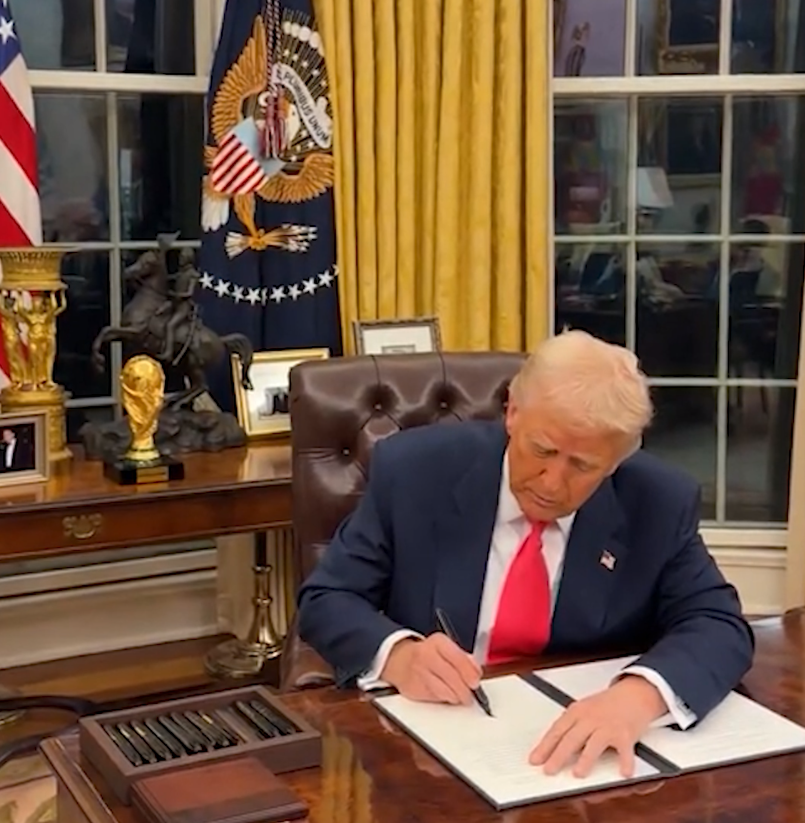
The geopolitical landscape of the Middle East has once again entered a phase of uncertainty and intense scrutiny following statements by President Donald Trump claiming that the United States had effectively “ended the war” with Iran. The announcement, delivered with confidence and optimism, suggested that a breakthrough had been reached after days of escalating military exchanges between the two countries. According to Trump, a “very strong memorandum of understanding” had been agreed upon, marking what he described as a significant step toward halting hostilities and establishing a framework for long-term stability. Yet, almost immediately after these remarks, a contrasting narrative emerged from Tehran, where officials indicated that no final agreement had been confirmed. This divergence in messaging has created a complex and fragile situation, raising questions about the nature of the proposed deal, the state of negotiations, and the broader implications for regional and global stability.
Trump’s assertion that the United States had “ended the war” carries significant weight, not only as a statement of policy but also as a signal to domestic and international audiences. The framing of the situation as a concluded conflict suggests a level of finality that may not fully reflect the realities on the ground. In conflicts involving multiple actors, competing interests, and ongoing negotiations, declarations of victory or resolution can often be premature. Nevertheless, such statements play a role in shaping perception, influencing markets, and setting expectations for what may come next.
Central to Trump’s announcement was the idea of a memorandum of understanding, described as both “very strong” and “a little conceptual.” This characterization introduces an element of ambiguity, as memoranda of understanding can vary widely in their scope and binding nature. In some cases, they represent formal agreements with clear commitments, while in others, they serve as preliminary frameworks intended to guide further negotiations. The description of the deal as conceptual suggests that while certain principles may have been agreed upon, many details likely remain unresolved.
The suggestion that a signing ceremony could take place in Europe, potentially attended by Vice President JD Vance, adds another dimension to the narrative. Such ceremonies are often used to formalize agreements and demonstrate unity among participating parties. However, the absence of confirmation from Iran raises questions about whether such an event is imminent or whether it remains a possibility contingent on further negotiations. The contrast between the certainty expressed by Trump and the caution conveyed by Iranian officials highlights the challenges of interpreting developments in real time.
Iran’s response to the announcement has been notably measured yet firm. Esmail Baghaei, a spokesperson for Iran’s Foreign Ministry, described reports of an agreement as “merely speculation” and emphasized that no final decision had been made. This statement reflects a cautious approach, likely intended to manage expectations and maintain flexibility in ongoing negotiations. By refraining from confirming the deal, Iran preserves its ability to negotiate terms without being bound by external narratives.
The Islamic Revolutionary Guard Corps further reinforced this position by casting doubt on Trump’s claims. Statements from the IRGC and reports from the semi-official Tasnim news agency suggest that Iranian officials have not endorsed the existence of a finalized agreement. This divergence in messaging is not uncommon in high-stakes negotiations, where public statements may serve strategic purposes. Each side seeks to shape the narrative in a way that supports its objectives, whether by demonstrating strength, maintaining leverage, or influencing the behavior of other actors.
The skepticism expressed by Iranian lawmakers adds another layer of complexity. The warning from Ebrahim Rezaei, who suggested that Trump’s announcement could be deceptive, reflects a broader concern within certain segments of Iran’s political landscape. Such skepticism may influence Iran’s approach to negotiations, encouraging caution and a reluctance to commit without clear and verifiable terms. It also highlights the internal dynamics that can affect how agreements are perceived and implemented.
Israel’s reaction to Trump’s announcement introduces yet another dimension. Reports that Prime Minister Benjamin Netanyahu was surprised by the claims suggest that communication between allies may not have been fully aligned. The indication that Israel was not aware of any imminent agreement, nor had approved such a deal, appears to contradict Trump’s assertion that all parties involved had endorsed the final points. This discrepancy raises questions about the coordination among key stakeholders and the extent to which consensus has been achieved.
Netanyahu’s subsequent conversation with Trump, during which he expressed appreciation for commitments related to Iran’s nuclear program and regional activities, suggests that discussions are ongoing. The focus on issues such as enriched uranium, nuclear infrastructure, missile production, and support for regional proxies underscores the central concerns driving the negotiations. These issues have long been points of contention and are likely to remain critical in any agreement.
The broader context of the conflict is essential for understanding the significance of these developments. The recent exchange of strikes between the United States and Iran represents a continuation of tensions that have persisted for years. The ceasefire agreed upon in April provided a temporary pause, but it did not address the underlying issues that have fueled the conflict. As a result, intermittent clashes have continued, creating a situation that is neither full-scale war nor true peace.
Trump’s assertion that US military action played a role in pushing Iran toward an agreement reflects a particular interpretation of the dynamics at play. From this perspective, the use of force serves as a means of compelling negotiation, creating conditions under which an adversary is more likely to engage. However, this approach is not without controversy, as it raises questions about the balance between coercion and diplomacy. While military pressure can influence outcomes, it can also lead to escalation and unintended consequences.
The mention of a continued blockade of Iranian ports further complicates the situation. Economic measures such as blockades are often used to exert pressure, but they can also impact broader economic and humanitarian conditions. The decision to maintain such measures until an agreement is finalized suggests that the United States intends to retain leverage during the negotiation process. At the same time, it may influence how Iran perceives the fairness and sustainability of any proposed deal.
The involvement of multiple countries in the approval process, as suggested by Trump, reflects the regional and international dimensions of the conflict. Nations such as Saudi Arabia, the United Arab Emirates, Qatar, Turkey, Pakistan, Bahrain, Kuwait, Jordan, and Egypt all have interests in the outcome. Their roles may vary, from direct participation to indirect influence, but their inclusion highlights the complexity of reaching a consensus that satisfies diverse perspectives.
Qatar’s role as a mediator is particularly noteworthy. The presence of a Qatari delegation in Tehran during ongoing hostilities underscores the importance of diplomacy even in times of conflict. Reports that these meetings helped resolve some sticking points suggest that progress has been made behind the scenes. Mediation efforts often operate away from public view, focusing on building trust and identifying areas of compromise.
The broader implications of a potential agreement are significant. A resolution between the United States and Iran could reshape the geopolitical landscape of the Middle East, influencing alliances, economic conditions, and security arrangements. It could also affect global markets, particularly in areas such as energy, where stability in the region is a key factor. Conversely, a failure to reach an agreement could lead to further escalation, with consequences that extend beyond the immediate parties involved.
The uncertainty surrounding the current situation reflects the challenges inherent in international negotiations. Differences in perspective, communication gaps, and competing interests can all influence the outcome. Public statements, while important, represent only one aspect of the process. The details of any agreement, including its scope, enforcement mechanisms, and timelines, will ultimately determine its effectiveness.
As the situation continues to evolve, the importance of careful analysis and informed understanding becomes increasingly clear. Observers must navigate a complex landscape of information, distinguishing between confirmed developments and speculative claims. This requires attention to detail, awareness of context, and a recognition of the strategic considerations that shape public statements.
Ultimately, the question of whether the war has truly been “ended” remains open. While Trump’s announcement signals optimism and a desire for resolution, the lack of confirmation from Iran suggests that the process is not yet complete. The coming days and weeks will be critical in determining whether the current momentum leads to a formal agreement or whether tensions persist.
In this moment of uncertainty, the stakes are high. The decisions made by leaders, the responses of nations, and the outcomes of negotiations will all play a role in shaping the future. Whether this moment represents the beginning of a lasting peace or a temporary pause in a continuing conflict will depend on the ability of all parties to move beyond rhetoric and toward meaningful, sustainable solutions.
As the situation continues to develop, one of the most critical elements shaping the narrative is the gap between political messaging and diplomatic reality. Statements made by leaders often serve multiple purposes: they reassure domestic audiences, signal strength to adversaries, and attempt to frame the direction of negotiations. However, when those statements are not fully aligned with developments on the ground or with the positions of other parties involved, they can introduce uncertainty and even tension into an already fragile process. In this case, the contrast between the United States declaring that the war has effectively ended and Iran insisting that no final decision has been made highlights just how delicate the current moment is.
This divergence also raises questions about the nature of communication channels between the two countries. While formal diplomatic relations between the United States and Iran have long been limited, indirect communication through intermediaries has played a key role in managing crises and negotiating agreements. Countries like Qatar, which reportedly facilitated recent discussions, often act as bridges, conveying messages and helping both sides navigate sensitive issues without direct confrontation. The effectiveness of such mediation depends heavily on trust, timing, and the willingness of both parties to engage constructively.
The idea that “breakthroughs” may have been achieved behind the scenes suggests that progress is possible, even if it has not yet been formalized. In many high-level negotiations, agreements are built gradually, piece by piece, rather than finalized in a single moment. Certain issues may be resolved while others remain open, creating a situation where both sides can claim partial success while still working toward a comprehensive deal. This incremental approach can be effective, but it also leaves room for misinterpretation, particularly when public statements get ahead of the actual process.
Another factor influencing the current dynamics is the role of internal politics within each country. In the United States, presenting the situation as a successful resolution can carry political advantages, reinforcing narratives of strength and leadership. At the same time, it can create expectations that may be difficult to meet if the agreement is not fully secured. In Iran, internal divisions and differing perspectives on how to approach negotiations can shape how officials respond publicly. Hardline voices, such as those expressing skepticism about potential deception, may influence the overall stance, encouraging caution and resistance.
The involvement of multiple regional players further complicates the situation. Trump’s claim that numerous countries have approved the agreement suggests an effort to present the deal as broadly supported. However, the apparent surprise from Israeli leadership indicates that coordination may not be as complete as suggested. This discrepancy highlights the challenges of aligning the interests of multiple stakeholders, each with their own priorities and concerns. For countries in the region, the outcome of US-Iran negotiations has direct implications for security, economic stability, and political influence.
Israel’s position is particularly significant, given its longstanding concerns about Iran’s nuclear program and regional activities. Any agreement that addresses these issues would likely be seen as a positive development, but only if it meets certain criteria. The emphasis on removing enriched uranium, dismantling nuclear infrastructure, and limiting missile production reflects core demands that have shaped policy for years. Whether these elements are fully included in the proposed memorandum remains unclear, adding to the uncertainty surrounding the deal.
Economic considerations also play a major role in shaping the decisions of both sides. For Iran, sanctions and restrictions have placed significant pressure on the economy, affecting everything from trade to domestic stability. An agreement that leads to relief from these measures could provide substantial benefits, making it an attractive option. However, the conditions attached to such relief are critical, as they determine the extent of concessions required. For the United States, maintaining leverage through economic measures like port blockades can be seen as a way to ensure compliance, but it also raises questions about how quickly normal relations can be restored.
The mention of a continued blockade “until this transaction is finalized” suggests that economic pressure will remain a key tool in the negotiation process. This approach reflects a broader strategy of combining military, economic, and diplomatic elements to achieve desired outcomes. While effective in some cases, it can also prolong tensions if not managed carefully. The challenge lies in finding a balance that encourages agreement without pushing the situation toward further escalation.
The regional security environment remains highly sensitive, with recent military exchanges demonstrating how quickly tensions can escalate. Even as discussions of a potential agreement continue, the presence of ongoing hostilities creates a backdrop of uncertainty. Actions taken on the battlefield can influence negotiations, just as developments in negotiations can influence military decisions. This interconnected relationship makes it difficult to separate diplomacy from conflict, as each element affects the other.
International organizations, including the United Nations, have emphasized the importance of de-escalation and dialogue. The warning that the region is being pulled deeper into crisis reflects a broader concern about the potential for wider instability. In such situations, the role of neutral actors becomes increasingly important, providing platforms for discussion and encouraging restraint. However, their influence depends on the willingness of the primary parties to engage in good faith.
The concept of a “memorandum of understanding” itself warrants closer examination. Unlike formal treaties, which are legally binding and often involve detailed provisions, memoranda of understanding can be more flexible. They may outline general principles or intentions without specifying exact commitments. This flexibility can be useful in early stages of negotiation, allowing parties to agree on a framework before addressing more complex details. However, it can also lead to ambiguity, particularly when expectations differ.
Trump’s description of the deal as both “very strong” and “conceptual” captures this dual nature. On one hand, it suggests confidence in the overall direction of the agreement. On the other, it acknowledges that key elements may still be under discussion. This combination can be difficult to interpret, especially for observers trying to assess the likelihood of a finalized deal.
The potential for a signing ceremony in Europe adds an element of symbolism to the process. Such events are often used to demonstrate unity and commitment, providing a visual representation of agreement. They can also serve as milestones, marking the transition from negotiation to implementation. However, the absence of confirmation from Iran indicates that this stage has not yet been reached, and that further work is required.
As the situation continues to evolve, the importance of managing expectations becomes clear. Public statements, media coverage, and market reactions all contribute to shaping perceptions, but they do not always reflect the underlying realities. For policymakers, balancing transparency with strategic communication is a constant challenge, particularly in high-stakes situations where information can influence outcomes.
The broader implications of a potential agreement extend beyond the immediate conflict. A successful resolution could pave the way for improved relations, reduced tensions, and greater stability in the region. It could also influence other areas of international diplomacy, demonstrating the effectiveness of negotiation in addressing complex issues. Conversely, a breakdown in talks could reinforce existing divisions and increase the likelihood of further confrontation.
In this context, the role of timing is crucial. Negotiations often reach critical points where decisions must be made, and delays can either provide space for further discussion or create opportunities for setbacks. The coming days, as suggested by Trump’s timeline for finalizing the deal, will be particularly important. Whether progress continues or stalls will depend on the ability of both sides to address remaining differences.
Ultimately, the current situation reflects the complexity of modern geopolitics, where multiple factors intersect to shape outcomes. Military actions, economic pressures, diplomatic efforts, and political considerations all play a role, creating a landscape that is both dynamic and unpredictable. Navigating this landscape requires careful analysis, informed decision-making, and a willingness to engage with difficult questions.
As observers watch developments unfold, the central question remains: is this truly the end of a conflict, or simply another phase in an ongoing struggle? The answer will depend not only on what is said, but on what is agreed, implemented, and sustained over time.