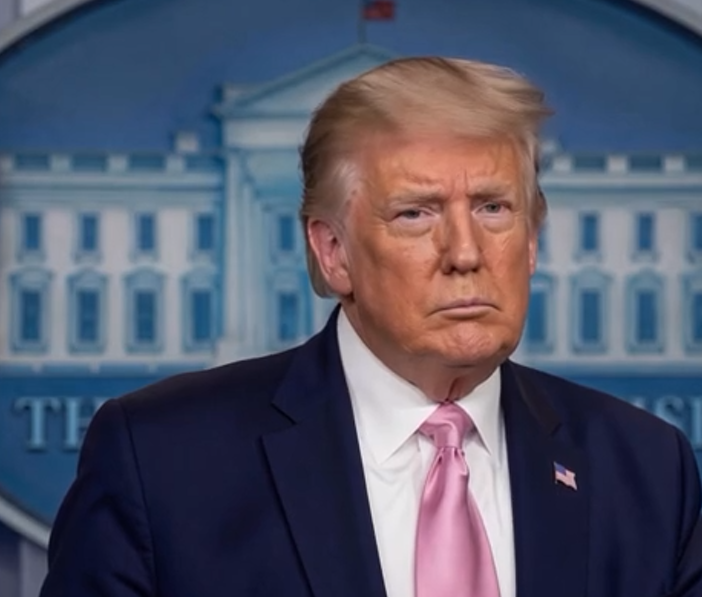
The Trump administration’s sweeping federal law enforcement operation in Washington, D.C., has become one of the most consequential and controversial public-safety experiments in the nation’s capital, combining thousands of National Guard personnel with federal agents, prosecutors and local police resources in an effort President Donald Trump says is necessary to reduce violent crime and restore order. What began in August 2025 as an emergency intervention has developed into a long-term federal presence that is now scheduled to continue through the remainder of Trump’s presidency, placing Washington at the center of a national debate over crime, military involvement in civilian communities, constitutional authority and the limits of local self-government.
Trump launched the initiative on August 11, 2025, when he declared what his administration described as a crime emergency in the District of Columbia. The president invoked authority under the District of Columbia Home Rule Act and directed that Metropolitan Police Department services be made available to the federal government during the emergency. He separately ordered the mobilization of the D.C. National Guard and called for additional federal law enforcement resources to support the crackdown. The administration argued that crime in the capital threatened residents, visitors, federal employees and the proper functioning of the national government.
The federal presence expanded quickly. Agencies participating in the broader effort included the FBI, U.S. Marshals Service, Bureau of Alcohol, Tobacco, Firearms and Explosives, Department of Homeland Security, U.S. Park Police and federal prosecutors, among others. The administration also created the D.C. Safe and Beautiful Task Force to coordinate federal and local resources, establish priorities and strengthen information sharing between agencies operating across Washington.
Trump followed the initial declaration with another executive order on August 25, 2025, directing additional measures. That order called for hiring more U.S. Park Police officers, adding prosecutors focused on violent and property crime and creating specialized federal law enforcement units dedicated to public safety in the capital. It also directed the Defense Department to establish a specialized D.C. National Guard unit that could be activated for public-order missions under applicable law.
What initially appeared to many observers to be an extraordinary but temporary intervention has since become something much larger. The National Guard mission has been extended through January 20, 2029, unless Trump ends it earlier, meaning troops could remain in Washington through the end of his second term. As of September 1, 2026, the D.C. National Guard’s Joint Task Force reported 3,780 assigned personnel from Washington and numerous states around the country.
That longevity has fundamentally changed the political debate.
The administration no longer has to defend only an emergency response. It now has to explain why an extraordinary federal and military presence should remain part of Washington’s daily life years after the initial declaration.
Trump officials argue that the results provide the answer.
According to the U.S. Attorney’s Office for the District of Columbia, Washington has experienced significant reductions in several major crime categories during the year following the federal surge. The office reported in August 2026 that homicides had fallen 45 percent year over year, carjackings were down 64 percent, robberies declined 33 percent and motor-vehicle thefts dropped 53 percent. Federal officials also said authorities had seized nearly 2,000 illegal firearms.
The administration has presented those figures as evidence that aggressive enforcement works.
U.S. Attorney Jeanine Ferris Pirro said prosecution efforts had increased substantially, reporting that her office charged 16,724 cases in D.C. Superior Court during the year following the beginning of the surge. According to the Justice Department, prosecutors secured 5,767 guilty pleas and 213 guilty verdicts at trial during the same period, while another 969 cases were resolved through diversion programs.
The White House has gone further, portraying the operation as a major success of Trump’s law-and-order agenda. It said in August that the combined effort had produced more than 16,000 arrests, more than 3,200 drug-related arrests and the seizure of nearly 2,000 illegal firearms. Administration officials have argued that visible federal enforcement has restored confidence to areas where residents previously feared violent crime, carjackings and disorder.
For supporters, those statistics demonstrate exactly why the federal intervention was necessary.
They argue that debates over jurisdiction and political authority should not obscure the basic responsibility of government to keep people safe. If residents can walk through their neighborhoods with less fear, businesses face fewer robberies and families encounter fewer carjackings, supporters contend that Washington should welcome additional federal resources rather than reject them because they originated with the Trump administration.
Some also emphasize Washington’s unusual status.
D.C. is not a state.
It is the seat of the federal government and home to the White House, Capitol, Supreme Court, federal agencies, foreign embassies and national monuments. Millions of Americans visit the city each year, while federal employees and officials from across the country work there.
Trump has repeatedly argued that these circumstances give the federal government an especially strong interest in ensuring that Washington remains safe.
That argument has constitutional foundations but also significant limits and political complications.
The Constitution grants Congress unique authority over the federal district. The District of Columbia Home Rule Act later created an elected mayor and council and transferred substantial responsibility for local affairs to Washington residents, but Congress retained considerable power over the city. The result is a governance structure unlike that of any state.
Washington residents elect local officials and pay federal taxes, yet Congress can intervene in local policy in ways it cannot ordinarily do to a state government.
That arrangement has produced decades of arguments over D.C. statehood and home rule.
Trump’s law enforcement operation has brought those disagreements back to the forefront.
Critics say the administration is exploiting Washington’s unusual constitutional status to exercise control that would face greater legal and political obstacles elsewhere.
Local opponents have described the continuing National Guard presence as an intrusion into the city’s autonomy. Some residents and officials argue that Washington is being treated as though its local government cannot govern itself, despite having an elected mayor, council and police department.
The extension through 2029 has intensified those concerns.
What critics might have tolerated as a short emergency response becomes considerably more difficult to accept when troops remain on city streets for years.
Supporters respond that the federal government has always had unique responsibilities in the capital and that the operation should be evaluated by results rather than political symbolism.
Those competing perspectives have created an unusual situation in which both sides can point to facts supporting portions of their argument.
Crime has declined substantially in Washington.
But whether the National Guard deserves credit for that decline is heavily disputed.
A Reuters investigation published in August 2026 found that National Guard personnel themselves were directly involved in only about 1.3 percent of criminal cases filed in D.C. Superior Court during the deployment. Reuters reported that troops often conducted presence patrols and handled relatively minor incidents rather than operating in neighborhoods where the city’s most serious violent crime had historically been concentrated.
That does not necessarily mean their presence had no effect.
Deterrence is difficult to measure precisely.
A visible patrol can theoretically prevent an offense without making an arrest. If a potential offender sees uniformed personnel and decides not to commit a robbery, no case appears in court and no arrest statistic records the intervention.
Supporters can therefore argue that direct involvement in criminal cases understates the deployment’s value.
Critics counter that the administration cannot claim the Guard caused declining crime merely because both developments occurred at the same time.
Correlation does not establish causation.
Washington’s crime trends were influenced by local policing, prosecution policies, demographic factors and initiatives that began before the federal intervention. Researchers attempting to isolate the Guard’s effect have questioned whether the deployment itself produced measurable reductions in violent crime. Reuters cited research from the Niskanen Center finding no reduction in violent crime attributable specifically to the National Guard deployment.
This distinction is essential when evaluating the administration’s claims.
The Justice Department’s reported reductions in homicide, robbery, carjacking and vehicle theft are significant statistics. They describe what happened during the period.
They do not, by themselves, prove which particular policy caused the decline.
The federal surge involves far more than National Guard troops, however.
Federal prosecutors have increased charging activity.
Federal law enforcement agencies are participating in investigations and arrests.
Firearms have been seized.
Local and federal agencies are sharing resources.
Police operations have changed.
Consequently, even if researchers conclude that uniformed Guard patrols themselves have little measurable impact, other elements of the federal initiative could still contribute to crime reduction.
This complexity often disappears from political messaging.
Trump supporters may attribute virtually every improvement to federal intervention.
Opponents may attribute virtually none of it to federal intervention.
Reality could involve multiple overlapping factors.
The cost of maintaining the deployment has created another controversy.
The Washington Post reported that the Pentagon expects the National Guard mission to cost an additional $1.4 billion from October 2026 through January 2029. That comes on top of hundreds of millions already spent on the operation.
Critics question whether such enormous expenditures are justified when the troops themselves are rarely directly involved in serious criminal cases.
They argue that some of the money could instead be directed toward Metropolitan Police Department staffing, violence-prevention programs, prosecutors, mental-health services, youth programs or other targeted crime-reduction strategies.
Supporters see the calculation differently.
They argue that public safety itself has enormous economic value.
Violent crime imposes costs on victims, businesses and neighborhoods. Carjackings and thefts increase insurance expenses. Fear discourages tourism and investment. Businesses can leave neighborhoods they consider unsafe.
If a large federal presence contributes meaningfully to reducing those costs, supporters contend that evaluating the operation only by its immediate budget ignores its broader benefits.
The National Guard’s role nevertheless remains especially controversial because American political tradition generally distinguishes military service from ordinary civilian policing.
The sight of armed troops patrolling public spaces in the national capital inevitably carries symbolism beyond normal law enforcement.
For some residents, it provides reassurance.
For others, it produces anxiety.
Those reactions can coexist within the same city.
A tourist walking near a national monument may interpret Guard personnel as evidence of security.
An immigrant family may wonder whether the uniformed presence is connected to immigration enforcement.
A resident accustomed to local policing may see federal troops as unnecessary.
Someone who has personally experienced violent crime may welcome virtually any additional security.
Public confidence therefore cannot be measured through a single political narrative.
Civil-rights organizations have raised particular concerns about how expanded federal operations affect immigrants and other communities already wary of law enforcement.
The Trump administration has simultaneously pursued an aggressive nationwide immigration enforcement agenda. That means federal agents operating in Washington may be viewed through the lens of immigration policy even when a particular operation is focused on violent crime.
For undocumented residents, interaction with federal authorities can carry consequences extending far beyond a routine encounter.
That can create reluctance to report crimes.
An undocumented person who witnesses an assault may fear speaking with authorities.
A family may hesitate to call police during domestic violence.
A victim may worry that providing identification could expose immigration status.
Law enforcement agencies have historically recognized that such fears can make communities less cooperative and ultimately make crimes more difficult to solve.
Supporters of Trump’s policies argue that immigration laws must still be enforced and that people living in the country unlawfully cannot expect immunity simply because enforcement creates anxiety.
The tension between those objectives—immigration enforcement and community cooperation—remains one of the broader challenges surrounding the federal operation.
Accountability presents another major question.
When numerous agencies operate simultaneously in one city, residents may not always know who has authority over a particular encounter.
A person could see Metropolitan Police officers, Park Police, federal agents and National Guard personnel within the same general operation.
Different agencies operate under different chains of command.
They may follow different internal policies.
Complaint procedures can differ.
Body-camera requirements can differ.
Public-record rules can differ.
Jurisdiction can differ.
That complexity can make accountability difficult for ordinary residents to understand.
If someone believes an officer violated their rights, where should the complaint be filed?
Who investigates?
Which agency retains records?
Which use-of-force policy applies?
Who releases body-camera footage?
Those questions matter regardless of whether someone supports or opposes the federal crackdown.
Effective law enforcement requires authority.
Legitimate law enforcement also requires accountability.
Federal and local officials therefore face the challenge of ensuring that coordination does not blur responsibility.
The administration argues that coordination is actually one of the initiative’s strengths.
Its D.C. Safe and Beautiful Task Force was explicitly designed to bring agencies together, share information and establish common priorities. Federal officials say this allows law enforcement to pursue violent offenders more effectively across jurisdictional boundaries.
That argument has practical merit.
Criminal activity does not respect bureaucratic boundaries.
A firearm may cross state lines.
A suspect can move between Washington, Maryland and Virginia.
A criminal network can involve federal offenses alongside violations of local law.
Different agencies possess different intelligence and capabilities.
Sharing those resources can prevent investigations from becoming fragmented.
The question is whether coordination can be achieved while maintaining transparent lines of authority.
The debate has become even more politically sensitive because the mission is scheduled to continue through the 2026 midterm elections and beyond.
Critics worry about the symbolism of thousands of troops remaining in the capital during elections.
There is currently no evidence that the D.C. deployment itself is intended to control voting, and the nation’s top military officer recently stated that the military has no plans to send troops to polling places during the November elections. Nevertheless, the long duration of the domestic deployment has contributed to broader concern among some Democratic officials about military involvement in civilian affairs.
That concern illustrates why the precedent may ultimately matter as much as Washington itself.
Trump’s August 2025 executive order did not focus exclusively on D.C. The administration also directed preparations for specialized National Guard capabilities that could potentially support law enforcement and respond to civil disturbances elsewhere when legally authorized.
Critics therefore view Washington as a possible model for federal intervention in other American cities.
Supporters may see exactly the same possibility as an advantage.
If federal coordination works in Washington, they ask, why should similar assistance not be available to other cities experiencing severe violence or disorder?
The legal answer becomes considerably more complicated outside D.C.
States possess powers and constitutional protections that the District does not have in the same form. Governors ordinarily control their National Guard forces unless those forces are federalized under specific legal authority. Federal law also restricts the use of military forces for domestic law enforcement.
Washington’s unique status therefore makes it easier for a president to exercise certain powers there than in Chicago, New York, Los Angeles or another major city.
Any attempt to export the D.C. model would likely generate substantial litigation.
Washington itself has already become the subject of legal challenges and political resistance.
Those disputes will help determine how much authority future presidents possess when they claim extraordinary federal intervention is necessary to restore public safety.
And that future-president question is crucial.
Americans often evaluate executive power according to whether they support the person currently exercising it.
But presidential authority survives individual presidents.
A precedent established by Trump can potentially be used by a Democratic successor.
A precedent created by a Democratic administration can later be used by a Republican one.
That is why debates over federalism and civil liberties should extend beyond immediate partisan preferences.
Someone who believes Trump should possess broad authority to deploy federal resources against crime must consider whether they would support equivalent authority under a president whose priorities they strongly oppose.
Someone who opposes Trump’s intervention must similarly consider what federal response they would accept if local authorities genuinely became unable to maintain order.
Those questions have no easy answers.
The federal government unquestionably has responsibilities in Washington.
Local democratic government also has legitimacy.
Residents have a right to safety.
They also have civil liberties.
Police require sufficient authority to arrest dangerous offenders.
Communities require safeguards against abuse.
National Guard personnel can provide manpower and visible deterrence.
Military involvement in civilian law enforcement can create constitutional and democratic concerns.
The challenge is balancing all of these principles rather than pretending only one matters.
After more than a year, the Trump administration believes the numbers vindicate its approach.
Homicides are down.
Carjackings are down.
Robberies are down.
Vehicle theft is down.
Thousands of cases have been prosecuted.
Nearly 2,000 illegal firearms have been seized, according to federal officials.
Those are outcomes any administration would celebrate.
The dispute concerns how much credit the federal surge deserves and whether achieving those results requires maintaining thousands of National Guard personnel through January 2029.
Critics can acknowledge falling crime while questioning the deployment.
Supporters can acknowledge constitutional concerns while arguing that federal intervention contributed to greater safety.
The debate becomes more productive when neither side is required to deny inconvenient facts.
Washington is safer according to several major crime indicators.
The National Guard’s precise contribution remains disputed.
The deployment is expensive.
The federal government possesses unusual authority over D.C.
Many local residents and officials remain uncomfortable with the continuing military presence.
And the administration has no intention, at least currently, of ending the mission soon.
Those realities now define the situation.
For residents, the most important test will be what daily life feels like rather than what politicians say at press conferences.
Can families walk through neighborhoods safely?
Can businesses operate without persistent theft and violence?
Do residents trust officers enough to report crimes?
Do communities feel protected rather than occupied?
Are dangerous offenders being prosecuted effectively?
Can declining crime be sustained?
Those questions will ultimately determine public confidence.
Statistics matter, but legitimacy matters too.
A successful law enforcement strategy needs both.
If crime falls dramatically but large portions of the community lose trust in authorities, long-term cooperation becomes difficult.
If community trust is high but violent offenders operate without meaningful consequences, public safety suffers.
The strongest system combines effective enforcement with constitutional restraint.
That standard will become increasingly important as the operation moves into its second year and potentially toward a third and fourth.
The Trump administration has already transformed what federal involvement in Washington looks like.
Thousands of Guard personnel remain assigned to the mission.
Federal agencies continue coordinating enforcement.
Prosecution has intensified.
The administration says the results demonstrate success.
Opponents say the city should not need years of military patrols to maintain those gains.
Neither argument is likely to disappear.
The real question is what Washington looks like by the time the deployment ends.
If crime remains at historic lows and the federal presence gradually becomes unnecessary, Trump will likely argue that his intervention changed the trajectory of the capital.
If crime remains low after troops eventually leave, researchers will attempt to determine which reforms created lasting improvements.
If crime rises despite continued deployment, questions about effectiveness and cost will become much harder for the administration to answer.
And if federal operations generate significant civil-rights controversies, political arguments over home rule could become even more intense.
For now, Washington remains the site of an extraordinary experiment in federal power and public safety.
The operation began with Trump declaring a crime emergency on August 11, 2025.
One year later, the administration says homicides, carjackings, robberies and vehicle thefts have fallen sharply. Thousands of cases have been charged, thousands of arrests have been made and nearly 2,000 illegal guns have been removed from the streets, according to federal figures.
At the same time, independent reporting has raised substantial questions about how much of that improvement can specifically be attributed to the National Guard, whose personnel have played only a small direct role in criminal prosecutions despite the enormous size and cost of the deployment.
That leaves Washington with a debate more complicated than either “the crackdown worked” or “the crackdown failed.”
Crime reduction, federal power, military involvement, local democracy, immigration enforcement, civil liberties and public confidence are now intertwined.
And because the National Guard mission is currently scheduled to remain in place until January 20, 2029, Americans will have considerably more time to judge the results.
The administration sees Washington as evidence that determined federal action can restore order when local approaches are insufficient.
Its critics see the same city as a warning about how quickly emergency powers can evolve into a long-term federal presence.
The ultimate judgment will depend not only on how many arrests are made or how far crime falls, but on whether Washington can maintain public safety without sacrificing accountability, civil liberties and the local democratic authority its residents have spent decades attempting to strengthen.
That is what makes the story larger than one police operation.
Washington is not simply another American city. It is the national capital, a federal district and home to hundreds of thousands of people who expect both safety and a meaningful voice in how their community is governed.
Trump’s intervention has placed those expectations in direct tension.
And with thousands of National Guard personnel still assigned to Washington more than a year after the original emergency declaration, the country is no longer debating a temporary crackdown.
It is debating what role federal power should permanently play in keeping America’s capital safe.