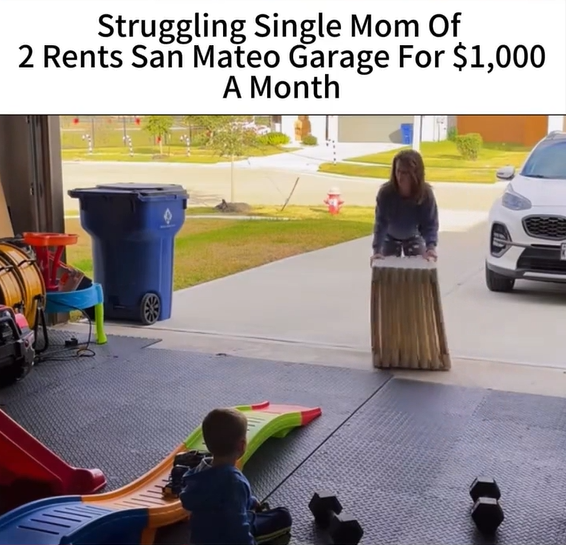
In an all-too-common story, a single mother of two has resorted to renting a garage in San Mateo for $1,000 a month to house her family. This is a stark representation of the housing struggles faced by many low-income families, particularly single parents. Despite her best efforts, this mother is left with no choice but to make do with substandard living conditions. Unfortunately, this is not an isolated case. Across the country, families are increasingly being pushed to the margins due to the rising cost of living, particularly in urban areas.
The image of this family living in a garage, with their children playing in the space, serves as a striking example of the hardships that many single parents face in an economy where affordable housing is increasingly out of reach. This mother’s story reflects a larger, systemic issue that has led many families to compromise their living conditions just to survive.
The Reality of Housing Costs for Single Parents
For single parents, the cost of housing is often their most significant financial burden. Many single mothers are forced to make difficult decisions between paying for basic necessities like food, healthcare, and education or covering the high costs of rent. In cities like San Mateo, which are part of the high-cost Bay Area, finding affordable housing can feel like an insurmountable challenge. With the average rent for a one-bedroom apartment in San Mateo hovering around $2,000 to $3,000 per month, many families are left searching for alternative housing options that are more affordable but still functional.
The choice to rent a garage, as in this case, highlights the desperation many parents feel when confronted with high rental costs. Renting unconventional spaces like garages, basements, or converted sheds is often seen as a temporary solution, but for some families, it can become a long-term arrangement. These living situations are not ideal, but they are the only options available when traditional housing is out of reach.
The Stigma of Non-Traditional Housing
Living in a garage, while a reality for many, carries a stigma. This form of housing is often seen as a last resort, an indication of failure in an otherwise functional system. However, for many families, it is simply a matter of survival. The stigma surrounding non-traditional housing can affect a single mother’s self-esteem, especially when society often expects parents to maintain stable and comfortable homes for their children. This stigma, combined with the financial burden of high rent, only adds to the emotional strain felt by many single mothers in similar situations.
Living on the Edge: The Struggles of a Single Mother
Single mothers face some of the toughest challenges when it comes to balancing work, childcare, and financial stability. Often, these mothers are juggling low-wage jobs, raising children alone, and trying to make ends meet. The stress of managing all these responsibilities can take a toll on both physical and mental health, leaving little room for personal time or self-care.
In this particular case, the mother is not only dealing with the emotional weight of trying to provide for her children, but also facing the harsh realities of living in cramped and inadequate housing. Her resilience in the face of these obstacles is commendable, but it’s important to recognize that her story is not unique. Millions of single parents across the country are in similar situations, doing their best to provide a safe environment for their children while facing overwhelming financial pressures.
The Hidden Struggles of Single Parenthood
Single parents are often forced to operate within a cycle of financial instability. Without the support of a second income, they must stretch every dollar and often sacrifice their own needs for the sake of their children. For many, this means working long hours, sometimes in more than one job, to cover basic expenses. The lack of affordable housing further complicates their situation, forcing them to live in substandard conditions that negatively affect their quality of life.
These struggles also have a significant emotional and psychological impact. Single mothers are often isolated, lacking the support network that two-parent households may have. This isolation can lead to feelings of loneliness, depression, and burnout, especially when trying to balance the demands of work, family, and financial survival.
The Growing Issue of Affordable Housing in Urban Areas
The issue of affordable housing is not confined to one area but is a nationwide problem. Cities across the United States are experiencing a housing crisis, with costs escalating at a rate that far outpaces wages. San Mateo, like many urban areas, has seen a sharp increase in rental prices, making it increasingly difficult for working-class families to find housing they can afford.
While some argue that the increase in housing costs is due to the influx of tech workers and higher-income residents into areas like the Bay Area, the real issue lies in the supply and demand imbalance. There simply isn’t enough affordable housing being built to meet the needs of low- and middle-income families. As the demand for housing continues to rise, landlords are capitalizing on the opportunity to increase rents, pushing more families into precarious living situations.
The Lack of Affordable Housing: A National Crisis
This issue is not confined to the Bay Area. Across the United States, there is a severe shortage of affordable housing for low-income families. According to the National Low Income Housing Coalition, there is a deficit of more than 7 million affordable and available rental homes for extremely low-income renters. This shortage has led to an increase in overcrowded housing, long waiting lists for government-subsidized housing, and families being forced to make do with substandard living conditions.
As housing costs continue to rise, more families are being pushed to the margins. Some families are even forced to make the heartbreaking decision to live in garages, cars, or other non-traditional spaces just to survive.
The Social and Emotional Toll of Housing Insecurity
The emotional toll of housing insecurity cannot be underestimated. For single parents, having to live in inadequate housing creates a constant sense of instability. This insecurity affects every aspect of their lives—from their ability to focus at work to their relationships with their children. The stress of not knowing whether they’ll be able to afford rent each month can lead to chronic anxiety and depression.
In addition to the mental health impacts, housing instability can also affect a child’s development. Children who grow up in unstable housing situations are at higher risk for poor academic performance, behavioral issues, and emotional difficulties. The lack of a stable, secure home environment can undermine a child’s sense of safety and well-being, which is critical for their overall development.
Exploring the Causes of Skyrocketing Housing Prices
The rapid increase in housing prices can be attributed to several factors, including supply and demand imbalances, gentrification, and the growing popularity of urban living. Cities like San Mateo are experiencing a surge in demand due to an influx of high-income workers in industries such as technology. This has led to the displacement of lower-income residents, who are increasingly forced to move further out from city centers or live in substandard conditions.
At the same time, the lack of new housing development, particularly affordable units, has exacerbated the crisis. Zoning laws, construction costs, and NIMBY (Not In My Backyard) attitudes have prevented the construction of enough affordable housing to meet the demand. The result is a housing market that is increasingly inaccessible to low- and middle-income families.
The Role of Government in Addressing Housing Affordability
While the private market plays a significant role in the housing crisis, government intervention is crucial in addressing the issue of affordability. Programs like Section 8 housing, which provides rental assistance to low-income families, help alleviate the financial burden for some, but they are not sufficient to meet the growing demand for affordable housing. Expanding affordable housing initiatives and increasing funding for housing assistance programs are key steps in providing relief for families struggling to find housing.
How Single Parents Cope with Limited Resources
For single parents like the mother in this video, making ends meet can feel like a daily struggle. In addition to their primary responsibilities of caring for their children, single parents often have to stretch limited financial resources to cover rent, utilities, food, and other essentials. The choice to rent a garage may seem like a temporary solution, but it reflects the harsh reality that many single parents face in today’s economy.
Single mothers are often forced to make difficult choices, such as skipping meals, sacrificing personal health, or working long hours at multiple jobs. These challenges are compounded by the lack of affordable childcare options, which can prevent parents from pursuing higher-paying jobs or educational opportunities.
Policy Solutions for Housing Affordability and Support for Single Parents
To address the housing crisis, comprehensive policy solutions are needed. This includes increasing the supply of affordable housing, expanding rental assistance programs, and offering more support for single parents who are struggling to make ends meet. By focusing on both short-term and long-term solutions, policymakers can help alleviate the financial strain that families are facing.
Additionally, offering financial literacy programs, affordable childcare options, and career development services for single parents can provide them with the tools they need to break free from the cycle of poverty and housing instability.
The story of this single mother renting a garage for $1,000 a month is a powerful reminder of the challenges faced by families in today’s economy. Housing insecurity, coupled with the emotional and financial stress of single parenthood, creates a difficult and often unbearable situation for many. By addressing the root causes of skyrocketing housing prices, increasing support for single parents, and expanding affordable housing options, we can work toward a future where all families have access to safe, secure, and affordable housing.
In the meantime, we must continue to advocate for those who are struggling the most. By supporting policies that prioritize housing affordability and offering resources for single parents, we can help ensure that no family is forced to live in substandard conditions simply to survive.
In recent years, the wealth gap in the United States and other urbanized areas has significantly widened, and housing affordability is one of the most obvious areas where this divide is felt. The increasing concentration of wealth among the top earners, coupled with the stagnation of wages for low- and middle-income households, has made it harder for families to keep up with the rising costs of living.
This trend is evident in cities like San Mateo, where high-income workers in the tech industry drive up demand for housing, pushing out lower-income families who are already struggling to make ends meet. In such cities, housing prices are becoming unattainable for many working-class individuals, particularly single parents who often earn lower wages and face additional financial burdens.
Economic Inequality and Housing: The Vicious Cycle
The situation of the single mother renting a garage in San Mateo is emblematic of a broader trend seen in many urban centers across the country. As wealth becomes increasingly concentrated in the hands of a few, the majority of individuals struggle to maintain their living standards. Housing is one of the most important markers of this inequality, as those with limited financial resources are pushed further and further away from the city centers where they work and the services they need.
While some cities have become hubs of economic opportunity for high-income workers, the influx of wealth into these areas has led to skyrocketing housing prices. This, in turn, forces working-class families into substandard living situations or even homelessness. The growing divide between the wealthy and the working class is not just an economic issue—it’s a social issue that affects the stability and well-being of entire communities.
Displacement and the Loss of Community
As housing prices continue to climb in major cities, displacement becomes an increasingly common experience for low-income families. The single mother in this case, who had to rent a garage instead of a proper apartment, is a prime example of the displacement many families face. Rising housing costs often push them out of neighborhoods where they have lived for years, causing them to lose the community connections they had built.
Displacement can have long-lasting effects on a family’s mental health, as well as their children’s social and educational development. Children who are moved from one home to another may experience stress, anxiety, and difficulty adjusting to new schools. The lack of stability in their housing situation can prevent children from developing the sense of security and belonging that is essential for their emotional and social growth.
For parents, the emotional toll of displacement can be just as significant. They may feel a loss of control over their lives, particularly if they are struggling to secure stable housing. The constant worry about being unable to afford rent or the fear of eviction can lead to chronic stress, which can further exacerbate other challenges such as job performance, health problems, and family relationships.
The Lack of Affordable Housing in Urban Areas
One of the primary contributors to the housing crisis is the shortage of affordable housing, particularly in urban areas. Cities like San Mateo, which are experiencing rapid growth in high-tech industries, are also seeing significant increases in the cost of living. As demand for housing increases, developers often choose to build high-end luxury apartments rather than affordable housing units, further exacerbating the affordability crisis.
This pattern is not unique to San Mateo. Many urban centers across the U.S. are experiencing similar issues. The constant influx of wealthier individuals into cities, coupled with a lack of investment in affordable housing, leaves lower-income families with limited options.
Gentrification and Its Impact on Low-Income Families
Gentrification is another factor that contributes to the shortage of affordable housing in urban areas. As neighborhoods are revitalized and new businesses and developments move in, housing prices begin to rise. In many cases, these developments cater to higher-income residents, displacing the existing low-income families who can no longer afford to live in the area.
While gentrification can bring economic benefits, such as job creation and improved infrastructure, it often comes at the expense of those who have lived in the neighborhood for years. For many low-income families, gentrification results in forced displacement, making it difficult for them to find affordable housing within the city. This cycle of displacement is harmful not only to families but to the broader community, as it undermines the social fabric of neighborhoods and disrupts longstanding relationships.
The Strain on Public Services and Social Support
The lack of affordable housing has a ripple effect on public services, as well. As families are pushed out of their homes, they often find themselves relying more heavily on social support systems. Homelessness rates rise, and demand for food assistance, healthcare, and mental health services increases.
For single mothers like the one in this article, the strain of not being able to secure affordable housing also impacts their ability to access other essential services. For example, single mothers may need to rely on public transportation to get to work, but if they are forced to live far from the city, commuting can become an insurmountable challenge. This can lead to missed work, loss of income, and additional stress for the entire family.
Furthermore, children who experience housing instability may struggle to access education and healthcare. Inconsistent housing can make it difficult for kids to stay enrolled in the same school, and without stable housing, they may lack the resources they need to succeed academically. This instability can perpetuate the cycle of poverty, making it harder for children to break free from the conditions that led to their family’s struggles in the first place.
Policy Solutions to Address the Housing Crisis
To address the issue of housing affordability, several policy solutions need to be considered. These solutions should focus on increasing the supply of affordable housing, expanding rental assistance programs, and providing financial support for families struggling to make ends meet. The government also needs to ensure that zoning laws and building codes are updated to allow for the construction of more affordable housing units.
Increasing the Supply of Affordable Housing
One of the most important steps in addressing the housing crisis is increasing the supply of affordable housing. This can be achieved by incentivizing developers to build affordable housing units, offering tax credits or subsidies for construction, and cutting red tape that slows down the construction process.
In addition, cities should consider implementing policies that prioritize the construction of affordable housing over luxury developments. This might include offering incentives for developers to create affordable units or creating mandates that require a percentage of new developments to be designated for low-income renters.
Expanding Rental Assistance Programs
In addition to increasing the supply of affordable housing, rental assistance programs should be expanded to ensure that low-income families can afford to stay in their homes. Programs like Section 8 housing vouchers provide financial assistance to renters, allowing them to pay only a portion of their income toward rent. Expanding these programs would help more families access safe and stable housing.
Affordable Childcare and Financial Support for Single Parents
Single parents, especially those with young children, often face the double burden of paying for housing while managing the cost of childcare. Programs that offer affordable childcare options would go a long way in reducing the financial strain on single mothers and helping them maintain stable housing. Financial support, such as direct assistance with rent or utility bills, can also provide temporary relief while single parents work toward long-term stability.
How Single Parents Cope with Limited Resources
Single parents often find themselves in a constant struggle to provide for their families. With limited resources, they are forced to make difficult decisions every day. For many, the decision to rent a garage instead of a traditional apartment is not one made lightly. It is often the only option available when faced with high rent prices and limited income.
Coping Strategies for Single Mothers
Single mothers like the one in this case use a variety of coping strategies to manage the challenges of raising children on their own. Many mothers take on multiple jobs, work long hours, and sacrifice personal time to ensure their children have what they need. This can lead to exhaustion and burnout, but for many, it is the only way to provide a stable home environment.
Moreover, the stress of financial insecurity can negatively affect a mother’s mental health. Feelings of anxiety, guilt, and shame are common among single mothers, especially when they are unable to provide the stable and comfortable home they wish for their children. The pressure to make ends meet can affect every aspect of their lives, from their work performance to their emotional well-being.
A Call for Stronger Support Systems for Single Parents
The struggles of single parents must be met with greater societal support. Policies that prioritize the needs of single mothers, particularly those in low-income situations, are essential. This includes increasing access to affordable housing, healthcare, education, and childcare.
Single parents should not have to bear the full weight of financial and emotional strain on their own. With the right support, they can thrive and provide their children with the opportunities they deserve. Stronger public programs, better social services, and more affordable housing options are essential steps toward ensuring that single parents and their families can live with dignity, security, and hope for the future.
The situation faced by this single mother is a poignant reminder of the growing housing crisis and the struggles that low-income families, particularly single parents, face in today’s economy. The inability to afford a decent home should not be the reality for any family, yet for many, it is.
By advocating for policy changes, increasing the availability of affordable housing, and supporting single parents with the resources they need to succeed, we can ensure that every family has access to a safe, stable, and supportive living environment. It is time to address the root causes of the housing crisis and work together to build a more inclusive and compassionate society, where no one is forced to live in a garage just to survive.