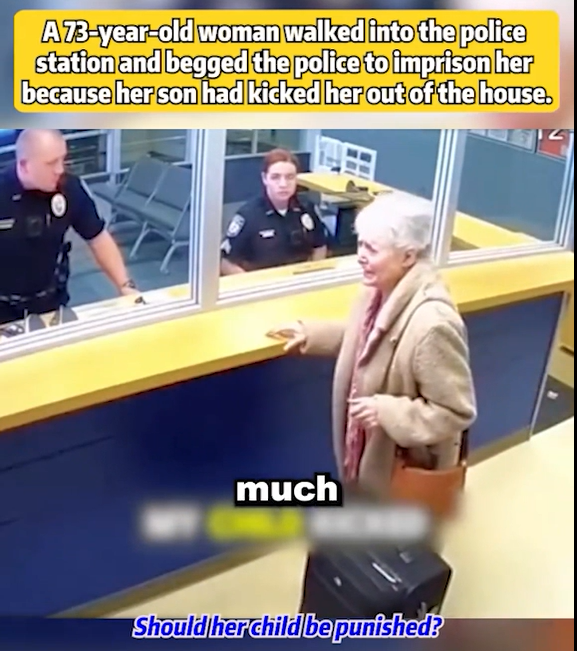
In a heart-wrenching and deeply emotional moment, a 73-year-old woman walked into a police station, suitcase in hand, and begged the officers to imprison her. Her plea was not due to criminal behavior but rather the painful reality of being kicked out of her home by her own son. The situation was not just about the immediate conflict between mother and child; it speaks to a much larger issue—the challenges faced by aging individuals in families, the lack of support systems, and the stigma surrounding elder abuse.
This incident provides a glimpse into the emotional and psychological toll that aging can take on individuals, especially when they are forced to face neglect or abandonment from those they once cared for. While society often associates family conflict with younger generations, the reality is that older adults are frequently vulnerable to emotional and physical neglect, often in the very homes where they should feel safe.
A Heartbreaking Plea: The Unspoken Struggles of the Elderly
For many elderly individuals, the transition into later years is often accompanied by increasing vulnerability. Physical limitations, health issues, and diminished independence make them more reliant on family members and caregivers. In the case of this elderly woman, the emotional trauma of being cast aside by her son symbolizes a tragic reality faced by many seniors.
Elderly individuals often have a deep emotional connection to their families, and the thought of being rejected by their own children can be devastating. The emotional toll of such abandonment is not just about the loss of a home; it also represents a loss of dignity and self-worth. This woman’s plea for imprisonment is a clear cry for help, a desperate attempt to find a safe place when her own family has failed her.
While family conflict is common, the elderly are particularly vulnerable when such conflicts arise. Their reliance on family for care and support can lead to feelings of isolation when those bonds are broken. The stigma surrounding aging—where elderly individuals are often seen as a burden—can exacerbate feelings of loneliness, anxiety, and depression.
The Emotional Impact of Aging and Family Conflict
Aging brings with it inevitable physical and cognitive decline. For many seniors, this decline is paired with a loss of independence, which can be deeply upsetting. As they become more dependent on others for daily tasks, they may struggle with feelings of helplessness or worthlessness. These feelings are compounded when a person’s family, those who should be their primary source of support, is the very one causing them harm.
For the elderly woman in the video, being cast out by her son represents the breakdown of a fundamental relationship. Children, who were once cared for and nurtured by their parents, often become the caregivers in old age. When that relationship falters, it is more than just a practical loss; it is a deeply emotional one. Many seniors in this situation may feel rejected, abandoned, or unloved, which further impacts their mental health and overall well-being.
Psychological Consequences of Family Neglect
The emotional consequences of family neglect can be severe for the elderly. Abandonment or mistreatment by family members can lead to depression, anxiety, and feelings of despair. Seniors who face these emotional struggles may withdraw from social interactions, become distrustful of others, or even suffer from chronic stress-related conditions such as hypertension or heart disease.
For those who find themselves in this woman’s situation—kicked out of their own home by their children—the psychological damage can be lasting. It can erode their sense of self-worth and place them at increased risk of developing mental health disorders, particularly if they are unable to find support elsewhere.
Exploring the Role of Children in Caring for Aging Parents
One of the most profound aspects of this scenario is the role that children play in the care of their aging parents. The expectation of reciprocity in familial relationships is ingrained in many cultures: parents care for their children during their formative years, and in turn, children are expected to care for their parents as they age. However, this expectation is not always met, and when it is, it is not always with the care and compassion that one would expect.
Generational Gaps and the Caregiving Burden
The transition from being a child to becoming a caregiver for one’s parents can be difficult for many people. As children grow older and establish their own families, they may struggle to balance the demands of raising children, managing careers, and caring for aging parents. This generational gap can lead to misunderstandings and tensions between parents and children.
For some, caring for an elderly parent may feel like a burden, especially if the relationship with the parent has been strained over the years. In these cases, the elderly may find themselves isolated, with little to no support. This is likely the case for the elderly woman in the video, whose son may have seen her as a burden rather than a person in need of support and care.
The Importance of Compassionate Caregiving
Compassionate caregiving involves more than just providing basic needs—it requires emotional support, understanding, and patience. Elderly individuals, especially those with health issues, require more than just physical care; they also need emotional and psychological care to maintain their dignity and quality of life. It is the responsibility of the children, or caregivers, to ensure that their elderly parents feel loved, respected, and secure in their later years.
The Lack of Support Systems for Seniors in Crisis
One of the central issues highlighted by this situation is the lack of sufficient support systems for seniors who are in crisis. While there are programs that exist to assist the elderly, they are often not enough to meet the growing needs of this population.
Social Services for the Elderly
In many regions, there are social services available to assist elderly individuals, such as financial aid, healthcare services, and home assistance programs. However, these services are often stretched thin and may not provide the kind of comprehensive support needed for seniors in emotional or physical distress.
In this case, the elderly woman likely had few options available to her once her son kicked her out of the house. Her decision to go to the police station was likely a last resort, as she had nowhere else to turn. The lack of appropriate social services for seniors who face family rejection or abuse is a significant gap in the current system.
The Need for More Comprehensive Elder Care Systems
There is a growing need for comprehensive systems that provide a network of support for aging individuals, particularly those facing family rejection or abuse. These systems should include not only physical care but also emotional and psychological support. Elderly individuals who experience family conflicts or abuse need a safety net that includes legal assistance, mental health services, and housing support.
In addition, elder care systems should focus on providing resources for caregivers to help them manage the emotional and physical demands of caring for aging parents. This support will ensure that family members do not feel overwhelmed and are better equipped to care for their elderly relatives with compassion and understanding.
Addressing the Stigma Around Elder Abuse and Neglect
While elder abuse is a growing issue, it is often overlooked or minimized. There is a significant stigma surrounding the mistreatment of elderly individuals, and in some cultures, there may be a reluctance to acknowledge the severity of the problem. This stigma makes it harder for victims to seek help, as they may fear being judged or dismissed.
Elder abuse can take many forms, including physical abuse, emotional neglect, financial exploitation, and abandonment. In the case of the elderly woman in the video, her son’s actions—kicking her out of the house—constitute emotional neglect and abandonment. This type of abuse is particularly damaging, as it undermines the individual’s sense of security and self-worth.
Breaking the Silence on Elder Abuse
To address elder abuse, society must break the silence and confront this issue head-on. Public awareness campaigns and educational programs that highlight the signs of abuse and neglect are essential in empowering seniors to speak up. In addition, caregivers and family members need to be educated about the responsibilities and emotional aspects of caring for aging parents.
Legal and Social Support for the Elderly: A Growing Need
The legal system must also play a more significant role in protecting the elderly from abuse and neglect. There should be clear legal protections for seniors who are facing family rejection or mistreatment, and resources must be available to help them navigate the legal process. This includes access to legal counsel, advocacy groups, and shelters that provide temporary housing for seniors in need.
Strengthening Laws and Enforcement
While laws regarding elder abuse do exist, they are not always enforced effectively. The elderly often do not have the means to defend themselves legally or may feel too embarrassed or fearful to seek legal help. Strengthening these laws and ensuring that elderly individuals have access to legal assistance is a key step in protecting them from further harm.
The heart-wrenching plea of the 73-year-old woman in the video serves as a reminder of the challenges faced by aging individuals, especially those who are mistreated or neglected by their own families. It highlights the importance of providing comprehensive care and support for the elderly and the need for stronger systems that protect their rights and well-being.
The elderly are not a burden but a cherished part of our communities who deserve love, respect, and care. It is essential that we address the growing issue of elder abuse and neglect and work to create a world where aging individuals are supported, valued, and treated with dignity.
As a society, we must do better. By strengthening social services, raising awareness about elder abuse, and supporting caregivers, we can ensure that no one is left feeling abandoned, isolated, or unloved in their later years. The elderly deserve a safe and supportive environment, where they can live out their lives in peace and comfort.
As people age, the transition from independence to reliance on others can be an incredibly difficult one. Aging individuals often face the harsh reality that their physical health and mental sharpness are not what they once were. Many elderly people who have spent their lives providing for themselves and their families are suddenly forced to lean on others for basic needs, such as housing, food, and medical care.
This loss of independence can lead to feelings of helplessness, fear, and depression. The elderly woman in the video, who sought refuge in a police station after being kicked out by her own son, represents a common but often hidden struggle faced by seniors. Unfortunately, when a senior is abandoned by family, as was the case with this woman, it becomes a moment of complete isolation—one that no individual should have to experience.
Loss of Identity and Dignity in the Aging Process
As people grow older, they may also lose their sense of identity. For many, being able to care for oneself and contribute to family life is a source of pride and fulfillment. When this ability is taken away, it can result in a profound sense of loss. For some elderly individuals, being forced to depend on others for care can strip them of their dignity.
This loss of dignity is especially painful when it is inflicted by close family members, who are expected to be the ones providing care and emotional support. Family rejection, as seen in this case, creates a deep emotional wound. The elderly woman’s plea for imprisonment highlights the depths of despair and isolation she felt after being rejected by her own son. It’s an extreme cry for help, a reflection of how much she was willing to give up—her freedom—for the sense of security and respect she no longer felt from her own family.
The Impact of Loneliness on Mental Health
Loneliness is a significant concern for the elderly, particularly those who are estranged from their families. Research has shown that loneliness can have a severe impact on the mental and physical health of older individuals. The elderly woman’s experience of being abandoned by her son is an extreme example of this, but it highlights a broader issue: the growing number of seniors who live in isolation.
The emotional toll of loneliness can lead to mental health issues such as depression, anxiety, and cognitive decline. Seniors who are isolated and have no social interactions are also at a greater risk of developing physical health issues, including heart disease, high blood pressure, and weakened immune systems. The psychological effects of loneliness are not just about feeling sad—they are tangible, affecting both the mind and the body.
The situation faced by the woman is an example of how family conflict can worsen these issues. When elderly individuals are rejected by their own children, they may feel like they have nowhere left to turn. It’s important to acknowledge that this loneliness is not just about being physically alone—it’s also about being emotionally abandoned by the people who should have cared for them the most.
Breaking the Cycle of Family Rejection: A Call for Greater Awareness
Family rejection, particularly of elderly parents, is a growing problem that needs to be addressed. The emotional consequences for the individual are clear, but the broader societal impact is also profound. If family rejection of the elderly continues to be overlooked or minimized, it can perpetuate a cycle of neglect and isolation that harms not only the elderly but society as a whole.
To break this cycle, it is essential to start by raising awareness of the emotional, physical, and psychological toll that family rejection takes on elderly individuals. We must change the cultural narrative surrounding aging, ensuring that the elderly are seen as valuable members of society who deserve respect and care, not just as burdens.
Education as a Tool to Prevent Elder Neglect
One of the most effective ways to address family rejection of the elderly is through education. Many people may not be aware of the impact their actions can have on their elderly parents or relatives. Elder abuse, whether it’s physical, emotional, or financial, is often a result of ignorance or a lack of understanding about the challenges that aging individuals face.
Education programs for adult children about the realities of aging and the responsibilities of caregiving can help reduce incidents of neglect and abandonment. These programs can also help foster empathy and understanding, allowing family members to better cope with the demands of caregiving and to provide support for their aging loved ones in healthier ways.
In addition, educating the general public about the signs of elder abuse and how to report it is crucial in preventing future cases. As communities become more aware of the issues that elderly individuals face, they are more likely to take proactive steps to help seniors who are in need.
The Role of Social Services in Supporting the Elderly
While family care is essential, social services also play a crucial role in supporting the elderly. When families are unable or unwilling to care for elderly members, social services can provide vital assistance. These services include access to health care, financial aid, housing assistance, and counseling, all of which can help seniors maintain their dignity and independence.
However, many social services are underfunded and overstretched. While some areas offer senior-specific programs that provide support, others may not have the resources to meet the growing demand for elder care. This disparity highlights the need for a more robust and equitable social safety net for seniors, ensuring that no elderly individual is left without help when they need it the most.
The Importance of Holistic Support for Seniors
Aging individuals who experience family rejection need more than just physical support—they need emotional and social support as well. Holistic programs that address the full spectrum of needs for elderly individuals—mental health, socialization, physical care, and legal assistance—can help seniors stay healthy and thrive despite facing challenging circumstances.
One key area of support is mental health services. Many seniors who are rejected by their families face depression and anxiety due to the emotional toll of isolation and neglect. Access to counseling and therapy can help these individuals process their feelings, develop coping mechanisms, and regain a sense of hope.
Creating Safe Spaces for the Elderly in Crisis
Elderly individuals facing family rejection or mistreatment need safe spaces where they can find refuge and support. These spaces could include shelters, community centers, or crisis hotlines specifically designed to assist seniors in need. The goal is to create an environment where they feel secure, valued, and supported, so they can regain their independence and heal emotionally.
The elderly woman in the video should not have had to resort to asking the police to imprison her. There should have been other options available to her—options that provided not only physical care but also emotional and psychological support. Communities need to do more to ensure that no elderly person is left feeling abandoned or unsafe.
Elder Abuse Laws and the Role of Law Enforcement
While police intervention may seem like an appropriate response in some situations, elder abuse requires more than just emergency intervention. It requires a systemic approach to ensure that elderly individuals are protected from abuse and neglect, whether it comes from family members or others in their lives.
The Need for Stronger Legal Protections for Seniors
In many regions, elder abuse laws are still lacking, and enforcement is often weak. Even when laws exist to protect seniors, they may not be fully implemented or understood by the general public. It is essential for governments to pass stronger laws that explicitly protect seniors from abuse, abandonment, and exploitation.
Furthermore, law enforcement agencies need specialized training to recognize the signs of elder abuse and to respond appropriately. This includes understanding the emotional and psychological aspects of elder abuse, as well as knowing how to connect elderly individuals with the appropriate services and resources.
Advocacy groups that focus on elder rights play a crucial role in raising awareness about elder abuse and advocating for stronger protections. These organizations work tirelessly to improve the lives of elderly individuals, providing resources, legal assistance, and support for victims of abuse. Their efforts help create a society where seniors are respected, cared for, and protected from harm.
The heartbreaking plea of the 73-year-old woman at the police station is a powerful reminder of the vulnerabilities that aging individuals face. Family rejection, neglect, and abuse are real issues that affect millions of elderly people every day.
However, her story also highlights the importance of compassion, empathy, and support. It is essential that we, as a society, recognize the emotional and physical toll that aging can take on individuals and ensure that we have systems in place to provide the care and support seniors need.
By improving public awareness, strengthening social services, advocating for stronger legal protections, and providing compassionate caregiving, we can create a world where no elderly person is left feeling abandoned, isolated, or unloved. Every aging individual deserves to live their later years with dignity, respect, and security—something we all have the power to provide.