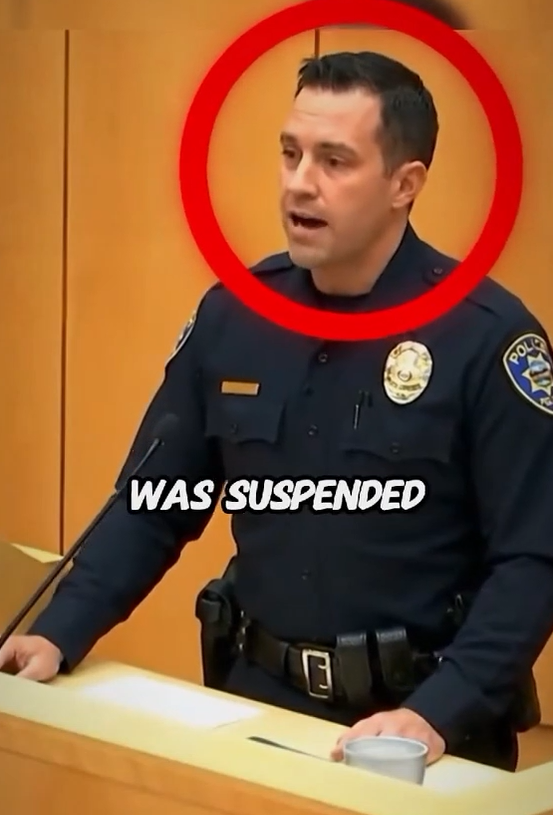
In a controversial incident that has raised both eyebrows and questions about professional ethics in law enforcement, a police officer has been suspended after buying food for an individual involved in a robbery. This shocking incident, captured both in video and photographic evidence, has sparked a heated debate regarding the boundaries between compassion and professional conduct within the police force. What initially seemed like a simple act of kindness has led to an intense examination of the officer’s judgment and the wider implications for police conduct during criminal investigations.
An Officer’s Generosity Turns into a Disciplinary Matter
In the video footage, the officer is seen speaking calmly with a man, later identified as a suspect involved in a robbery. The officer’s demeanor appears relaxed, and in a surprising turn of events, he offers to buy food for the suspect as part of what seems like an attempt to show kindness. The police officer can be seen taking the suspect to a nearby food establishment and paying for the meal, an action that clearly crosses the line between his professional obligations and personal feelings of empathy.
While the officer’s intent may have been to assist someone in need or show a moment of compassion, the public reaction has been largely negative. The act of purchasing food for a suspect, particularly one involved in a criminal activity like robbery, has raised alarms about potential lapses in judgment and what might be viewed as an inappropriate form of engagement with an active criminal.
The Ethical Boundaries: Where Should Compassion End in Law Enforcement?
This incident poses the question: where should compassion and professional duty intersect, and when do they risk undermining the integrity of law enforcement practices? Police officers are trained to uphold the law, ensure justice, and maintain public order. Their interactions with criminals and suspects must always be conducted with the understanding that their behavior is both a reflection of their professionalism and an example for the public to follow.
Compassion is a cornerstone of effective policing, especially in community-oriented approaches, where building trust with the public is essential. Officers often deal with vulnerable populations, such as individuals struggling with addiction, homelessness, or mental health issues, and compassion can help in de-escalating tense situations or encouraging individuals to seek help. However, this type of generosity must be carefully managed to ensure that it does not compromise the integrity of the law or the officer’s role in ensuring justice.
The officer in this case may have acted out of a desire to show kindness to someone in distress, but the action of buying food for a robbery suspect raises questions about where the line is drawn between genuine empathy and professional duty. Law enforcement officers must always prioritize the safety and well-being of the community while adhering to legal frameworks and ethical guidelines.
Public Outrage: Could This be an Act of Compassion Gone Wrong?
The news of the officer’s suspension came as a surprise to many, as some viewed the officer’s actions as compassionate rather than malicious. Supporters of the officer argue that his actions demonstrated an understanding of the complexities of human behavior and that his decision to buy food for the suspect was rooted in kindness, not a lapse in judgment. They suggest that the officer was trying to offer help to someone who may have been in need, regardless of their involvement in criminal activity.
However, the majority of public opinion has been less forgiving. Critics have pointed out that, as a law enforcement officer, the officer’s primary responsibility is to enforce the law and act impartially. By purchasing food for a robbery suspect, the officer may have inadvertently signaled that he was willing to ignore the seriousness of the crime. For many, this act of generosity raised concerns about the officer’s ability to remain neutral in his duties and whether this lack of professionalism could undermine the integrity of the entire law enforcement system.
Additionally, this incident comes at a time when police officers across the country are facing heightened scrutiny, particularly in the wake of numerous incidents involving the abuse of power or unethical behavior. Given this context, any action that could be perceived as unprofessional or inconsistent with established protocols could be seen as a violation of public trust.
What Does This Mean for the Future of Law Enforcement Practices?
This incident serves as a learning moment for law enforcement agencies, highlighting the fine line between showing empathy and maintaining professional boundaries. While compassion is crucial for effective policing, it’s important to remember that police officers must balance this empathy with the need to uphold the law and serve the public impartially.
As part of the investigation into the officer’s actions, it’s likely that the department will review its policies on interactions with suspects, particularly in cases where officers may feel inclined to offer assistance. This may lead to new guidelines and training for officers on how to handle such situations in a manner that is both compassionate and professional, without risking the perception of bias or favoritism.
For the officer involved, this incident could serve as an opportunity for reflection and growth. While it’s clear that their intentions were not malicious, the fallout from the incident may prompt the officer to reconsider how they approach sensitive situations in the future. This, in turn, could contribute to improving public perception of law enforcement practices, ensuring that officers maintain the trust and respect of the communities they serve.
The Role of Social Media in Amplifying Controversies
In the age of social media, incidents like this are often amplified, with public opinion shaping the narrative long before an official investigation can take place. The video footage of the officer purchasing food for the robbery suspect quickly spread across various platforms, sparking debates and discussions among the public. Social media users voiced their opinions, and the case became a point of contention for many.
While social media provides a platform for people to voice their opinions, it can also contribute to the spread of misinformation and sensationalized stories. In this case, the officer’s actions were dissected from multiple angles, and the overall public response was polarized. On one hand, there were those who saw the officer’s actions as a human moment of kindness, while others felt that such behavior was unacceptable in the context of law enforcement.
For law enforcement agencies, managing their image in the age of social media is becoming an increasingly difficult task. The speed at which information spreads, coupled with the viral nature of controversial content, means that even the most well-intentioned actions can quickly be misinterpreted or blown out of proportion. Law enforcement agencies must be proactive in managing these situations, offering transparent explanations and working to rebuild public trust when incidents like this occur.
The suspension of the officer involved in this incident speaks to the complexity of law enforcement in the modern world. While showing compassion for others is a vital part of human nature, the officer’s actions underscore the challenges that come with balancing empathy with the responsibilities of maintaining order and upholding the law.
In the end, this case illustrates that while compassion is an essential trait for law enforcement officers, it must be tempered with professionalism and a clear understanding of the role officers play in society. Moving forward, law enforcement agencies will need to ensure that their officers are properly trained to recognize when acts of kindness are appropriate and when they risk compromising the integrity of their duties.
For the officer involved, the suspension is a consequence of their actions, but it also serves as a reminder of the importance of maintaining a professional demeanor in all situations. The outcome of this case will likely have lasting implications for both the officer’s career and for the broader policing community, as law enforcement agencies reassess the importance of empathy in their approach to public service.
As we move forward, this incident serves as a critical reminder of the importance of professional boundaries in law enforcement and the delicate balance between compassion and responsibility.
The incident with the officer’s generosity, where he bought food for a suspect, has opened up a larger conversation not only about his professional life but also his personal decisions and the ethical boundaries within them. While the act of buying food for a suspect sparked public backlash, another event involving the officer—paying for his own groceries—brings forth an interesting angle of personal responsibility and financial independence, showcasing the complexities of balancing personal ethics with professional obligations.
The Significance of Paying for One’s Own Groceries
At first glance, the act of an officer paying for his groceries may seem trivial compared to the previous controversy. But, on a deeper level, this simple, self-sustained act of paying for his own groceries shows the officer’s sense of personal accountability, the commitment to his responsibilities outside of his uniform, and how these moments of personal life should not be overshadowed by public perception, especially when an officer’s professional actions come under scrutiny.
For many people, paying for groceries may seem like a mundane task. However, it is a reflection of one’s attitude toward responsibility. The officer, in this case, demonstrated independence and self-reliance, values that are fundamental both in personal and professional life. In a world where people are constantly interacting with service professionals, including law enforcement officers, the ability to manage one’s finances, respect the value of goods, and handle situations independently speaks volumes about a person’s character.
The contrast between the officer buying food for himself and the initial incident of paying for a suspect’s meal highlights an interesting tension between actions seen as acceptable versus those perceived as overstepping professional boundaries. Paying for groceries, a personal task, reflects the officer’s approach to everyday life and the ethical stance he holds in that realm. His decision to take financial responsibility for personal needs stands in stark contrast to an earlier situation, where a display of generosity raised questions about his professional behavior.
The Psychological Impact of Public Scrutiny on Officers
For law enforcement officers, their personal actions are often placed under a microscope, particularly in today’s digital age. This scrutiny can create significant pressure, especially when an officer’s professional behavior is being questioned, and their personal choices are perceived through a lens of public judgment.
The psychological impact of this kind of scrutiny cannot be overstated. Officers, like anyone else, are human beings who make mistakes, show kindness, or display acts of self-reliance. These actions, even if well-intentioned, often get blown out of proportion, leading to unwarranted stress and anxiety about public perception.
In the case of the officer involved in the grocery purchase, some may feel that such scrutiny over minor actions is unfair. Nevertheless, it’s clear that these personal moments reflect an officer’s overall ethical framework and contribute to their public image. Balancing the expectations of the community with personal choices, such as buying groceries or helping others, is a difficult task, especially when each action can be weighed against the officer’s responsibilities.
Public Perception and the Pressures of Accountability in Law Enforcement
The public’s perception of law enforcement is a delicate issue. The idea of “doing the right thing” has become increasingly complex, especially for officers who face intense criticism for their actions, even when they might be well-intentioned. The grocery purchase situation is a minor yet telling example of how an officer’s decisions in their personal life can bleed into their professional image.
In today’s world, where the smallest actions are often shared and judged publicly, the stress placed on law enforcement officers to appear impeccable is enormous. The reaction to the officer’s decision to buy food for a suspect is an example of how such a seemingly innocent act can spark a larger conversation about accountability. Similarly, when the officer pays for their groceries, it could be interpreted as a sign of self-sufficiency and personal integrity, but it also raises questions about whether the public will continue to scrutinize each of his personal actions.
The Need for Officer Transparency and Community Trust
While law enforcement officers are expected to maintain high standards of professionalism, it’s also important that the communities they serve understand the complexity of their roles. Officers should have the opportunity to engage with their communities in a way that is supportive and builds trust—whether it’s showing empathy or engaging in normal daily activities like paying for groceries.
Public trust is crucial to maintaining effective law enforcement. In many cases, community policing practices, where officers actively engage with the public and build positive relationships, can make a difference in how officers are perceived. This concept of community engagement is vital, not just in handling criminals but in fostering a bond between officers and the people they protect.
The incident with the officer buying food for the suspect highlights the gray area of community engagement. Should law enforcement officers be allowed to show kindness, even to those who have committed crimes? And to what extent does such behavior affect the integrity of their professional duties? There is a delicate balance to be struck between showing compassion to those in need while maintaining the authority and impartiality expected of police officers.
The Broader Issue: Empathy and Professionalism in Policing
The bigger question raised by both the officer’s decision to buy food for a suspect and his more personal decision to pay for his groceries is how empathy and professionalism intersect. While empathy is an essential quality for law enforcement officers, it can sometimes conflict with their roles as enforcers of the law.
The officer’s actions raise a broader question about the role of empathy in policing. Can compassion sometimes impede professional duties, or is it an essential tool for officers to effectively serve the community? Officers are often trained to de-escalate situations, maintain composure under pressure, and respond with fairness and understanding. But when does that understanding of people’s personal struggles cross into making decisions that could undermine the integrity of the law or compromise impartiality?
Training and Boundaries: Ensuring Proper Conduct
It’s important to acknowledge that law enforcement agencies are becoming more attuned to the complexities of empathy in policing. Today, many police departments provide training on topics such as mental health, substance abuse, and de-escalation tactics, which are all part of a larger effort to ensure that officers are able to balance empathy with their responsibility to enforce the law. However, what happens when an officer’s actions go beyond their professional duties and appear to favor certain individuals?
Training that includes ethical decision-making, setting boundaries, and knowing when to step in or step back from personal involvement is essential. The officer’s situation—where personal compassion for a suspect and daily life responsibilities intersect with public scrutiny—shows that managing both empathy and professional duty in policing is more challenging than it appears.
The Future of Law Enforcement: Compassionate but Professional
The discussion about whether law enforcement officers can show empathy or make personal decisions without jeopardizing their professional image and responsibility will continue as policing evolves. Officers are increasingly expected to not only enforce the law but to act as community leaders, mentors, and figures of support. This role requires a complex balance of enforcing authority while remaining approachable and compassionate to community members in distress.
In the future, law enforcement agencies should consider the importance of training officers to maintain their professionalism while understanding the personal struggles of those they serve. Programs that encourage officers to build relationships, show empathy, and interact positively with the community should continue to be a core part of police training.
At the same time, it’s important for both the public and law enforcement to understand that being a good police officer doesn’t mean being devoid of human emotions. Empathy and compassion can coexist with professionalism if boundaries are respected, and if officers are guided by a clear understanding of their responsibilities.
The officer’s decision to buy food for a suspect may have been a simple act of kindness, but it reflects a larger conversation about the role of empathy in law enforcement. Whether buying groceries for oneself or showing compassion to a suspect, each decision carries weight in shaping the officer’s public image and the trust placed in them by the community.
The situation highlights the complexities that law enforcement officers face every day as they balance the demands of their profession with their human instincts. For law enforcement to remain effective, officers must learn to balance their duty to uphold the law with the compassion necessary to protect and serve their communities. The incident serves as a reminder of the challenges that come with this balancing act and underscores the importance of professionalism, empathy, and personal responsibility in policing.
As law enforcement continues to evolve, it is critical that officers learn how to navigate the fine line between empathy and professionalism. Officers are often placed in situations where their instinct is to help, whether it’s through an act of kindness, offering support to someone in distress, or providing resources. However, maintaining the appropriate professional boundaries is essential to ensuring that these acts do not interfere with their primary duties of upholding the law and maintaining public safety.
In this case, the officer’s actions, though stemming from a place of compassion, highlight the potential consequences of blurring these boundaries. Offering assistance to a suspect, even when well-meaning, could undermine the perception of impartiality that is expected of law enforcement officials. The officer’s decision to purchase food for a robbery suspect, despite the individual’s involvement in criminal activity, could be seen as an attempt to show kindness. However, it risks sending a message that law enforcement officers are willing to show preferential treatment to individuals who break the law, which could erode public trust.
The Role of Community Support in Policing
While officers face the challenge of balancing empathy with their responsibilities, it’s important to note that community policing models offer a way forward. In these models, officers work to build lasting relationships with community members, fostering trust and collaboration. Community policing emphasizes proactive approaches, such as engaging in local outreach, providing resources for at-risk populations, and being a supportive presence within neighborhoods.
Community-based policing not only allows officers to connect with the people they serve but also helps prevent potential criminal behavior by addressing issues such as substance abuse, mental health struggles, and poverty. Through these connections, law enforcement can help address the root causes of criminal behavior, potentially reducing the likelihood of future criminal activity and improving overall community relations.