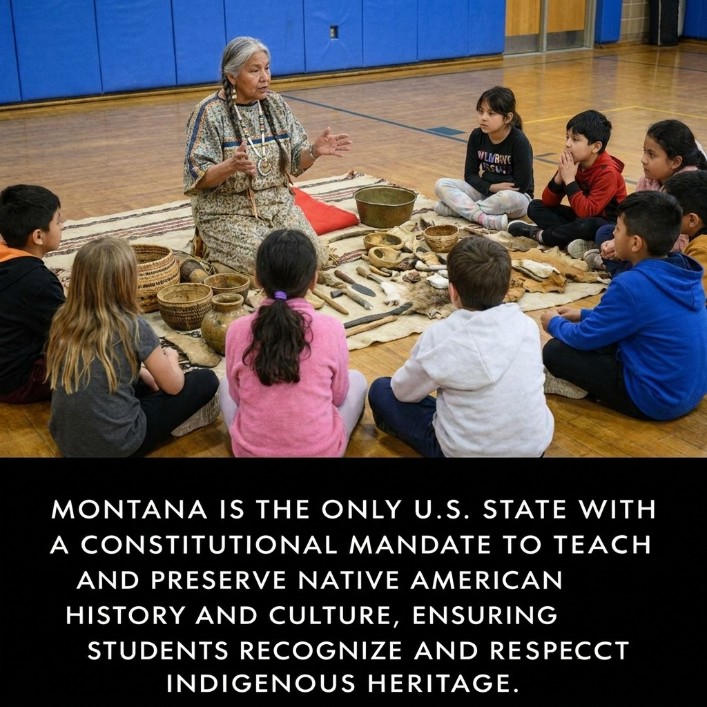
Montana stands apart in the United States for its unique commitment to preserving and teaching Native American history and culture within its public education system. As the only state with a constitutional mandate to educate students about Indigenous peoples, Montana recognizes the importance of ensuring that both Native and non-Native students understand the histories, cultures, and contributions of the original inhabitants of the land. This mandate, rooted in Article X of the Montana State Constitution, reflects a profound acknowledgment of Indigenous communities as living cultures with enduring traditions, languages, and governance systems. It represents not merely a curricular requirement but a broader societal commitment to respect, understanding, and historical accountability.
The constitutional mandate was implemented through the Indian Education for All program, which guides the integration of Indigenous content into schools across Montana. The program emphasizes that Native American history is not solely a subject of the past; it is a living, evolving reality that continues to shape the state, its communities, and the experiences of Indigenous peoples today. By incorporating perspectives from Montana’s Tribal Nations, the curriculum fosters authenticity, accuracy, and cultural relevance, addressing historical omissions and countering stereotypes that have long been present in traditional education. This collaborative approach ensures that Native voices play a central role in shaping educational content, reinforcing self-determination and cultural pride.
Indian Education for All provides teachers and schools with resources, professional development, and guidance to integrate Indigenous perspectives meaningfully into instruction. The curriculum spans multiple grade levels, embedding Native history and culture across subjects such as social studies, literature, language arts, science, and civics. Students learn about treaty rights, tribal sovereignty, historical and contemporary governance systems, traditional ecological knowledge, and the cultural continuity of Montana’s Tribal Nations. They also explore the relationships between Indigenous peoples and their ancestral lands, understanding how geography, ecology, and cultural practices intersect. This holistic approach ensures that students develop a comprehensive understanding of Native American histories and contemporary issues.
One of the program’s central goals is to foster respect and understanding between Indigenous and non-Indigenous communities. By exposing all students to accurate representations of Native culture, the program challenges long-standing misconceptions, promotes cross-cultural empathy, and cultivates informed citizenship. It also helps Native students see their identities, histories, and contributions represented in school curricula, which reinforces self-esteem, cultural pride, and engagement in learning. In this way, the mandate functions both as an educational tool and as a mechanism for promoting social cohesion, equity, and cultural recognition across the state.
The program’s implementation is strengthened by active collaboration with Tribal Nations. Tribal leaders, educators, and cultural experts provide input on curriculum development, instructional materials, and teaching strategies. This collaborative process ensures that Indigenous content is not tokenistic or superficial but instead reflects the depth, diversity, and authenticity of Native traditions and knowledge. Teachers receive training on culturally responsive pedagogy, learning how to integrate Indigenous perspectives in ways that are meaningful, accurate, and sensitive to the lived experiences of Native students. This ongoing partnership between schools and Tribal Nations is central to the program’s success, fostering a dynamic educational environment that honors Indigenous voices.
Montana’s constitutional mandate also acknowledges the historical injustices faced by Native peoples and seeks to promote awareness and understanding among future generations. By embedding Indigenous history in the curriculum, students confront the realities of colonization, forced removal, and cultural suppression while also learning about resilience, adaptation, and contributions of Native communities. This dual focus—on historical accountability and cultural celebration—ensures that education does not merely relay historical facts but also cultivates ethical understanding and empathy. Students are invited to reflect on the consequences of historical actions and to consider their roles in promoting equity, justice, and intercultural respect in contemporary society.
The educational impact of Montana’s policy extends beyond classrooms. By normalizing the teaching of Native American histories and cultures, the state fosters a climate of recognition, respect, and civic responsibility. Students leave school with a deeper understanding of the diversity and complexity of Montana’s communities, equipped with knowledge that can inform public discourse, policy decisions, and civic engagement. For Indigenous students, this integration of cultural content validates their identity, strengthens community bonds, and encourages participation in broader social and political life. It also challenges prevailing narratives that have historically marginalized Native voices, providing a model for education that is inclusive, accurate, and socially responsible.
In practical terms, schools incorporate Indigenous content through textbooks, oral histories, cultural artifacts, field trips to tribal sites, and participation in ceremonial events. Lessons may include studying treaties, analyzing the impact of European settlement, examining Native contributions to art, science, and governance, and learning traditional ecological practices. By embedding these experiences into standard curricula, students engage with material in a hands-on, experiential way, which enhances understanding and retention. Moreover, the approach emphasizes that Indigenous knowledge is dynamic and contemporary, rather than static or purely historical.
Montana’s constitutional mandate and the Indian Education for All program serve as a model for other states and nations seeking to integrate Indigenous perspectives into education. It demonstrates that legislative frameworks, when paired with community collaboration and culturally responsive pedagogy, can transform the way histories are taught and understood. The program underscores the importance of respecting Indigenous sovereignty and expertise in educational content, ensuring that curricula reflect the voices, priorities, and lived experiences of Native communities. It also provides a pathway for reconciliation, fostering recognition of historical injustices while promoting intercultural understanding and equity.
The significance of Montana’s policy cannot be overstated. It affirms that Indigenous peoples are not relics of history but vibrant, living communities whose experiences, knowledge, and contributions are essential to understanding the state and the nation. By mandating the teaching of Native American history and culture, Montana reinforces a broader societal commitment to cultural preservation, justice, and mutual respect. The policy ensures that students leave school not only with historical knowledge but also with a sense of responsibility to honor and engage with Indigenous communities in ways that are informed, respectful, and equitable.
Ultimately, Montana’s constitutional mandate represents a bold commitment to education as a tool for justice, reconciliation, and cultural continuity. It reflects the recognition that the histories and cultures of Indigenous peoples are integral to the story of the United States and that education has the power to shape attitudes, values, and relationships across generations. Through Indian Education for All, Montana students gain access to knowledge, experiences, and perspectives that cultivate empathy, respect, and understanding, fostering a society that values diversity, historical accuracy, and cultural integrity. The policy stands as a beacon of what is possible when governments, educators, and Indigenous communities collaborate to ensure that the past is honored, the present is inclusive, and the future is informed by justice and cultural awareness.
Montana’s constitutional mandate to teach Native American history and culture reflects a profound recognition that education is not merely a tool for literacy or numeracy, but a means of shaping society, understanding human experience, and promoting justice. At the heart of this mandate is the understanding that Indigenous peoples are not merely historical subjects but living communities with active cultures, languages, governance structures, and spiritual practices. By embedding Indigenous perspectives into the core of public education, Montana ensures that students learn to appreciate the continuity of Native cultures, the contributions of Indigenous peoples, and the complexity of historical and contemporary relationships between Native communities and broader society.
The Indian Education for All program, which operationalizes this constitutional mandate, is a comprehensive initiative designed to integrate Indigenous knowledge into curricula across all grade levels. It seeks to provide students with a holistic understanding of history and culture, going beyond textbook narratives to incorporate oral histories, traditional ecological knowledge, tribal governance, language, and spirituality. Teachers are trained to approach this material with cultural sensitivity, authenticity, and respect, working closely with local Tribal Nations to ensure that instruction accurately reflects Indigenous perspectives. This collaborative approach strengthens the credibility of the program and provides students with opportunities to engage directly with Native educators, elders, and cultural experts.
Curriculum development under Indian Education for All includes a range of topics, each carefully designed to illuminate different aspects of Indigenous experience. Students learn about tribal sovereignty, the historical and legal foundations of treaties, and the impact of colonization and forced relocation on communities. They explore the complex social structures of tribal governance, the significance of ceremonial practices, and the ways in which Indigenous knowledge has informed land stewardship, agriculture, and environmental management. Lessons often incorporate storytelling, artifacts, and site visits, allowing students to engage with Indigenous culture in a tangible and immersive way. This experiential learning fosters a deeper understanding of the values, principles, and histories that have shaped Montana’s Native communities.
The program also emphasizes the resilience and continuity of Indigenous cultures. Rather than presenting Native peoples solely as victims of historical events, Indian Education for All highlights the strength, creativity, and adaptability that have allowed communities to survive and thrive despite centuries of displacement, assimilationist policies, and systemic marginalization. Students are introduced to the stories of contemporary Indigenous leaders, artists, activists, and scholars, demonstrating that Native cultures are dynamic and evolving rather than static or relics of the past. By framing instruction in this way, the program cultivates respect, empathy, and appreciation for the ongoing contributions of Indigenous communities to the cultural, political, and social fabric of Montana.
A distinctive feature of Montana’s approach is the direct involvement of Tribal Nations in the development and delivery of educational content. Tribes provide guidance on curricular materials, advise on culturally appropriate teaching methods, and participate in professional development for educators. This partnership ensures that Indigenous voices are central to the educational process, reinforcing the principle of self-determination and cultural sovereignty. It also allows students to encounter Indigenous knowledge directly from the communities that preserve and live it, rather than through a filtered or secondhand lens. By incorporating Tribal expertise, schools are able to teach history and culture in ways that are both accurate and meaningful.
The educational impact of Montana’s policy extends beyond classroom knowledge to foster social and civic development. Students who receive comprehensive instruction in Native history and culture are better equipped to understand the complexities of cultural identity, historical injustice, and social equity. They learn to recognize the value of diversity, the importance of ethical responsibility, and the role of empathy in building cohesive and inclusive communities. For Native students, the program reinforces identity, pride, and cultural continuity, providing a sense of validation and belonging that can positively influence academic achievement and personal development. For non-Native students, it cultivates awareness, understanding, and respect, creating a foundation for informed civic engagement and intercultural dialogue.
Montana’s program also addresses historical omissions and misrepresentations in education. Traditional curricula in the United States have often marginalized Indigenous histories, portraying Native peoples as either vanishing or peripheral to the nation’s story. Indian Education for All challenges these narratives by presenting Native histories as integral to the state’s and nation’s development. Students learn about the resilience of communities, the impact of treaties, and the contributions of Indigenous peoples in shaping Montana’s cultural, environmental, and political landscapes. By correcting omissions and providing balanced perspectives, the program ensures that all students gain a more nuanced and accurate understanding of history.
One of the most compelling aspects of Montana’s mandate is its emphasis on Indigenous languages. Language is a cornerstone of culture, carrying knowledge, worldview, and tradition across generations. Indian Education for All encourages schools to incorporate language instruction alongside cultural and historical content, helping students understand the deep connection between language, identity, and heritage. Efforts to revitalize and teach native languages not only preserve linguistic diversity but also foster cognitive, social, and emotional benefits for students, promoting a richer, more holistic educational experience.
In addition to classroom instruction, the mandate encourages community engagement and experiential learning. Schools often collaborate with tribal elders, cultural centers, and local historians to provide students with opportunities to participate in ceremonies, visit sacred sites, and observe traditional practices firsthand. These experiences reinforce the lessons taught in class, creating a lasting connection to the material and allowing students to appreciate the living nature of Native culture. By integrating experiential learning, the program ensures that education is not abstract but deeply connected to real-world contexts, history, and people.
Montana’s constitutional commitment also serves as a model for other states and educational systems. It demonstrates that legislation can play a critical role in shaping educational priorities, particularly in areas of historical and cultural significance. The state’s approach shows that meaningful inclusion of Indigenous perspectives requires sustained commitment, collaboration with tribal communities, and the integration of cultural knowledge across multiple subjects and grade levels. By institutionalizing the teaching of Native American history and culture, Montana ensures that this knowledge is not optional or peripheral but a core component of civic education.
The social and cultural benefits of this policy are multifaceted. By fostering awareness and respect for Native heritage, the program contributes to reconciliation and healing, acknowledging the historical injustices faced by Indigenous communities while affirming their contemporary presence and contributions. It also encourages critical thinking, ethical reflection, and empathy among students, promoting social cohesion and intercultural understanding. The program’s holistic approach equips students with the tools to engage thoughtfully with complex historical and contemporary issues, fostering informed citizenship and community engagement.
Finally, Montana’s constitutional mandate embodies a broader principle: that education is a tool not only for academic development but also for cultural preservation, ethical formation, and social justice. By requiring the teaching of Native American history and culture, the state recognizes the moral and civic imperative to honor the histories, contributions, and perspectives of Indigenous peoples. It affirms that education has the power to correct historical omissions, foster empathy, and build a society that respects diversity, inclusion, and shared humanity. Through Indian Education for All, Montana ensures that generations of students understand, value, and uphold the cultural heritage of the state’s Native communities, creating a foundation for a more equitable and informed society.
Montana’s commitment to teaching Native American history and culture is not merely symbolic; it has profound implications for the educational, social, and cultural development of students. By embedding Indigenous knowledge into the curriculum, the state ensures that all learners develop a nuanced understanding of history, culture, and society. This approach is particularly important in addressing long-standing gaps in education, where Native perspectives were historically excluded or misrepresented. For decades, textbooks presented incomplete or inaccurate narratives, often depicting Indigenous peoples as passive, vanishing, or confined to historical contexts. Montana’s constitutional mandate corrects these omissions, providing students with a richer, more accurate understanding of the state’s history and the ongoing presence and contributions of Native communities.
One of the most impactful aspects of Indian Education for All is its emphasis on collaboration with Tribal Nations. Tribal elders, educators, and cultural specialists are integral to curriculum development, ensuring that teaching materials are both accurate and culturally appropriate. This partnership reflects a recognition of sovereignty and respects the authority of Native communities to shape how their histories and cultures are presented. By actively involving Indigenous voices, the program creates an educational environment where Native knowledge is honored as legitimate, authoritative, and contemporary. Students gain not only factual knowledge but also an appreciation for the lived experiences, traditions, and values that inform Native communities today.
In the classroom, teachers incorporate a variety of instructional strategies to engage students with Native history and culture. Lessons often combine oral storytelling, hands-on activities, and multimedia resources to create immersive experiences. Students may examine artifacts, learn traditional crafts, or participate in simulated treaty negotiations to understand the historical context of land agreements and government policies. Field trips to tribal lands, cultural centers, or historic sites provide experiential learning opportunities that bring abstract concepts to life. By engaging multiple senses and perspectives, educators help students develop a deeper and more empathetic understanding of Native history, culture, and identity.
Language preservation is another critical component of the program. Montana recognizes that language is central to culture, identity, and knowledge transmission. Many schools offer instruction in Native languages, helping students understand the relationship between language, worldview, and cultural practice. This effort is not only valuable for Native students, who gain connection to their heritage, but also for non-Native students, who learn to appreciate the complexity, diversity, and depth of Indigenous linguistic traditions. By fostering language awareness, the program contributes to the revitalization of endangered languages and the maintenance of cultural continuity across generations.
The educational benefits of Indian Education for All extend beyond academic knowledge. Students develop critical thinking skills, cultural competency, and ethical reasoning. They learn to analyze historical events from multiple perspectives, consider the consequences of policy decisions, and reflect on issues of justice and equity. These skills are essential for informed citizenship and for building inclusive communities that value diversity, human rights, and mutual respect. For Native students, the program reinforces cultural pride, identity, and resilience, while for non-Native students, it cultivates empathy, awareness, and respect for Indigenous perspectives.
Montana’s program also addresses contemporary social and political issues faced by Native communities. Instruction includes discussion of sovereignty, treaty rights, and the ongoing efforts of tribes to protect land, natural resources, and cultural heritage. Students learn about the contemporary challenges of Native nations, including economic development, healthcare disparities, and environmental stewardship. This approach ensures that education is not limited to historical analysis but encompasses living, dynamic communities, emphasizing the relevance of Indigenous perspectives in shaping modern society.
Community involvement further enhances the effectiveness of Indian Education for All. Tribal leaders, elders, and cultural practitioners participate in school events, guest lectures, and workshops. Their presence reinforces the authenticity and cultural grounding of instruction, allowing students to engage directly with the sources of knowledge. These interactions foster mutual understanding, respect, and cross-cultural dialogue, strengthening relationships between schools and Indigenous communities. Students develop a personal connection to the material, gaining insight into the lived experiences, values, and traditions of Native peoples that cannot be conveyed solely through textbooks.
The program also integrates arts and cultural expression as a means of teaching history and values. Native storytelling, music, dance, and visual arts are incorporated into lessons to provide students with immersive experiences that highlight cultural creativity and resilience. Artistic expression becomes a vehicle for understanding complex concepts such as identity, community, and adaptation. Students learn that Native cultures are not static relics of the past but living, evolving traditions that continue to shape Montana’s cultural landscape.
Evaluation and continuous improvement are key elements of the program. Educators and Tribal Nations work collaboratively to assess the effectiveness of curriculum materials, teaching methods, and student engagement. Professional development opportunities ensure that teachers remain informed about cultural practices, historical research, and pedagogical approaches that respect Indigenous perspectives. This ongoing refinement strengthens the program’s ability to meet its goals, ensuring that students receive education that is accurate, meaningful, and culturally responsive.