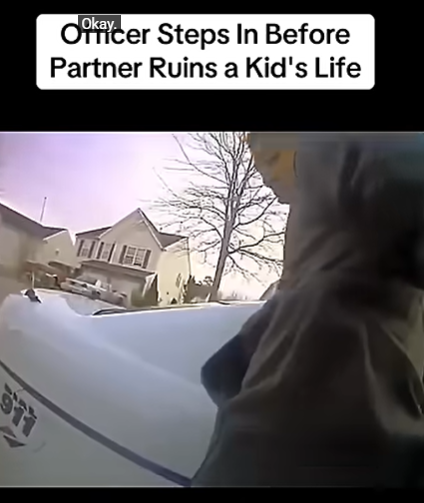
The bodycam video captures a tense encounter involving a 14-year-old boy, referred to in the narration as Malcolm, who is placed in handcuffs after an officer accuses him of being in possession of a stolen motor vehicle. The scene begins with the officer already taking control of the situation, placing Malcolm’s hands behind his back and securing him in handcuffs. From the very start, Malcolm appears confused and tries to explain that there is a simple way to clear up the accusation. He tells the officer that he has a bill of sale for the vehicle and that the document is inside the house. He also suggests that the officer can ring the doorbell and speak with his father, who can help provide the paperwork. Instead of pausing to verify that explanation, the officer dismisses him with a casual response and continues with the detention.
The most striking part of the encounter is how quickly the officer moves from accusation to restraint. Malcolm is not shown being given time to retrieve the bill of sale, call his father outside, or explain the ownership situation in detail. He immediately offers a way for the officer to verify his claim, but the officer does not appear interested in checking it at that moment. This creates the central conflict of the video: a young teenager says there is proof inside the house that the vehicle is not stolen, while the officer proceeds as if the accusation is already strong enough to justify handcuffs, a search, and placement in the back of a police cruiser.
Malcolm’s age adds a serious emotional layer to the footage. At 14 years old, he is still a minor, yet he is treated in a way that would be frightening for many adults. Being handcuffed behind the back, searched, and placed in a police vehicle can be intimidating, especially for someone so young. Malcolm’s immediate response is not to become aggressive or flee. Instead, he tries to explain that there is documentation available and that his father can confirm it. That detail matters because it suggests he is attempting to cooperate by pointing the officer toward evidence. The officer’s decision to brush off that explanation makes the encounter feel more troubling.
The officer tells Malcolm that he is being detained or arrested because of possession of a stolen motor vehicle. That is a serious accusation. Being connected to a stolen car can carry major legal consequences, and it is not the kind of claim that should be handled carelessly. But according to the narration, the officer’s decision appears to be based on a phone tip from a complainant rather than verified facts. The narrator points out that, within roughly 30 seconds, the officer decides to handcuff Malcolm without checking the Vehicle Identification Number, confirming the vehicle’s stolen status, or speaking to the father who Malcolm says has the bill of sale. That timeline is one of the most important parts of the commentary because it suggests the officer acted first and investigated later.
After handcuffing Malcolm, the officer begins searching him. He checks Malcolm’s mouth and pats him down for weapons or contraband. This part of the video adds another layer of intensity because Malcolm is already restrained and trying to explain himself. A pat-down may be framed by officers as a safety measure, especially during a detention connected to a suspected stolen vehicle. However, viewers may question whether the level of suspicion justified the speed and manner of the search, especially when Malcolm had already offered an explanation that could potentially be verified within moments. The search reinforces the feeling that the officer has already decided to treat Malcolm as a suspect before confirming whether the accusation is accurate.
Malcolm’s repeated mention of the bill of sale is important because a bill of sale can be a key document in showing a vehicle was purchased or transferred. While a bill of sale alone may not answer every legal question about ownership or registration, it is still relevant information. Malcolm is not making a vague excuse. He is identifying a specific document, saying where it is, and suggesting a specific adult who can retrieve it. That makes the officer’s dismissal stand out. A reasonable viewer may wonder why the officer would not take a moment to verify the document before escalating the situation further.
The officer’s response, described as “Yeah, yeah, yeah,” becomes one of the defining moments of the video because it sounds dismissive. Rather than acknowledging Malcolm’s explanation or telling him that the claim will be checked, the officer appears to wave it off and continue the detention. That kind of response can make a person feel unheard, especially when they are already in handcuffs. For a minor, the feeling of being ignored by an armed officer can be deeply distressing. Malcolm’s attempt to explain is not treated as helpful information, but as noise in the middle of the officer’s process.
The video’s legal commentary focuses heavily on whether the officer had enough justification to seize Malcolm. The narrator explains that under constitutional law, a person is considered seized when a reasonable person would not feel free to leave. The commentary references the Supreme Court case Florida v. Bostick and argues that Malcolm was clearly seized once he was placed in handcuffs. That point is central to the narrator’s argument because handcuffs remove any realistic possibility that Malcolm could walk away. Whether the officer uses the word “detained” or “arrested,” the physical reality is that Malcolm is restrained and under police control.
The narrator then argues that the seizure required probable cause or, at minimum, stronger verified facts than what the officer had at the time. According to the commentary, the officer had only an unverified tip and did not confirm the VIN or the vehicle’s status before handcuffing Malcolm. This is where the video shifts from a simple bodycam arrest to a broader discussion about constitutional protections. The argument is that police cannot lawfully restrain someone based only on weak or unverified information when there are obvious steps available to verify the claim. In this case, those steps appear to include checking the VIN, running the vehicle information, speaking with Malcolm’s father, or reviewing the bill of sale.
Malcolm’s complaint that the handcuffs are tight and causing pain adds another human element to the encounter. Once he is told to sit in the back of the police cruiser, he says the cuffs hurt. For someone his age, that discomfort likely adds to his fear and frustration. Tight handcuffs can make a person feel trapped and powerless. Even if an officer believes handcuffs are necessary, complaints about pain should still be taken seriously. The video summary does not suggest that Malcolm is physically fighting or trying to escape while making this complaint. Instead, he appears to be reacting to discomfort while being placed into the car.
The officer’s decision to place Malcolm in the cruiser also deepens the seriousness of the detention. Being handcuffed on the street is already a major restriction. Being searched and placed in the back of a police car makes the situation feel even more like an arrest, regardless of how the officer labels it. For Malcolm, the moment likely feels like he is being taken away before anyone has checked whether his explanation is true. That is what makes the footage so unsettling. The viewer sees a teenager offer a clear path to verification, but the officer continues with the process as if that explanation does not matter.
The narrator’s criticism centers on the lack of verification. If the allegation is that the vehicle is stolen, the VIN is one of the most important pieces of information. It can be checked against records to determine whether the vehicle has been reported stolen. The narrator argues that this step should have been done before Malcolm was handcuffed, especially when Malcolm said there was documentation available inside the house. The failure to verify first makes the officer’s actions appear rushed and possibly unjustified. In police work, quick action may be necessary when there is immediate danger, but the video commentary suggests there was no clear emergency requiring Malcolm to be handcuffed before basic facts were confirmed.
The situation also raises questions about how officers treat young people during investigations. Teenagers may not always know the exact legal language to use, but Malcolm appears to understand enough to say that he has proof of ownership and that his father can help. That should have been valuable information. Instead, the officer continues searching him and directing him into the cruiser. A more careful approach might have involved keeping Malcolm nearby, asking him to remain still, calling the father to the door, and verifying the paperwork before deciding whether handcuffs were necessary. That kind of approach could have protected officer safety while also avoiding the appearance of unnecessary escalation.
The video also shows how a single unverified report can quickly place someone in a frightening position. A complainant’s tip may be important, and police often have to respond to reports from the public. But tips can be mistaken, incomplete, exaggerated, or based on misunderstanding. Someone may believe a vehicle is stolen because they do not recognize it, because ownership changed recently, or because of a conflict with another person. That is why verification matters. A tip can justify investigation, but the narrator argues that it should not automatically justify handcuffing a minor before checking the facts.
Malcolm’s suggestion to ring the doorbell is especially important because it shows that verification was not difficult or far away. The alleged proof was not across town, hidden, or unavailable. According to Malcolm, it was inside the house, and his father could provide it. That means the officer had an immediate way to test the teenager’s claim. Instead of using that option first, the officer proceeds with restraint and search. This makes the encounter feel less like a careful investigation and more like a conclusion reached before the facts were fully gathered.
The case also illustrates the emotional impact of being disbelieved. Malcolm tells the officer he has a bill of sale, but the officer responds as if he has heard excuses like that before and does not take it seriously. For a young person, being dismissed in that way can feel humiliating and frightening. He is not only accused of something serious; he is also denied the chance to prove his side before being treated like a suspect. The power imbalance is clear. The officer has the authority, the handcuffs, and the police vehicle. Malcolm has only his explanation and the hope that someone will listen.
The legal commentary’s reference to the Fourth Amendment frames the incident as a question of rights. The Fourth Amendment protects people from unreasonable searches and seizures. The narrator argues that because Malcolm was handcuffed and not free to leave, the officer needed a lawful basis for that seizure. The commentary claims that unverified hearsay from a phone tip did not provide enough probable cause, especially when the officer had not checked the VIN or spoken to the father. This argument is not just about Malcolm’s feelings; it is about whether the officer’s actions met the legal standard required before restricting someone’s freedom.
The footage may also raise concerns about how quickly ordinary situations can become criminalized for young people. If Malcolm truly had a bill of sale and the car was not stolen, then the encounter could have been resolved by checking the paperwork. Instead, he experiences the full pressure of police detention. Even if he is later cleared, the experience of being handcuffed, searched, and placed in a cruiser can stay with him. For a teenager, that kind of encounter can affect trust in law enforcement for years. It can also create fear about being misunderstood or accused again.
The officer’s search of Malcolm’s mouth may stand out to viewers because it feels especially intrusive. Officers may check a person’s mouth if they suspect the person is hiding or trying to swallow something, but based on the summary, the main accusation was possession of a stolen vehicle. Without more context, viewers may wonder why that step was necessary. It adds to the sense that the officer is treating Malcolm as if he may be hiding contraband or presenting a broader threat, even though the stated issue is the vehicle.
The video’s narrative structure appears designed to make viewers question the officer’s judgment. First, the officer handcuffs Malcolm. Then Malcolm offers an explanation. Then the officer dismisses it. Then the narrator explains that the officer had not verified key facts. Finally, the commentary connects the encounter to constitutional law and probable cause. This structure encourages viewers to see the arrest not as a routine stolen vehicle stop, but as an example of possible overreach based on insufficient information.
The strongest point in Malcolm’s favor, at least as described, is that he did not simply deny the accusation. He gave the officer a specific solution: check the bill of sale inside the house and talk to his father. That kind of response is different from someone giving a vague excuse or refusing to cooperate. It suggests that the situation could have been clarified quickly. The officer’s refusal to prioritize that verification is what makes the encounter feel avoidable.
The strongest concern from the officer’s perspective may be that stolen vehicle calls can involve uncertainty, and officers may worry about flight, weapons, or false explanations. But even then, the response should be proportional to the facts known at the time. Handcuffing a 14-year-old based on an unverified tip, before checking the VIN or speaking to the adult inside the house, is the central action being criticized. The narrator’s argument is that caution does not justify skipping basic confirmation when there is no immediate threat clearly shown.
In the end, the video presents a troubling scene of a young teenager being restrained while trying to explain that the vehicle is legally documented. Malcolm is accused of possessing a stolen motor vehicle, but he immediately says he has a bill of sale in the house and that his father can confirm it. The officer dismisses the explanation, searches him, checks his mouth, pats him down, and places him in the back of the police cruiser. Malcolm complains that the handcuffs are painful, while the narration argues that the officer acted too quickly and without sufficient verification.
The footage leaves viewers with serious questions about investigation, restraint, and constitutional protections. A tip may justify police attention, but the narrator argues that it should not automatically justify handcuffing a minor before confirming basic facts. The officer had potential ways to verify Malcolm’s claim almost immediately, yet chose to proceed with detention first. The strongest takeaway is that police authority must be paired with careful judgment, especially when dealing with minors and serious accusations. What began as a stolen vehicle allegation became a larger discussion about probable cause, the Fourth Amendment, and whether a young person’s freedom can be restricted based on an unverified report before the most basic facts are checked.
Another layer of concern in the video is how quickly Malcolm’s own explanation is treated as irrelevant. In many police encounters, a person’s first response can reveal whether there is an easy way to verify the situation. Malcolm does not appear to give a confusing story or avoid the officer’s question. Instead, he immediately says there is a bill of sale and points the officer toward the house, where his father can help confirm the information. That kind of statement should have been useful to the investigation. It gave the officer a clear lead, a location for documents, and an adult who could help explain the vehicle’s ownership. The fact that the officer continued forward without checking those details is what makes the encounter feel rushed and heavy-handed.
The situation also shows how a young person can be placed at a disadvantage when dealing with authority. Malcolm may understand that he has documentation, but he may not know how to clearly assert his rights or demand that the officer verify the facts before handcuffing him. At 14, he is old enough to explain himself, but still young enough to be intimidated by a police officer, handcuffs, and accusations involving a stolen vehicle. His ability to defend himself depends almost entirely on whether the officer chooses to listen. When the officer brushes him off, Malcolm is left with very little power to change what is happening.
The officer’s decision to search Malcolm before checking the paperwork also raises questions about priorities. If the concern is truly whether the car is stolen, the fastest path to clarity would seem to be verifying the vehicle’s information and speaking with the adult inside the home. The search may be framed as officer safety, but the timing makes the encounter feel like Malcolm is already being treated as guilty. For viewers, that distinction matters. A safety check during a lawful detention is one thing, but a search following a detention based on unverified information can feel like escalation before confirmation.
Malcolm’s complaint about the handcuffs being tight adds another important detail because it shows that the detention is not only legally significant, but physically uncomfortable. Handcuffs are not neutral to the person wearing them. They restrict movement, create pain if too tight, and make the person feel trapped. For a teenager, that discomfort can turn confusion into fear very quickly. Even if the officer believes cuffs are necessary, a minor saying they hurt should prompt careful attention. The goal should be control and safety, not unnecessary pain.
The narrator’s legal commentary gives the incident a broader meaning beyond Malcolm’s individual experience. By referencing the Fourth Amendment and the idea of seizure, the video frames the handcuffing as more than a temporary inconvenience. Once Malcolm is restrained, searched, and placed in a police vehicle, he is clearly not free to leave. That means the officer’s justification matters. The narrator argues that a phone tip alone, without checking the VIN or confirming ownership, should not have been enough to take that step. Whether viewers agree fully or not, the commentary forces the central question: how much verification should be required before a 14-year-old is handcuffed?
This question becomes even more important because the possible verification was nearby. Malcolm was not asking the officer to trust him blindly. He was saying the proof was inside the house and that his father could provide it. That makes the delay in verification harder to justify. If the officer had checked the paperwork first and found it suspicious or invalid, the situation would look different. But according to the narration, the officer restrained Malcolm before confirming the basic facts. That order of events is the main reason the video feels like an example of possible overreach.
The encounter also shows how a police response can affect a young person’s future view of law enforcement. If Malcolm believed he was telling the truth and offering proof, being dismissed and handcuffed could leave a lasting impression. A teenager who feels unfairly treated may become less willing to trust officers later, even in situations where help is needed. That kind of damage is difficult to measure, but it matters. Police interactions with minors can shape attitudes for years.
In the end, the footage continues to raise the same troubling issue: investigation should come before escalation whenever possible. A serious accusation deserves a serious response, but seriousness does not mean skipping verification. Malcolm’s age, his immediate explanation, the nearby bill of sale, and the availability of his father all suggest there were less aggressive ways to handle the situation. The strongest concern is not simply that the officer investigated a stolen vehicle claim, but that he appeared to restrain a child before checking the facts that could have clarified the entire encounter.