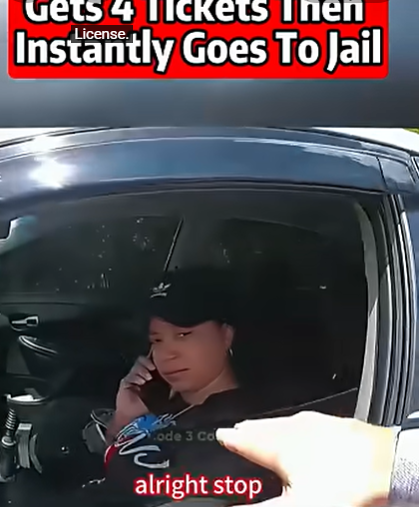
A routine traffic stop in Florida quickly turned into a much more serious situation after a driver, already facing multiple citations, chose to speed away from officers and ignore another stop sign. What began as an enforcement stop over vehicle violations eventually escalated into an arrest, a vehicle search, and a tow, all because the driver’s behavior changed the nature of the encounter.
The incident started when a law enforcement officer pulled the driver over and checked the tint on her vehicle’s windows. Window tint laws exist because officers need to be able to see into vehicles during traffic stops, and other drivers also need enough visibility to make safe decisions on the road. In Florida, the officer explained that the legal requirement for the tint was 25% or higher, but the driver’s window tint measured only 11%. That meant the windows were much darker than allowed.
For the driver, this may have felt like an irritating or minor issue. Many people view window tint as a style choice or a comfort feature, especially in a hot state like Florida where sunlight can be intense. But from the officer’s perspective, the measurement created a clear violation. Once the tint was tested and found to be below the legal limit, the officer had grounds to issue a citation.
The stop did not end with only the window tint, though. The officer also issued citations for several other problems. According to the description, the driver received four separate citations: running a stop sign, operating a vehicle with no registration, driving with expired tags, and having illegal window tint. Each of those violations added to the seriousness of the stop.
Running a stop sign is a direct traffic safety violation. It puts other drivers, pedestrians, and the driver herself at risk because intersections depend on predictable behavior. When a stop sign is ignored, other people may not have time to react. Even if no crash happens, the violation is still treated seriously because of what could happen.
The lack of registration and expired tags created another layer of concern. Registration and tags help establish that a vehicle is legally allowed to be on the road and that it can be connected to a valid owner. When a vehicle has no registration or expired tags, it becomes harder for officers to verify who is responsible for it and whether it should be driven at all. These issues may seem like paperwork problems to some drivers, but they matter during a traffic stop because they affect the legal status of the vehicle.
Then there was the illegal tint. At 11%, the tint was far darker than what the officer said Florida law allows. That alone could result in a citation, but combined with the stop sign violation, expired tags, and no registration, the driver was now dealing with multiple tickets at once.
The driver appeared frustrated by the citations. That reaction is not unusual. Nobody enjoys being pulled over, and receiving several citations at the same time can feel overwhelming. Still, frustration during a traffic stop does not give a driver the right to act recklessly. The safest response is usually to accept the citations, remain calm, and handle any disagreement later through the proper legal process.
Instead, the driver made the situation worse. After the citations were issued, she sped away from the scene in a reckless manner. In doing so, she also committed another stop sign violation. That choice changed everything. The first stop had been about traffic and vehicle violations. But speeding away recklessly after being stopped by law enforcement can make the situation look more dangerous and intentional.
Once she drove off that way, officers pursued and stopped her again. At that point, the tone of the encounter had shifted. The driver was no longer simply someone receiving citations for vehicle issues. Her conduct after the stop created a new concern for the officers. They now had to deal with a driver who had left the stop aggressively and committed another violation immediately afterward.
When officers stopped her the second time, the officer ordered her to turn off the car and roll down the window. Those commands were meant to control the scene and reduce the risk of the vehicle moving again. During a stop that has already escalated, officers generally want the vehicle turned off so the driver cannot suddenly pull away. Rolling down the window also allows officers to communicate clearly and safely.
The driver refused to comply. That refusal made the situation even more tense. Once an officer has ordered a driver to turn off the car and lower the window during an escalated traffic stop, refusing those instructions can be treated as resisting or obstructing the officer’s attempt to safely handle the stop. The officer then opened the car door and removed her from the vehicle so she could be placed under arrest.
The arrest became the turning point of the incident. Up to that point, the driver had been facing citations. After she sped away, ran another stop sign, and refused to follow commands during the second stop, the officer treated the situation as a criminal matter. The driver’s own decisions turned a frustrating traffic stop into an arrestable situation.
This is one of the clearest lessons from the incident. A driver may disagree with an officer. A driver may feel the tickets are unfair. A driver may believe the stop was unnecessary or excessive. But the side of the road is not the place to fight that argument through reckless behavior. Courts exist for disputes. Traffic stops require calm compliance in the moment, even when the driver plans to challenge the citations later.
Once the woman was arrested and placed in the back of the police cruiser, the officers began dealing with the vehicle. While sitting in the cruiser, she asked why they were searching her car. From her perspective, this may have seemed like an additional punishment or an unnecessary invasion. But the officer explained that because she was under arrest, they were conducting an inventory of the vehicle before it was towed.
An inventory search is different from a normal search for evidence. The purpose is usually to document what is inside the vehicle before it is removed from the scene. This helps protect the owner’s property, protects the tow company, and protects officers from later claims that items went missing. It can also help identify anything inside the vehicle that needs to be handled safely before towing.
The officer also explained why the vehicle had to be towed. Because the officers could not verify or reach a registered owner who could take possession of the car, they could not simply leave it where it was or hand it over to someone else. The vehicle had registration issues, and the driver was now under arrest. With no confirmed owner available to take responsibility for it, towing became the practical next step.
For the driver, the tow likely added another layer of frustration. She had already received multiple citations, had been arrested, and now her car was being searched and towed. But again, the consequences came from the way the stop escalated. If the driver had accepted the citations and left calmly, the situation may have ended much differently. Her decision to speed away and ignore another stop sign turned a bad day into a much bigger legal problem.
The incident is a strong example of how quickly a traffic stop can escalate when emotions take over. At first, the stop was about measurable and documentable violations: window tint, registration, tags, and a stop sign. None of those necessarily required an arrest by themselves in the way the situation is described. They were citations. But the driver’s reaction after receiving them created new concerns.
Traffic stops are already tense situations for both drivers and officers. Officers do not always know who they are approaching or what may happen. Drivers may feel anxious, embarrassed, angry, or confused. Because both sides are under stress, small choices can have major consequences. A calm response can keep the stop routine. A reckless response can make officers believe the situation is becoming unsafe.
In this case, the driver’s decision to speed away sent the wrong message. It suggested she was unwilling to accept the stop, unwilling to follow traffic laws even after being cited, and possibly willing to create danger to leave the scene. When she then refused to turn off the car and roll down the window during the second stop, officers had even more reason to take control of the situation.
The window tint measurement itself also matters because it shows how the stop involved objective evidence. The officer did not simply say the tint looked dark. He measured it and told her it was at 11%. That number gave a specific basis for the citation. Whether the driver agreed or not, the officer’s explanation was tied to the reading from the tint measurement.
The expired tags and lack of registration also made the vehicle legally questionable on the road. Those issues can sometimes be resolved with paperwork, but they still matter at the time of the stop. A car with expired tags and no registration raises questions about whether it is properly documented and who has legal responsibility for it. That became especially important later when officers had to decide what to do with the vehicle after the arrest.
The woman’s question from the back of the cruiser is also important because it shows a common misunderstanding. Many drivers may not realize that once a vehicle is being towed after an arrest, officers may inventory it. To the person being arrested, it can feel like officers are searching for a reason to add charges. But an inventory is often explained as a standard process connected to towing. The officer’s response made clear that the tow was happening because they could not verify or contact a registered owner to take the vehicle.
That explanation also shows how one problem can lead to another. The vehicle’s registration issue did not just produce a citation. It also affected what happened after the arrest. If the vehicle had been properly registered and a valid owner had been available, the situation might have been handled differently. But with no verified owner available, the officers said they had to tow it.
The incident also highlights how important it is to keep vehicle documents current. Expired tags, missing registration, and illegal tint may seem separate, but together they create a pattern of vehicle noncompliance. When a driver is stopped for one violation and several more are discovered, the stop becomes more serious. It also gives officers more reasons to continue investigating the status of the car.
Still, the biggest escalation came from the driver’s conduct, not the paperwork. Tickets are frustrating, but they are usually manageable. Reckless driving after a traffic stop is much harder to explain away. Running another stop sign immediately after being cited for a stop sign violation makes the situation even worse. It shows the driver did not correct the behavior and instead repeated it while leaving the stop.
The arrest could likely have been avoided if the driver had stayed calm. Even if she believed the officer was wrong, she could have accepted the paperwork and later challenged the citations. That is the legal path. Driving away recklessly does not cancel the tickets; it adds new problems. Refusing commands during the second stop does not protect the driver; it gives officers more reason to remove her from the car.
The officer’s actions after the second stop were focused on controlling the situation. Ordering the car off reduces the chance of another sudden departure. Asking for the window to be rolled down allows communication. Removing the driver after she refused to comply allowed officers to make the arrest and prevent further movement of the vehicle. Whether someone agrees with every step or not, the escalation followed the driver’s refusal and reckless driving.
From a viewer’s perspective, the situation may feel frustrating because it seems avoidable. The driver was angry about tickets, but her reaction created a much worse outcome. A few minutes of patience might have ended with citations and a chance to leave. Instead, the scene became a pursuit, a second stop, an arrest, an inventory, and a tow.
That avoidability is what makes the video stand out. It is not just about a driver getting pulled over. It is about how one bad decision after another can turn a routine stop into a criminal case. The driver’s choices formed a chain: illegal tint and other violations led to citations; frustration led to speeding away; speeding away led to another stop; refusal to comply led to removal from the vehicle and arrest; the arrest and vehicle issues led to the inventory and tow.
Each step made the next step more likely. Once that chain started, it became harder for the driver to regain control of the situation. The safest point to stop the escalation was at the very beginning, by accepting the citations calmly and leaving lawfully.
The case also serves as a reminder that traffic laws are not just technical details. Stop signs exist to prevent crashes. Registration and tags exist to identify vehicles and confirm they are legally on the road. Tint laws exist partly for visibility and safety. When several of these issues appear at once, officers are likely to treat the stop seriously.
For drivers, the practical lesson is simple: keep documents current, know local tint laws, and do not let anger control your driving. If you receive a citation and believe it is wrong, gather your information, remain polite, and handle the matter through court or the proper agency. The roadside is not the place to prove a point by speeding away.
For officers, the video shows how a stop can shift quickly from routine enforcement to a safety concern. A driver who has just been cited and then speeds away can create risk for everyone nearby. Officers then have to respond not just to the original violations, but to the driver’s new behavior.
The woman’s confusion about the search and tow also shows why clear explanations matter. Even after arrest, people may not understand what is happening or why. The officer’s explanation that it was an inventory before towing helped clarify the process. It did not necessarily make the driver happy, but it gave a reason for what officers were doing.
In the end, the traffic stop became much bigger than it needed to be. The original violations were serious enough to result in citations, but the driver still had a chance to leave the scene without being arrested. That changed when she chose to drive away recklessly and ignore another stop sign. Her refusal to comply during the second stop made the arrest more likely, and the registration issues contributed to the decision to tow the vehicle.
The incident leaves behind a clear message about consequences. A traffic ticket is not the end of the world, but reacting badly to one can create far more serious problems. The driver’s frustration may have been real, but the way she expressed it only made the situation worse. What began with a window tint measurement and a set of citations ended with officers removing her from the car, placing her under arrest, inventorying the vehicle, and preparing it for tow.
It is a reminder that during a traffic stop, the smartest move is usually the calmest one. Stay in control, follow lawful instructions, and challenge any disagreement later through the proper channels. Losing patience in the moment can turn a citation into an arrest, and that is exactly what happened here.
Another important part of the situation is how preventable it all seemed. Many traffic stops are stressful, but they do not have to become chaotic. The driver had already received the citations. At that point, the legal process had moved out of the officer’s hands and into the next stage. She could have taken the tickets, driven away carefully, and decided later whether to pay them, dispute them, or gather proof to challenge them. Instead, her frustration showed up immediately in her driving, and that decision gave the officers a brand-new reason to stop her again.
That is what made the second stop so different from the first. During the first stop, the officer was dealing with traffic and vehicle violations. During the second, the driver had already shown that she might leave suddenly or ignore road rules while upset. That made the vehicle itself part of the concern. As long as the car was running and the driver was behind the wheel, the officers could not be sure she would not pull away again. This is why the order to turn off the car mattered. It was not just about control; it was about stopping the situation from escalating further.
The refusal to roll down the window also made communication harder. A traffic stop depends on clear instructions and clear responses. When the driver refused to lower the window, she created another barrier between herself and the officers. Instead of calming the situation, it increased tension. The officers were now dealing with someone who had already sped away and was now refusing basic commands. At that point, removing her from the vehicle became the next step in bringing the scene under control.
The tow and inventory process likely felt like another punishment to her, but it followed naturally from the arrest and the vehicle’s registration problems. Once she was no longer able to drive the car away, officers had to decide what to do with it. Leaving an unregistered or unverifiable vehicle on the roadside was not a practical option. Allowing someone else to take it would require confirming that person had legal authority to do so. Since they could not reach or verify a registered owner, towing became the default solution.
The inventory of the car also served a practical purpose. Before a vehicle is handed over to a tow company, officers often document what is inside. This protects everyone involved. It protects the driver from losing property without a record. It protects officers from later accusations. It protects the tow company from disputes about what was or was not inside the vehicle. Although it may feel invasive in the moment, the officer explained it as part of the towing process rather than a random search.
By the end, the entire encounter became a lesson in how quickly consequences can build. One ticket can become several. Several tickets can lead to anger. Anger can lead to reckless driving. Reckless driving can lead to arrest. Arrest can lead to towing. Each new decision added another layer to the problem.
The driver may have felt that the original stop was unfair or excessive, but her reaction made it much harder for anyone to focus only on the first set of citations. Her behavior after the stop became the main issue. That is why staying calm matters so much. Even when a driver feels wronged, the safest choice is to preserve their position, avoid creating new violations, and challenge the matter later. In this case, the moment she sped away, the situation stopped being just about tint, tags, registration, and a stop sign. It became about control, safety, and the consequences of refusing to comply.