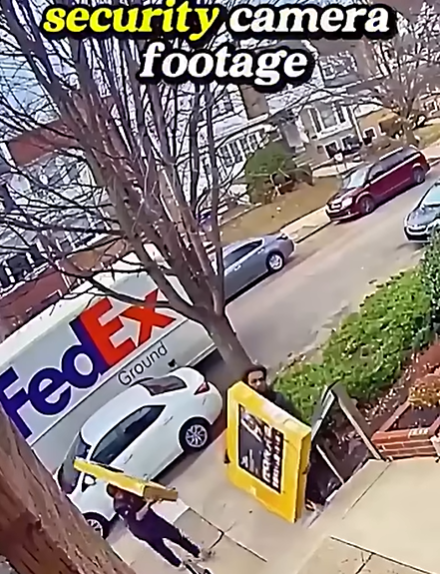
Security camera footage from a quiet home captures a simple delivery that turns into a memorable act of kindness. At first, the scene looks ordinary. Two FedEx delivery drivers arrive at a house carrying two large, expensive television boxes. The packages are big, noticeable, and difficult to hide, the kind of delivery that would immediately catch the eye of anyone passing by. The drivers bring the TVs to the front door, place them carefully on the porch, and complete the normal steps of a delivery. They ring the doorbell, wait briefly, and realize that no one is home to bring the packages inside.
Like many deliveries, the process appears routine. One of the drivers takes a confirmation photo to show that the packages were delivered to the correct location. After that, both drivers begin walking back toward their truck. From a work perspective, their job could have ended there. They had delivered the items, documented the drop-off, and followed the usual procedure. But as they begin to leave, one of the drivers seems unable to ignore a problem. The televisions are sitting in plain view, large and exposed, right at the front of the house.
For a homeowner, receiving expensive items like TVs can be exciting, but leaving them outside unattended can also be risky. Large electronics are easy to recognize, and their packaging often makes it clear exactly what is inside. A passerby would not need to guess. The boxes are visible, valuable, and tempting to someone looking for an easy theft. The driver appears to understand this immediately. Even though no one asked him to do anything extra, he pauses and decides that simply leaving the packages there does not feel right.
Instead of continuing back to the truck, he turns around and walks back toward the porch. This small decision changes the entire meaning of the video. What could have been just another delivery becomes a moment of thoughtfulness. The driver looks around the porch and notices several patio chairs nearby. He quickly comes up with a practical idea: use the chairs to hide the boxes from view. It is not a complicated plan, but it is clever, kind, and effective.
The driver begins carefully rearranging the chairs around the television boxes. He places them in front of the packages and stacks them in a way that blocks the view from the street. The movement is calm and deliberate. He is not rushing carelessly or tossing things around. He is trying to protect the homeowner’s property while also respecting the items already on the porch. Piece by piece, the large TV boxes become less visible. What was once an obvious target slowly blends into the porch setup, hidden behind the chairs.
This act may seem small at first, but it says a lot about the driver’s character. He had already completed the delivery. He did not have to return. He did not have to think about what might happen after he left. Many people might have simply followed the required steps and moved on to the next stop. But he took a few extra moments to consider the homeowner’s situation. He imagined what could happen if expensive packages were left in open sight, and he chose to do something helpful.
The kindness in the video comes from the fact that it is practical. The driver is not making a grand gesture or looking for attention. He is simply solving a problem in the moment. There are no speeches, no dramatic reactions, and no reward waiting for him. He sees a risk, finds a simple solution, and acts. That quiet kind of responsibility often has the strongest impact because it feels genuine. It shows care without needing recognition.
The other driver continues nearby as the scene unfolds, and the delivery remains calm and ordinary on the surface. But the security camera captures the extra effort clearly. The homeowner may not have been there to see it in person, but the footage later reveals what happened after the doorbell went unanswered. Instead of leaving the boxes exposed, the driver made sure they were protected as best as possible. For the homeowner, watching the footage would likely bring both relief and gratitude.
The video is heartwarming because it shows that good customer service is not only about speed or efficiency. It is also about awareness. A delivery driver’s job can be demanding, with long routes, tight schedules, heavy packages, and constant pressure to keep moving. Yet in this moment, the driver slows down enough to notice something important. He understands that the delivery does not truly feel complete if the packages are left vulnerable. His action shows a sense of pride and care that goes beyond the basic task.
It also highlights how much difference a few seconds can make. The driver did not spend a long time on the porch. He did not need special equipment. He simply used what was already there. A few chairs, moved into the right position, turned two highly visible boxes into something much harder to spot from the street. That quick decision may have prevented the TVs from being stolen. It may have saved the homeowner from stress, financial trouble, and the frustration of dealing with a missing delivery.
The scene also touches on a common worry many people have with home deliveries. Online shopping has made it easier to receive large and valuable items without going to a store, but it has also created more opportunities for package theft. When expensive items arrive while no one is home, they can sit outside for hours. Even a short period can feel risky, especially if the packaging clearly shows what is inside. That is why the driver’s decision feels so thoughtful. He recognizes a real concern that many homeowners face.
What makes the moment especially meaningful is that the driver treats the packages as if they matter. To him, they are not just boxes on a route. They are someone’s belongings. Someone ordered them, paid for them, and expected them to arrive safely. By hiding them, he shows respect for that. He understands that his responsibility is connected to a real person, even if that person is not home at the moment.
The patio chairs become a simple shield. They are not a perfect security system, but they create enough cover to reduce attention. From the street, the boxes no longer stand out in the same obvious way. This small barrier may be all that is needed to discourage someone from noticing or approaching the delivery. Sometimes prevention does not require a perfect solution. It only requires making the opportunity less obvious.
The video also reminds viewers that kindness often happens when no one is expected to be watching. The driver may have known there was a doorbell camera or security camera, but his action still appears natural and unforced. He does not perform for the camera. He simply does what seems right. That is why the footage feels sincere. It captures a moment of everyday decency that might otherwise have gone unnoticed.
In a world where many viral delivery videos show damaged packages, careless handling, or frustrating mistakes, this footage stands out for a different reason. It shows someone taking pride in doing the right thing. The driver does not treat the homeowner’s absence as an excuse to finish quickly and leave. Instead, he treats it as a reason to be more careful. That small shift in thinking turns a routine delivery into a positive story.
The homeowner’s front porch becomes the setting for a quiet act of protection. The driver cannot stay there until the homeowner returns. He cannot bring the TVs inside. He cannot guarantee that nothing will happen after he leaves. But he can reduce the risk, and that is exactly what he does. He takes the options available to him and makes the situation safer than it was before. That is what makes the action meaningful. He does not solve every problem, but he solves the one he can.
The footage also shows how trust is built through small actions. Delivery services depend on trust. Customers trust that their packages will arrive safely, and drivers are trusted to handle items responsibly. When a driver goes beyond the minimum, it strengthens that trust. It reminds people that behind every delivery company logo are individual workers making choices. Some of those choices may be small, but they can leave a lasting impression.
The driver’s decision may also reflect empathy. He may have imagined how he would feel if expensive TVs were left outside his own home in plain view. That simple ability to consider someone else’s situation can lead to thoughtful action. Empathy does not always require emotional words. Sometimes it looks like moving chairs in front of boxes because you know someone would be upset if those boxes disappeared.
By the time the driver finishes arranging the chairs, the porch looks different. The boxes are no longer the first thing someone would notice. They are covered and protected as much as possible. The driver then leaves, returning to his route with the quiet satisfaction of having done something extra. The delivery continues, the truck moves on, and the homeowner’s belongings remain better hidden than they would have been.
The beauty of this video is in its simplicity. No one is rescued from physical danger. No dramatic emergency unfolds. Instead, the moment is about care, responsibility, and doing the right thing when it would be easy not to. The driver’s action is small, but its meaning is large. He sees someone’s property at risk and decides to protect it. That is enough to turn an ordinary delivery into a story worth sharing.
In the end, the footage leaves viewers with a warm impression. It shows that kindness does not always need to be complicated. Sometimes it is as simple as noticing a problem, taking a few extra steps, and helping someone who is not there to ask for help. The FedEx driver could have walked away after taking the confirmation photo, but he chose to turn back. That choice is the heart of the video. It is a reminder that even in everyday routines, people still have opportunities to be thoughtful, careful, and good.
The video also speaks to the quiet pressure delivery drivers face every day. Their work may look simple from the outside, but each stop comes with its own small decisions. They have to carry heavy items, find the correct address, protect the package from damage, follow delivery instructions, take confirmation photos, and move quickly enough to stay on schedule. In most cases, they are expected to complete the delivery and continue to the next address. That is why this moment stands out. The driver had every reason to keep walking after the photo was taken, yet he chose to turn back because he noticed something that mattered.
The two television boxes were not small packages that could easily be tucked behind a plant or hidden near the side of the door. They were large, expensive, and easy to identify. Anyone passing by could immediately understand what had been delivered. The size of the boxes made them difficult to protect, and that is what makes the driver’s quick thinking even more impressive. He did not have a storage room, a garage code, or permission to enter the home. He only had the front porch and the objects already around him. Still, he found a way to make the delivery safer.
There is something almost instinctive about the way he returns. He seems to realize the problem after taking only a few steps away. That pause says a lot. It suggests that the driver’s mind was not only focused on finishing the route, but also on the condition in which he was leaving the delivery. He could probably picture the boxes sitting there for hours, visible from the road, with nobody home to bring them inside. That thought was enough to make him stop and act.
His solution is also meaningful because it shows respect for the homeowner’s space. He does not drag the boxes roughly to a strange location or move them somewhere unsafe. He does not create a mess or throw items around. Instead, he uses the porch furniture carefully, arranging the chairs in a way that covers the boxes while keeping everything close to the front door. He treats the porch like someone’s home, not just another stop on a delivery list. That care is part of what makes the video feel so genuine.
The moment is especially heartwarming because the homeowner did not ask for this extra effort. There was no note telling the driver to hide the TVs. There was no person standing there giving instructions. The driver made the choice on his own. That kind of kindness feels different because it is voluntary. It comes from personal judgment and concern, not from obligation. He saw a small opportunity to help and took it.
For many people, package deliveries can come with anxiety. A tracking notification may say an item has arrived, but the homeowner might be at work, school, the store, or stuck in traffic. They may know the package is sitting outside, but they cannot get home right away. With ordinary boxes, that worry is already frustrating. With large electronics, it becomes even stronger. The homeowner may spend the rest of the day hoping the packages are still there. In this case, the driver’s action may have reduced that worry before the homeowner even knew it existed.
The footage also reminds us that security cameras often capture more than crimes or accidents. Many people install cameras to protect their homes from theft, damage, or suspicious activity. But sometimes those cameras record acts of kindness instead. They show the small good things people do when they think no one is paying attention. In this video, the camera preserves a moment that could have disappeared unnoticed. Without the footage, the homeowner might have simply found the TVs hidden behind chairs and wondered how they got that way. The video reveals the thoughtfulness behind the arrangement.
There is a powerful contrast between the routine nature of the delivery and the emotional reaction it creates. Moving a few chairs may not seem dramatic, but the meaning behind the action is what matters. The driver is protecting something that belongs to someone else. He is taking responsibility beyond the minimum. He is thinking ahead to prevent a problem rather than waiting for one to happen. That kind of awareness is valuable in any job, but it feels especially meaningful in a role where workers are often under time pressure.
The act also shows how small gestures can change the way people see a profession. Delivery drivers are often noticed only when something goes wrong: a package is late, damaged, misplaced, or stolen. But videos like this show the other side of the job. They show workers who care, who think, and who make choices that help customers in ways the customer may never directly see. It reminds viewers that many people take pride in their work quietly, without expecting applause.
The driver’s decision may have prevented a theft, but it also did something more subtle. It protected the homeowner’s peace of mind. Losing expensive items can be stressful, even if replacement or refund options exist. It can mean phone calls, reports, waiting periods, proof of delivery disputes, and frustration. It can also make someone feel unsafe in their own neighborhood. By hiding the TVs, the driver helped avoid not only a possible financial loss, but also all the stress that could have followed.
The porch chairs become part of a simple but thoughtful solution. They are ordinary objects, probably used for relaxing outside on calm days. In this moment, they become a protective cover. That transformation is part of the charm of the video. The driver does not need anything special. He simply uses what is available. It shows practical intelligence, the kind that comes from noticing details and making quick decisions.
There is also a lesson in how helpfulness often depends on awareness. The driver first has to notice the problem before he can solve it. If he only sees the delivery as a completed task, he walks away. But because he sees the packages from the perspective of the homeowner, he understands the risk. That shift in perspective is what creates the act of kindness. It is not only about being nice. It is about paying attention.
The video may also encourage people to think about how they handle deliveries themselves. Homeowners can sometimes reduce risk by choosing delivery windows, using package lockers, adding instructions, asking a neighbor to bring items in, or requesting signature confirmation for expensive packages. But even when customers take precautions, not every situation can be controlled. That is why thoughtful delivery workers can make such a difference. Their judgment at the final step of the delivery can protect the item when the customer is not available.
The driver’s kindness feels especially important because it happens during a normal workday. He is not in a special ceremony. He is not being praised in the moment. He is simply doing his route. That makes the act relatable. It suggests that people do not need perfect circumstances to do something good. They only need a moment of awareness and the willingness to take a little extra care. Sometimes kindness is not a major sacrifice. Sometimes it is a small pause before walking away.
The video also shows how responsibility can extend beyond written rules. Officially, the delivery may have been complete once the packages were placed at the door and the confirmation photo was taken. But morally, the driver seemed to feel there was one more thing he could do. That difference between completing a task and caring about the outcome is what makes the moment special. He did not just deliver the TVs. He tried to make sure they would still be there when the homeowner returned.
For the homeowner, discovering the footage likely changed the way they viewed the delivery. Instead of only seeing two boxes placed at the door, they saw a person making an effort to protect their belongings. That kind of moment can restore trust. It can remind people that even in busy systems filled with tracking numbers, schedules, and automated notifications, there are still human beings making thoughtful choices.
The driver’s action also carries a quiet message about community. Even though he may not know the homeowner personally, he still treats their property with care. That is one of the foundations of a good community: people looking out for one another in small ways. It does not always require deep relationships. Sometimes it is a stranger making a helpful choice because it is the right thing to do. That kind of everyday respect helps people feel safer and more connected.