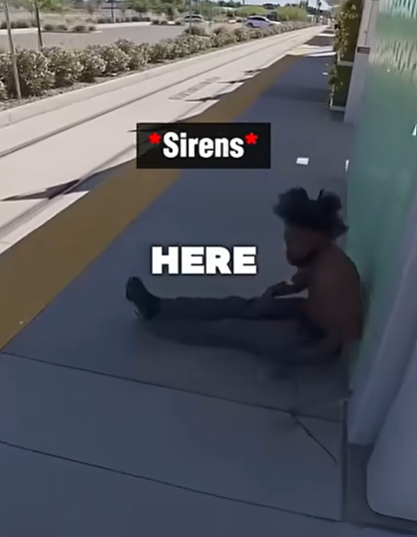
A routine ride near a light rail station turned into a life-saving intervention when a biker noticed a man in severe distress and decided to stop instead of passing by. The man, later identified as Edward, appeared disoriented, unsteady, and in urgent need of help. What could have become a tragic situation changed because one stranger recognized the signs of danger, called 911, and stayed close until emergency responders arrived.
The biker first noticed Edward near the light rail platform, where he seemed confused and physically overwhelmed. His behavior suggested that something was seriously wrong. He was not simply tired or lost; he appeared to be in a state of distress that required immediate attention. The biker quickly understood that Edward might be experiencing a drug overdose and chose to act. In moments like this, hesitation can matter. Instead of assuming someone else would help, the biker stopped, approached carefully, and began trying to keep Edward safe.
One of the first things the biker did was call 911. That call was crucial because Edward needed professional medical assistance, not just comfort or conversation. Emergency dispatchers could send paramedics, firefighters, or police to the area, while the biker remained with Edward and tried to prevent the situation from getting worse. Calling for help also meant the biker did not have to handle the crisis alone. He could focus on keeping Edward calm and nearby while trained responders made their way to the scene.
The biker also attempted to contact Edward’s girlfriend, hoping she could help identify him and possibly calm him down. That effort showed compassion and practical thinking. In a medical emergency, knowing a person’s name, who they are connected to, or who may be able to speak reassuringly to them can make a difference. Edward was confused and frightened, and hearing that someone close to him cared about him may have helped him feel less alone.
As the situation continued, Edward became increasingly disoriented. At one point, he walked onto a stopped light rail train, creating a new safety concern. In his condition, he may not have fully understood where he was, what was happening, or why he needed to stay on the platform. The biker quickly intervened, speaking to him and convincing him to step back off the train. That moment was especially important because Edward could have been carried away from the scene, separated from help, or placed in greater danger.
The biker’s response was calm but persistent. He did not shout at Edward or treat him as a problem. Instead, he stayed close, spoke to him, and tried to guide him back to safety. This kind of calm presence can be powerful during a crisis. A person who is disoriented may not respond well to pressure or panic, but they may respond to a steady voice and a simple request. The biker’s ability to keep Edward near the platform helped ensure that emergency responders could find and treat him quickly.
While waiting for help, the biker continued reassuring Edward. He remained by his side, keeping him engaged and reminding him that assistance was coming. This was not just a small act of kindness. It may have helped prevent Edward from wandering into traffic, leaving the station area, or becoming more frightened. In emergencies involving confusion or overdose symptoms, staying with the person can be extremely important. The biker became a bridge between Edward’s distress and the professional care that was on the way.
When the emergency medical team and firefighters arrived, the situation shifted into a medical response. Paramedics assessed Edward and prepared to give him a nasal medication commonly used in suspected opioid overdoses. Edward, however, initially panicked and resisted. His fear was understandable. In a confused state, he may not have understood who the responders were or what they were trying to do. To him, the medication may have felt sudden or frightening, even though the responders were trying to save his life.
The biker and paramedics worked together to calm him. Rather than forcing the moment to become more chaotic, they tried to explain that the medication was meant to help him breathe and survive. They also mentioned that his girlfriend wanted him to take it, which appeared to reach him emotionally. That detail mattered because Edward may have been more willing to trust the people helping him when he heard that someone he loved wanted him to accept care.
After being reassured, Edward finally accepted the medication. Once he inhaled it, he gradually began to stabilize. The change marked a turning point in the emergency. A few moments earlier, he had been panicked, confused, and unable to fully understand the danger he was in. After treatment, he began to sit up and appear more aware of his surroundings. The presence of responders, combined with the biker’s continued support, helped bring the situation under control.
One of the most meaningful moments came when Edward shook the biker’s hand in gratitude. That simple gesture carried a lot of weight. It showed that Edward recognized, at least in that moment, that someone had stayed with him when he was vulnerable and afraid. The biker had no obligation to stop, no personal connection to Edward, and no guarantee that the situation would be easy. But he chose to help anyway, and Edward’s handshake became a quiet acknowledgment of that kindness.
This incident shows how important bystanders can be during medical emergencies. Emergency responders are trained to save lives, but they are not always there at the first critical moment. Sometimes, the first person who notices something wrong is an ordinary passerby. In this case, it was a biker near a light rail station. His decision to call 911, stay with Edward, contact someone close to him, and guide him away from danger helped create the conditions for a successful rescue.
The story also highlights the importance of compassion during addiction-related emergencies. People experiencing overdose or severe drug-related distress are often judged, ignored, or treated as if they are responsible for their suffering in a way that makes them less deserving of help. But in a crisis, the most important thing is preserving life. The biker did not waste time blaming Edward or making assumptions about him. He saw a person in danger and responded with humanity.
The paramedics and firefighters also played a vital role. Once they arrived, they moved quickly to provide medical care and stabilize Edward. Their job required both urgency and patience. They had to act fast, but they also had to calm a frightened and disoriented man who did not immediately understand that they were trying to help. Their cooperation with the biker helped make the intervention more effective.
The light rail setting made the situation more complicated. A station platform can be busy, open, and risky for someone who is confused. Trains, tracks, crowds, and nearby roads can all create danger. Edward’s attempt to walk onto the stopped train showed how quickly the scene could have shifted. If he had remained on the train or moved away before help arrived, responders might have had a harder time locating him. The biker’s quick action kept him close and safe.
In the end, this was not only a story about a medical emergency. It was also a story about presence. The biker stayed. He stayed when Edward was confused. He stayed when the situation became unpredictable. He stayed when emergency responders arrived. He helped calm Edward when he resisted treatment. That steady presence mattered.
The outcome could have been very different if the biker had ignored what he saw. Edward might have wandered away, boarded the train, collapsed alone, or missed the chance to receive timely medical care. Instead, someone noticed. Someone cared enough to stop. Someone called for help and remained there until professionals arrived.
Edward’s stabilization and handshake at the end gave the incident a powerful human conclusion. It showed that even in frightening moments, kindness can reach someone. A stranger on a bike became the person who helped Edward survive long enough to receive treatment. The firefighters and paramedics then stepped in with the medical care needed to stabilize him. Together, they turned a dangerous moment at a light rail station into a rescue.
This case is a reminder that helping does not always require dramatic action. Sometimes, it means calling 911, speaking calmly, staying nearby, and keeping someone safe until help arrives. The biker’s actions were simple, but they were also brave and compassionate. Because he chose not to look away, Edward had a chance to recover, reconnect with the moment, and thank the person who helped save his life.
The emotional weight of the moment also comes from the fact that Edward did not appear able to fully protect himself. When someone is severely disoriented, their decisions may no longer reflect what they would normally choose in a clear state of mind. Walking onto the stopped train was one example of that. To others nearby, it may have looked confusing or even frustrating, but the biker seemed to understand that Edward was not acting with full awareness. He needed guidance, not judgment. That understanding helped shape the entire response.
The biker’s patience became one of the most important parts of the rescue. He did not simply call 911 and leave. He stayed involved, watched Edward’s movements, spoke to him, and tried to keep him connected to the present moment. In emergencies like this, a person in distress may drift in and out of awareness, respond unpredictably, or become frightened by the people trying to help. A calm bystander can help reduce that fear by becoming a familiar voice in the middle of a confusing situation.
What made the biker’s actions especially meaningful was that he treated Edward like a person, not like a problem. He used his name once he learned it. He tried to reach someone who cared about him. He spoke to him directly and reassured him instead of talking about him as if he were not there. Those small choices matter. In moments of crisis, dignity can easily be lost. But the biker helped preserve Edward’s dignity by staying respectful, patient, and present.
The attempt to contact Edward’s girlfriend also showed how quickly the biker was thinking. He understood that emergency responders would need information, and he also understood that Edward might respond better to someone personally connected to him. Even when a loved one cannot physically be there, their voice, name, or concern can become a grounding point. In Edward’s case, hearing that his girlfriend wanted him to accept help seemed to make a difference. It gave the responders another way to reach him when fear and confusion were getting in the way.
The arrival of firefighters and paramedics brought professional help to the scene, but it did not immediately solve everything. Edward’s panic showed that medical emergencies are not always neat or simple. A person may resist treatment not because they want to be harmed, but because they are confused, scared, or unable to understand the situation clearly. That is why the responders needed patience as well as medical skill. They had to explain, reassure, and persuade while also recognizing that time mattered.
The teamwork between the biker and the emergency crew was one of the strongest parts of the incident. The biker had already built some trust with Edward before responders arrived. Instead of stepping away completely, he remained part of the calming process. The paramedics brought the medical knowledge, while the biker brought the connection he had created in the minutes before. Together, they were able to help Edward accept the care he needed.
This kind of cooperation can make a major difference in public emergencies. First responders often arrive without knowing the full story. They have to assess the person, understand the environment, and make quick decisions. A bystander who has been present from the beginning can provide helpful context: what the person was doing, what was said, whether anyone was contacted, and how the person responded before help arrived. In this case, the biker was not just a witness. He became part of the chain of care.
The light rail platform itself added urgency. Public transit areas are not ideal places for someone in medical distress. There may be moving trains, open platforms, crowds, noise, and limited space. A confused person may step into unsafe areas or wander away before responders can help. Edward’s movement onto the train showed how easily the situation could have become harder to manage. The biker’s quick intervention kept the emergency contained and made it possible for responders to treat Edward where they could reach him.
There is also a larger message here about not ignoring people in distress. Many people pass by emergencies because they feel unsure, afraid, or unqualified to help. They may worry about saying the wrong thing or getting involved in something complicated. Those concerns are understandable, but this story shows that helping can begin with very simple actions: noticing, calling for help, keeping a safe distance if needed, speaking calmly, and staying until trained responders arrive. The biker did not need to solve everything alone. He only needed to start the process.
His decision to stop likely changed the entire outcome. If Edward had been left alone, he may have continued wandering, boarded the train, or collapsed without anyone nearby who understood what was happening. The delay could have made the emergency worse. Instead, the biker acted early. He recognized that Edward’s condition was urgent and treated the situation as something that could not wait.
The incident also shows why compassion is so important when addiction or overdose may be involved. People experiencing these emergencies are often met with suspicion or criticism. Some bystanders may assume the person is dangerous, irresponsible, or not worth helping. But in the moment of crisis, none of that matters more than saving a life. Edward needed help immediately. The biker responded to the human being in front of him, not to the stigma surrounding the situation.
That response is powerful because it reminds viewers that addiction-related emergencies can happen in ordinary public places: near transit stations, sidewalks, parks, parking lots, or outside businesses. They do not always look the same, and they do not always involve someone lying still. Sometimes the person is walking, speaking, panicking, or trying to leave. Recognizing that someone is not okay and calling for medical assistance can be the first step toward survival.
The way Edward responded after receiving help also adds emotional depth to the story. As he began to stabilize, he seemed more aware of what had happened and of the people around him. The handshake with the biker was brief but meaningful. It suggested gratitude, recognition, and perhaps relief. A few minutes earlier, Edward had been frightened and disoriented. Then he was sitting up, calmer, and able to acknowledge the stranger who had stayed by him.
That handshake also gave the biker’s actions a human reward. He did not stop for praise or attention. He stopped because someone needed help. But Edward’s gesture showed that the help reached him. It turned the scene from a medical emergency into a moment of connection between two people who had never expected to meet. One was vulnerable and in danger; the other chose to care.
The paramedics and firefighters also deserve recognition for the way they handled Edward’s fear. Emergency work requires more than equipment and training. It requires communication, emotional control, and the ability to handle people who may be scared, confused, or resistant. In this case, the responders did not simply treat Edward as an obstacle. They explained the purpose of the medication and worked with the biker to help him accept it. Their approach helped prevent the situation from becoming more chaotic.
The fact that Edward initially resisted is important because it shows how frightening medical intervention can feel to someone who does not fully understand what is happening. A person in that condition may not process instructions clearly. They may hear voices, see people approaching, and feel threatened even when the responders are there to help. That is why calm voices, simple explanations, and familiar emotional anchors can matter so much. The mention of his girlfriend appeared to help cut through the panic and remind him that the people around him were trying to keep him alive.
The story also shows the value of staying calm under pressure. The biker could have panicked when Edward boarded the train or resisted help. Instead, he continued to speak to him and guide him. The responders could have become frustrated when Edward refused the medication at first. Instead, they kept trying to explain. That calmness helped keep the emergency from escalating into a struggle. It also helped Edward feel safer.
For the people who may have witnessed the scene, it was likely a powerful reminder that emergencies can unfold suddenly in public. One moment, people may be waiting for a train or passing through the station. The next, someone nearby may need urgent help. Not everyone will know what to do, but one person stepping forward can encourage others to pay attention and make space for responders. In many emergencies, the first helpful action creates a ripple effect.
This case also points to the importance of emergency services arriving quickly. The biker could keep Edward safe temporarily, but he could not provide the full medical care Edward needed. The arrival of firefighters and paramedics was the moment the situation moved from bystander support to professional treatment. That combination of public awareness and emergency response is what made the outcome possible. Neither part alone would have been as effective as both working together.
Edward’s survival in that moment depended on timing. The biker noticed him before he disappeared onto the train or wandered away. The 911 call brought responders before the situation worsened. The medication was accepted after responders and the biker persuaded him. Each step happened in sequence, and each one mattered. If any part had failed, the outcome could have been very different.
The incident also raises awareness about the importance of viewing overdose emergencies as medical emergencies. The goal in the moment is to keep the person alive and get them professional care. Shame, blame, or anger do not help someone breathe, stabilize, or regain awareness. Compassion does. Fast action does. Clear communication does. The biker’s response reflected that understanding, whether through training, instinct, or simple humanity.
There is something especially moving about the fact that the helper was a stranger. Edward was not rescued by someone who already knew him. He was helped by someone who happened to be nearby and chose to get involved. That kind of kindness is powerful because it shows that community care does not always require a personal relationship. Sometimes, the only connection needed is the recognition that another person is in danger.