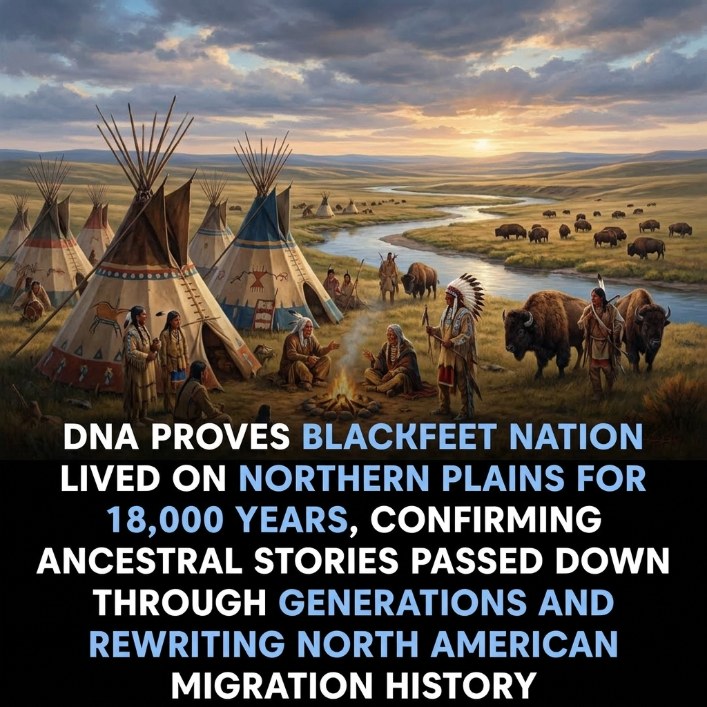
For countless generations, the Blackfeet people have known who they are and where they belong, carrying a profound understanding of their ancestral ties to the Northern Plains. Long before maps, written histories, or colonial interpretations, the Blackfeet preserved their identity through oral traditions, ceremonies, and collective memory. Elders passed down knowledge through stories and teachings, ensuring that each generation understood their place in the world and the sacred connection they had to the land. These narratives, preserved with care and reverence, provided guidance for living in harmony with nature, maintaining cultural values, and understanding the rhythms of the seasons and the migration patterns of animals. Every hill, river, and valley held meaning, not just as a geographical feature, but as a repository of history and wisdom. The Blackfeet understood that the land was a living entity, a teacher, and a witness to generations of human experience. This knowledge was never written down, yet it was precise, detailed, and enduring. It offered practical survival strategies while embedding moral, spiritual, and ethical lessons that shaped community life. This transmission of knowledge was not merely a cultural practice—it was an assertion of identity and a declaration of existence in a world increasingly dominated by outsiders who often sought to erase or distort Indigenous histories.
In 2022, centuries of oral knowledge were affirmed by modern science. A groundbreaking DNA study revealed that the Blackfeet Nation’s lineage has been rooted in the Northern Plains for approximately 18,000 years. This confirmation did not merely validate a population statistic; it recognized the truth of oral tradition and acknowledged that Indigenous peoples have long possessed deep historical insight about their own origins. For generations, the Blackfeet have spoken of their enduring connection to the land, recounting stories of migration, settlement, and survival through the harsh conditions of Ice Age climates. These stories, passed down meticulously from elder to child, were not vague myths but precise accounts of ancestry, ecological knowledge, and historical memory. The DNA evidence corroborates these narratives, demonstrating that the Blackfeet have occupied and adapted to the Northern Plains for millennia, predating many assumptions held by anthropologists and historians who relied primarily on archaeological and written records. The study challenged prevailing narratives that marginalized Indigenous knowledge, showing that oral histories are not only valid but extraordinarily reliable, capable of preserving accurate information across tens of thousands of years. This scientific affirmation represents a moment of reconciliation between traditional knowledge systems and contemporary empirical methods. It illustrates the importance of listening to communities who have long held wisdom about their own histories, acknowledging that knowledge can exist outside of conventional Western academic frameworks.
The Blackfeet Nation’s stories do more than recount the past—they are a guide for the present and future. Each narrative contains lessons about respect, stewardship, and the interconnection of all living things. Through storytelling, the Blackfeet teach children about moral conduct, community responsibility, and the delicate balance required to live sustainably on the plains. Stories of hunting, buffalo migrations, and survival strategies are interwoven with spiritual teachings and an understanding of the cosmos, creating a holistic worldview that encompasses both practical and metaphysical knowledge. These teachings instill a sense of identity and belonging, linking each individual to ancestors and the land itself. The passing of stories fosters resilience, allowing the Blackfeet to maintain cultural continuity despite centuries of disruption, including forced relocations, attempts at assimilation, and suppression of language and ceremonies. The 18,000-year confirmation of their lineage reinforces the significance of these practices, underscoring that the Blackfeet’s oral histories are a legitimate record of human occupation and cultural persistence. This milestone is both a source of pride and a reminder of the enduring strength of Indigenous knowledge systems. It affirms that the wisdom carried in stories, songs, and ceremonies is not symbolic alone but rooted in tangible historical truth, deserving recognition alongside other forms of historical evidence.
This recognition also challenges broader assumptions about the history of human migration in North America. For decades, prevailing theories about settlement patterns in the continent relied heavily on archaeological evidence and carbon dating, often overlooking Indigenous accounts. The confirmation of the Blackfeet’s 18,000-year presence demonstrates that oral histories can complement, refine, and even correct archaeological narratives. By integrating Indigenous knowledge into scientific inquiry, researchers gain a richer, more accurate understanding of the past. This approach promotes collaborative scholarship, where communities are partners in research rather than subjects, and acknowledges the depth of insight embedded in Indigenous memory systems. The Blackfeet example highlights how listening to oral traditions can reveal information about population movements, ecological adaptation, and cultural evolution that might be missed by conventional methods. It also underscores the moral imperative to respect the intellectual and historical contributions of Native communities, recognizing them as experts on their own histories and the lands they have inhabited for millennia.
The implications of this revelation extend beyond academia. For the Blackfeet Nation, it reinforces cultural identity and sovereignty, affirming that their presence on the Northern Plains is both ancient and enduring. It strengthens the community’s ability to advocate for land protection, treaty rights, and cultural preservation, as historical claims are backed by both traditional knowledge and scientific validation. For younger generations, the confirmation of their heritage fosters pride and resilience, encouraging them to learn and maintain cultural practices, language, and traditions. It creates a tangible link between ancestors and descendants, demonstrating that the Blackfeet’s knowledge has been preserved and transmitted successfully across thousands of years. The recognition also challenges societal perceptions of Indigenous peoples, countering narratives that portray them as displaced or disconnected from their ancestral lands. It offers a powerful reminder that Indigenous communities have deep roots, sophisticated knowledge systems, and a continuous presence that predates colonial histories and modern borders.
Moreover, the story of the Blackfeet Nation emphasizes the universality and relevance of oral history as a method of preserving human experience. Across cultures worldwide, oral traditions have long served as repositories of knowledge, history, and values, ensuring continuity even in the absence of written records. The Blackfeet case illustrates that these traditions are not merely symbolic or ceremonial—they can encode detailed, empirically verifiable information about migration patterns, ecology, and social organization. By recognizing the validity of oral histories, societies can gain a more nuanced and comprehensive understanding of human history. This perspective encourages a more inclusive approach to knowledge production, one that values multiple epistemologies and recognizes the expertise inherent in Indigenous ways of knowing. It challenges the privileging of written and Western scientific records over centuries-old narratives maintained through memory, language, and ritual.
The Blackfeet Nation’s 18,000-year legacy also highlights the remarkable adaptability and resilience of Indigenous communities. Surviving the Ice Age, dramatic climate shifts, and the arrival of European settlers required sophisticated knowledge of the environment, social cohesion, and cultural continuity. Their stories preserve lessons about sustainable living, resource management, and community governance, demonstrating that long-term survival is possible through cooperation, respect for the environment, and adherence to cultural principles. The recognition of this lineage serves as both validation of past wisdom and inspiration for contemporary challenges, including environmental stewardship, cultural preservation, and social justice. It shows that Indigenous knowledge systems are not relics of the past but dynamic, living frameworks capable of guiding present and future generations.
The affirmation of the Blackfeet Nation’s history is also a symbolic victory for Indigenous sovereignty and rights. It provides a concrete, scientifically corroborated foundation for claims related to land, cultural heritage, and self-determination. By demonstrating an unbroken connection to their territory for 18,000 years, the Blackfeet strengthen their position in legal, political, and social discussions about land stewardship, resource management, and cultural protection. This knowledge empowers communities to assert their rights and advocate for policies that honor their history, sustain their culture, and protect the environment. It challenges governments, historians, and the public to recognize Indigenous presence and authority, not as a marginal or historical footnote, but as a central and ongoing reality.
The story of the Blackfeet Nation’s ancestry also resonates with broader themes of human resilience, cultural preservation, and the enduring power of storytelling. It demonstrates how communities can transmit knowledge across vast spans of time, surviving external pressures while maintaining identity and purpose. The oral histories of the Blackfeet have survived wars, displacement, assimilation policies, and attempts at erasure, yet they remain vibrant, accurate, and now scientifically validated. They offer lessons about the importance of memory, the value of intergenerational education, and the deep interconnection between people and the land. In a modern context, these lessons can inspire efforts to protect cultural heritage, support language revitalization, and foster a more inclusive understanding of history.
Ultimately, the validation of the Blackfeet Nation’s 18,000-year presence is a reminder of the profound knowledge embedded in Indigenous traditions. It emphasizes the need to honor and preserve oral histories, to recognize the expertise of Native communities, and to integrate multiple ways of knowing into our understanding of the past. This recognition is not just about numbers or genetics; it is about respect, justice, and acknowledgment of centuries of wisdom, resilience, and stewardship. It invites all of us to reconsider the sources we rely on to understand history, to listen more closely to voices that have long been marginalized, and to celebrate the rich, enduring legacies of Indigenous peoples whose stories have shaped the land and its human inhabitants for millennia.
The Blackfeet Nation’s 18,000-year story offers a profound lesson for humanity: history is not only recorded in texts, artifacts, or scientific data, but also in the voices, memories, and traditions of communities that have lived, thrived, and passed down their knowledge for countless generations. Listening to these stories with respect and curiosity enriches our understanding of the world, grounding us in the interconnectedness of people, place, and time, and reminding us that truth can take many forms, each deserving recognition and honor.
The story of the Blackfeet Nation’s presence on the Northern Plains is not only a tale of longevity but also a story of extraordinary cultural resilience. For 18,000 years, the Blackfeet maintained their knowledge, traditions, and identity, passing them from generation to generation through oral histories that contained intricate details of geography, seasonal cycles, hunting practices, and social governance. Each story, each song, and each ceremonial act was carefully preserved, ensuring that the next generation would inherit not only survival skills but also the moral and spiritual frameworks that had sustained the community over millennia. Unlike written records, which can be destroyed, misinterpreted, or ignored, oral traditions rely on the continuous presence of community and memory. In this sense, the Blackfeet’s stories were living entities, evolving with each retelling while maintaining their core truths, anchoring the people to the land and to each other. The resilience embedded in this oral tradition was tested repeatedly over centuries, as European settlers arrived, claiming lands and resources, introducing foreign diseases, and imposing systems of governance that threatened to erode traditional ways of life. Yet the Blackfeet endured, safeguarding their knowledge through ritual, education, and careful storytelling, ensuring that their history was never forgotten even as the world around them changed dramatically.
The confirmation of their 18,000-year presence through DNA evidence is profoundly significant, as it provides scientific recognition of the knowledge that Indigenous peoples have carried for thousands of years. It challenges the long-standing biases of academia that historically favored written records over oral histories, dismissing Indigenous knowledge as anecdotal or unreliable. The Blackfeet case demonstrates that oral history is not only valid but often remarkably accurate, capable of preserving detailed information about events, migrations, and ecological changes over tens of thousands of years. This realization calls for a reevaluation of how history is understood, documented, and taught, emphasizing the importance of including Indigenous perspectives in the broader historical narrative. It also highlights the ways in which Western scientific methods and Indigenous knowledge systems can complement one another, creating a richer and more complete understanding of the past. By listening to oral histories and validating them through scientific research, scholars can uncover patterns and insights that might otherwise remain hidden, revealing a more nuanced and interconnected view of human history.
For the Blackfeet, the DNA confirmation is not merely an academic milestone; it is a profound affirmation of identity and belonging. In a world where Indigenous communities have often been marginalized, displaced, or silenced, such recognition is a form of justice. It acknowledges the Blackfeet’s enduring connection to their ancestral land and affirms the authority of their stories, which have guided and sustained the community for countless generations. This acknowledgment is particularly important for the younger generation, who are growing up in a society that has historically overlooked or misrepresented Indigenous histories. Knowing that their stories are accurate, that their ancestors truly inhabited and thrived on the Northern Plains for 18,000 years, fosters a sense of pride, continuity, and resilience. It reinforces the idea that cultural knowledge is not only relevant but essential, providing a foundation for identity, community cohesion, and the continuation of traditions in a modern context.
The confirmation also resonates with broader themes of human adaptation and ecological knowledge. The Blackfeet survived and flourished across millennia, navigating changing climates, ecosystems, and resource availability. Their oral histories reflect a deep understanding of environmental patterns, from animal migration and plant cycles to water sources and weather phenomena. These observations were encoded in stories and teachings, allowing successive generations to make informed decisions about hunting, farming, and settlement. This knowledge was not static but dynamic, adapting to environmental shifts while preserving core principles of sustainability and stewardship. Modern science now recognizes the value of this knowledge, not only as historical fact but as insight into human-environment interactions that have enabled long-term survival. In this sense, the Blackfeet’s history offers lessons that extend beyond their community, providing models of resilience, sustainability, and intergenerational knowledge transfer that are relevant to contemporary challenges such as climate change and ecological management.
Furthermore, the recognition of the Blackfeet’s 18,000-year history underscores the critical role of cultural memory in shaping social and political identity. Indigenous nations, including the Blackfeet, have always understood that their stories, ceremonies, and knowledge systems are central to maintaining sovereignty, cohesion, and agency. By preserving their history orally, they maintained a record of territory, governance, and cultural norms that could not be easily erased by colonial powers. The recent scientific validation of these stories strengthens their claims to land, resources, and political rights, providing tangible evidence that supports long-standing legal and moral arguments. It also highlights the intersection between culture, science, and law, demonstrating how multiple forms of knowledge can converge to support justice and recognition for Indigenous communities. The Blackfeet example illustrates that history is not a static record of the past but a living process that continues to inform identity, governance, and relationships with the land.
The Blackfeet’s oral traditions also emphasize the importance of storytelling as a means of teaching ethical and moral values. Stories about ancestors, migrations, and survival often contain embedded lessons about cooperation, respect, courage, and responsibility. These narratives guide behavior, inform social norms, and strengthen community bonds. By transmitting values alongside factual knowledge, the Blackfeet ensured that cultural integrity would be maintained even in times of upheaval or displacement. The DNA confirmation of their long-term presence validates these stories not only as historical accounts but as integral components of a moral and social framework that has guided the community for millennia. It demonstrates that oral histories are multidimensional, serving simultaneously as records of the past, guides for ethical living, and tools for social cohesion.
Importantly, the Blackfeet case challenges broader societal assumptions about the reliability and value of oral traditions. For too long, Western frameworks for knowledge have privileged written records, often dismissing Indigenous storytelling as myth or folklore. The validation of the Blackfeet’s 18,000-year history demonstrates that such assumptions are flawed and that oral knowledge can preserve complex, empirically verifiable information across immense spans of time. This realization encourages greater respect for Indigenous epistemologies and calls for their integration into education, research, and policy-making. It highlights the need to listen actively to communities whose knowledge has been marginalized and to recognize that truth and expertise are not confined to conventional academic methods. In doing so, it opens the door to more inclusive, accurate, and respectful approaches to understanding human history.
The confirmation of the Blackfeet’s enduring presence also resonates symbolically, affirming the continuity of culture, identity, and resilience in the face of adversity. Indigenous communities across North America have endured centuries of colonization, forced relocation, cultural suppression, and systemic marginalization. Despite these challenges, the Blackfeet preserved their knowledge, language, and traditions, maintaining a continuous link to their ancestors and their land. The scientific acknowledgment of their history honors this persistence, highlighting the capacity of communities to survive, adapt, and thrive even under extreme pressures. It also serves as a reminder that historical narratives must recognize the agency, wisdom, and resilience of Indigenous peoples rather than portraying them solely as victims of external forces. By affirming the accuracy of Blackfeet oral histories, the scientific community acknowledges the sophistication and reliability of Indigenous knowledge systems and the enduring relevance of these traditions in contemporary life.
Finally, the story of the Blackfeet Nation illustrates the transformative potential of integrating science and oral history. Rather than viewing these knowledge systems as opposed, the Blackfeet example shows how they can complement each other, providing a richer and more nuanced understanding of human history. DNA evidence confirms what has been preserved in stories for millennia, demonstrating that oral traditions are not only culturally significant but empirically valid. This integration fosters mutual respect between different epistemologies, challenging hierarchies of knowledge and promoting more holistic approaches to understanding the past. It also emphasizes the importance of community engagement, ethical research practices, and the recognition of Indigenous authority over their own histories. By listening to the Blackfeet and validating their ancestral memory, science contributes to a broader cultural recognition of Indigenous presence, expertise, and resilience, helping to correct centuries of erasure and misrepresentation.
In essence, the confirmation of the Blackfeet Nation’s 18,000-year history represents a monumental moment for Indigenous communities, historians, and the broader public. It is a testament to the endurance of oral tradition, the accuracy of ancestral knowledge, and the resilience of culture in the face of adversity. It underscores the value of listening to Indigenous voices, recognizing the legitimacy of non-written histories, and respecting the deep, continuous connection between people and the land. The Blackfeet example reminds us that history is alive, carried forward through stories, teachings, and practices that connect generations, preserve identity, and inform the present. It challenges conventional narratives, enriches our understanding of human migration and settlement, and affirms the wisdom embedded in Indigenous knowledge systems. By honoring the Blackfeet’s ancestral memory and validating it through modern science, we are reminded that truth can take many forms, and that the voices of those who have lived on the land for millennia are not only relevant but essential to understanding the past, present, and future of North America.