Becoming a parent is often described as one of the most transformative moments in a person’s life, a culmination of hope, love, and anticipation that fundamentally reshapes identity and perspective. For one transgender father, this transformation was profound in ways both expected and unexpected, a journey marked not only by the joy of welcoming a new life but by the subtle, complex ways language, recognition, and societal assumptions interact with identity.
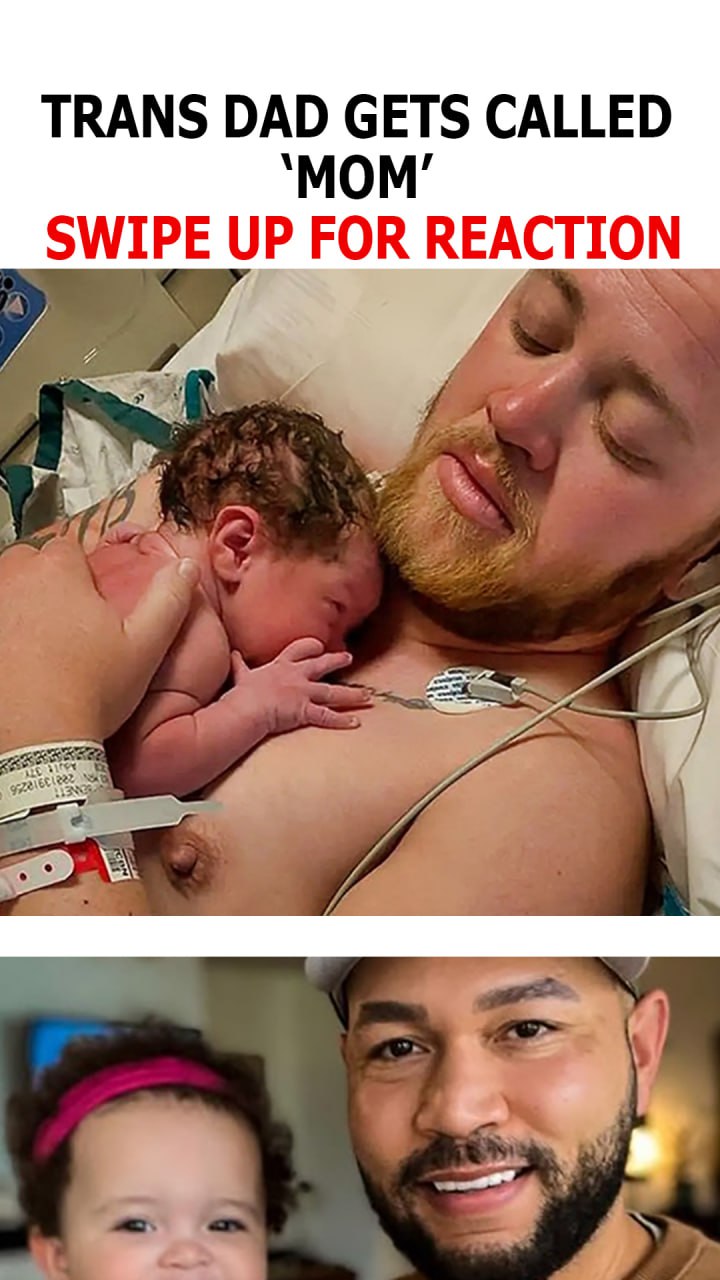
The images circulating online depict this father cradling his newborn child against his chest, the warmth of skin-to-skin contact evident in the gentle, protective way he holds the infant. The hospital environment, sterile and precise, is softened by the tender intimacy of this moment — wires and monitors still attached, hospital bands on both father and child, yet the focus is entirely on the connection between parent and newborn. Another image captures the father alongside his partner, both smiling, their joy unmistakable, radiating a sense of accomplishment and emotional relief after months of anticipation, medical appointments, and preparation.
Yet beyond the visible happiness lies an emotional complexity that illustrates how deeply intertwined identity and parenthood are for transgender parents. According to the father’s own account, a critical part of his experience was shaped by the way he was referred to by hospital staff. Despite his clear identification as the child’s father, some nurses inadvertently addressed him as “mom.” To an outside observer, this might seem like a minor oversight, a slip of language. But for the father, this moment was layered with meaning — touching not only on parental roles but on the recognition of his gender identity, a recognition he had spent years asserting in both personal and public contexts.
The father reflected on how this misidentification made him feel simultaneously seen and unseen. He was undeniably acknowledged as a parent — as a caregiver and central figure in his child’s life — yet the pronoun “mom” carried the implication that his gender identity was secondary, overlooked, or invisible. This subtle but powerful dissonance underscored the nuanced ways in which language can affirm or undermine identity, especially at life-altering moments like childbirth. His emotions were a mix of joy, pride, and a bittersweet ache, reflecting both the fulfillment of becoming a parent and the ongoing challenges of navigating societal recognition as a transgender man.
From the beginning of the pregnancy journey, this father and his partner had navigated a complex landscape of medical, social, and emotional hurdles. Prenatal care often required explaining and reaffirming his identity, advocating for his inclusion in medical decisions, and ensuring that forms, staff, and procedures respected his role. While healthcare professionals are generally trained to provide care and support, many systems remain structured around assumptions of binary gender roles in parenting, which can inadvertently create stress or confusion for transgender parents. The father’s story highlights the importance of both awareness and systemic flexibility in medical environments.
The moment of childbirth magnified these dynamics. Skin-to-skin contact, a practice widely recognized as essential for bonding and early emotional development, brought immediate joy and physiological benefits: warmth, heartbeat synchronization, and the soothing of the newborn through parental presence. The father held his child close, feeling the rise and fall of the infant’s chest against his own, the subtle movements of tiny fingers curling reflexively. Each breath, each coo, each flutter of eyelids reinforced the bond between parent and child. Yet, even amidst this tenderness, the misnaming by hospital staff created a moment of cognitive dissonance. It was a reminder that, even in moments of intimate human connection, societal assumptions about gender persist, sometimes in subtle but emotionally significant ways.
The father recounted that, initially, he felt a pang of frustration and vulnerability. The word “mom” echoed differently than “dad,” carrying with it assumptions that he was not only the wrong gender but perhaps not fully capable of assuming the role of fatherhood as he defined it. He described feeling a momentary tension — a mix of embarrassment, sorrow, and a quiet assertiveness that he had to remind himself of his rightful place as a parent. But as the minutes passed and the baby rested against his chest, he allowed himself to focus on what truly mattered: the presence of his child, the miracle of life, and the deep, instinctive love that flowed through him.
This experience illustrates a critical aspect of parenthood for transgender individuals: identity and recognition are not abstract; they are integral to the parent-child relationship and to personal affirmation. For this father, being acknowledged correctly as “dad” was not a matter of semantics but a validation of years of self-identification, personal growth, and societal navigation. He noted that, while most people might not understand the emotional weight of a single word, for parents in nontraditional gender roles, language can be a powerful tool of affirmation or, conversely, a subtle erasure of lived experience.
Beyond personal feelings, the father also reflected on systemic issues in healthcare. Hospitals, maternity wards, and neonatal units have historically been structured around assumptions of a mother-father dichotomy, with checklists, charts, and verbal conventions aligned accordingly. These practices, though often unintentional, can create moments where transgender parents feel misrecognized or excluded. By sharing his experience publicly, this father sought to shed light on the need for awareness, training, and adjustments in medical practices — ensuring that all parents, regardless of gender identity, are treated with respect, dignity, and affirmation.
The broader social response to his story has been overwhelmingly positive, with many viewers expressing admiration for his vulnerability and bravery. Social media platforms and online news outlets have highlighted both the tender images of father and child and the narrative around recognition and identity. Commenters frequently remarked on the emotional resonance of the story, the universal appeal of parental love, and the courage it takes to navigate both parenthood and societal misunderstanding simultaneously. For many, this father’s story serves as both a mirror and a window: a mirror reflecting their own experiences with identity, family, or advocacy, and a window into the lived experiences of transgender parents navigating medical and social systems.
His narrative also prompts reflection on the role of language in everyday interactions, particularly in high-stakes, emotionally charged situations. Words like “mom” and “dad” carry cultural, emotional, and psychological weight, shaping how individuals perceive themselves and their roles. In the hospital, during childbirth — a moment saturated with expectation, tradition, and emotion — the misapplication of pronouns can have amplified effects. This father’s experience underscores the importance of deliberate, informed, and sensitive language use in all domains, particularly healthcare, where affirmation of identity can significantly impact emotional well-being.
Furthermore, the story provides an opportunity to explore the intersection of family, identity, and societal progress. Transgender parents are increasingly visible, yet their stories are still often underrepresented or misunderstood. By publicly sharing his experience, the father not only advocates for his own recognition but contributes to broader awareness of the challenges and triumphs faced by transgender parents. He emphasizes that parental love, dedication, and competence are not determined by gender; rather, they are demonstrated through care, attention, and emotional presence — qualities that he embodies fully in his interactions with his child.
The images themselves communicate volumes without words. In one, the baby rests peacefully against the father’s chest, tiny hands curling instinctively. Electrodes and medical monitors remain attached, yet the focus is entirely on the human connection — warmth, protection, and intimacy. The father’s gaze is directed downwards, calm and tender, radiating the quiet intensity of love and responsibility. In another image, his partner smiles broadly beside him, sharing in the joy of family creation and reflecting the collaborative, supportive nature of modern parenthood. These visuals reinforce the narrative of affirmation and identity, illustrating that family structures are diverse, dynamic, and resilient.
Healthcare professionals can also glean lessons from this story. Training in inclusivity, awareness of diverse family structures, and the importance of asking and using correct pronouns can profoundly affect patient experience. Simple actions — confirming preferred parental titles, using gender-affirming language in documentation, and cultivating a culture of respect — create an environment where all parents feel recognized and supported. For transgender parents, these actions are more than procedural niceties; they validate identity, support mental health, and facilitate the bonding process between parent and child.
Moreover, the father’s reflections extend beyond the hospital. He speaks to the importance of societal recognition of nontraditional families. Public awareness, education, and advocacy can reduce instances where transgender parents feel misrecognized or marginalized. Stories like his challenge assumptions about gender, parenthood, and the universality of love and caregiving. By sharing his journey, he empowers others, opens dialogue, and contributes to a gradual cultural shift toward inclusion, affirmation, and understanding.
The emotional resonance of his story also highlights the universality of parenthood. While the circumstances may differ — the challenges of gender identity, the nuances of societal recognition — the core experiences are familiar to all parents: the protective instinct, the overwhelming love, the simultaneous fear and awe of holding a new life in one’s arms. In capturing both the vulnerability and the pride inherent in these moments, the story transcends identity categories and speaks to a fundamental human experience.
As social media amplified his experience, the response was multifaceted. Supporters applauded his bravery and the visibility he brought to transgender parenthood. Many shared personal experiences, highlighting similar moments of affirmation or misrecognition, while advocacy groups emphasized the importance of systemic change in medical, legal, and social contexts. Critics, though few, underscored lingering societal misunderstandings, demonstrating the continuing need for dialogue, education, and empathy. The story’s broad reach reinforced that representation matters — that narratives of transgender parents contribute to both visibility and normalization, fostering awareness and acceptance.
In conclusion, the experience of this trans dad encapsulates the profound intersection of identity, parenthood, and societal perception. His initial misnaming as “mom” was not merely a linguistic oversight but a moment laden with personal significance, touching on recognition, affirmation, and respect. Yet, within the complexity of emotions, the narrative reveals resilience, love, and the power of human connection. Through his story, readers gain insight into the lived experiences of transgender parents, the challenges they face in navigating systems and social assumptions, and the universal joys and responsibilities inherent in welcoming a child into the world.
Ultimately, these images and this narrative serve as a reminder: parenthood is defined not by gender alone but by the love, care, and dedication that a parent brings to their child. By sharing his journey, this father not only celebrates the bond with his newborn but advocates for recognition, empathy, and systemic awareness, offering a compelling testament to the evolving understanding of family in the modern era.
Even after the initial hospital experience, the emotional journey for the father was far from over. Bringing a child into the world is a profound moment under any circumstances, but for a transgender parent, it carries additional layers of significance. Each day following birth was filled with moments that tested his patience, resilience, and awareness of how identity and societal expectations intersected with parenthood. The hospital room, once the site of joy and bonding, became a space where subtle microaggressions and affirmations alike shaped his perception of how fully he was recognized as a father.
From the very first feedings, the father was conscious of the language used by nurses and staff. Simple phrases like “your baby” or “mom” were laden with meaning. In the quiet moments of the night, when he cradled his child and whispered lullabies, he often reflected on how language could affirm or undermine his role. He realized that recognition was not only a matter of personal validation but also impacted the child’s experience of family. How a newborn perceives their parent can be influenced by tone, word choice, and subtle cues from the environment — even in infancy. These realizations brought both clarity and urgency to his advocacy: ensuring that he was addressed accurately was not merely for his comfort but for the holistic well-being of his child.
Visits from extended family and friends added another dimension to the experience. Conversations often centered around curiosity, congratulations, and shared excitement. Yet, even well-meaning friends sometimes misused pronouns or referred to him in ways inconsistent with his identity. Each slip, though minor in intent, was emotionally significant. He found himself alternating between gentle correction, patient explanation, and moments of quiet frustration. These interactions reinforced the need for education and awareness, even among close family members, highlighting that affirmation and respect for identity are ongoing processes rather than one-time acknowledgments.
The father also began reflecting on the broader societal implications of his experience. He recognized that many healthcare professionals, despite their good intentions, operate within systems designed around binary gender assumptions. Forms, protocols, and documentation often assume that the birthing parent is female, that the supportive partner is male, and that standard language reflects these assumptions. This structural limitation, he realized, could inadvertently exclude or misrecognize transgender parents, compounding stress during a period that is already emotionally and physically demanding. For him, these structural challenges underscored the importance of systemic change — advocating not only for personal recognition but for the implementation of inclusive policies that could benefit all families.
Social media became an unexpected ally in this process. After sharing his experience, images, and reflections, the father received a flood of supportive messages from other transgender parents, LGBTQ+ advocates, and parents of all identities. Many shared similar experiences of misnaming or misrecognition in medical or social contexts, echoing the emotional impact of language in parenthood. The father found solace in these connections, realizing that his story resonated widely and could help others navigate similar challenges. Beyond personal validation, this network became a source of practical advice: strategies for advocating for pronoun use, navigating hospital protocols, and communicating identity clearly and respectfully in high-stress settings.
He also reflected on the educational potential of his experience. In the weeks following the birth, he began speaking publicly about the challenges and joys of transgender parenthood. He highlighted the importance of language, visibility, and inclusion, emphasizing that parenthood is defined not by gender but by love, dedication, and the active role one plays in a child’s life. His story served as both advocacy and education — a reminder to society that families come in diverse forms, that gender identity is integral to personal recognition, and that healthcare systems must evolve to meet these realities.
The father’s advocacy extended into interactions with medical professionals beyond the birth itself. Pediatricians, lactation consultants, and nurses all became partners in this journey. He observed how staff responses to pronouns and identity could either empower or diminish a parent’s sense of authority and confidence. He took care to communicate clearly, explaining preferred pronouns, sharing his experience, and highlighting moments when misnaming could be emotionally impactful. In doing so, he helped cultivate awareness, encouraging a culture of respect and sensitivity that extended beyond his own family to other patients and staff.
At home, the dynamics of parenthood were equally layered. Everyday tasks such as diaper changes, feedings, and nighttime soothing became opportunities for bonding, reflection, and reinforcement of parental identity. The father took deliberate care in how he interacted with his child, ensuring that every touch, every word, and every gesture affirmed his role as a father. In moments of quiet, when the infant gazed up with unseeing eyes, he found both profound joy and a subtle affirmation that identity, love, and presence were inseparable in the parent-child relationship.
Beyond the immediate family, societal perception continued to play a role in shaping the father’s experience. Public spaces such as parks, pediatric clinics, and community centers presented subtle challenges: glances from strangers, questions from curious parents, and assumptions about family structure. Each encounter reinforced the reality that, for transgender parents, navigating the world requires a blend of confidence, advocacy, and resilience. He often reflected on how these experiences could shape the child’s understanding of identity, acceptance, and empathy from an early age.
Education and storytelling became tools of empowerment. The father began documenting milestones, writing reflections, and capturing images that conveyed both the love and the identity affirmation central to his parenting. These records served multiple purposes: preserving memories, creating a narrative that accurately represented his role, and providing resources for other families navigating similar journeys. Each photograph, each note, and each shared experience became part of a broader effort to normalize diverse family structures and advocate for recognition in both medical and social systems.
The father also addressed the emotional and mental health dimensions of parenting while navigating societal misrecognition. Moments of misnaming or assumptions about gender could trigger subtle stress, anxiety, or doubt. By acknowledging these feelings and seeking support — from partners, peer networks, and professional counselors — he cultivated resilience and modeled coping strategies that would benefit both himself and his child. He emphasized that acknowledging vulnerability does not diminish parental authority; instead, it enhances awareness, empathy, and emotional attunement — qualities essential to nurturing a child’s development.
Engagement with the wider community became another aspect of his journey. Through talks, interviews, and social media posts, he highlighted both the joys and challenges of transgender parenthood. Discussions included the impact of language, the importance of institutional support, and the broader need for inclusivity across healthcare, education, and public policy. These dialogues not only amplified his personal experience but contributed to societal learning, raising awareness of systemic challenges and advocating for equitable treatment across all areas of family life.
As the child grew, the father focused on building routines and traditions that reinforced his role and affirmed identity. Simple daily practices — reading bedtime stories, singing songs, establishing mealtime rituals — became opportunities to model stability, love, and consistent presence. Each routine carried dual significance: fostering a nurturing environment while subtly reinforcing the father’s visibility and authority. Over time, these practices helped the child internalize a sense of security and love that transcended societal assumptions about gender or parental roles.
The father’s journey underscores a broader societal message: parenthood is defined not solely by biological sex or gender but by the consistent, loving, and attentive presence of caregivers. Transgender parents, like all parents, navigate challenges and triumphs, yet their experiences highlight the ways in which language, recognition, and systemic structures can amplify or impede the parental journey. By sharing his story, this father contributes to visibility, understanding, and advocacy, demonstrating that identity affirmation is central not only to personal well-being but also to the healthy development of children.