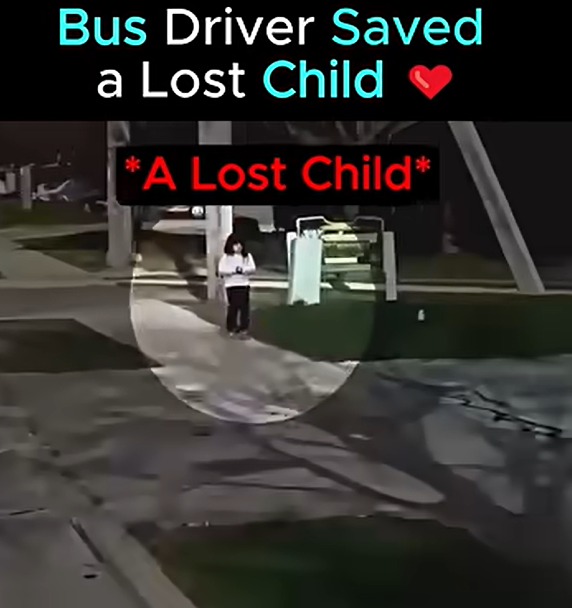
A quiet moment on a bus route turned into an important act of kindness when a bus driver noticed a young girl wandering alone on the sidewalk. At first glance, it may have looked like an ordinary scene on a regular day, but the driver quickly recognized that something was not right. The child appeared to be by herself, with no adult nearby and no clear direction of where she was going. Instead of continuing on her route, the driver made the decision to stop and help, showing how a single moment of attention can make a major difference in a child’s safety.
The bus driver pulled over and brought the bus to a stop after spotting the young girl walking alone outside. In situations like this, quick judgment matters. A child wandering without supervision can be vulnerable to traffic, weather, strangers, confusion, or panic. The driver understood that ignoring the situation could place the girl at greater risk. By stopping the bus, she turned what could have become a frightening situation into one where the child was immediately seen, protected, and cared for.
After stopping, the driver opened the bus doors and called out to the girl. She asked where the child was going and where she lived, trying to understand whether the girl knew her way home or had become lost. The questions were simple, but they were important. A young child may not always be able to explain clearly what happened, especially if she is scared or confused. The driver’s calm approach helped create a safer atmosphere and gave the child a chance to respond without feeling overwhelmed.
The driver then invited the girl onto the bus and told her to take a seat. This was an important step because it moved the child away from the sidewalk and into a safer space. On the bus, the girl was no longer alone outside or exposed to the risks of passing traffic and public surroundings. The driver’s actions showed care, patience, and responsibility. She did not treat the situation as an inconvenience or a delay. Instead, she treated the child’s safety as the priority.
Once the girl was inside, the driver stayed close to her and sat beside her to provide comfort. That small gesture likely mattered a great deal. For a lost child, being surrounded by unfamiliar streets, vehicles, and people can be frightening. Having a calm adult sit nearby can help reduce fear and make the child feel less alone. The driver did more than simply call for help; she offered reassurance in a moment when the girl needed it most.
The driver then contacted emergency services to report the situation and request assistance. Calling 911 was the right step because police and emergency responders are trained to handle cases involving lost children. They can help identify the child, contact family members, and make sure the child is returned safely. By involving authorities, the driver ensured that the situation would be handled properly rather than simply guessing where the girl belonged or allowing her to continue wandering.
When a police officer arrived, the focus remained on keeping the child calm and safe. The officer approached the situation gently, speaking to the young girl in a calm and reassuring way. Instead of treating the moment with force or urgency that might frighten her, he handled it with care. He held her hand and guided her off the bus, helping her transition from the safety of the bus to the next step of being reunited with her family.
The officer then took the child to the station so authorities could continue the process of finding her home. In cases involving lost children, officers must confirm where the child belongs and make sure she is returned to the correct guardians. This process may involve asking the child questions, checking missing-child reports, contacting family members, or using information from the area where she was found. The goal is not only to return the child quickly, but also to ensure she is returned safely.
Eventually, the officer was able to bring the young girl home safely. That outcome was possible because several people acted responsibly at the right time. The bus driver noticed the child, trusted her instincts, stopped the bus, brought the girl inside, comforted her, and called for help. The officer then continued the process with patience and care, making sure the child was safely reunited with her family. Together, their actions turned a potentially dangerous situation into a safe ending.
This incident is a strong reminder of the important role public service workers play in the community. Bus drivers do much more than transport passengers from one stop to another. They watch the roads, interact with the public, and often notice things others may miss. Because they travel through neighborhoods every day, they can become an extra set of eyes for the community. In this case, the driver’s awareness helped protect a child who needed help.
The story also shows why it is important to pay attention to children who appear to be alone or distressed in public places. A lost child may not always cry, scream, or ask for help. Some children may simply keep walking because they are confused or unsure what else to do. Others may be too shy or frightened to approach an adult. That is why the bus driver’s decision to step in was so important. She did not wait for the child to ask for help. She recognized the signs and acted.
For parents and guardians, the incident is also a reminder of how quickly a young child can become separated from home or family. Children are naturally curious, and sometimes they may wander outside without realizing the danger. A few minutes can be enough for a child to end up on a street, sidewalk, or public area where they do not know how to get back. Teaching children their name, address, and how to ask trusted adults for help can make a major difference in situations like this.
At the same time, not every young child can remember or explain where they live, especially under stress. That is why community response matters. Adults who work in public spaces, including bus drivers, teachers, store employees, and police officers, can help protect children when something goes wrong. The safest response is often to bring the child to a secure location, stay with them, and contact emergency services.
The emotional side of the story is just as important as the practical one. The little girl was not treated like a problem or a delay. She was treated with kindness. The driver took time to speak to her, invite her inside, and sit next to her. The police officer held her hand and guided her gently. These actions may seem simple, but for a frightened child, they can make the difference between panic and comfort.
The incident also demonstrates the value of calm decision-making. The driver could have continued her route and assumed someone else would help. She could have been worried about the schedule or the passengers waiting to continue their trip. Instead, she chose to stop. That decision showed strong judgment and compassion. Public safety often depends on people being willing to pause their routine when something appears wrong.
In many communities, stories like this do not always receive as much attention as more dramatic police or emergency incidents, but they are just as meaningful. They show the everyday heroism of people who notice, care, and act. No one had to perform a dramatic rescue. No one had to chase anyone or confront danger. The most important action was simple: a responsible adult saw a lost child and made sure she was not left alone.
The safe return of the young girl also likely brought enormous relief to her family. For any parent or guardian, realizing a child is missing is terrifying. Even a short period of uncertainty can feel overwhelming. Thanks to the bus driver’s quick response and the officer’s assistance, the family’s fear ended with the child coming home safely. That ending is exactly why early intervention matters.
This story stands as a heartwarming example of community care. It shows that safety is not only the responsibility of police officers or emergency workers. It can begin with anyone who notices something unusual and decides to help. In this case, it began with a bus driver who looked out the window, saw a young girl alone, and understood that she needed protection.
What could have been a dangerous situation became a story of quick thinking and kindness. A lost child was brought out of harm’s way, comforted, and safely returned home because adults around her responded with care. The bus driver’s actions showed attentiveness and compassion, while the officer’s gentle handling helped complete the rescue. Together, they reminded everyone that sometimes the most powerful acts of service happen in ordinary moments, when someone chooses not to look away.
The incident also reflects the deep responsibility carried by people who work in public transportation. A bus driver’s job is often seen as routine: follow the route, pick up passengers, drop them off safely, and stay on schedule. But in reality, drivers are constantly observing their surroundings. They watch traffic, pedestrians, cyclists, passengers, road conditions, and unexpected activity along the route. Because of that, they are often among the first people to notice when something seems wrong. In this case, the driver’s awareness was exactly what the young girl needed.
A child walking alone on a sidewalk may not always immediately appear to be in danger. In some neighborhoods, children walk to school, visit friends, or play nearby. But there are small signs that can make a trained or attentive adult pause. A lost child may walk slowly, look around repeatedly, seem unsure of where to go, or appear too young to be outside alone. The bus driver noticed enough to understand that the situation deserved attention. That instinct was important because lost children can become more vulnerable the longer they remain outside without help.
The driver’s decision to pull over also showed courage and responsibility. Stopping a bus is not always simple. There may be passengers onboard, traffic behind the vehicle, and a schedule to maintain. Every delay can affect the rest of the route. But the driver chose safety over routine. That decision is what makes the story meaningful. She understood that a child’s wellbeing mattered more than staying perfectly on time. In public service jobs, those moments of judgment can be just as important as any formal rule or procedure.
Once the driver opened the doors and spoke to the girl, she created a connection. For a young child, being approached by an unfamiliar adult can be scary, especially when the child is already confused. The driver had to be gentle enough not to frighten her, but clear enough to let her know she was safe. Asking where she was going and where she lived gave the child a chance to explain herself, but it also helped the driver understand that the child likely needed more help than simple directions.
Inviting the girl onto the bus was a protective act. The sidewalk may have been open, exposed, and unpredictable. Cars could pass nearby. Strangers could approach. The child could continue walking farther away from home. By bringing her inside the bus, the driver placed her in a controlled environment where she could sit, calm down, and wait for help. This was safer than leaving her outside while emergency services were called. It also meant the driver could keep an eye on her and prevent her from wandering away again.
The comfort the driver gave the child may have been just as important as the call to 911. Children often respond strongly to the emotional tone of adults around them. If an adult seems panicked, angry, or impatient, a child may become more frightened. But if an adult speaks calmly and stays nearby, the child may feel reassured. Sitting next to the girl showed her that she was not alone. It communicated safety without needing many words.
Calling emergency services was also the correct and responsible step because it placed the situation into the hands of people trained to reunite lost children with their families. The driver did not attempt to solve the entire situation alone. She did not drive around looking for the child’s home or let the child guess where she lived. Instead, she followed a safer process. When a young child is found alone, it is important to involve authorities so that the child’s identity and home can be confirmed properly.
The police officer’s arrival continued the calm and careful handling of the situation. The officer did not rush the child or treat her like she had done something wrong. He spoke gently and guided her by the hand, showing patience and understanding. That kind of response matters because a lost child may already feel embarrassed or scared. A harsh tone could make the child shut down or cry. A gentle approach helps the child trust the adult who is trying to help.
Taking the child to the station may have been necessary to continue the process safely. Police stations can serve as secure locations where officers can contact guardians, check reports, and gather accurate information. If the girl could not clearly explain where she lived, officers could use other methods to identify her family. They could also make sure no one else was searching for her nearby. The goal was to avoid guessing and to make sure she was returned to the right place.
The successful return home was the best possible outcome. It means the driver’s instincts were right, the officer’s response was effective, and the child was protected before anything worse could happen. Many serious incidents are prevented not by dramatic force, but by early action. This was one of those moments. The child was found before she reached a more dangerous area, before she became more upset, and before the situation turned into a longer emergency.
This story also reminds communities that children depend on many layers of protection. Parents and guardians are the first line of safety, but they cannot be everywhere at every second. Teachers, neighbors, bus drivers, store workers, and police officers can all become part of the safety net when something unexpected happens. A child who wanders away may be protected by the first responsible adult who notices. In this case, that responsible adult was a bus driver.
The event also shows why public awareness matters. Many people might see a child walking alone and assume everything is fine. They may think the child’s parent is nearby or that someone else will step in. But sometimes, taking a closer look can make all the difference. This does not mean every child outside alone is in danger, but when a child appears very young, confused, or unsupervised, it is better to check than to ignore the situation. A simple question from a caring adult can prevent a much bigger problem.
The driver’s response can also be seen as an example of everyday heroism. She did not have to make a loud announcement or perform a dramatic rescue. Her heroism was quiet. It was in the decision to stop the bus, open the door, speak kindly, offer a seat, and make a phone call. These actions may seem ordinary, but they changed the outcome for a vulnerable child. Sometimes, the most important acts of help are simple and immediate.
For the young girl, the memory of being lost may have been frightening, but the adults who helped her likely made the experience less traumatic. Instead of being left alone or scolded, she was welcomed, comforted, and guided safely. That kind of care can help a child feel protected even during a confusing moment. It teaches the child that there are safe adults in the community who will help when something goes wrong.
The case also highlights the value of training for public-facing workers. Bus drivers and other transportation employees may benefit from knowing how to respond when they encounter lost children, distressed passengers, or people who appear vulnerable. The right response includes staying calm, keeping the person safe, contacting emergency services, and avoiding actions that could make the situation worse. This driver’s actions followed that kind of careful approach, whether through training, instinct, or both.
Passengers on the bus may also have witnessed a powerful example of compassion. A delay in public transportation can sometimes frustrate people, but moments like this remind everyone that safety comes first. Most passengers would likely understand that helping a lost child is more important than arriving at the next stop a few minutes earlier. In fact, seeing the driver act with kindness may have reassured passengers that they were in the care of someone responsible and alert.
The officer’s role was equally important because he helped complete the process professionally. Finding a lost child is only the beginning. Authorities must determine where the child belongs, whether anyone is looking for her, and whether there are any concerns at home. In many cases, a child may simply have wandered away accidentally. In other cases, there may be a larger issue that needs attention. Police must be careful, gentle, and thorough to make sure the child’s safety is fully protected.
The safe return also shows the importance of coordination between community members and emergency services. The bus driver did not need to know every answer. She only needed to recognize the problem and call for help. The police officer did not witness the beginning of the situation, but he relied on the driver’s report and then took the next steps. Each person played a role. That kind of teamwork is what makes community safety effective.
This incident can also encourage parents to have age-appropriate safety conversations with their children. Young children should be taught what to do if they become lost: stay in a safe place, look for a trusted adult, and give their name or address if they know it. They can be taught that bus drivers, police officers, teachers, and store employees are people they can ask for help. Of course, every child’s age and ability level is different, but simple lessons can make a difference during a scary moment.
It is also helpful for children to learn basic identifying information when possible, such as their full name, a parent’s name, or their home address. Some families use ID bracelets, tags inside backpacks, or emergency contact cards for younger children who may not remember details under stress. These small precautions can make it easier for helpers to reunite a child with family quickly. Still, even without that information, a calm adult response remains essential.