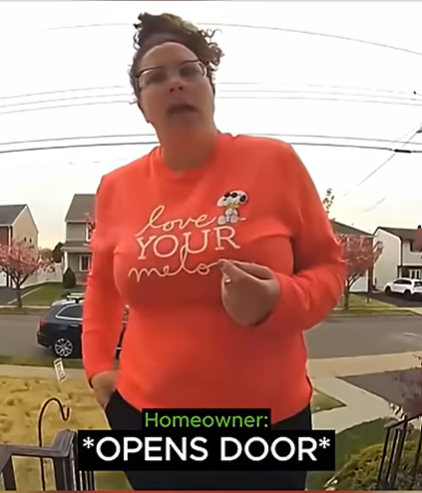
A neighborhood dispute over a towed vehicle has sparked a tense confrontation between two residents after a woman discovered that her sister’s car had been removed from a public street while the family was away on vacation.
The incident began when the neighbor approached the homeowner visibly upset, demanding an explanation for why her sister’s car had been towed. According to the neighbor, her sister had parked the vehicle on the street because the family’s usual parking spaces were unavailable at the time. With limited options, they left the car in what they believed was a perfectly legal public parking spot before leaving for a family trip to Disney World.
The neighbor argued that there was nothing unusual or improper about the car being parked there. From her point of view, the street was public, meaning anyone had the right to leave a vehicle there as long as it was not blocking a driveway, parked illegally, or creating a safety issue. She insisted that her sister had no reason to notify anyone in the neighborhood before leaving the car behind, especially because it was not parked on private property.
The homeowner, however, saw the situation very differently. They explained that the vehicle had been sitting in the same spot for several days without moving. Because no one appeared to be coming back to check on it, and because the car did not belong to anyone they recognized, they believed it may have been abandoned. After waiting and seeing no change, the homeowner said they contacted the proper authorities or towing service to have the vehicle removed.
That explanation did little to calm the neighbor, who felt the homeowner had acted too quickly and unfairly. She claimed the family returned from vacation only to find the car gone, leaving them confused and frustrated. After learning it had been towed, they were forced to deal with the towing company and pay a fee of around $500 to recover the vehicle. The neighbor then demanded that the homeowner reimburse that amount, arguing that the tow never should have happened in the first place.
The homeowner refused to pay. They said they were retired and did not have $500 available to hand over, especially for a decision they believed was reasonable at the time. The homeowner maintained that they had not acted out of spite, but out of concern that an unknown car had been left sitting in the area for multiple days. In their view, they had done what many people might do if they suspected a vehicle had been abandoned in front of their home.
As the conversation continued, the disagreement became more heated. The neighbor repeatedly emphasized that the street was public and that her sister had every right to park there. She appeared frustrated that the homeowner had assumed the worst instead of asking around or waiting longer. To her, the situation was not about a random abandoned vehicle, but about a family car that had been left in a legal spot while the owners were away.
The homeowner responded by saying they had no way of knowing the circumstances. They did not know the family had gone to Disney World, nor did they know the car belonged to the neighbor’s sister. From their perspective, all they saw was an unfamiliar vehicle that had remained unmoved for days. They argued that if someone planned to leave a vehicle parked for an extended period, especially in front of someone else’s home, it would have been considerate to let nearby residents know.
The disagreement revealed a common tension in residential neighborhoods: the difference between what is legally allowed and what neighbors consider courteous. Public streets are usually available for public parking, but that does not always prevent conflict when a vehicle is left for several days in front of someone else’s house. Some homeowners feel protective over the space near their property, even when they do not legally own it. Others believe that if the street is public, no neighbor has the right to complain unless a law is being broken.
In this case, the neighbor strongly believed the homeowner had overstepped. She argued that the car being parked for several days was not enough reason to assume it was abandoned. Families go on trips, people leave town, and cars may remain in one place for different reasons. She felt the homeowner’s decision created an unnecessary financial problem for her sister, especially after what was supposed to be a happy family vacation.
The homeowner, on the other hand, seemed firm in their belief that they had made a reasonable judgment based on the information available. They said they had not been informed that the car belonged to someone nearby, and they did not know the owners were away. The homeowner appeared to feel that responsibility should not fall entirely on them, especially since the family chose to leave the vehicle in that location without telling anyone.
The neighbor’s demand for $500 became the center of the confrontation. She wanted the homeowner to take responsibility for the towing cost, while the homeowner insisted they could not and would not pay. The homeowner’s explanation that they were retired and lacked the money added another layer to the dispute. Even if they had wanted to resolve the situation quickly, they claimed they were not in a financial position to cover such an expense.
The neighbor did not accept that answer. Feeling that her sister had been wronged, she warned the homeowner that the matter could be taken to small claims court. Her threat suggested that she believed there was a legal argument to be made, possibly that the homeowner caused damages by reporting or arranging the tow. The homeowner did not back down, and the conversation ended with the neighbor walking away after making it clear that the issue was not over.
The situation has since drawn attention because it touches on an everyday problem that many neighborhoods face. Parking on public streets can become a source of tension even when no official rules appear to be broken. Residents may feel frustrated when unfamiliar cars take up space near their homes, especially for long periods. At the same time, vehicle owners often feel they should not be punished for using public parking legally.
What makes this case especially complicated is the question of whether the homeowner had the authority to have the vehicle towed simply because it had not moved for several days. In many places, rules about abandoned vehicles depend on local ordinances. Some cities or counties require a car to remain unmoved for a certain number of days before it can be considered abandoned. Others may require warnings, notices, or involvement from law enforcement before a tow can happen. Without knowing the specific local rules, it is difficult to determine whether the tow was fully justified or whether the vehicle should have been left alone.
For the family whose car was towed, the incident likely turned a vacation memory into a frustrating return home. After spending time away, possibly expecting to come back relaxed, they were instead met with an unexpected bill and the stress of locating their vehicle. The neighbor’s anger appeared to come from that sense of unfairness. She believed her sister had done nothing wrong, and yet the family was forced to pay hundreds of dollars.
For the homeowner, the confrontation may have felt like being blamed for trying to protect the neighborhood. They may have genuinely believed they were reporting a suspicious or abandoned vehicle. In many residential areas, abandoned cars can create concerns about safety, blocked visibility, limited parking, or neighborhood appearance. The homeowner’s decision may have been based on those concerns rather than any personal issue with the neighbor’s family.
Still, the dispute raises the question of whether a simple conversation could have prevented the entire problem. If the family had told a neighbor they were leaving the car there while on vacation, the homeowner may never have suspected it was abandoned. Likewise, if the homeowner had asked around before taking action, they may have discovered the vehicle belonged to someone connected to the neighborhood. Instead, both sides acted based on assumptions, and those assumptions led to a costly disagreement.
The neighbor’s argument focused heavily on rights. She believed that because the street was public, her sister had the right to park there without explaining herself. That position is understandable. Public streets are not reserved for the homeowners who live beside them, and in many neighborhoods, parking is first come, first served. A resident cannot usually claim the curb in front of their house as their personal space unless there are specific permits, restrictions, or local rules in place.
The homeowner’s argument focused more on responsibility and common sense. They believed that a car left unmoved for several days could reasonably be viewed as abandoned, especially if it was unfamiliar. To them, the lack of communication created uncertainty. They seemed to feel that while the family may have had a legal right to park there, they also had a responsibility to consider how the situation might look to others.
That difference between legal rights and neighborly expectations is often where these disputes become personal. One person may say, “I had every right to do this,” while another says, “You should have been more considerate.” Both can feel correct from their own perspective. But when money enters the situation, especially a towing fee as high as $500, emotions can escalate quickly.
The threat of small claims court suggests the conflict may continue beyond the initial confrontation. In small claims court, the neighbor or her sister would likely need to show that the homeowner was responsible for the tow in a way that caused financial loss. The homeowner, in turn, would likely argue that they acted in good faith because they believed the vehicle was abandoned. The outcome would depend on local parking laws, towing procedures, and whether the homeowner had the legal ability to request the tow.
Even if the case never goes to court, the relationship between the neighbors may be damaged. Neighborhood disagreements over parking often leave lingering resentment because they happen close to home. Unlike a disagreement with a stranger in a store or on the road, disputes between neighbors can continue long after the original incident. The people involved may still see each other outside, pass each other’s homes, or share the same street every day.
The confrontation also highlights the importance of communication in residential communities. A short message, a note, or a quick conversation before leaving the car could have helped avoid confusion. On the other side, a little more patience or an attempt to identify the car’s owner might have prevented the tow. Neither side appears to have expected the situation to become so serious, but once the towing fee was involved, the disagreement quickly turned into a demand for repayment.
For many observers, the situation may feel like a lesson in how easily small neighborhood issues can grow into major conflicts. A parked car, a family vacation, and an assumption about abandonment were enough to create a dispute involving money, anger, and possible legal action. What began as a simple parking decision became a larger argument about rights, responsibility, and respect between neighbors.
The homeowner’s refusal to pay was firm, but it was also based on their personal circumstances. By saying they were retired and did not have the money, they framed the demand as something they simply could not afford. The neighbor, however, seemed to believe that financial hardship did not erase responsibility. From her point of view, the family was already out $500 because of the homeowner’s decision, and someone needed to make that right.
The emotional tone of the confrontation suggests that both sides felt wronged. The neighbor felt her sister had been unfairly punished for using a public street. The homeowner felt they were being blamed for responding to what looked like an abandoned car. Neither side seemed willing to accept full responsibility, and neither appeared satisfied with the other’s explanation.
In situations like this, local rules matter greatly. Some areas allow residents to report vehicles that appear abandoned, but the final decision to tow may rest with police, code enforcement, or parking authorities. In other places, private citizens may not be able to tow a car from a public street unless certain conditions are met. If proper procedures were not followed, the family may have a stronger argument. If the authorities approved the tow under local law, the homeowner may be less likely to be held responsible.
The case also brings attention to how expensive towing can be. A $500 fee can be a serious burden for many families, especially when it is unexpected. Towing charges often include the tow itself, storage fees, administrative costs, and other penalties. The longer a vehicle remains in a tow yard, the higher the amount may become. For someone returning from a vacation, discovering that cost can feel especially upsetting.
At the same time, homeowners who deal with unfamiliar vehicles left near their property may feel they have few options. If a car sits for days, they may worry it has been stolen, abandoned, or left by someone who does not live in the area. They may also worry that if they ignore it, the car could remain there indefinitely. These concerns can lead residents to contact authorities, even when the vehicle’s owner has an innocent explanation.
The neighbor’s statement that her sister had every right to park there without notifying anyone reflects a belief in public access. But public access does not always protect people from local abandoned-vehicle rules. In some communities, even legally parked cars cannot remain in the same spot beyond a certain period. This means that a car can be both legally parked at first and later subject to towing if it is not moved within the allowed timeframe. That detail could be important if the dispute moves forward.
The homeowner’s assumption that the vehicle was abandoned may or may not be considered reasonable depending on how many days the car sat there and what the local rules require. If the car was only there for a short time, the neighbor may have a stronger point that the tow was excessive. If it was there long enough to violate a local ordinance, the homeowner’s decision may appear more justified.
Beyond the legal questions, the story shows how differently people define fairness. To the neighbor, fairness means reimbursing the family for a tow she believes should never have happened. To the homeowner, fairness means not being forced to pay for a situation they did not knowingly create. Both sides believe they are standing up for what is right, but their versions of fairness do not match.
The confrontation ended without a resolution. The neighbor walked away after threatening to sue, while the homeowner remained unwilling to pay the $500. Whether the matter ends there or continues in small claims court will likely depend on whether the family decides the cost and effort of pursuing the case are worth it.
For now, the incident remains a reminder that parking disputes can quickly become emotional, especially when people feel their property, money, or rights have been affected. A public street may be shared space, but shared space often requires patience, communication, and an understanding that not everyone sees the same situation the same way.
In the end, the dispute was not just about a car being towed. It was about assumptions, expectations, and the fragile balance of living near other people. One family assumed that parking on a public street while they went on vacation would not be a problem. One homeowner assumed that a car left unmoved for days may have been abandoned. Those two assumptions collided, leaving behind a $500 bill, angry words, and the possibility of a courtroom dispute.
The situation could have been avoided with one simple step from either side. The family could have let a neighbor know the car would be there for several days. The homeowner could have checked with nearby residents before reporting it. Instead, both acted without having the full picture, and the result was a conflict that may take far longer to settle than the vacation itself.
The incident also shows how quickly trust between neighbors can break down when people feel ignored or disrespected. The neighbor did not only seem upset about the money; she seemed upset that no one had given her family the benefit of the doubt. From her perspective, the homeowner saw an unfamiliar car and immediately treated it as a problem instead of considering that it might belong to someone nearby. That feeling of being judged or dismissed can make an ordinary parking issue feel much more personal.
For the homeowner, the confrontation may have felt unfair in a different way. They may have believed they were being accused of doing something malicious when, in their mind, they were simply reacting to an unusual situation. Being approached angrily and asked for $500 could have made them defensive, especially if they genuinely thought they had followed the correct process. Instead of a calm conversation, both sides entered the discussion already feeling blamed.
The disagreement may also affect how other residents on the street behave in the future. Neighbors who hear about what happened may become more cautious about leaving cars parked for long periods. Others may think twice before reporting a vehicle as abandoned. Some may even begin communicating more openly about travel plans, guests, or temporary parking situations to avoid similar misunderstandings.
At the same time, this kind of dispute can create tension in the wider neighborhood. People may start taking sides, with some agreeing that public parking should remain open to everyone, while others sympathize with homeowners who do not want unknown vehicles sitting outside their homes for days. What looks like a simple argument between two households can slowly become a larger conversation about boundaries, courtesy, and community expectations.
Whether or not the neighbor follows through with small claims court, the situation has already left a mark. The $500 fee may eventually be paid, dismissed, or argued over legally, but the bigger damage may be the loss of neighborly goodwill. Once residents begin seeing each other as opponents instead of people sharing the same street, even small problems can become harder to solve.