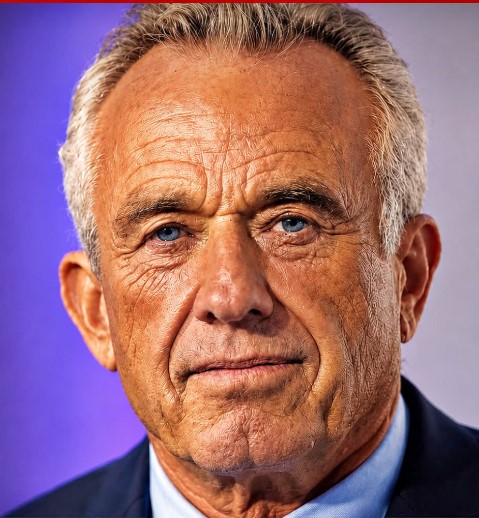
A newly published article carrying the dramatic title “What We Just Learned About RFK Jr.” has attracted attention not because it reveals a clearly documented development, but because it demonstrates how quickly vague language, unanswered questions and strategic omissions can create the appearance of breaking news. The article repeatedly refers to an unspecified “developing situation,” unnamed reports, supposed family silence, medical documentation and a timeline under review. However, it never clearly explains what allegedly happened to Robert F. Kennedy Jr., who requested the documentation, which family sources were contacted, what statements were compared or what evidence created the controversy in the first place. As a result, the most important thing readers have learned is not a new fact about Kennedy himself. It is that an article can generate considerable uncertainty without presenting a single concrete, independently verifiable claim.
The timing makes the lack of detail especially significant. The story was published on June 29, 2026. On that same date, the Department of Health and Human Services announced that Kennedy, serving as the department’s secretary, had appeared publicly in Atlantic City, New Jersey. According to the official release, he joined more than 75 children at a Boys & Girls Club event to launch the return of the Presidential Fitness Test and promote a new federal physical-activity initiative. Whatever broader questions people may have about Kennedy’s leadership, policies or political future, the official record provides a specific location, activity and public appearance directly connected to him on the day the vague article appeared. That does not automatically answer every possible question, but it sharply weakens any unsupported suggestion that his condition or whereabouts were unknown.
The original article does not openly say that Kennedy is dead, missing, seriously ill or involved in a family emergency. Instead, it uses phrases that could cause readers to imagine one or more of those possibilities. It says late-breaking reports are circulating, that people close to the family have become difficult to reach, that medical documentation has been requested and that public appearances are being examined. Yet it provides no names, dates, quotations, documents, photographs, official requests or descriptions of the underlying allegation. This style allows an article to suggest something alarming while avoiding responsibility for stating the alarming thing directly. Readers are left to fill in the blank, and because people often assume that a journalist knows more than has been published, the absence of information can be mistaken for evidence of a hidden reality.
That is why specificity matters so much in political and health reporting. A credible developing story normally tells readers exactly what has been confirmed, who confirmed it, when the event allegedly occurred and which parts remain uncertain. Even when sources must remain anonymous, responsible reporting generally explains why those sources are in a position to know the information. It might identify someone as a senior official, a family representative, a medical professional familiar with the case or a person who witnessed a particular event. The linked article does none of this. It refers broadly to “people described as close to the family” without saying who described them that way or how the publication communicated with them. It mentions a request for medical records without identifying the person or institution that supposedly made the request. It describes a timeline review without showing the timeline.
The repeated emphasis on silence is also misleading when it is separated from a clearly defined question. A person cannot reasonably be expected to deny every rumor that appears online, particularly when the rumor is never stated directly. Public figures and their representatives receive countless requests for comment, including messages based on false claims, impersonation, satire and deliberate misinformation. A failure to respond may mean that a message was overlooked, considered unserious, referred to legal counsel or rejected because answering it would give unnecessary publicity to an unverified story. Silence can sometimes be relevant, but it becomes meaningful only when readers know what question was asked, who received it, how much time was allowed for a response and whether the subject would ordinarily be expected to address the matter publicly.
In this case, the article turns the absence of a response into the center of the story while withholding the information necessary to interpret that absence. It asks why there has been no confirmation or denial, but never explains what Kennedy’s representatives were being asked to confirm or deny. It says the inner circle has not provided a definitive answer, although readers are not told whether the publication contacted Kennedy’s office, HHS, a lawyer, a family member or a campaign representative. Without those details, “no denial” is not a meaningful journalistic fact. It is simply a phrase that can make speculation sound more substantial than it is.
The reference to medical documentation raises an additional concern. Medical information is private, sensitive and legally protected in many circumstances. A publication cannot establish that an important medical event occurred merely by saying records have been requested. Anyone can request information, and a request does not prove that responsive records exist. Even when records do exist, they require authentication and careful interpretation. Medical terminology can be misunderstood, dates can reflect administrative activity rather than treatment and documents can be altered or removed from their proper context. Responsible journalists therefore need more than an unexplained claim that someone wants documentation. They need a legitimate source, verification of authenticity and a clear public-interest justification for discussing private medical details.
The article itself acknowledges that no documentation has been released and no medical conclusion has been officially announced. That admission should have greatly reduced the certainty and prominence of the story. Instead, the article uses the lack of documentation to maintain suspense. It suggests that the records could clarify the matter but gives readers no basis for believing that the records are relevant, available or connected to a real incident. The structure resembles a mystery in which the existence of the mystery is never established. Every unanswered question leads to another unanswered question, allowing uncertainty to expand even though the factual foundation remains unchanged.
The supposed timeline review operates in the same way. Timelines are useful investigative tools when they contain identifiable events. A meaningful timeline could include a dated public appearance, a scheduled meeting, a social-media post, a verified photograph, an official statement, travel records or comments from named witnesses. Those events could then be compared for consistency. The linked story refers generally to appearances and statements being placed “side by side,” but it does not reproduce or summarize them. It never identifies the alleged contradiction. Readers cannot evaluate whether the timeline contains a real discrepancy, a minor reporting error or nothing unusual at all.
Meanwhile, public information provides recent evidence of Kennedy carrying out his official responsibilities. HHS reported that he launched the physical-fitness initiative in Atlantic City on June 29. His official leadership page also listed recent departmental announcements associated with his work, including health-record infrastructure, regenerative agriculture and the restoration of the fitness test. Earlier in June, HHS said Kennedy had launched GetActive.gov during a Colorado tour, while another release documented his announcement of hundreds of millions of dollars in funding opportunities related to serious mental illness, addiction and homelessness. These official sources naturally present the administration’s preferred account of its work and should not be treated as independent evaluations of Kennedy’s performance. Nevertheless, they are concrete, dated records that can be examined and compared, unlike the anonymous suggestions in the viral article.
None of this means Kennedy is free from legitimate scrutiny. As secretary of Health and Human Services, he controls or influences policies affecting federal health agencies, medical research, food regulation, vaccination guidance, disease prevention, health insurance and public communication. His decisions have generated intense debate among lawmakers, doctors, researchers, patient advocates and political groups. Those disputes deserve detailed coverage because they involve identifiable actions and measurable consequences, not insinuations about an unexplained personal emergency.
Kennedy’s vaccine policies have been among the most controversial elements of his tenure. Medical organizations and public-health advocates have challenged changes linked to his department, while Kennedy and his supporters have argued that federal institutions require greater transparency, stronger conflict-of-interest protections and a willingness to reconsider accepted practices. Reuters reported in February 2026 that medical groups were challenging parts of his vaccine agenda in federal court. FactCheck.org later reviewed what it described as mixed messaging from Kennedy regarding the measles vaccine, noting a gap between his claim that the department promotes vaccination and his history of less direct or inconsistent endorsements. These are specific disagreements that can be evaluated through court filings, public statements, health data and expert analysis.
Kennedy has also attempted to focus national attention on chronic illness, nutrition, physical activity and the ingredients used in American food. His Make America Healthy Again agenda argues that the country’s health system spends too much time treating illness after it develops and too little time addressing environmental, dietary and lifestyle factors that may contribute to disease. Some of those goals have attracted support across political lines, particularly efforts to improve nutrition, reduce childhood chronic disease and examine the role of heavily processed foods. Even critics of Kennedy’s vaccine positions have sometimes agreed that federal health policy should give more attention to prevention, food quality and metabolic health.
However, broad agreement on a goal does not automatically validate every policy proposed in its name. Critics have questioned whether Kennedy’s department consistently follows established scientific standards, whether political priorities are influencing public-health recommendations and whether major institutional changes are being made without sufficient consultation. Supporters respond that the institutions themselves have suffered from conflicts of interest, bureaucratic inertia and excessive closeness to pharmaceutical or food-industry interests. These disagreements are politically significant because Kennedy’s influence now extends beyond advocacy. As HHS secretary, he has the authority to shape agencies that affect hundreds of millions of people.
One recent example of political pressure came from Republican Senator Bill Cassidy, a physician who played an important role in Kennedy’s confirmation. Cassidy publicly accused Kennedy of breaking commitments made during the confirmation process, particularly regarding vaccines and scientific standards. Kennedy has maintained that he has honored his agreements, while his defenders argue that opposition to his reforms comes partly from institutions resistant to change. The dispute matters because it shows that criticism of Kennedy is not limited to Democrats or traditional political opponents. It also raises questions about congressional oversight and the assurances cabinet nominees make before receiving confirmation.
Kennedy’s record has also remained tied to controversy over his past involvement with vaccine-skeptical movements. Reporting in early 2026 examined newly obtained emails related to his 2019 trip to Samoa before a deadly measles outbreak. Critics argued that the messages conflicted with parts of his confirmation testimony and demonstrated closer involvement with local anti-vaccine figures than he had acknowledged. Kennedy’s allies have disputed the way his role has been characterized and have said he was not responsible for Samoa’s vaccination crisis. Here again, the issue can be investigated through actual emails, testimony, travel records and statements from identifiable people. It does not require mysterious references to unnamed family sources or undisclosed medical files.
The difference between these legitimate controversies and the linked article is not whether the coverage is favorable or unfavorable. Journalism does not have to protect a public official from criticism, and it should not avoid uncomfortable questions simply because facts may damage someone’s reputation. The difference is evidence. A strongly critical story can still be responsible when it clearly identifies the conduct being criticized and allows readers to inspect the basis for the conclusions. A favorable story can be misleading if it omits important context or relies entirely on official claims. Reliability depends less on tone than on whether the publication provides enough information for its reporting to be checked.
The linked article appears designed around a common form of online engagement: the curiosity gap. A title promises that something has just been learned, but the body never clearly states the revelation. Each paragraph delays the answer, repeating that questions remain and that more information may emerge. Readers continue because they expect the next paragraph to finally explain the situation. Instead, they reach the end with essentially the same information they had at the beginning. No event is confirmed, no allegation is described and no evidence is presented.
This strategy is effective because uncertainty is emotionally powerful. Human beings naturally want to resolve incomplete stories. When an article mentions family silence and medical documents, readers may imagine the most serious explanation available. Social-media users may then share their interpretations rather than the article’s actual wording. One person asks whether Kennedy has suffered a medical emergency. Another presents that question as a report. A third assumes the report has been confirmed because several accounts are discussing it. Within hours, a story containing no factual allegation can produce a rumor that sounds specific and widespread.
Political polarization makes that process even faster. Kennedy has passionate supporters who see him as a challenger to entrenched institutions and determined critics who view him as a danger to evidence-based medicine. Both groups are likely to react strongly to dramatic information about him. Supporters may interpret vague coverage as evidence that powerful interests are hiding something. Opponents may accept a negative rumor because it fits their existing view of his leadership. In both cases, emotional investment can reduce the instinct to demand basic verification.
The responsible response is not to assume that every unusual article is part of a coordinated deception. Some low-quality stories result from rushed writing, poor editorial standards, automated content production or an attempt to summarize social-media discussion before reliable details are available. Nevertheless, the effect can be the same: readers are encouraged to believe that a significant event has occurred without being given enough evidence to establish that event. The intent of the publisher may be uncertain, but the weakness of the reporting can still be identified.
Readers evaluating such stories should look for several basic elements. The first is a clear statement of the central claim. After reading the opening paragraphs, a person should be able to explain what allegedly happened. The second is attribution. The article should identify where the information came from and why the source would know it. The third is evidence, which may include documents, direct quotations, official statements, photographs, video, public records or corroboration by multiple independent sources. The fourth is timing. Readers should know when the alleged event occurred and when the publication sought confirmation. The fifth is context, including reliable information that may support or contradict the claim.
Applying those standards here produces a simple conclusion. The article does not clearly state the underlying event. It does not name its sources. It does not publish the requested documentation. It does not display the timeline it says is being reviewed. It does not identify the supposed inconsistencies. It does not explain which representatives failed to respond. Most importantly, publicly available information places Kennedy at an official event on the date of publication. The linked article’s own repeated admission that the matter is unconfirmed is therefore not a minor disclaimer attached to a substantial report. It is effectively the entire story.
The best-supported development involving Kennedy on June 29, 2026, was his appearance in Atlantic City to promote youth fitness. According to HHS, the event marked the return of the Presidential Fitness Test and the launch of a related program encouraging children to become more active. Whether the initiative will improve childhood health, how it will be implemented in schools and communities, and whether it represents meaningful policy or mainly symbolic messaging are all reasonable subjects for further reporting. They are also more informative than speculation about a hidden situation unsupported by verifiable facts.
What we have recently learned about Kennedy in a broader sense is that he remains an active and deeply polarizing member of the administration. He is continuing to promote the MAHA agenda, physical activity, nutritional reform and changes to federal health policy. At the same time, he faces criticism over vaccine guidance, scientific governance, departmental management and earlier statements about his public-health activism. His supporters continue to argue that he is confronting systems that have failed to prevent chronic disease. His critics continue to warn that some of his actions may weaken confidence in vaccination and established scientific institutions. These competing assessments are rooted in real policy choices and deserve careful attention.
What we have not learned is the unspecified secret implied by the viral article. There is no verified medical announcement in the story, no confirmed family crisis and no documented disappearance. There is only an atmosphere of uncertainty created through phrases about silence, private concern and documents that have not been produced. Treating that atmosphere as evidence would reverse the normal process of verification. Instead of beginning with facts and drawing a cautious conclusion, it begins with a dramatic suggestion and asks readers to treat the absence of facts as suspicious.
Silence can sometimes be newsworthy, but only when it is connected to a clear and important question that a person or institution has been given a fair opportunity to answer. An unexplained lack of comment is not proof. An unnamed request for medical information is not proof. An unpublished timeline is not proof. A collection of online questions is not proof. Even widespread discussion is not proof, because thousands of people can repeat the same unsupported claim.
Kennedy should be held accountable for his decisions through rigorous reporting, congressional oversight, court review, scientific analysis and transparent public debate. That accountability becomes harder, not easier, when weakly sourced rumors are mixed with legitimate criticism. False or exaggerated stories give public officials an opportunity to dismiss accurate reporting as part of the same unreliable media environment. They also distract audiences from policies that have direct consequences for health, research and public trust.
The clearest lesson from the article is therefore about information itself. A dramatic title does not guarantee a revelation. Repetition does not create confirmation. Silence does not establish guilt, illness or tragedy. A publication’s claim that a timeline is being investigated does not become meaningful until the timeline is shown. Readers should be especially careful when a report repeatedly says that something important may have happened but avoids saying exactly what that something is.
As of the available public record, Robert F. Kennedy Jr. was carrying out official duties and appearing at a public event on June 29, 2026. Serious debates surrounding his leadership remain active, and additional developments will undoubtedly receive attention. Those developments should be judged according to the evidence that accompanies them. Until a credible source provides a specific claim supported by verifiable information, the responsible conclusion is not that a hidden event has been confirmed. It is that the viral article has offered speculation without a factual foundation.
That may be less sensational than the headline suggests, but it is the most important thing we just learned: the story is not evidence of an undisclosed crisis involving RFK Jr. It is an example of how an empty space in the public record can be turned into an attention-grabbing narrative. The proper response is not panic, celebration or conspiracy. It is patience, scrutiny and a demand for facts.