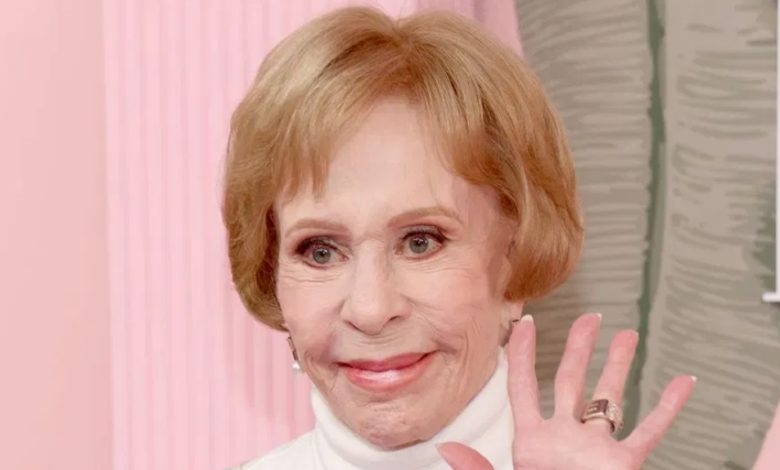
For generations of television viewers, Carol Burnett has been much more than a comedian whose name appears in the history of American entertainment. She became part of the rhythm of family life, part of the sound of living rooms filled with laughter, and part of the memories people carried with them long after the television set had been turned off. Her influence cannot be measured only by awards, ratings, famous characters, or memorable sketches.
Those accomplishments matter, but they do not fully explain why so many viewers still speak about Burnett with unusual warmth. The connection is emotional. Her comedy became tied to particular moments in people’s lives — watching television with parents, grandparents, siblings, spouses, or children and sharing the kind of laughter that could make an entire room feel lighter. That is one reason her work continues to feel so personal even decades after many of her most famous performances first appeared. Burnett had the rare ability to make television feel polished without making it feel distant.
Her programs featured carefully prepared comedy, elaborate costumes, musical numbers, detailed sets, movie parodies, and an exceptionally talented ensemble. Yet audiences often felt as if they knew her personally. She did not perform with the emotional distance sometimes associated with major television stars. Instead, she created a feeling of openness and familiarity. She could appear sophisticated one moment and completely ridiculous the next. She could sing beautifully, deliver a carefully timed line, fall into exaggerated physical comedy, or react to another performer with an expression that made the audience laugh before she even said a word.
That combination made her seem both extraordinary and approachable. When The Carol Burnett Show began in 1967, television occupied a very different place in American culture. Families often watched the same programs at the same time. There were fewer channels, no streaming libraries, and no endless collection of personalized entertainment options competing for attention. A popular television program could become a genuinely shared cultural experience. For many viewers, Burnett’s show became exactly that. Families gathered together knowing they would see sketches, music, parody, guest performers, and characters who might be completely different from anything that had appeared the week before. The program continued until 1978 and developed a reputation for balancing careful preparation with wonderful unpredictability. Burnett was surrounded by performers who understood how to create comedy as an ensemble.
For generations of television viewers, Carol Burnett has been much more than a comedian whose name appears in the history of American entertainment. She became part of the rhythm of family life, part of the sound of living rooms filled with laughter, and part of the memories people carried with them long after the television set had been turned off. Her influence cannot be measured only by awards, ratings, famous characters, or memorable sketches. Those accomplishments matter, but they do not fully explain why so many viewers still speak about Burnett with unusual warmth.
The connection is emotional. Her comedy became tied to particular moments in people’s lives — watching television with parents, grandparents, siblings, spouses, or children and sharing the kind of laughter that could make an entire room feel lighter. That is one reason her work continues to feel so personal even decades after many of her most famous performances first appeared.
Burnett had the rare ability to make television feel polished without making it feel distant. Her programs featured carefully prepared comedy, elaborate costumes, musical numbers, detailed sets, movie parodies, and an exceptionally talented ensemble. Yet audiences often felt as if they knew her personally. She did not perform with the emotional distance sometimes associated with major television stars.
Instead, she created a feeling of openness and familiarity. She could appear sophisticated one moment and completely ridiculous the next. She could sing beautifully, deliver a carefully timed line, fall into exaggerated physical comedy, or react to another performer with an expression that made the audience laugh before she even said a word. That combination made her seem both extraordinary and approachable.
When The Carol Burnett Show began in 1967, television occupied a very different place in American culture. Families often watched the same programs at the same time. There were fewer channels, no streaming libraries, and no endless collection of personalized entertainment options competing for attention. A popular television program could become a genuinely shared cultural experience.
For many viewers, Burnett’s show became exactly that. Families gathered together knowing they would see sketches, music, parody, guest performers, and characters who might be completely different from anything that had appeared the week before. The program continued until 1978 and developed a reputation for balancing careful preparation with wonderful unpredictability.
Burnett was surrounded by performers who understood how to create comedy as an ensemble. Harvey Korman brought precision, theatrical skill, and an ability to play scenes with complete seriousness even when everything around him was becoming absurd. Vicki Lawrence developed into a powerful comic performer capable of matching Burnett’s energy while creating memorable characters of her own.
Lyle Waggoner brought another kind of presence, moving naturally between straight-man roles, glamorous television presentation, and comedy. Tim Conway became famous for taking seemingly simple situations and stretching them into moments of escalating comic chaos. Together, the cast created something that felt less like a collection of individual stars and more like a group of performers who genuinely understood one another’s instincts. That chemistry became one of the show’s greatest strengths.
Viewers could often sense when a performer was preparing to surprise another cast member. A scene might begin in a familiar way, only for a pause, expression, physical gesture, or unexpected line to push everyone toward laughter. Sometimes the performers themselves struggled to remain composed. Those moments became legendary because they allowed viewers to see something beyond the written sketch.
They were watching professionals attempt to maintain control while genuinely finding one another funny. When a cast member began to break character, the audience became part of the moment. The humor was no longer only about the fictional situation being performed. It was also about the human reaction happening underneath it.
That feeling of spontaneity was difficult to manufacture. Burnett and her cast were disciplined performers, but they also understood when to allow a moment to breathe. If someone was trying not to laugh, the attempt itself could become funnier than the original joke. The audience recognized the authenticity of the reaction. It was laughter creating more laughter.
Burnett’s own reactions were especially important. She could communicate enormous amounts with her face. A widening of the eyes, a suspicious glance, a tight-lipped attempt not to laugh, or a sudden change in posture could transform an entire scene. She understood that comedy did not always require more dialogue.
Sometimes the funniest response was silence. Sometimes it was simply allowing the audience to see that a character was beginning to realize how ridiculous a situation had become. Burnett also possessed another quality that strengthened the entire program. She did not appear threatened when another performer received the biggest laugh.
That generosity mattered. Some variety programs depended heavily on the central star remaining the focus of every moment. Burnett was comfortable stepping back. If Tim Conway had the audience collapsing with laughter, she allowed the scene to belong to him.
If Harvey Korman’s reaction became the funniest part of a sketch, she did not fight for attention. If Vicki Lawrence delivered the perfect line, Burnett supported the moment instead of competing with it. The result was a program in which audiences could become invested in the entire cast. Burnett remained the emotional center, but she understood that the show became stronger when everyone around her had room to succeed.
That quality helped make the program feel warm rather than competitive. The comedy also frequently came from characters struggling with ordinary emotions. Burnett was completely willing to look foolish. She could play someone who believed she was far more sophisticated than she actually was.
She could portray a woman desperately trying to maintain dignity while everything around her fell apart. She could become loud, awkward, overly confident, frustrated, jealous, exhausted, embarrassed, or completely overwhelmed. Those emotions were exaggerated for comedy, but they were recognizable. Everyone has experienced moments when a carefully planned situation goes wrong.
Everyone has tried to appear calm while feeling embarrassed. Everyone has occasionally wanted to make a good impression and failed spectacularly. Burnett understood how to take those universal experiences and make them bigger without making them cruel. That distinction contributed to the emotional warmth of her comedy.
People could laugh at the characters while still recognizing something human inside them. Her humor rarely required the audience to feel superior to the person on screen. Instead, viewers were often laughing because they understood the character’s predicament.
Burnett’s famous movie and television parodies also demonstrated the show’s ability to combine elaborate production with broad comedy. These sketches frequently recreated familiar genres, costumes, and dramatic situations while pushing them into absurdity. Part of the fun came from recognizing what was being parodied. Viewers who knew the original films could appreciate the details being exaggerated.
Those who did not understand every reference could still enjoy the physical comedy, exaggerated performances, and visual jokes. One of the show’s strengths was that the humor operated on several levels. A child might laugh at an outrageous costume. An adult might understand a reference to an old Hollywood movie. Another viewer might simply enjoy watching the cast struggle to remain serious.
That broad accessibility helped make the program something families could enjoy together. It also contributed to Burnett’s lasting appeal across generations. Parents introduced the show to children. Later, those children grew older and shared clips or reruns with their own families.
The technology changed, but the reaction often remained remarkably similar. A sketch produced decades earlier could still make someone laugh because the humor depended less on temporary trends and more on timing, personality, physical comedy, and recognizable emotions.
Burnett’s relationship with her audience extended beyond the sketches themselves. Her interactions with studio audiences reinforced the sense that viewers were not simply watching a distant celebrity. She spoke directly to people. She answered questions. She allowed audiences to see her reacting naturally rather than always speaking through a scripted character.
Those exchanges helped establish the sense of familiarity that remained attached to Burnett throughout her career. Her famous gesture of tugging her ear carried that same mixture of public performance and private meaning. To millions of viewers, it became part of Burnett’s television identity. The gesture was simple, recognizable, and deeply personal.
It reminded people that behind the large television production was a person with her own family history and emotional connections. That emotional authenticity is an important reason audiences remained attached to Burnett. Her career certainly involved glamour and extraordinary success, but she never seemed completely separated from ordinary human feeling.
She could tell stories about difficulty as well as achievement. Her personal journey became part of the larger story viewers associated with her. Burnett did not simply arrive as a fully formed television institution. Her career developed through persistence, performance, and a willingness to take chances.
That history contributed to the affection viewers felt toward her. Her comedy often carried a similar quality. Characters might find themselves humiliated, confused, or defeated, but the laughter allowed everyone to move forward. A disaster in a sketch did not feel permanent. Someone would react, recover, and continue.
That made the humor oddly reassuring. For many viewers, television comedy was never simply entertainment. It offered relief. People watched after difficult workdays, during stressful periods, and while dealing with ordinary pressures inside their own homes.
Laughter created a temporary space where those concerns could loosen their grip. Burnett’s program excelled at providing that kind of release. It did not always ask viewers to analyze what they were watching. Sometimes the purpose was simply to laugh.
That simplicity should not be confused with a lack of skill. Creating comedy that feels effortless usually requires enormous discipline. Timing matters. Rehearsal matters. Costumes, music, scripts, camera placement, editing, and performance all contribute to whether a joke succeeds.
Burnett and the people surrounding her understood those mechanics extremely well. The fact that audiences often forgot about all the technical work happening behind the scenes is evidence of how effectively the show was produced. Everything existed to support the performance. When the comedy worked, viewers did not think about cameras or lighting. They simply laughed.
Another reason Burnett’s work remains influential is her versatility. She was never limited to one type of comedy. She could perform broad slapstick, deliver character-based humor, sing, dance, parody melodrama, or play a quiet reaction or an enormous emotional outburst.
That range allowed The Carol Burnett Show to change tone repeatedly within a single episode. One sketch could be visually outrageous. Another could depend almost entirely on dialogue. A musical performance could follow. Then the show might move into a parody of a familiar film or television style.
Burnett could connect all of those elements because audiences trusted her presence. Her versatility also helped younger comedians see possibilities beyond narrow definitions of what a female television comedian could be. She demonstrated that a woman could lead a major comedy program while being physically fearless, emotionally expressive, musically talented, and completely comfortable sharing the stage with other powerful performers.
She did not need to preserve a perfect image. In fact, destroying that perfect image was often where the comedy began. An elegant costume could become ridiculous. A dignified character could lose control. A glamorous entrance could end in embarrassment.
Burnett understood that laughter frequently came from the collapse of appearances. That willingness to abandon vanity gave her enormous comic freedom. Audiences sensed that freedom. They knew she was willing to go wherever the joke required.
At the same time, her comedy usually maintained a sense of affection. Even exaggerated characters often felt like people Burnett understood rather than people she simply wanted audiences to ridicule. That tone matters when considering why so much of her work continues to feel enjoyable decades later.
The humor could be sharp, but the atmosphere remained inviting. People wanted to spend time with the cast. That emotional comfort became part of the show’s identity.
For viewers who watched during its original run, remembering Burnett can bring back much more than individual sketches. It can bring back the room where they watched. It can bring back the furniture, the relatives sitting nearby, and the sound of someone laughing before anyone else understood the joke.
It might remind someone of being allowed to stay up later than usual. It might bring back the memory of a parent repeating a favorite line the following morning. Television has a unique ability to become attached to ordinary memories because it exists inside the home.
Unlike a film watched once in a theater, a weekly television program becomes part of routine. Burnett entered people’s homes repeatedly. Over time, familiarity created affection. That is why discussions of her legacy often become personal so quickly.
People do not simply say that Carol Burnett was funny. They remember who watched her with them. They remember how someone in their family laughed. They remember moments from childhood. They remember introducing her comedy to someone younger.
Burnett’s work becomes the doorway to those memories. The entertainment landscape today is radically different from the world in which The Carol Burnett Show originally became successful. Audiences now have instant access to enormous libraries of entertainment.
People can watch alone on phones, tablets, computers, or televisions. Families do not necessarily gather around one program at one scheduled hour. Entertainment has become far more personalized. Yet Burnett’s comedy continues to circulate.
Old sketches find new audiences online. Clips are shared between generations. People discover performances without having lived through the era in which they were originally broadcast. That continued rediscovery demonstrates the strength of the underlying comedy.
The technology surrounding the performances may look old to younger viewers. The pacing may differ from modern programs. The sets and costumes reflect another television era. But human laughter still responds to surprise, timing, embarrassment, exaggeration, and genuine chemistry.
Those things do not expire easily. A performer desperately trying not to laugh is still funny. A character maintaining absolute seriousness while everything becomes absurd is still funny. An outrageous visual joke can still work instantly. A perfectly timed reaction can still say more than a long speech.
Burnett and her collaborators mastered those tools. Modern comedians have often acknowledged the importance of performers who created opportunities before them, and Burnett occupies a significant place in that history. Her success demonstrated that sketch comedy could be led by a woman whose performance style was expansive rather than restricted.
She could be elegant without being limited by elegance. She could be emotional without losing authority. She could be ridiculous without losing the audience’s respect. Those qualities created a model of television leadership based on confidence rather than self-protection.
Burnett was secure enough to let herself look weak, foolish, confused, or completely overwhelmed for the sake of the joke. That requires a particular kind of confidence as a performer. The audience understood the difference. They laughed at the character while admiring the person creating the character.
Her collaboration with other performers strengthened that respect. The laughter surrounding The Carol Burnett Show never belonged to one person alone. That is another reason the program remains so memorable. Comedy often depends on relationships.
A great straight man can make another comedian even funnier. A reaction can transform an ordinary line into an unforgettable moment. A pause can create anticipation. A performer struggling not to laugh can make the audience laugh harder than the person delivering the joke.
Burnett understood the architecture of those relationships. She knew when to push forward and when to step aside. The ensemble became an extension of her own comic instincts. That collaborative spirit also gave viewers multiple personalities to connect with.
Someone might particularly love Harvey Korman. Another viewer might wait for Tim Conway. Someone else might connect with Vicki Lawrence’s characters. Burnett brought those different energies together and gave them a shared home. The result was a program that felt alive.
That quality is difficult to reproduce because chemistry cannot be created entirely through planning. Producers can assemble talented performers, but performers must develop trust. They have to understand one another’s timing. They need to be willing to risk failure together.
The best moments on Burnett’s show often revealed that trust. Cast members understood how far they could push one another. They knew how someone else might react. They recognized when the unexpected had produced something even better than what had originally been planned.
The audience became fortunate witnesses to those moments. Perhaps that is why watching those performances today can still feel intimate. The viewer is not simply watching an old television program. They are watching people enjoying the experience of performing together.
That enjoyment crosses the screen. Laughter is contagious, and the cast’s obvious delight often becomes the audience’s delight.
Burnett’s legacy therefore exists in two places at once. It exists in television history, where her accomplishments can be documented through programs, performances, awards, recordings, and the influence she had on later entertainers. But it also exists somewhere much harder to measure.