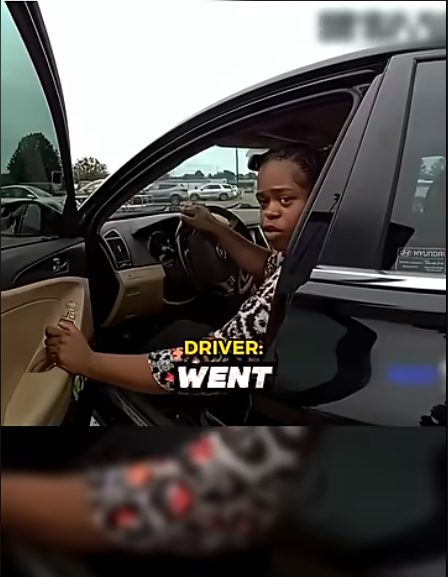
Routine Parking Dispute Escalates Into Physical Arrest After Handicap Placard Confrontation
Introduction
A video capturing a tense confrontation between a police officer and a woman parked in a handicap-accessible space has drawn attention because of how quickly the situation appears to escalate from a parking-related inquiry into a physical arrest. What begins as an officer attempting to determine whether a handicap placard is being used properly develops into a heated exchange involving demands for identification, accusations about child safety, repeated orders for the driver to exit the vehicle, and eventually the officer forcefully removing the woman from her car.
The incident is especially striking because the woman repeatedly explains that the handicap placard belongs to her grandmother, whom she says she had just dropped off at the store. According to the events shown in the video, that explanation is later supported when the grandmother comes out of the store wearing a pink hat and appears to confirm the woman’s account. By that point, however, the encounter has already escalated dramatically. The woman has been taken to the ground and detained, and what might have remained a routine parking investigation has become a physical confrontation in public view.
The video raises several important questions about discretion, communication, escalation, and the handling of minor violations. It also illustrates how quickly everyday situations involving law enforcement can become emotionally charged when both sides feel misunderstood, challenged, or threatened. The officer appears focused on verifying the legal use of the handicap placard and asserting control over the encounter. The woman, meanwhile, appears frustrated that her explanation is not being accepted and increasingly concerned that the officer is treating her with hostility.
This article examines the incident in detail, looking at the initial confrontation, the points of escalation, the physical removal from the vehicle, and the appearance of the grandmother at the end of the encounter. It also considers the broader issues raised by the video, including handicap parking enforcement, police authority during vehicle encounters, the importance of de-escalation, and the public reaction such incidents often generate.
A Routine Parking Check Becomes a Confrontation
The video begins with what appears to be a relatively routine situation: an officer approaches a vehicle parked in a handicap-accessible parking space. Such spaces are legally protected for people with disabilities or mobility limitations, and the misuse of handicap placards is a common enforcement issue. Officers may question drivers when they suspect a placard is being used improperly, especially if the person driving or occupying the vehicle does not appear to be the registered user of the placard.
In this case, the officer’s initial concern seems to be whether the woman in the car is the rightful user of the handicap placard displayed in the vehicle. The officer approaches the driver and asks questions to determine whether she owns the placard or is legally allowed to use it. The woman explains that the placard belongs to her grandmother and that she has just dropped her grandmother off at the store. According to her explanation, the grandmother is inside the store at that moment, and the woman is waiting in the car.
This explanation is central to the incident. In many places, a handicap placard can be used when the disabled person is being transported, even if that person is not the driver. For example, a relative may drive an elderly or disabled family member to a store, park in an accessible space, and assist that person into the building. If the placard holder is the person being transported, the use of the placard may be lawful. However, if a driver uses someone else’s placard for personal convenience when the authorized person is not present or being transported, that use may be illegal.
The officer appears skeptical of the woman’s explanation. Instead of waiting for the grandmother to return or attempting to verify the claim in a calmer manner, the conversation becomes tense. The officer demands the woman’s identification and tells her that she is not allowed to park in the handicap space. The woman pushes back, insisting that the placard belongs to her grandmother and that the grandmother is inside the store.
At this early stage, the encounter still has the potential to remain simple. The officer could investigate the placard, ask for documentation, wait briefly for the grandmother, or issue a warning or citation if he believes the law has been violated. The driver could comply with requests for identification while continuing to explain the situation. But the video shows the interaction moving in a different direction. Rather than slowing down, the exchange intensifies.
The Woman’s Explanation and the Officer’s Skepticism
The woman’s explanation is straightforward: she says she dropped off her grandmother, who owns the handicap placard, and that the grandmother is currently inside the store. From the woman’s perspective, she may believe she has done nothing wrong. She may feel that she is simply waiting for an elderly family member who needed the accessible parking space to enter the store safely. If her grandmother has mobility issues, then parking farther away may have been difficult or unsafe.
The officer, however, appears to view the situation through the lens of enforcement. He sees a driver in a handicap space and wants to know whether the placard is being properly used. When the woman does not immediately satisfy his concerns, he escalates the matter by demanding her identification. His position appears to be that she is occupying a handicap space without being the authorized user of the placard, and therefore he has grounds to investigate further.
This difference in perspective is important. The woman seems to view the encounter as unfair because she believes the officer is ignoring the presence of her grandmother. The officer seems to view the woman’s refusal or resistance as noncompliance. Once the encounter becomes framed as a struggle over authority rather than a fact-finding conversation, the chances of a peaceful resolution decrease.
The woman becomes visibly frustrated. She requests a supervisor and accuses the officer of being hostile. Asking for a supervisor is a common reaction from people who feel they are being mistreated or who believe an officer is acting improperly. It can be a way to slow the situation down and bring another authority figure into the interaction. However, officers do not always stop an investigation simply because a person asks for a supervisor. In many situations, they continue giving commands while a supervisor is requested or called.
The officer’s skepticism may have been influenced by the fact that the grandmother was not visible at the time. From his point of view, he may have had only the driver’s statement that the authorized placard holder was inside the store. But from the woman’s point of view, the officer could have easily verified the explanation by waiting a few minutes or checking inside. This gap between what the officer believed he needed to do and what the woman believed was reasonable helped fuel the conflict.
Demands for Identification and Rising Frustration
One of the key moments in the video occurs when the officer demands the woman’s identification. The demand changes the tone of the encounter. What may have begun as a question about parking becomes a more formal police interaction. The woman appears reluctant to comply, especially because she believes the officer has not accepted her explanation.
Identification requests during police encounters can be complicated and emotionally charged. Many people feel that being asked for ID suggests they are being accused of a crime. Others may not understand when they are legally required to provide identification and when they are not. Officers, meanwhile, often interpret refusal to provide ID as obstruction, especially during an investigation.
The video does not provide every legal detail, such as the jurisdiction, the exact wording of local laws, or whether the officer had already determined there was probable cause or reasonable suspicion of a violation. However, the demand for identification clearly becomes a point of conflict. The officer insists that the woman provide ID. The woman questions the officer’s behavior and requests a supervisor. The interaction grows more heated.
The officer also raises another issue: he claims that the woman’s children are not properly secured in the vehicle. This allegation introduces a new layer to the encounter. What began as a handicap parking issue now includes a possible child safety concern. The woman appears to reject or dispute the officer’s claims, and her frustration grows.
The introduction of the children’s safety into the conversation may have increased the officer’s sense of urgency. At the same time, it may have made the woman feel even more targeted. To her, the officer may have seemed to be adding accusations rather than resolving the original issue. When additional concerns are introduced during an already tense interaction, they can make the situation feel less like a narrow investigation and more like a broad confrontation.
At this point, both sides appear locked into their positions. The officer continues giving orders and asserting that the woman is in violation. The woman continues questioning his conduct and asking for a supervisor. Neither side appears willing to back down. This is often the moment when de-escalation becomes most important, because the next steps can determine whether the encounter ends with a citation or with force.
The Request for a Supervisor
The woman’s request for a supervisor is one of the most notable parts of the exchange. It reflects her belief that the officer is acting improperly or unfairly. In stressful police encounters, people often ask for a supervisor because they want another officer to review the situation, calm the tone, or prevent the encounter from becoming more aggressive.
From a civilian perspective, asking for a supervisor can feel like a reasonable safeguard. It gives the person hope that someone else will listen, evaluate the facts, and possibly correct the officer’s approach. In this incident, the woman appears to believe that a supervisor would understand that she was waiting for her grandmother and that the placard was not being misused.
From the officer’s perspective, however, a request for a supervisor does not necessarily eliminate the driver’s obligation to comply with lawful commands. Officers often continue an investigation while a supervisor is being called. If the officer believes the woman is refusing to identify herself, refusing to exit the vehicle, or otherwise failing to follow orders, he may view the request for a supervisor as irrelevant to the immediate need for compliance.
This difference in understanding can cause serious problems. The civilian may believe, “I asked for a supervisor, so we should pause until the supervisor arrives.” The officer may believe, “You can ask for a supervisor, but you still must follow my commands right now.” If neither side clearly explains or acknowledges this difference, the encounter may escalate further.
In the video, the woman’s request does not appear to stop the officer’s demands. Instead, the officer continues instructing her and eventually orders her out of the vehicle. The woman refuses to exit, and the situation reaches a critical point. Her refusal appears rooted in fear, frustration, and the belief that the officer has no valid reason to remove her. The officer appears to interpret the refusal as noncompliance that justifies physical intervention.
Orders to Exit the Vehicle
The officer repeatedly orders the woman to get out of the vehicle. This is the point where the encounter shifts from verbal conflict to the possibility of physical force. A command to exit a vehicle is a serious escalation in any police encounter. For the person inside the car, it can feel frightening and humiliating, especially if children are present. For the officer, refusal to exit may be seen as a direct challenge to authority and control.
The woman does not comply with the orders. She remains in the vehicle and continues objecting. Her refusal may be based on her belief that the officer is acting unfairly. She may also feel safer inside the car than outside with an officer she perceives as hostile. However, officers are often trained to treat refusal to exit a vehicle as a safety and control issue. Once an officer decides a person must exit, repeated refusal can quickly lead to physical removal.
The video shows the officer moving from verbal commands to force. He reaches into the vehicle and removes the woman. The encounter becomes physical, and the woman is taken to the ground. This is the most dramatic and disturbing part of the video, particularly because the original issue appears to be a parking violation involving a handicap placard.
The use of force in response to noncompliance is one of the most debated aspects of policing. Supporters of the officer’s actions may argue that once the woman refused lawful orders, the officer had authority to remove her and detain her. Critics may argue that the officer escalated too quickly, especially given the relatively minor nature of the suspected violation and the woman’s explanation that her grandmother was inside the store.
What makes the incident especially troubling to many viewers is that the central factual dispute was capable of being resolved. The grandmother was nearby. The officer’s suspicion could potentially have been confirmed or disproven by waiting briefly or verifying the woman’s claim. Instead, the encounter reached a point where the driver was forcibly taken out of the car before the explanation was fully resolved.
The Physical Removal and Arrest
The physical removal of the woman from the vehicle marks the peak of the incident. The officer forcefully pulls her from the car after she refuses to exit. The woman is then taken to the ground and detained. This moment transforms the encounter from a parking dispute into an arrest or arrest-like detention.
For viewers, the use of force may appear disproportionate to the original issue. Handicap parking violations, while important to enforce, are generally not the kind of offenses that people expect to end in a physical struggle. The public often reacts strongly when minor infractions escalate into force, especially when the person involved had offered an explanation that later appears to be supported.
The presence of children in or near the vehicle also adds emotional weight to the scene. If the woman’s children were present during the confrontation, they may have witnessed their mother being pulled from the car and taken to the ground. Such moments can be frightening for children and can intensify public concern about whether the officer handled the situation appropriately.
From a law enforcement perspective, the officer may argue that the force was not about the parking violation alone but about the woman’s refusal to comply with commands. Officers often distinguish between the original reason for contact and the later conduct that occurs during the encounter. In other words, an officer may begin with a parking investigation but later make an arrest because the person refuses orders, obstructs the investigation, or resists.
However, critics of this reasoning often argue that officers should consider whether their own decisions unnecessarily created the conditions for escalation. If the original issue could have been handled through patience, communication, or a citation, then the later noncompliance may be seen as a predictable reaction to an unnecessarily aggressive approach. This is why the concept of de-escalation is so central to public debate about policing.
The Grandmother Appears
The most revealing moment comes near the end of the video, when the grandmother appears from inside the store. She is described as wearing a pink hat and is identified as the owner of the handicap placard. Her appearance appears to validate the woman’s earlier explanation. The woman had said that she dropped off her grandmother and that the grandmother was inside the store. When the grandmother emerges, that claim seems to be confirmed.
This moment changes how many viewers interpret the entire encounter. If the grandmother was indeed the authorized placard holder and had been transported by the woman, then the woman’s use of the handicap parking space may have been legitimate, depending on the specific law in that location. Even if the officer had a reason to ask questions, the grandmother’s appearance suggests that the woman was not simply inventing an excuse.
The timing is significant. The grandmother appears only after the woman has already been detained. This creates a sense of tragic irony. The evidence that could have calmed or resolved the situation arrives too late to prevent the physical confrontation. The officer’s suspicion is answered, but only after the encounter has escalated beyond the original issue.
For the grandmother, the scene must have been shocking. She comes out of the store expecting to find her granddaughter waiting, only to see her being arrested or detained. The video’s emotional impact depends heavily on this moment. It reinforces the idea that the incident may have spiraled unnecessarily and that a more patient approach could have avoided the confrontation.
The grandmother’s appearance also raises questions about investigative judgment. If the woman told the officer that her grandmother was inside the store, should the officer have waited? Should another officer or store employee have been asked to verify the grandmother’s presence? Should the woman have been given a chance to call or point out her grandmother before being ordered out of the vehicle? These questions do not necessarily have simple answers, but they are central to why the video has drawn attention.
Handicap Parking Enforcement and Public Sensitivity
Handicap parking spaces exist for an important reason. They provide access for people with disabilities, elderly individuals, and others with mobility challenges who may struggle to walk long distances or safely enter buildings from standard parking spaces. Misuse of these spaces can create real hardship for people who genuinely need them.
Because of this, enforcement matters. People who use handicap spaces without authorization can prevent disabled individuals from accessing stores, medical offices, workplaces, and public facilities. Handicap placard abuse is a legitimate concern, and officers or parking enforcement officials may have a responsibility to investigate suspected misuse.
At the same time, enforcement must be handled carefully. Disability is not always visible, and the person who needs the placard may not always be the driver. A caregiver, family member, or friend may be transporting the authorized placard holder. In those situations, the driver may lawfully park in an accessible space because the passenger needs it. An officer who assumes misuse simply because the driver does not appear disabled may misunderstand the situation.
This incident shows the tension between enforcement and assumption. The officer appears to suspect improper use of the placard because the woman in the driver’s seat is not the person to whom the placard belongs. But the woman’s explanation is that the placard holder is her grandmother, who had just gone into the store. That explanation is plausible and, according to the video summary, ultimately validated.
The broader lesson is that handicap parking enforcement requires both seriousness and sensitivity. It is important to protect accessible spaces from misuse, but it is also important to recognize that disabilities, caregiving arrangements, and transportation needs vary widely. A calm verification process can protect the rights of disabled people without unnecessarily criminalizing family members or caregivers.