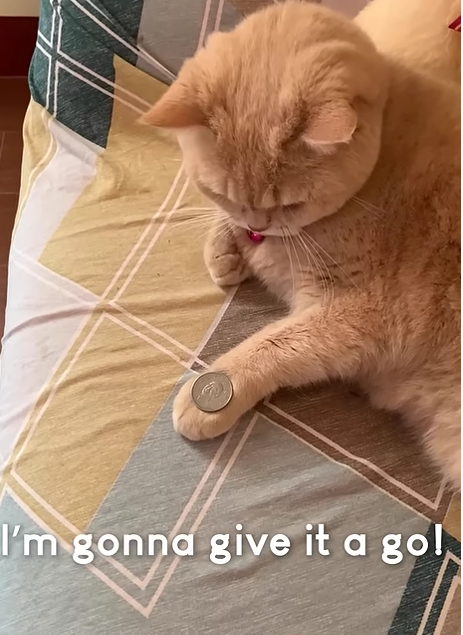
This short but highly entertaining video captures a playful interaction between an orange cat and its owner, turning a simple moment on a bed into something that resembles a miniature magic performance. The clip revolves around the illusion of a disappearing coin, but what makes the video especially memorable is the way the cat appears to understand and imitate the trick after watching its owner demonstrate it first. Through timing, movement, and clever positioning, the scene creates the impression that the cat has learned how to perform magic on its own.
The video begins in a calm indoor setting, likely inside a bedroom where a mattress or bed becomes the stage for the interaction. The environment is simple and comfortable, with no major distractions in the background. This simplicity helps focus attention entirely on the actions taking place between the owner, the coin, and the cat. The relaxed atmosphere immediately gives the clip a lighthearted and playful tone, preparing viewers for a harmless but amusing sequence.
At first, the owner demonstrates the trick. A small coin is placed carefully on top of the mattress. The owner then covers the coin with a hand, pressing down slightly before lifting the hand again to reveal that the coin has apparently vanished. Because the mattress surface is soft and flexible, the coin slips slightly out of view when pressure is applied, creating the illusion that it has disappeared completely. Even though the mechanics of the trick are simple, the presentation makes it look surprisingly convincing.
The orange cat watches this demonstration closely. Cats are naturally curious animals, often paying careful attention to moving objects and repetitive actions. In the video, the cat appears focused on the owner’s movements, observing the placement of the coin and the hand motions involved in the trick. This attentive posture is important because it sets up the illusion that the cat is learning from what it sees.
After watching the owner perform the disappearing coin trick, the cat appears ready to try it itself. The orange cat slowly places one paw down on the mattress in front of the owner. This action alone already feels intentional because of the timing. The cat’s posture suggests participation, almost as if it is volunteering to become the magician for the next round of the trick.
The owner then carefully places the coin directly on top of the cat’s paw. For a brief moment, everything remains still. The coin rests visibly on the paw while the cat remains focused and calm. This pause creates anticipation because viewers begin wondering whether the cat is truly about to imitate the disappearing trick it just witnessed moments earlier.
Then comes the key moment that transforms the clip into something hilarious and surprisingly clever. The cat smoothly retracts its paw backward into its body, pulling the surface supporting the coin away in one fluid motion. As the paw disappears beneath the cat’s fur and body, the coin slips out of sight between the mattress folds or beneath the cat itself. The movement is so smooth and perfectly timed that it genuinely looks like the cat has intentionally made the coin vanish.
When the cat extends its paw outward again, the coin is nowhere to be seen. The result strongly resembles a completed magic trick. Because the sequence mirrors the owner’s earlier demonstration so closely, the illusion becomes even funnier. It appears as though the cat not only understood the trick but successfully performed it independently.
The humor of the video comes largely from the illusion of intelligence and intentionality. Cats are known for many things—curiosity, independence, and playful behavior—but they are not typically associated with performing magic tricks. By framing the interaction in this way, the video encourages viewers to imagine the cat as a tiny magician copying its owner’s technique. This imaginative interpretation is what gives the clip its charm and comedic impact.
The cat’s calm expression also contributes heavily to the humor. Rather than reacting dramatically, the cat behaves with surprising composure throughout the sequence. Its smooth movement and neutral posture make the performance seem even more deliberate. The lack of exaggerated reaction almost gives the cat an air of confidence, as though it fully expected the trick to succeed.
The orange coloring of the cat adds another layer of visual appeal. Orange cats are often stereotyped online as chaotic, dramatic, or unusually expressive, which has made them especially popular subjects in internet humor and memes. In this case, the cat’s bright fur color stands out clearly against the softer tones of the bed, helping draw attention to its movements and expressions during the trick.
The simplicity of the trick itself is another reason the video works so well. There are no elaborate props, complicated edits, or visual effects. Everything happens naturally in real time using only a mattress, a coin, and the cat’s movement. This simplicity makes the illusion feel authentic and easy to appreciate. Viewers understand exactly what happened physically, yet the timing and framing still make the result feel magical.
Another interesting aspect of the video is the role of imitation. Whether or not the cat truly understands the trick is less important than the appearance that it does. Animals often mimic or respond to human actions out of curiosity, and here that behavior creates the illusion of learning. The cat watches the owner perform the trick and then appears to recreate it successfully moments later. This sequence taps into a common fascination people have with intelligent animal behavior.
The interaction also reflects the playful bond between pets and their owners. The owner is not forcing the cat into an uncomfortable situation or complicated training exercise. Instead, the moment feels spontaneous and collaborative, built around curiosity and gentle humor. This relaxed dynamic contributes to the wholesome tone of the clip and makes the interaction feel genuine rather than staged.
As the trick succeeds, viewers are left with the amusing image of a cat apparently mastering sleight of hand. The absurdity of the idea is what makes it memorable. Magic tricks are typically associated with human dexterity and deliberate deception, yet here an ordinary house cat accidentally—or perhaps intentionally—creates an illusion convincing enough to resemble a professional trick.
The pacing of the video also plays a major role in its effectiveness. Nothing happens too quickly. The owner demonstrates the trick clearly, the cat observes carefully, and the cat’s attempt unfolds slowly enough for viewers to follow every movement. This deliberate pacing allows anticipation to build naturally before the final reveal that the coin has disappeared.
The mattress surface itself becomes an important part of the illusion. Because it is soft and flexible, the coin can slip out of sight easily once the paw retracts. This physical detail is subtle but essential to making the trick appear convincing. The softness of the bed also contributes to the cozy, relaxed atmosphere of the scene, making the entire interaction feel playful and harmless.
The video also fits perfectly within the broader popularity of animal content online, especially clips where pets appear to display human-like intelligence or humor. Viewers are naturally drawn to moments where animals seem to understand games, tricks, or social interactions. Even when the behavior is partly coincidental, the interpretation becomes entertaining because humans instinctively project intention and personality onto animals.
In this case, the cat’s precise timing makes the illusion particularly convincing. The paw movement happens at exactly the right moment to hide the coin effectively, reinforcing the impression that the cat understands what it is doing. This creates a satisfying comedic payoff because the audience has already seen the owner perform the same trick moments earlier.
Another subtle element that strengthens the humor is the cat’s confidence after the trick succeeds. Once the paw returns and the coin is gone, the cat does not appear confused or startled. Instead, it behaves casually, almost as though it expected applause for a successful performance. This calm reaction encourages viewers to imagine the cat as knowingly proud of its magical accomplishment.
The interaction also highlights how easily ordinary household moments can become entertaining through creativity and perspective. Without narration or elaborate setup, the video transforms a simple coin trick into a miniature comedy scene starring a cat magician. The charm comes entirely from timing, observation, and the viewer’s willingness to imagine intention behind the cat’s movements.
As the clip continues, the playful illusion becomes more enjoyable because viewers begin focusing less on the mechanics of the trick and more on the personality projected onto the cat. The cat stops being just an animal interacting with an object and instead becomes a character participating in a joke. This transformation is one of the most common reasons animal videos become so memorable online.
The emotional tone of the video remains light and wholesome throughout. There is no tension or conflict—only curiosity, humor, and playful interaction. This positive atmosphere makes the clip especially appealing as comforting entertainment. In a digital environment often filled with fast-paced or stressful content, small moments like this offer viewers a brief sense of amusement and relaxation.
Another reason the video feels satisfying is because it follows a clear narrative structure despite its simplicity. First, the owner demonstrates the trick. Second, the cat watches carefully. Third, the cat attempts the trick itself. Finally, the trick succeeds. This sequence gives the clip a beginning, middle, and payoff, making it feel more complete and memorable than a random moment alone.
The cat’s involvement also gives the illusion a sense of unpredictability. If only the owner performed the trick, the clip would simply be a standard demonstration. The addition of the cat transforms it into something unexpected and original. Viewers are surprised not because the trick itself is complicated, but because the cat appears capable of reproducing it.
The more viewers watch the sequence, the more impressive the timing appears. The cat retracts its paw smoothly enough to keep the illusion intact without fumbling or hesitation. Whether accidental or intentional, the movement feels perfectly synchronized with the setup, which is why the trick appears so convincing in the moment.
By the end of the video, the audience is left with a humorous mental image of an orange cat secretly mastering stage magic. The combination of observation, imitation, and perfect timing creates a moment that feels surprisingly clever while remaining simple and lighthearted. It is exactly the kind of everyday interaction that becomes memorable because of the unexpected way it unfolds.
Ultimately, the video succeeds because it combines ordinary elements—a coin, a mattress, and a curious cat—into a playful illusion that feels magical despite its simplicity. Through smooth movement and clever timing, the cat appears to perform a disappearing act worthy of applause. The result is a charming and entertaining moment that captures the creativity, curiosity, and unpredictable humor that make animal videos so universally enjoyable.
One of the most interesting parts of the video is how strongly it relies on timing rather than complexity. The actual mechanics behind the disappearing coin are simple, yet the sequence feels clever because every movement happens at exactly the right moment. The owner places the coin carefully, the cat waits just long enough to build anticipation, and then the paw retracts smoothly before the viewer fully expects it. This rhythm gives the illusion its effectiveness and transforms a basic physical action into something that resembles a genuine magic trick.
The cat’s role in the sequence also highlights how expressive animals can appear even without dramatic facial changes. Cats often communicate through posture, eye focus, and subtle body movement rather than exaggerated reactions. In this clip, the orange cat’s calm concentration is what makes the performance feel intentional. If the cat had reacted nervously or moved unpredictably, the illusion would lose much of its charm. Instead, the measured and steady motion creates the impression of confidence, almost as though the cat fully understands the routine it is performing.
Another reason the clip feels memorable is because it combines two forms of entertainment that are already widely loved online: magic tricks and funny animal behavior. Both categories rely heavily on surprise and timing, so blending them together creates a naturally engaging result. The audience already understands the concept of a disappearing coin trick, which makes the cat’s imitation instantly recognizable and funny. The humor comes from seeing a familiar illusion recreated in an unexpected way.
The interaction between the owner and the cat also feels collaborative rather than accidental. Even though the cat is simply responding naturally to the situation, the sequence creates the illusion of teamwork. The owner introduces the trick and gives the cat an opportunity to participate, while the cat unintentionally delivers a perfect comedic payoff. This dynamic gives the scene warmth and personality, making it feel less like a random pet clip and more like a playful shared moment between companions.
The mattress itself becomes almost like a stage for the performance. Its soft surface allows the coin to disappear naturally when pressure is applied or support is removed. Because the trick depends on the environment rather than hidden tools or editing, the illusion feels more authentic. Viewers can clearly see every movement, which makes the disappearance seem even more satisfying despite understanding the basic concept behind it.
The orange cat’s physical movements also contribute heavily to the comedic effect. Cats are naturally graceful animals, capable of smooth and precise motion. In this case, the way the cat retracts its paw appears almost theatrical, as though it has rehearsed the action. The slow extension of the paw afterward further reinforces the illusion, creating the feeling of a magician revealing an empty hand after completing a trick.
Another subtle aspect of the video is how it encourages viewers to imagine an internal thought process for the cat. People naturally anthropomorphize animals, especially in humorous situations. As a result, viewers may imagine the cat thinking something like, “I can do that too,” before attempting the trick itself. This imagined motivation adds an extra layer of entertainment because it transforms the cat from a passive observer into an active comedic character.
The simplicity of the visual setup is also important. There are no distractions competing for attention, allowing viewers to focus entirely on the sequence of actions. The bed, coin, hand, and cat are the only significant elements in the frame. This minimalism helps strengthen the illusion because the audience can clearly follow every movement leading up to the disappearance.
The clip also reflects how internet humor often thrives on unexpected competence from animals. Audiences enjoy moments where pets appear unusually intelligent, coordinated, or aware of human behavior. Even when the actions are coincidental, the interpretation becomes entertaining because viewers instinctively project understanding onto the animal. In this case, the cat seems to “learn” the trick after seeing it once, which creates the illusion of clever imitation.
The pacing of the video gives viewers enough time to appreciate each stage of the process. First comes observation, then participation, and finally the successful trick. Because nothing happens too quickly, the audience has time to anticipate the outcome, making the final reveal more satisfying. This structure mirrors the pacing used in actual magic performances, where suspense and buildup are essential to maintaining audience engagement.
The cat’s body language after the trick is another small but important detail. Rather than searching for the coin or reacting with confusion, the cat remains calm and composed. This lack of surprise strengthens the illusion that the disappearance was intentional. It almost feels as though the cat expects admiration for its performance, which adds another layer of humor to the moment.
The wholesome atmosphere of the clip is also part of its appeal. There is no tension or conflict, only curiosity and playful interaction. The owner appears patient and amused, while the cat remains relaxed throughout the exchange. This gentle tone makes the video comforting to watch and contributes to its broad appeal across different audiences.
Another interesting element is the contrast between human understanding and animal instinct. The owner clearly understands the mechanics of the trick, while the cat likely reacts out of curiosity or comfort rather than strategic planning. However, because the outcome appears so perfectly timed, viewers temporarily suspend that understanding and enjoy the illusion anyway. This playful suspension of logic is similar to the experience of watching traditional magic tricks, where audiences knowingly participate in the illusion for entertainment.
The visual comedy of the disappearing coin is strengthened further by the cat’s orange fur and expressive appearance. Orange cats are often associated online with mischievous or exaggerated personalities, which makes the performance feel even more fitting. The cat naturally becomes the “star” of the scene simply because of how confidently it occupies the role.
As the clip unfolds, the focus shifts away from the trick itself and toward the personality viewers assign to the cat. The cat begins to feel less like a pet reacting to movement and more like a tiny magician proudly performing for an audience. This transformation is what gives the video its lasting charm. The illusion is simple, but the personality projected onto the cat makes the moment memorable.
The interaction also demonstrates how everyday household settings can unexpectedly become sources of entertainment. A mattress, a coin, and a curious pet are all ordinary elements, yet together they create a scene that feels creative and amusing. This accessibility is one reason videos like this resonate so strongly online—viewers can easily imagine similar moments happening in their own homes.
Another layer of humor comes from the contrast between the seriousness often associated with magic performances and the casual simplicity of the clip. Professional magicians rely on rehearsed techniques, dramatic presentation, and carefully controlled environments. Here, however, the “magician” is an orange house cat casually sitting on a bed. That contrast between expectation and reality is what makes the scene so funny.
The clip also captures the unpredictability that makes pets so entertaining. Animals often create humorous moments accidentally, simply through instinctive behavior interacting with human interpretation. In this case, the cat’s natural movement happens to align perfectly with the structure of a magic trick, creating a coincidence that feels almost scripted despite its spontaneity.
By the final moments, the video leaves viewers with a strong sense of playful satisfaction. The trick has been completed successfully, the coin remains missing from sight, and the cat appears completely unbothered by its apparent magical abilities. The scene ends not with a dramatic conclusion but with a lingering sense of amusement at how perfectly the interaction unfolded.
Ultimately, the video succeeds because it transforms an incredibly small and ordinary moment into something imaginative and entertaining. Through careful timing, smooth movement, and the natural charisma of the cat, a simple disappearing coin trick becomes a miniature comedy performance. The result is charming, funny, and memorable precisely because it feels so effortless and spontaneous.