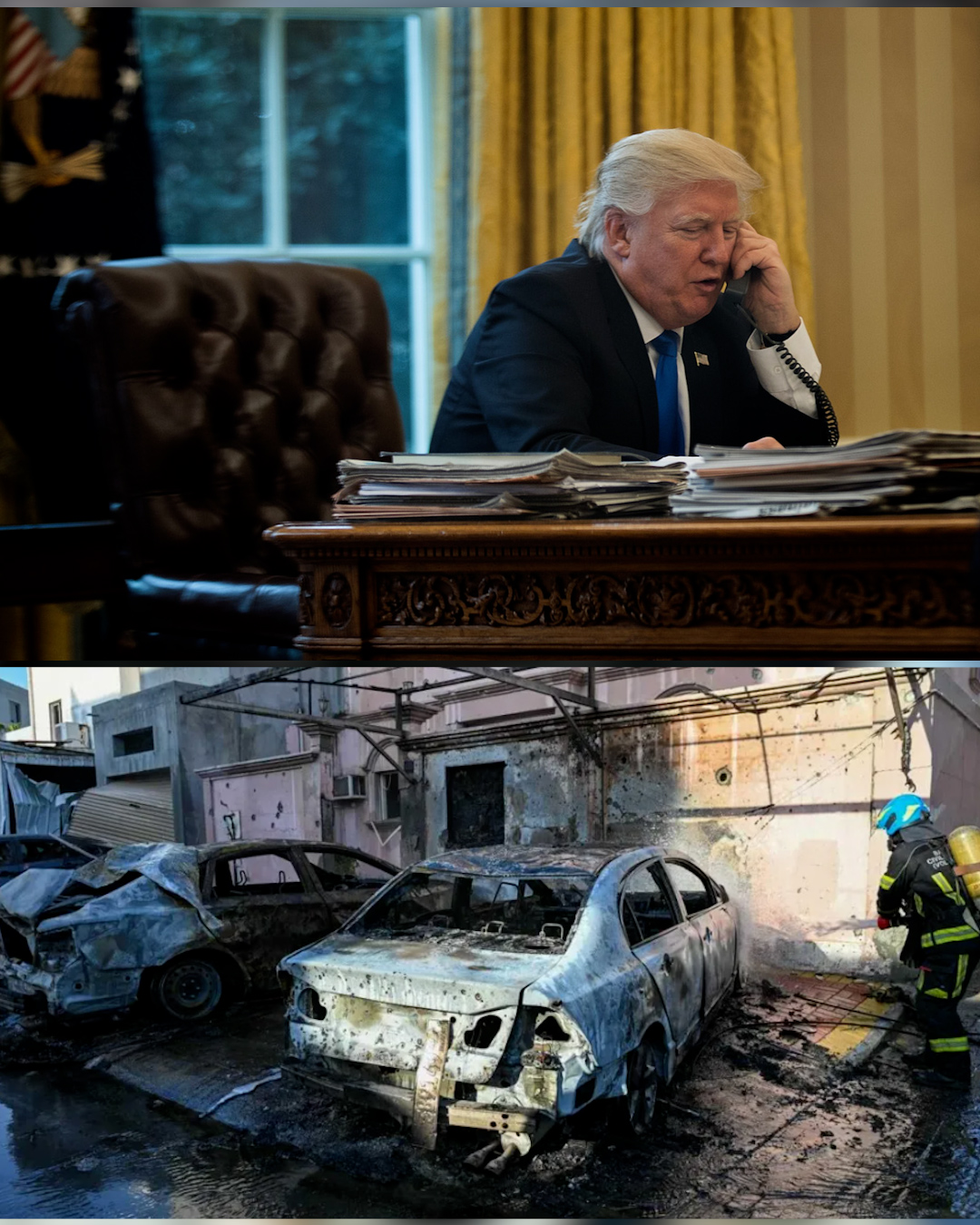
Tensions between the United States and Iran have once again surged into dangerous territory, as both nations exchanged strikes across the Middle East for a second consecutive day, pushing an already fragile ceasefire to the brink of collapse. What was once described as a temporary pause in hostilities, agreed upon earlier in April, now appears increasingly unstable, with both sides engaging in military actions that risk escalating into a broader regional conflict. The unfolding situation reflects not only the longstanding rivalry between Washington and Tehran but also the complexity of modern geopolitical dynamics, where diplomacy, military strategy, and global economic interests intersect in highly volatile ways.
The most recent wave of conflict began with a series of strikes conducted by US forces, described by US Central Command as “self-defense strikes” targeting key military, surveillance, and radar installations in southern Iran. These strikes were presented as a direct response to perceived threats and were framed within the broader context of protecting US personnel and interests in the region. However, their impact extended far beyond immediate tactical objectives, signaling a clear escalation in military engagement and raising concerns about the sustainability of the ceasefire that had been holding, albeit tenuously, for weeks.
President Donald Trump’s statements ahead of the strikes added a layer of urgency and intensity to the situation. By publicly declaring that US forces would hit Iran “hard” and criticizing Tehran for taking too long to negotiate a permanent resolution, the administration set a tone that suggested a willingness to move beyond limited engagement if diplomatic progress remained stalled. These remarks were not only directed at Iran but also served as a message to allies and observers around the world, emphasizing the United States’ position and its readiness to act decisively.
Iran’s response was swift and equally forceful. Military assets linked to the United States across the Middle East became targets, with bases in Bahrain and Kuwait reportedly coming under fire for a second consecutive day. The use of drones and missiles highlighted the capabilities that Iran and its associated forces have developed over the years, enabling them to project power across the region. These actions underscored the risks associated with the current trajectory, as each exchange of strikes increases the likelihood of further escalation.
Particularly notable were claims made by Iran’s Islamic Revolutionary Guard Corps regarding strikes on a US command center in Jordan. According to state media, ballistic missiles were launched at the Muwaffaq Salti Airbase, with assertions that significant damage had been inflicted. While these claims have not been independently verified, their very existence contributes to the narrative of confrontation and raises questions about the accuracy of information circulating during times of conflict. In such situations, competing narratives often emerge, each shaped by strategic objectives and the desire to influence perception.
The impact of the strikes was not limited to military targets. In Bahrain, authorities reported that air raid sirens were activated and that falling debris from intercepted drones caused damage to homes and vehicles. The report of an 11-year-old girl being treated for a minor injury serves as a stark reminder that even when defense systems function as intended, the consequences of conflict can extend to civilian populations. These incidents highlight the human dimension of geopolitical tensions, where individuals far removed from decision-making processes find themselves affected by events beyond their control.
Kuwait’s response further illustrates the regional implications of the conflict. The interception of “hostile aerial targets” by its defense systems and the temporary closure of its airspace reflect the immediate need to ensure safety and stability. The decision to reopen airspace shortly afterward suggests an effort to balance security concerns with the practical realities of maintaining normal operations. However, such measures also underscore the uncertainty that accompanies periods of heightened tension, where even routine activities can be disrupted.
Within Iran itself, reports of explosions in areas such as Tehran and Bandar Abbas indicate that the impact of the conflict is being felt domestically as well. These developments contribute to a sense of vulnerability and reinforce the perception that the situation is not confined to isolated incidents but represents a broader pattern of engagement. The mention of the Strait of Hormuz, a critical global shipping route, adds another layer of complexity, as any disruption in this area has the potential to affect international trade and energy markets.
Claims that the Strait of Hormuz had been closed, coupled with reports of attacks on oil tankers, immediately drew attention from global markets. Even without full confirmation, such developments can influence perceptions and drive economic reactions. The rise in oil prices following these reports illustrates the interconnected nature of geopolitics and economics, where events in one region can have far-reaching consequences. Brent crude’s climb toward $95 per barrel reflects not only immediate concerns but also broader anxieties about supply stability and future developments.
The role of rhetoric in shaping the situation cannot be overlooked. Statements from US officials, including Defense Secretary Pete Hegseth, reinforced the message that Iran had been given opportunities to negotiate but had failed to do so. The emphasis on potential further strikes if no agreement is reached highlights the conditional nature of the current approach, where military action is positioned as both a response and a tool for influencing diplomatic outcomes.
On the Iranian side, President Masoud Pezeshkian’s declaration that Iran would “stand firm against any pressure or threat” reflects a commitment to resisting external influence. Such statements are often aimed at both domestic and international audiences, reinforcing national resolve while signaling to adversaries that concessions may not be easily obtained. The Iranian foreign ministry’s criticism of the United States for sending “contradictory messages” further illustrates the challenges inherent in maintaining diplomatic channels during periods of conflict.
The origins of the current situation can be traced back to the ceasefire agreement reached in April. Initially intended as a temporary measure, the ceasefire was designed to create space for negotiations and reduce the risk of immediate escalation. However, its limited duration and the lack of a comprehensive agreement left room for uncertainty. As intermittent exchanges of fire continued, the ceasefire evolved into what some observers have described as a “lesser-fire,” a state of reduced but ongoing conflict.
The breakdown of recent negotiation efforts has contributed to the current escalation. Diplomatic processes often require sustained engagement, compromise, and trust, all of which can be difficult to achieve in an environment marked by suspicion and competing interests. The stalling of talks between Washington and Tehran reflects these challenges and underscores the difficulty of translating temporary pauses in hostilities into lasting agreements.
The downing of a US helicopter earlier in the week, attributed to Iranian actions, served as a catalyst for further escalation. Such incidents can quickly alter the dynamics of a conflict, prompting responses that may have been previously avoided. The subsequent targeting of US bases by the IRGC represents a continuation of this cycle, where actions and reactions build upon each other in a pattern that becomes increasingly difficult to contain.
The involvement of international organizations adds another dimension to the situation. The statement from UN Secretary General António Guterres highlights the concern that the region is being drawn deeper into crisis. His warning that a “lesser-fire” could become a “full fire” captures the precarious nature of the current moment. Calls for renewed diplomatic efforts and an end to attacks reflect the broader international community’s interest in preventing further escalation.
At its core, the conflict between the United States and Iran is shaped by a complex set of factors, including historical tensions, strategic interests, and regional dynamics. These factors influence not only the actions of the two countries but also the responses of other nations in the region. Alliances, rivalries, and economic considerations all play a role in shaping how events unfold and how they are perceived.
The potential consequences of continued escalation are significant. Beyond the immediate risks to military personnel and infrastructure, there are broader implications for regional stability, global trade, and international relations. The Middle East is a region of strategic importance, and developments there can have ripple effects that extend far beyond its borders. Ensuring stability requires careful consideration of these broader impacts and a commitment to finding solutions that address underlying issues.
In reflecting on the current situation, it is clear that both military and diplomatic approaches will play a role in determining the outcome. While military actions may achieve short-term objectives, lasting stability is more likely to be achieved through dialogue and negotiation. Balancing these approaches is a challenge that requires both strategic thinking and a willingness to engage with complex and often difficult issues.
As events continue to unfold, the importance of accurate information and careful analysis becomes increasingly evident. In times of conflict, narratives can shift rapidly, and distinguishing between verified facts and unconfirmed claims is essential. This not only supports informed decision-making but also helps to maintain a clearer understanding of the situation.
Ultimately, the current exchange of strikes between the United States and Iran represents a critical moment in an ongoing and evolving relationship. It highlights the challenges of managing conflict in a complex and interconnected world, where actions taken in one context can have far-reaching consequences. Whether the situation moves toward further escalation or returns to a path of negotiation will depend on the decisions made in the days and weeks ahead.
For now, the region remains on edge, with each development closely watched by governments, organizations, and individuals around the world. The stakes are high, and the need for careful, measured responses has never been greater.
As tensions continue to rise between the United States and Iran, one of the most concerning aspects of the current situation is how quickly localized military actions can expand into a broader regional confrontation. The Middle East, with its network of alliances, military bases, and strategic interests, is particularly vulnerable to this kind of escalation. What begins as a targeted strike in one location can trigger responses across multiple countries, drawing in actors who may not have been directly involved in the original conflict. This interconnected dynamic increases the risk that even limited engagements could spiral into something far more extensive.
The presence of US military bases throughout the region plays a central role in this dynamic. These bases, located in countries such as Bahrain, Kuwait, and Jordan, serve as key operational hubs for US forces. At the same time, they also represent visible symbols of American presence and influence, making them potential targets during periods of heightened tension. The reported strikes against these bases, whether through drones or missiles, highlight both their strategic importance and their vulnerability. Even when defense systems successfully intercept incoming threats, the psychological and political impact of such attacks can be significant.
Iran’s ability to project force across the region is not limited to direct military actions. Over the years, it has developed a network of allied groups and partners that extend its influence beyond its borders. While not all recent actions have been attributed to these groups, their presence adds another layer of complexity to the situation. It raises questions about attribution, responsibility, and the potential for indirect escalation, where actions taken by one group could trigger responses involving multiple parties.
The Strait of Hormuz remains one of the most critical focal points in this unfolding situation. As a major conduit for global oil shipments, any disruption in this narrow waterway can have immediate and far-reaching consequences. Even unverified reports of closure or attacks on vessels are enough to influence global markets, as seen in the rapid increase in oil prices. This sensitivity underscores the importance of maintaining stability in the region, as economic repercussions can extend far beyond the countries directly involved.
Energy markets, in particular, are highly responsive to geopolitical developments. The rise in Brent crude prices following reports of increased conflict reflects concerns about potential supply disruptions. For countries that rely heavily on imported energy, such fluctuations can have immediate economic implications, affecting everything from transportation costs to inflation. This connection between regional conflict and global economics highlights the broader stakes involved in managing the situation.
Diplomatic efforts, while currently strained, remain a crucial avenue for de-escalation. The ceasefire agreed upon in April, despite its limitations, demonstrated that both sides were capable of reaching a temporary understanding. However, the failure to build on that initial agreement reveals the challenges of translating short-term pauses into long-term solutions. Trust, once eroded, can be difficult to rebuild, and conflicting messages from both sides further complicate the process.
The language used by leaders also plays a significant role in shaping the trajectory of the conflict. Statements emphasizing strength, retaliation, or dissatisfaction with negotiations can reinforce hardline positions and reduce the space for compromise. At the same time, such rhetoric may be intended for domestic audiences, reflecting political considerations that go beyond the immediate conflict. Understanding this dual purpose is important in interpreting the signals being sent and anticipating potential next steps.
Iran’s internal response to the strikes is another factor worth examining. Reports of explosions in Tehran and other areas suggest that the impact of the conflict is being felt within the country itself. This can influence public sentiment and government decision-making, as leaders balance external pressures with domestic expectations. Demonstrating resilience in the face of external threats is often a priority, which can in turn shape the nature and intensity of the response.
The role of international actors is also critical in this context. Countries with interests in the region, whether political, economic, or security-related, may seek to influence the situation through diplomacy or other means. The involvement of the United Nations, as reflected in the Secretary General’s statement, represents one such effort to encourage restraint and dialogue. However, the effectiveness of these interventions depends on the willingness of the primary parties to engage constructively.
The concept of a “lesser-fire” situation, as described by António Guterres, captures the precarious balance that currently exists. While full-scale war has not resumed, the ongoing exchanges of fire indicate that the ceasefire is no longer functioning as intended. This intermediate state can be particularly dangerous, as it creates a sense of instability where escalation remains a constant possibility. Managing this balance requires careful coordination and a clear understanding of the potential consequences of each action.
Military strategy in such scenarios often involves signaling as much as action. Strikes may be designed not only to achieve tactical objectives but also to convey messages about capability, resolve, and limits. Similarly, responses are calibrated to demonstrate strength without necessarily crossing thresholds that would trigger broader conflict. This interplay of action and signaling adds another layer of complexity, as each move is interpreted within a broader strategic context.
At the same time, the risk of miscalculation remains ever-present. In fast-moving situations involving multiple actors and limited information, misunderstandings can occur. An action intended as a limited response could be perceived as a major escalation, prompting a reaction that further intensifies the situation. This potential for unintended consequences underscores the importance of communication channels, even in times of conflict.
The humanitarian dimension of the conflict should not be overlooked. While much of the focus is on military and political developments, the impact on civilians is an important consideration. Reports of injuries, property damage, and disruptions to daily life illustrate how conflict affects individuals and communities. Ensuring the safety and well-being of civilians is a fundamental concern, and efforts to minimize harm are an essential part of any responsible approach.
Looking ahead, the trajectory of the conflict will depend on a range of factors, including the outcomes of ongoing investigations, the responses of both sides, and the influence of external actors. Opportunities for de-escalation may arise, particularly if there is a recognition of the risks associated with continued confrontation. At the same time, the possibility of further escalation cannot be ruled out, especially if additional incidents occur.
In this context, the importance of maintaining open channels of communication becomes clear. Even in the absence of formal negotiations, informal or indirect communication can play a role in reducing misunderstandings and managing expectations. These channels can serve as a means of conveying intentions, clarifying actions, and exploring potential paths forward.
The broader implications of the conflict extend beyond the immediate region. As a major geopolitical issue, it has the potential to influence international relations, economic stability, and global security. Countries around the world are closely monitoring developments, assessing the potential impact on their own interests and considering how best to respond.
Ultimately, the current situation between the United States and Iran represents a complex and evolving challenge. It highlights the interplay between military action and diplomacy, the influence of rhetoric and perception, and the far-reaching consequences of decisions made in moments of tension. Navigating this landscape requires a careful balance of strength and restraint, informed by a clear understanding of both immediate objectives and long-term goals.
As events continue to unfold, the need for thoughtful analysis and measured responses remains paramount. The stakes are high, and the potential consequences are significant. Whether the situation moves toward further escalation or a return to dialogue will depend on the choices made by those involved, as well as the broader context in which those choices are made.
In the immediate term, the situation remains highly fluid, with each new development carrying the potential to shift the balance either toward escalation or de-escalation. Military movements, political statements, and international reactions are all unfolding in real time, creating an environment where stability can change quickly. This uncertainty makes it difficult to predict outcomes with confidence, as even small incidents can influence the broader trajectory of the conflict.
At the same time, there is growing recognition among global observers that prolonged instability in this region carries risks that extend far beyond the immediate actors involved. Economic markets, international security frameworks, and diplomatic relationships are all closely tied to developments in the Middle East. As a result, there is increasing pressure on all parties to consider not only their immediate objectives but also the wider consequences of continued confrontation.
In this context, the path forward will likely depend on a combination of restraint, strategic communication, and renewed diplomatic engagement. While tensions remain high, the possibility of reducing hostilities still exists, provided that all sides recognize the risks of allowing the situation to escalate further.