@gutierrez.dias
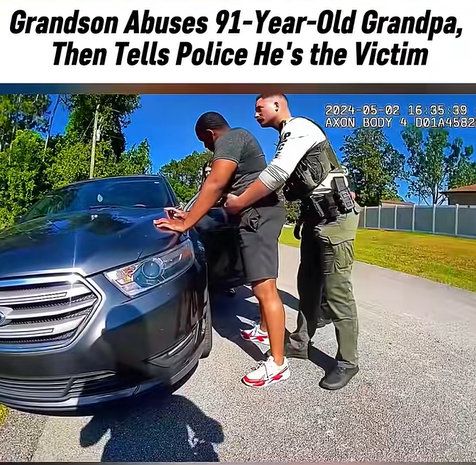
The bodycam video captures a tense and emotional interaction between law enforcement officers and a man named Brandon, who is trying to explain his side of a difficult family situation involving his 91-year-old grandfather. The text overlay suggests that the case involves an accusation that a grandson abused his elderly grandfather, but Brandon presents the situation very differently. Instead of describing himself as the aggressor, he tells officers that he has been trying to care for his grandfather, who has dementia, and that the responsibility has become overwhelming, stressful, and mentally draining.
From the beginning of the interaction, Brandon appears eager to explain that the situation is more complicated than it may look from the outside. He tells officers that he moved in to help take care of his grandfather and that he has been trying to manage the household in a responsible way. According to him, his grandfather’s dementia has made daily life extremely difficult. Caring for someone with memory loss and confusion can involve constant supervision, repeated explanations, safety concerns, and emotional pressure. Brandon describes the situation as something that has worn him down over time, especially because he feels he has been left to handle most of it alone.
Brandon explains that he has been doing everything “by the book” when it comes to his grandfather’s care. He mentions managing his grandfather’s diet and preparation, suggesting that he has been involved not only in basic supervision but also in the details of daily health and routine. He seems frustrated that his efforts are being questioned when, from his point of view, he has been trying to do the right thing. His tone suggests that he feels misunderstood and unfairly judged by people who are not present for the everyday difficulties inside the home.
A major part of Brandon’s frustration appears to come from the lack of support from other family members. He specifically mentions his mother and expresses anger that others have not stepped in to help. He seems to feel trapped in a situation where he is expected to manage his grandfather’s care, deal with the stress of dementia-related behavior, and then face criticism when things go wrong. His comments give the impression that the family conflict is not only about one specific incident, but also about a long buildup of resentment, exhaustion, and feeling abandoned by relatives.
The situation became more serious when Brandon says things recently “got physical” for the first time. According to his explanation, the conflict escalated after he removed the knobs from the stove. He says he did this because his grandfather had been leaving the stove on, creating a possible fire hazard. From Brandon’s perspective, removing the knobs was a safety measure meant to prevent a dangerous accident. In a home where someone has dementia, appliances like stoves can become serious risks if the person forgets they are on or does not understand the danger. Brandon appears to frame his decision as protective rather than controlling or abusive.
However, the same action may have contributed to the confrontation. For an elderly person with dementia, losing access to something familiar can cause confusion, fear, or anger. If Brandon’s grandfather did not understand why the stove knobs were removed, he may have reacted strongly. Brandon’s description suggests that the incident crossed a line into physical contact, which is why law enforcement became involved. The details of who initiated what are not fully clear from the summary, but the video shows Brandon trying to explain that this was not part of a pattern of violence. He emphasizes that it was the first time things had reached that point.
The officers also ask Brandon about a Department of Children and Families report connected to a firearm. This part of the interaction adds another layer of concern to the investigation. When a vulnerable elderly person is involved, any mention of a firearm can raise immediate safety questions. Brandon denies bringing his personal firearm around his grandfather in a threatening or unsafe way. He explains that he keeps the firearm unloaded in his car or locked away when he is inside the house. His response suggests that he understands why the officers are asking, but he wants to make clear that the firearm was not being used as part of the conflict.
Brandon’s explanation about the firearm appears to be part of his larger effort to show that he is not a danger to his grandfather. He presents himself as someone who has lived in the community for many years, has no prior history of incidents, and has been trying to manage a difficult caregiving role responsibly. He tells officers that he has lived there for 30 years, which seems intended to show that he is stable, known in the community, and not someone with a pattern of trouble. He repeatedly stresses that he did nothing wrong and that his actions were motivated by concern for his grandfather’s safety.
The bodycam footage is tense because it shows a situation where the legal, emotional, and caregiving issues are all tangled together. On one side, officers are responding to a report that involves a vulnerable elderly man, possible abuse, a physical altercation, and a firearm concern. They have to treat those details seriously. Elder abuse allegations cannot be ignored, especially when the alleged victim is 91 years old and has dementia. On the other side, Brandon is describing the emotional burden of caregiving and insisting that the situation has been misunderstood. He wants officers to see him not as an abuser, but as someone who has been pushed to the edge by a difficult and unsupported responsibility.
The video also highlights how challenging dementia care can become inside a family home. Dementia does not only affect memory. It can change behavior, judgment, mood, and the ability to understand danger. A person may forget that a stove is on, become angry when corrected, resist help, or accuse caregivers of trying to control them. Family members who provide care may feel like they are constantly trying to prevent accidents while also trying not to upset the person they are caring for. Over time, that stress can build into exhaustion and conflict.
Brandon’s comments suggest that he feels caught between duty and frustration. He moved in to help, but now he feels stuck. He is trying to control risks inside the house, but his actions are being interpreted as harmful. He is dealing with his grandfather’s dementia, but he feels other family members are not sharing the burden. He is trying to explain himself to officers, but the existence of a report means the situation has already been framed as suspicious. That emotional pressure is visible in the way he speaks.
At the same time, the officers cannot simply accept Brandon’s version without asking questions. Their responsibility is to investigate what happened, especially because an elderly person with dementia may not be able to fully explain the situation or protect himself. When officers hear that an incident “got physical,” they have to determine whether there was abuse, self-defense, confusion, or a caregiving situation that escalated beyond control. They also have to ask about the firearm because any weapon connected to a domestic or caregiving conflict can raise serious safety concerns.
The incident shows how quickly caregiving problems can become police matters when there is a lack of support, clear communication, and safe boundaries. What may begin as a family trying to care for an elderly relative can turn into accusations, emergency calls, and investigations if the situation becomes too stressful or unsafe. Brandon’s decision to remove the stove knobs may have been intended to protect his grandfather, but it also appears to have triggered a confrontation. That moment became the point where private family stress entered the public legal system.
The video does not present a simple story with an obvious answer. Brandon’s account may make viewers feel sympathy for the stress of caregiving and the frustration of being left alone to manage a loved one with dementia. At the same time, the allegation involving an elderly grandfather cannot be dismissed. A 91-year-old person with dementia is highly vulnerable, and any physical conflict involving him must be taken seriously. That tension is what makes the footage uncomfortable: Brandon may genuinely believe he was trying to help, while officers still have to investigate whether harm occurred.
Another important part of the interaction is Brandon’s insistence that this is not who he is. He points to his lack of prior incidents and his long history in the community as evidence that the situation should not be viewed as criminal behavior. He seems to want the officers to understand the context before judging him. He is not only defending himself against a specific accusation; he is defending his character. He wants them to see the months or years of stress behind the moment that brought police to the home.
The footage also reflects a broader issue many families face when caring for elderly relatives with serious cognitive decline. Family caregivers often take on responsibilities they are not fully trained or emotionally prepared for. They may handle medication, meals, hygiene, safety risks, appointments, and unpredictable behavior with little help. When other relatives are absent or critical from a distance, resentment can build. Brandon’s frustration with his mother and other family members appears to come from this kind of pressure. He feels judged by people who, in his view, are not doing the hard daily work.
The stove incident is especially important because it represents the conflict between safety and autonomy. Brandon says he removed the knobs to stop his grandfather from leaving the stove on. That is a common kind of safety concern in dementia care. But for the person with dementia, such restrictions can feel confusing or upsetting. They may not understand why an object has been removed or why they are being stopped from doing something familiar. This can lead to arguments, fear, or physical resistance. The caregiver may see the action as necessary, while the elderly person may experience it as control.
The officers’ questioning about the firearm shows that they are not only focused on what happened physically, but also on whether there is any ongoing risk in the home. Brandon’s explanation that the gun is unloaded in his car or locked away is meant to reduce that concern. Still, the fact that a DCF report mentioned a firearm means investigators likely had to verify the details. In situations involving vulnerable adults, any weapon-related allegation can change how officers assess safety, even if the person being questioned denies wrongdoing.
By the end of the interaction, Brandon continues to maintain that he did nothing wrong. He frames himself as someone who stepped up when others did not, tried to protect his grandfather from danger, and became the subject of accusations after the situation finally boiled over. His words show a mix of defensiveness, exhaustion, and frustration. He does not deny that the situation became physical, but he appears to deny that he was abusing his grandfather or acting with bad intentions.
The video leaves viewers with a complicated picture of family caregiving under stress. It shows a man trying to explain why he took certain actions, officers trying to investigate a serious report, and an elderly grandfather at the center of a situation that may be unsafe in more than one way. Whether Brandon’s actions were justified, excessive, misunderstood, or part of a larger problem would depend on the full investigation. But based on his statements in the footage, he wants officers to understand that he sees himself as the person trying to hold everything together, not the person causing harm.
In the end, the bodycam footage stands out because it captures the emotional weight behind an elder-care dispute. Brandon’s story is not just about one argument or one police call. It is about the pressure of caring for someone with dementia, the fear of accidents inside the home, the anger of feeling unsupported, and the seriousness of being accused of harming a vulnerable family member. The officers have to treat the report seriously, while Brandon tries to convince them that the situation has been twisted against him. The result is a tense encounter that shows how family responsibility, mental decline, safety concerns, and legal investigation can collide inside one home.
Another important part of Brandon’s account is the way he describes the emotional isolation of being the person who is physically present every day. In family caregiving situations, there is often a difference between the relatives who offer opinions from the outside and the person who actually lives with the daily responsibility. Brandon appears to feel that he is the one dealing with the confusion, the risk, the frustration, and the practical needs inside the home, while other family members only step in when there is criticism or blame. That sense of being alone can make an already difficult situation feel unbearable.
His frustration with his mother seems to come from this exact place. He does not simply sound angry that she is absent; he sounds angry that he believes she has left him with the hardest part of the responsibility. Caring for a 91-year-old with dementia is not a simple favor or occasional task. It can become a full-time emotional burden. It can mean watching someone constantly, trying to prevent accidents, repeating the same explanations, managing meals, and handling moments of confusion or resistance. Brandon’s statements suggest that he feels trapped between wanting to help his grandfather and feeling abandoned by the rest of the family.
The officers’ role in the situation is difficult because they are stepping into a family conflict that already has a long history. They are not seeing the full months or years of stress that led up to the call. They are arriving after a specific allegation has been made. That means their job is to focus on what happened, whether anyone is in danger, and whether a crime may have occurred. Brandon wants them to understand the context, but officers also have to separate context from justification. Stress may explain why a situation escalated, but they still have to determine whether the elderly grandfather was harmed or placed at risk.
This is what makes the interaction so tense. Brandon is speaking as someone who feels accused after trying to help. The officers are listening as investigators who cannot assume his version is complete. He may see their questions as unfair suspicion, while they may see them as necessary because of the age and condition of the grandfather. A 91-year-old with dementia may not be able to clearly report what happened, remember the details, or advocate for himself. That makes officers more cautious, because the person most vulnerable in the situation may also be the least able to explain it.
The mention of dementia also changes how viewers understand the conflict. Dementia can create situations where normal family communication breaks down. A caregiver may give a simple instruction, but the person with dementia may not understand it. A safety measure may feel like punishment. A routine task may suddenly become a conflict. The caregiver may be trying to prevent danger, but the person receiving care may react with fear, anger, or confusion. If Brandon removed the stove knobs to prevent a fire, he may have believed he was making a responsible decision. But his grandfather may not have understood the reason and may have seen it as someone taking control away from him.
That loss of independence can be extremely upsetting for elderly people, especially those who have spent their entire lives making their own decisions. Even when dementia affects judgment, the person may still feel pride, frustration, and a desire to remain in control. Something as small as not being able to use the stove can become a symbol of losing independence. For the caregiver, it is about safety. For the elderly person, it may feel like being treated like a child. That emotional clash can make home care very difficult.
Brandon’s statement that this was the first time things became physical is important because he seems to be trying to separate one bad incident from a pattern of abuse. He wants officers to understand that this was not an ongoing behavior, but an escalation caused by unusual pressure. However, from an investigative point of view, even a first physical incident matters, especially with a vulnerable elderly person. Officers have to consider whether the home remains safe and whether the caregiver is able to continue in that role without further conflict.
The firearm question adds another serious concern because it introduces the possibility of danger beyond the physical argument. Brandon denies bringing the firearm around his grandfather and says he keeps it unloaded or secured. Still, officers have to ask about it because any report involving a weapon changes the risk level of a domestic or caregiving situation. Even if the firearm was not used, threatened, or displayed, its presence in the broader situation may require clarification. Brandon’s response appears focused on showing that he is responsible with it and that it was not part of the conflict.
The interaction also shows how quickly a caregiver can go from being seen as helpful to being investigated. One day, a family member may be the person everyone depends on. The next, after a report or accusation, that same person may have to defend their actions to law enforcement. That shift can feel shocking and unfair to the caregiver, especially if they believe they have sacrificed time, comfort, and emotional energy to care for someone else. Brandon’s frustration seems tied to that feeling: he believes he stepped up, but now he is being treated as the problem.
At the same time, the situation reminds viewers why outside intervention sometimes becomes necessary. Family caregiving can become unsafe when stress grows too high, when support is missing, or when the caregiver and elderly person are constantly in conflict. Even a caregiver with good intentions may reach a point where the arrangement is no longer healthy. That does not automatically mean the caregiver is a bad person. It may mean the situation needs more help than one person can provide. Police involvement is often a sign that the family has reached a breaking point.
Brandon’s repeated emphasis that he did nothing wrong may also reflect fear. Being accused of abusing an elderly relative is serious, and he likely understands that the accusation could affect his reputation, his freedom, and his relationship with his family. By telling officers he has no prior history and has lived in the community for 30 years, he is trying to establish trust. He wants them to see him as a stable person who has been placed in a very difficult position, not as someone who intentionally mistreats his grandfather.
The video’s tension comes from the fact that both concerns can exist at the same time. Brandon may be genuinely exhausted and may have been trying to protect his grandfather from danger. The grandfather may also be vulnerable and in need of protection from any situation that becomes physical or unsafe. The presence of caregiving stress does not erase the need to investigate, and the existence of an investigation does not automatically prove Brandon had bad intentions. The bodycam captures that gray area, where the facts are emotional, complicated, and difficult to judge from one conversation alone.