@frida.lea1 #Cops #bodycamera #copsoftiktok #policebodycam #dashcam #dashcamfootage #police #crimetok #policebodycamvideos #crazypolicecamfootageparts #bodycam #knowyourrights #knowthelaw #fyp #viral
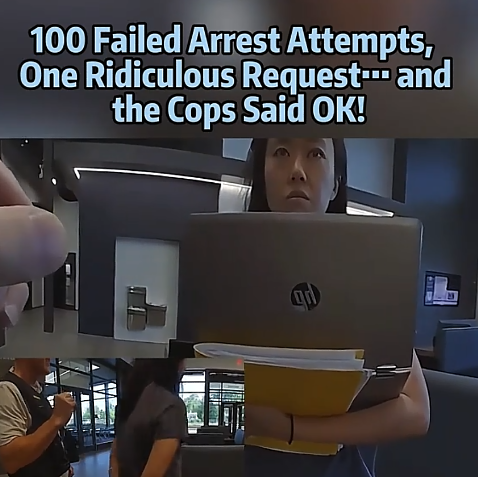
On August 5 an incident unfolded inside the police station in Mount Prospect, Illinois, after a 35-year-old woman, identified as Miss Kui, arrived at the department seeking help with what she described as harassment from her ex-boyfriend. According to the account, she wanted to file a police report and request a restraining order against him. What began as a request for assistance quickly became a tense confrontation between Miss Kui and the officers working at the front desk, eventually ending with her arrest inside the station lobby.
Miss Kui’s visit to the police department appeared to be connected to a long-running conflict between her and her former partner. She told officers that she was being harassed and claimed she had phone records from T-Mobile that could support her allegations. She believed those records would help prove her case and justify a restraining order. However, the officers did not immediately accept her request. Their refusal was based on the fact that her ex-boyfriend had previously obtained a restraining order against her in March 2021. That order legally prohibited her from contacting or harassing him, which complicated her attempt to file a new complaint against him.
From the officers’ point of view, the situation had already been addressed through the earlier restraining order. They appeared to believe that Miss Kui was attempting to reopen a matter that had already gone through the legal system. Miss Kui, however, strongly disagreed. She insisted that she still had the right to file a report as a civilian and that the police were obligated to document her complaint. The disagreement between her and the desk officer became the center of the conflict.
The situation became more complicated because Miss Kui had reportedly tried to get the previous restraining order lifted. Once that order was revoked, she immediately attempted to pursue a new order against her ex-boyfriend. To the officers, this raised concerns that she was continuing a personal dispute through repeated police involvement. The desk officer told her that he did not believe there was enough information to take a report, especially since she did not have the T-Mobile phone records with her at the time. Miss Kui continued to argue that the records existed and that she should still be allowed to file a case.
As the conversation continued, Miss Kui became increasingly frustrated. She felt she was being denied access to a basic legal process, while the officers felt she was refusing to accept their explanation. She remained in the lobby and repeatedly demanded that a report be taken. The officers told her that she was allowed to stay in the public lobby, but they warned her that she could not disrupt station operations or misuse public resources. They explained that if her behavior continued in the same way, she could be arrested.
Despite the warning, Miss Kui refused to leave. She continued to insist that she had a right to file her complaint and challenged the officers’ decision. The exchange became more heated when an officer directly told her that she could be arrested if she continued. Instead of backing down, Miss Kui responded by challenging the officer, saying, “Okay, let’s put me under arrest.” At first, the officer told her that he was not arresting her. However, moments later, the situation changed. The officer decided to place her under arrest.
When the officer moved to arrest her, Miss Kui reacted loudly and emotionally. She began screaming as officers placed her in handcuffs. What had started as an attempt to report harassment had turned into a confrontation over whether she was entitled to file a report and whether her continued presence in the lobby had crossed the line into disorderly or disruptive behavior.
The incident shows how quickly a disagreement inside a police station can escalate when both sides believe they are standing on firm ground. Miss Kui believed she was exercising her civilian right to report harassment and seek protection. The officers believed they had already reviewed the matter and had the authority to refuse a report they considered unsupported or repetitive. Once Miss Kui refused to leave and continued pressing the issue after multiple warnings, the encounter shifted from a complaint at the front desk to an arrest.
The case also highlights the emotional strain that can come with disputes involving former partners, restraining orders, and repeated contact with law enforcement. For someone seeking protection, being turned away can feel like being ignored or denied help. For officers, repeated attempts to file claims connected to the same conflict may appear like an improper use of police resources, especially when court orders have already existed between the people involved.
By the end of the encounter, Miss Kui did not receive the report or restraining order she had come to request. Instead, her refusal to leave the station lobby and her continued confrontation with officers led to her being handcuffed and taken into custody. The incident remains a tense example of how legal disputes, personal conflict, and police discretion can collide in a public setting.
What makes the incident especially notable is that it did not happen on the street, during a traffic stop, or in the middle of an active emergency call. It happened inside a police station, a place where people often go because they believe it is the safest and most direct way to ask for help. Miss Kui appeared to enter the building expecting that her complaint would at least be formally recorded. Instead, she found herself being questioned about the history of the dispute, the previous restraining order, and the evidence she claimed to have but did not physically present at that moment. That difference in expectations shaped the entire encounter.
From Miss Kui’s perspective, the fact that there had been a previous restraining order against her did not erase her belief that she was now the one being harassed. She seemed to view the earlier order as a separate issue, something that had existed in the past and should not prevent her from seeking protection in the present. In her mind, if she had information showing unwanted contact or harassment, then the police should take that information seriously. Her repeated statements about her right to file a case suggest that she felt the officers were blocking her from using the system in the way any other citizen could.
The officers, however, appeared to see the situation through the longer history between the two people. They were not only responding to the words Miss Kui said in the lobby. They were also considering the prior restraining order, her attempts to have it lifted, and the timing of her new request once that order was revoked. To them, the situation may have looked less like a new emergency and more like a continuation of an unresolved personal conflict. That does not mean Miss Kui’s feelings were not real, but it helps explain why the officers were hesitant to open a new report without seeing the records she mentioned.
The disagreement over the T-Mobile records became an important part of the exchange. Miss Kui claimed that those records supported her complaint, but the officer pointed out that she did not have them available. In many police reports, documentation such as phone logs, messages, screenshots, or call records can help establish whether a complaint has enough detail to be investigated. Without those records in front of him, the officer did not appear willing to move forward. Miss Kui, on the other hand, seemed to believe that her verbal statement should have been enough to begin the process and that she could provide the records later.
As the conversation continued, it became less about the original harassment claim and more about control of the situation inside the lobby. Miss Kui wanted the officer to acknowledge her complaint and begin a report. The officer wanted her to accept that he was not going to do so under those circumstances. Neither side seemed willing to give in. Every time the officer explained that he would not take the report, Miss Kui returned to the idea that she had a right to file one. Every time she insisted, the officer appeared to become more firm in his refusal.
This type of standoff can become difficult because both sides may believe they are following the rules. A person entering a police station may believe that the police must document any complaint brought to them. Officers may believe they have discretion when deciding whether a situation requires a report, a warning, a referral to court, or no action at all. When those beliefs clash, the conversation can quickly become tense, especially if the person seeking help feels dismissed and the officer feels challenged.
Miss Kui’s refusal to leave became the turning point. The officers did not immediately arrest her simply for coming to the station or for asking to file a report. They told her she could remain in the lobby, but they also placed limits on her behavior. They warned her that if she continued to disrupt the station or misuse public resources, she could face arrest. That warning changed the tone of the encounter. The issue was no longer only whether she could file a report. It was now also whether her continued insistence was becoming a disturbance.
For Miss Kui, being told that she was misusing public resources likely felt insulting. She had come to the police station because she believed she needed help. To hear that her request was being treated as a misuse of time or resources may have made her more upset. That reaction is understandable on a human level, especially in a situation involving an ex-partner, restraining orders, and claims of harassment. Still, the officers were making it clear that they believed the conversation had reached its limit.
The moment when she said, “Okay, let’s put me under arrest,” became one of the most important parts of the incident. It was a direct challenge, and it placed the officer in a position where he had to decide whether to follow through on the warning or step back. At first, he told her that he was not arresting her, which suggests that even then, he may not have intended to take her into custody. But after the exchange continued, he changed his decision. Within moments, the encounter moved from argument to physical arrest.
Her reaction to being handcuffed showed how emotionally charged the situation had become. She began to scream, and the arrest created a much more dramatic scene than the original complaint at the front desk. For anyone watching, the shift may have seemed sudden: one moment she was arguing about filing a report, and the next she was being placed in handcuffs. But from the officers’ view, the arrest was likely the result of the repeated warnings, her refusal to leave, and her continued confrontation after being told what could happen.
The incident raises questions about how police departments handle people who arrive at the station upset, angry, or desperate to be heard. A station lobby is a public-facing space, but it is also part of a law enforcement facility where officers expect order and control. People who enter that space may be under stress, especially if they are dealing with domestic conflict, harassment claims, or court orders. Officers must balance listening to complaints with preventing the lobby from becoming disruptive. That balance can be difficult, and in this case, it failed to produce a calm resolution.
It also raises questions about communication. The officer may have believed he had clearly explained why he was not taking the report, but Miss Kui did not accept that explanation. Miss Kui may have believed she was clearly asserting her rights, but the officers interpreted her behavior as disruptive. The more each side repeated its position, the less productive the conversation became. Instead of moving toward a solution, both sides became more locked into their own view of the situation.
One possible alternative might have been for the officers to explain exactly what documentation Miss Kui needed to bring back and where she could go to request a restraining order through the court. Another possible approach could have been to offer a written note or incident number showing that she had come to the station, even if a full report was not opened. However, based on the description, the conversation had already become tense by the time the warnings were given. Once emotions escalated, practical options became harder to discuss.
At the same time, Miss Kui’s decision to remain in the lobby after being warned also played a major role. Even when someone believes they are right, refusing to leave a police station after officers have clearly warned of arrest can create serious consequences. The officers did not have to agree with her complaint in order to enforce rules about behavior inside the building. By continuing to challenge them, she gave the officers a reason to treat the situation as more than a disagreement.
The case is a reminder that restraining order disputes can be legally and emotionally complicated. A restraining order is not just a personal disagreement written on paper; it is a court order that affects what people can say, where they can go, and how they can interact. When both people in a former relationship accuse each other of harassment or wrongdoing, the situation can become even more complicated. Police officers may be cautious about taking new reports if they believe the claims are part of an ongoing conflict rather than a separate incident.
Still, the public may view the arrest in different ways. Some may feel that Miss Kui should have been allowed to file a report, even if the officers doubted whether it would lead anywhere. Others may believe the officers were justified because she refused to leave and continued to argue after being warned. Both reactions come from different concerns: one focuses on access to police services, and the other focuses on maintaining order and preventing repeated misuse of public resources.
The most troubling part of the situation is how quickly a request for help turned into an arrest. Miss Kui entered the station because she wanted protection from someone she said was harassing her. By the end, she was the one in custody. That contrast makes the incident feel especially tense. It shows how a person’s frustration, an officer’s discretion, and a history of legal conflict can combine in a way that leaves everyone worse off than when the conversation began.
In the broader sense, the incident reflects a common problem in police interactions: the difference between being heard and getting the outcome someone wants. Miss Kui may have felt that the officers were not listening because they would not take the report. The officers may have felt that they had listened but had decided the matter did not justify a new report at that time. Those two things can feel very different to the person standing at the counter. Being told “no” inside a police station can feel like being denied justice, even when officers believe they are following procedure.
The arrest also shows the power of words during a tense encounter. When Miss Kui challenged the officer to arrest her, she may have been expressing frustration rather than truly wanting to be taken into custody. But in a police setting, words like that can carry consequences. Officers may interpret such statements as defiance, especially after warnings have already been issued. Once the officer decided to act, there was little room left for negotiation.
After she was handcuffed, the original issue of harassment was pushed completely into the background. The focus shifted to her behavior in the station, the refusal to leave, and the officers’ decision to arrest her. This is often what happens when an encounter escalates. The first reason a person contacts police can become secondary if the interaction itself becomes confrontational. In Miss Kui’s case, her attempt to create a record against her ex-boyfriend was overshadowed by the events that unfolded in the lobby.
The incident does not offer a simple lesson with one clear side being entirely right and the other entirely wrong. Instead, it shows a messy conflict where legal history, personal emotion, police judgment, and communication all collided. Miss Kui believed she had a right to make a complaint. The officers believed they had reason to refuse and later reason to remove her. The result was an arrest that likely could have been avoided if the conversation had taken a different turn earlier.
In the end, the Mount Prospect incident stands as an example of how fragile police station encounters can be when someone arrives already upset and officers are unwilling to take the requested action. It demonstrates the importance of clear explanations, calm communication, and understanding the limits of what police can and will do in civil or domestic disputes. It also shows that once warnings of arrest are given, continuing to argue can quickly change the situation from a complaint into a criminal matter.
For Miss Kui, the day ended very differently than she likely expected. She walked into the station seeking a report and a restraining order. She left in handcuffs after refusing to accept the officers’ decision and continuing the confrontation. For the officers, the incident may have been seen as an example of someone refusing to leave after being warned. For viewers, it remains a tense and uncomfortable case that raises questions about rights, discretion, and how far a person can push a complaint before police decide the complaint itself is no longer the main issue.
Another important detail is that the incident shows how difficult it can be for an ordinary person to understand where police authority ends and court authority begins. Miss Kui appeared to believe the police station was the correct place to request immediate protection, while the officers seemed to treat the restraining order issue as something that belonged more properly in court. That gap in understanding helped fuel the disagreement. When someone feels unsafe or harassed, they may not separate the process into police reports, evidence requirements, court petitions, and legal standards. They may simply expect someone in authority to listen and take action.
At the same time, officers working at the front desk often deal with repeated complaints, emotional disputes, and situations where people want legal outcomes that police cannot directly provide. That does not make the person’s concerns meaningless, but it can affect how officers respond. In this case, once the officer decided that no new report would be taken, the conversation needed a calm exit point. Instead, both sides stayed in the conflict until the only remaining outcome was enforcement. The arrest became the final answer to a conversation that had lost any chance of being resolved peacefully in the lobby.