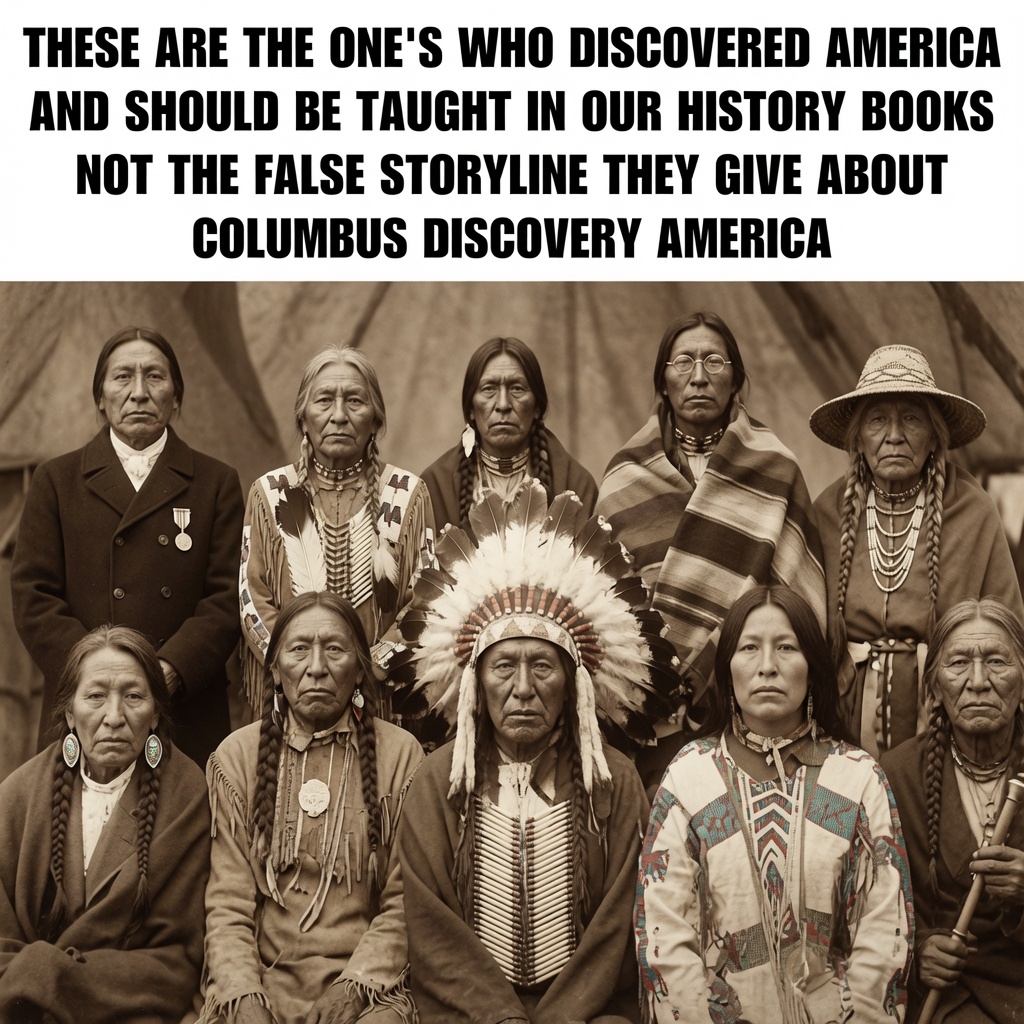
For generations, the story of Christopher Columbus has been told in a way that shaped how millions of children understood the history of the Americas. In classrooms across the world, students were taught a simple narrative: that in 1492, Columbus “discovered America.” This idea became so deeply embedded in education and popular culture that it was rarely questioned. It was repeated in textbooks, celebrated in holidays, and passed down as a foundational moment in history. Yet, as time has passed and perspectives have evolved, this narrative has come under closer examination, revealing a much more complex and often overlooked truth.
The question that emerges is both simple and profound: how can a land be “discovered” when it is already inhabited? Long before European explorers set foot on these continents, Indigenous peoples had already established rich and complex societies. These were not small, scattered groups without structure or identity; they were thriving communities with deep-rooted traditions, systems of governance, and connections to the land that spanned generations. Their presence was not temporary or uncertain—it was enduring, intentional, and deeply intertwined with the environment around them.
Indigenous peoples across the Americas developed diverse cultures that reflected the unique landscapes in which they lived. From the forests to the plains, from the mountains to the coasts, each community adapted to its surroundings in ways that demonstrated both ingenuity and respect for nature. They built homes suited to their climates, cultivated crops that sustained their populations, and developed trade networks that connected distant regions. These societies were not isolated; they were dynamic and interconnected, with systems of communication and exchange that allowed ideas and resources to flow across vast distances.
Language played a central role in these communities, serving not only as a means of communication but also as a way of preserving knowledge and identity. Each language carried within it a worldview, a way of understanding the relationship between people, the land, and the universe. Through stories, songs, and oral traditions, knowledge was passed down from one generation to the next, ensuring that the wisdom of the past remained alive in the present. These traditions were not static; they evolved over time, reflecting the changing needs and experiences of the people who carried them forward.
The spiritual beliefs of Indigenous peoples were also deeply connected to the natural world. Rather than viewing the land as something to be owned or exploited, many Indigenous cultures saw it as a living entity, deserving of respect and care. This perspective shaped their practices and their interactions with the environment, fostering a sense of responsibility that extended beyond individual needs to the well-being of future generations. This relationship with the land was not abstract; it was practical, guiding decisions about hunting, farming, and resource management in ways that promoted balance and sustainability.
When Columbus arrived in 1492, he did not encounter an empty or unclaimed territory. He entered a world that was already filled with life, culture, and history. The idea of “discovery” in this context is not only misleading but also dismissive of the realities that existed long before European contact. It suggests that history began with the arrival of outsiders, ignoring the thousands of years that preceded it. This framing has had lasting consequences, shaping how Indigenous peoples have been perceived and how their contributions have been recognized—or overlooked.
The use of the word “discovery” carries with it implications that go beyond language. It simplifies a complex encounter into a single moment, erasing the experiences of those who were already there. It obscures the impact of colonization, including the displacement of communities, the loss of land, and the disruption of cultural practices. It also minimizes the resilience of Indigenous peoples, who have continued to preserve their identities and traditions despite these challenges.
Colonial history often focused on the perspectives of explorers and settlers, presenting their journeys as central to the story of the Americas. While these perspectives are part of the historical record, they are not the whole story. By centering these narratives, other voices were pushed to the margins, creating an incomplete and unbalanced account of the past. Recognizing this imbalance is an important step toward a more inclusive understanding of history, one that acknowledges the contributions and experiences of all who were involved.
Indigenous history did not begin with European contact, and it did not end with it either. It is a continuous story, one that includes both the richness of pre-contact societies and the resilience demonstrated in the face of colonization. This history is preserved in many forms, from oral traditions and cultural practices to art and community life. It is also reflected in the ongoing presence of Indigenous peoples, who continue to contribute to the cultural and social fabric of the Americas.
The strength of Indigenous communities lies in their ability to adapt and endure. Despite facing significant challenges, including forced relocation, cultural suppression, and systemic inequality, they have maintained a sense of identity and purpose. This resilience is evident in the preservation of languages, the revival of traditions, and the continued connection to ancestral lands. It is also seen in the efforts of Indigenous leaders and activists who work to ensure that their communities are represented and respected.
Education plays a crucial role in shaping how history is understood, and it is through education that change can occur. Teaching a more accurate and inclusive history does not mean erasing the past; it means expanding it to include perspectives that were previously overlooked. It means acknowledging that the story of the Americas is not a single narrative but a collection of experiences that together form a more complete picture.
Children who learn about history today have the opportunity to engage with a broader and more nuanced understanding of the past. By learning about Indigenous peoples not as background figures but as central participants in the story, they can develop a deeper appreciation for the diversity and complexity of human experience. This understanding fosters empathy and respect, qualities that are essential in building a more inclusive and equitable society.
The idea that America was “discovered” in 1492 is not only historically inaccurate but also limiting in its implications. It reduces a vast and intricate history to a single event, ignoring the richness that existed long before. By moving beyond this narrative, it becomes possible to recognize the true depth of the history of the Americas and the people who have shaped it.
Ultimately, the story of the Americas is one of continuity and change, of connection and resilience. It is a story that begins not with Columbus, but with the countless generations of Indigenous peoples who lived, loved, and cared for these lands long before European maps gave them new names. It is a story that continues today, carried forward by those who honor their heritage while navigating the challenges of the present.
To tell this story honestly is not to diminish the importance of exploration or the impact of historical events, but to place them within a broader context that acknowledges all who were involved. It is to recognize that history is not fixed but evolving, shaped by the perspectives we choose to include. By embracing this complexity, we can move toward a more accurate and meaningful understanding of the past.
America was not discovered in 1492. It was already known, already loved, already protected, and already home. The people who were here first were not waiting to be found; they were living their lives, building their communities, and shaping their futures. Their story is not a footnote—it is the beginning, the foundation upon which everything else is built.
As conversations around history continue to evolve, there is a growing recognition that the stories we tell shape not only our understanding of the past, but also our values in the present. The narrative of “discovery” is one example of how language can influence perception, often simplifying complex realities into digestible but incomplete ideas. When a single moment is elevated above all others, it can overshadow the generations of knowledge, culture, and life that existed before it. Reexamining these narratives is not about rewriting history, but about restoring balance and giving space to voices that were long ignored.
For Indigenous peoples, history has always been more than dates and events; it is a living connection that ties the past to the present. It is carried in traditions, in ceremonies, and in the knowledge passed from elders to younger generations. This understanding of history emphasizes continuity rather than disruption, recognizing that identity is built over time and sustained through community. Even in the face of colonization and its lasting impacts, Indigenous cultures have remained resilient, preserving their heritage and adapting to changing circumstances without losing their core values.
One of the most important aspects of this resilience is the preservation of knowledge systems that differ from Western frameworks. Indigenous knowledge is often holistic, integrating environmental awareness, social responsibility, and spiritual understanding into a unified worldview. This approach offers valuable insights, particularly in areas such as sustainability and environmental stewardship. Long before modern discussions about climate change, Indigenous communities were practicing ways of living that emphasized balance and respect for the natural world. Their knowledge, developed over centuries, continues to offer lessons that are relevant today.
The recognition of Indigenous history also challenges the idea that progress must come at the expense of tradition. In many cases, Indigenous communities have found ways to integrate modern developments while maintaining their cultural identity. This balance demonstrates that tradition and innovation are not mutually exclusive, but can coexist in ways that strengthen communities and preserve heritage. It also highlights the importance of respecting different ways of knowing and understanding the world, rather than assuming that one perspective holds all the answers.
At the same time, acknowledging the full history of the Americas requires confronting difficult truths about colonization and its consequences. The expansion of European influence brought significant changes, many of which had devastating effects on Indigenous populations. Land was taken, communities were displaced, and cultural practices were often suppressed or outlawed. These experiences are not distant or abstract; their effects continue to be felt today, influencing social, economic, and political realities for many Indigenous peoples.
Understanding this history is an essential part of moving forward. It allows for a more honest conversation about the past and creates opportunities for reconciliation and growth. This process is not about assigning blame, but about recognizing the realities that have shaped the present and working toward a future that acknowledges and respects those experiences. It involves listening to Indigenous voices, supporting their rights, and ensuring that their perspectives are included in decisions that affect their communities.
Education remains one of the most powerful tools in this process. By teaching a more inclusive and accurate history, it becomes possible to challenge misconceptions and foster a deeper understanding of the world. This includes not only revising how events are presented, but also expanding the scope of what is taught. Learning about Indigenous nations, their histories, and their contributions provides a richer and more complete picture of the Americas. It also helps students develop a sense of respect and curiosity about cultures that may be different from their own.
Representation is another important factor in shaping how history is understood. When Indigenous peoples are portrayed only in the context of the past, it can create the impression that they are no longer present or relevant. In reality, Indigenous communities are vibrant and active, contributing to society in countless ways. Recognizing this presence is essential in breaking down stereotypes and promoting a more accurate understanding of contemporary life.
The arts also play a significant role in preserving and sharing Indigenous stories. Through visual art, music, storytelling, and other forms of expression, Indigenous creators continue to communicate their experiences and perspectives. These works not only celebrate cultural identity but also serve as powerful tools for education and awareness. They offer a way for people to connect with history on a personal level, engaging with it in ways that go beyond traditional academic approaches.
Language revitalization efforts are another example of how Indigenous communities are working to preserve their heritage. Many languages were threatened by policies aimed at assimilation, yet today there are ongoing efforts to bring them back to life. These initiatives are not just about words; they are about reclaiming identity and ensuring that future generations can connect with their cultural roots. Language carries history, values, and ways of thinking, making its preservation a vital part of cultural continuity.
As awareness grows, there is also an increasing recognition of the importance of Indigenous rights. Issues related to land, resources, and self-determination are central to many communities, reflecting a desire to maintain control over their futures. Supporting these rights is an important step in addressing historical injustices and building relationships based on respect and collaboration. It also acknowledges that Indigenous peoples are not just part of history, but active participants in shaping the present and future.
The shift toward a more inclusive understanding of history is not without its challenges. Changing long-held narratives requires effort, openness, and a willingness to engage with new perspectives. It can be uncomfortable to confront ideas that differ from what has been taught for generations, but it is also an opportunity for growth. By embracing complexity and acknowledging multiple viewpoints, it becomes possible to develop a more nuanced and accurate understanding of the past.
Ultimately, the story of the Americas is not defined by a single moment or a single perspective. It is a tapestry of experiences, woven together over thousands of years by countless individuals and communities. Recognizing this diversity does not diminish the importance of any one event; instead, it enriches the overall narrative, providing a fuller and more meaningful understanding of history.
The idea that America was “discovered” is gradually being replaced by a more accurate recognition of what already existed. This shift is not just about correcting a historical detail; it is about honoring the people who have been part of this land for generations. It is about acknowledging that their stories matter, that their contributions are significant, and that their presence continues to shape the world today.
In this way, history becomes not just a record of the past, but a guide for the future. By learning from it, by understanding its complexities, and by respecting the voices within it, we can build a more inclusive and thoughtful society. The story of Indigenous peoples is not a chapter that begins or ends with Columbus; it is an ongoing narrative, one that continues to evolve and inspire.
America was never empty, never waiting, and never unknown. It was alive with cultures, traditions, and knowledge that stretched back through time. To recognize this is to see history not as a single story, but as a collection of voices, each contributing to the whole. And in listening to those voices, we begin to understand not just where we come from, but where we are going.
As this deeper understanding of history continues to spread, it also invites a shift in how people relate to the land itself. For many Indigenous cultures, land is not simply a resource to be used, but a living presence that holds memory, identity, and responsibility. This perspective contrasts with more transactional views that see land primarily in terms of ownership or economic value. By learning from Indigenous ways of thinking, there is an opportunity to reconsider how relationships with the environment are formed and maintained, especially at a time when global challenges are increasingly tied to how land and natural resources are treated.
This shift in awareness also encourages a more respectful approach to place and history. Every river, mountain, and region carries stories that existed long before modern borders were drawn or cities were built. Recognizing these layers of history adds depth to the way people understand where they live, transforming familiar spaces into places of meaning and connection. It becomes not just about where one is, but about what came before and the people who shaped that space through generations of knowledge and care.
At the same time, the act of remembering and acknowledging Indigenous history is not only about the past—it is also about justice in the present. When histories are overlooked or minimized, it can contribute to ongoing inequality by erasing the contributions and rights of those who came before. Bringing these stories forward helps to restore visibility and recognition, ensuring that Indigenous voices are included in conversations that affect their communities and futures. This inclusion is essential in building a society that values fairness, representation, and mutual respect.
Cultural revitalization efforts across Indigenous communities are a powerful example of how history lives on in the present. Whether through language programs, traditional practices, or community-led initiatives, these efforts demonstrate a commitment to preserving identity while adapting to modern realities. They show that culture is not static, but dynamic—capable of evolving while still maintaining its roots. This resilience is a testament to the strength of Indigenous communities and their ability to carry their heritage forward despite centuries of disruption.
The importance of storytelling in this process cannot be overstated. Stories are not just a way of remembering; they are a way of teaching, connecting, and passing on values. Through stories, lessons are shared, identities are affirmed, and histories are preserved. Listening to these stories with openness and respect allows for a deeper understanding of perspectives that may differ from one’s own, fostering empathy and a broader sense of awareness.
s more people begin to question simplified historical narratives, there is also a growing appreciation for complexity. History is rarely straightforward, and acknowledging its nuances leads to a richer and more accurate understanding. This does not mean discarding what has been taught, but rather expanding it to include a wider range of experiences. By doing so, it becomes possible to see history not as a single line, but as a web of interconnected stories, each contributing to the whole.
In the end, the movement toward a more honest telling of history is about respect—respect for the people who came before, for the cultures that continue to thrive, and for the truth itself. It is about recognizing that the story of the Americas did not begin with arrival, but with presence. It began with communities who understood the land, who built relationships within it, and who carried their knowledge forward through generations.
America was not discovered, because it was never lost. It was lived in, cared for, and known in ways that go far beyond maps or records. And by continuing to acknowledge and honor that truth, a more complete and meaningful understanding of history can emerge—one that reflects not just where we have been, but how we choose to move forward together.