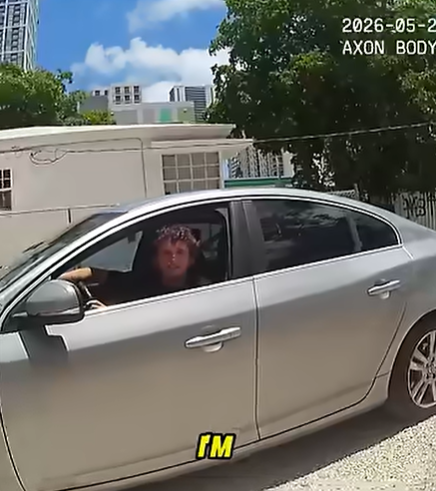
The video begins with a traffic stop that seems unusual at first. A police officer pulls over a silver car because it is traveling far below the speed limit, moving only about 10 mph in a 35 mph zone. Usually, when people think of traffic stops, they imagine drivers speeding, running lights, swerving, or driving aggressively. In this case, the problem is the opposite. The driver is going too slowly, and that slow speed is enough to create concern. A car moving much slower than the flow of traffic can become a hazard, especially on a road where other drivers expect vehicles to move at a normal pace. The officer notices the issue and decides to stop the car to find out what is going on.
When the officer approaches and speaks to the driver, the situation takes a softer turn. Behind the wheel is a 16-year-old boy who is not trying to be reckless or disrespectful. He is nervous. He explains that he just got his license the day before and that this is his very first day driving alone. That detail changes the entire feeling of the encounter. Suddenly, the slow driving is not about defiance, distraction, or carelessness. It is about fear. The teenager is overwhelmed by the responsibility of being alone behind the wheel for the first time. He is trying so hard to avoid making a mistake that his caution has become unsafe in a different way.
That is what makes the officer’s response important. Instead of mocking the teen, becoming aggressive, or turning the stop into a punishment, the officer treats it as a teaching moment. He explains that driving too slowly can also be dangerous. Many new drivers think danger only comes from speed, but hesitation can create its own risks. If everyone else is moving at 35 mph and one car is crawling at 10 mph, other drivers may have to brake suddenly, change lanes quickly, or guess what the slow driver is doing. That unpredictability can lead to crashes. The officer helps the teenager understand that safe driving is not only about being careful; it is also about moving confidently and predictably with traffic.
The officer’s advice about needing to trust his training and “commit” is one of the strongest parts of the encounter. Driving requires decisions. A driver has to choose when to accelerate, when to brake, when to turn, when to merge, when to continue, and when to stop. If a driver is constantly second-guessing every movement, the car becomes unpredictable. Other drivers cannot easily understand what that person is going to do. The officer is not telling the teenager to be careless. He is telling him that fear cannot be in control of the vehicle. The teen has learned the rules, passed the test, and earned the license. Now he has to begin trusting that training enough to drive like someone who belongs on the road.
For anyone who remembers being a new driver, the teenager’s anxiety is easy to understand. The first time driving alone can feel completely different from driving with an instructor or parent in the passenger seat. When someone experienced is beside you, there is a sense of backup. They can remind you what to do, correct you, calm you down, or take control if necessary. Alone, the responsibility feels heavier. Every lane change, every intersection, every car behind you, and every unexpected moment can feel intense. The teenager in the video is experiencing that exact pressure. He is not failing because he does not care. He is struggling because he cares too much and is afraid of doing something wrong.
The officer seems to recognize this. His tone, based on the description, is firm but gentle. He does not ignore the safety issue, but he also does not treat the boy like a criminal. That balance matters. A young driver needs correction, but he also needs encouragement. If the officer had yelled or humiliated him, the teenager might have become even more afraid of driving. Instead, the officer gives him a realistic explanation and then offers practical help. He decides to follow the teen the rest of the way home so he can arrive safely. That decision turns the traffic stop into an act of public service.
The officer following him home is meaningful because it gives the teenager a bridge between fear and independence. The teen still has to drive the car himself. The officer does not take over, call someone else, or simply send him away. He allows the boy to practice the exact thing he is afraid of, but with support behind him. That is often how confidence is built. People do not overcome fear by avoiding the task forever. They overcome it by doing the task in a safer, supported way until it begins to feel manageable. The officer gives the teenager that chance.
This is also a refreshing example of what policing can look like when it is centered on guidance rather than punishment. Not every traffic stop needs to end with a ticket, an argument, or a confrontation. Sometimes the best outcome is education. The officer saw a problem, identified the reason behind it, explained the danger, and helped the person correct it. That kind of response can leave a lasting positive impression, especially on a young person. The teenager may remember this stop for years, not as the day he got in trouble, but as the day an officer helped him through one of the most anxious moments of becoming independent.
The situation also highlights a lesson for parents and driving instructors. Getting a license does not automatically mean a teenager feels ready. Passing the test proves that a person has met the legal requirements, but confidence develops with experience. Some teens may need gradual exposure to driving alone: short routes first, familiar roads, low-traffic times, and then more challenging drives. A teenager who is extremely nervous may not need criticism; they may need practice, reassurance, and clear guidance. The boy in the video had the legal right to drive, but emotionally, he was still adjusting to the reality of being alone on the road.
The officer’s message about not driving out of fear is valuable beyond this specific incident. Fear can make people overly cautious in ways that become unsafe. A nervous driver may brake too often, hesitate at green lights, drive too slowly, avoid merging when there is enough space, or stop when they should continue. These actions may feel safer to the nervous driver, but they can confuse everyone else. Safe driving requires a balance between caution and confidence. The goal is not to be bold for no reason, but to be steady, predictable, and aware.
The teenager’s honesty also deserves attention. When stopped, he could have made excuses or acted defensive. Instead, he admitted the truth: he was nervous, newly licensed, and driving alone for the first time. That honesty likely helped shape the officer’s response. It allowed the officer to understand the real issue and respond appropriately. This is a good reminder that in many situations, telling the truth calmly can lead to a better outcome than pretending nothing is wrong. The teen’s vulnerability made it possible for the officer to help.
The road itself becomes almost symbolic in this video. For experienced drivers, a 35 mph road may feel simple and routine. For a new driver alone for the first time, it can feel like a major challenge. The same road can feel completely different depending on the person behind the wheel. That is why patience from other drivers matters too. Everyone on the road was new once. Everyone had a first day. Everyone had moments of uncertainty while learning. Experienced drivers may become frustrated when someone moves too slowly, but sometimes there is a nervous beginner in that car trying their best.
Still, the officer is right to address the danger. Sympathy for the teen does not mean ignoring the risk. Driving 10 mph in a 35 mph zone can create problems, especially if other drivers come around a curve, over a hill, or through traffic expecting normal speeds. A slow driver can cause sudden braking and rear-end crashes. The lesson is not that nervous new drivers should stay off the road forever. The lesson is that they need to learn how to drive at a safe and appropriate speed, even when they feel anxious. Confidence is part of safety.
The officer’s choice not to escalate also shows emotional intelligence. He could have treated the situation mechanically: violation observed, ticket issued, stop completed. Instead, he read the human being in front of him. He saw a teenager who needed correction but not punishment. That ability to judge context is one of the most important qualities in any public-facing authority role. Rules matter, but people matter too. The best outcomes often come from applying the rule with wisdom.
This encounter also stands out because many viral police videos focus on conflict, mistakes, anger, or abuse of authority. This video gives a different kind of story. It shows a police officer using authority to calm a situation and protect someone who is inexperienced. The officer still enforces road safety, but he does it without humiliation. That is why the video feels wholesome compared to many other bodycam clips. It reminds viewers that a traffic stop can become a positive lesson when handled with patience and professionalism.
For the teenager, the experience may have been embarrassing in the moment. No one wants to be pulled over on their first day driving alone. He may have felt ashamed, scared, or worried that he had already failed as a driver. But the officer’s response likely helped turn that embarrassment into growth. Instead of leaving the stop feeling defeated, the teen could leave with a clearer understanding of what to do next: drive at the proper speed, trust the training, stay aware, and keep going.
The phrase “commit” is especially useful because driving often requires commitment to a decision once it is safe and legal. If you decide to turn, make the turn smoothly. If you enter traffic, accelerate appropriately. If you have the right of way, proceed with awareness. Constant hesitation can create confusion. A confident driver is not someone who never feels nervous. A confident driver is someone who can feel nervous and still perform the correct actions. That is what the officer is trying to teach.
The final part of the video, where the officer follows the teen home, gives the story a gentle ending. It shows care without removing responsibility. The boy still has to drive. He still has to practice. He still has to face the road. But he does not have to do that final stretch completely alone. The officer becomes a protective presence behind him, making sure he gets home safely while also encouraging him to continue. That small act likely meant a lot to the teenager and maybe to his family as well.
The video is also a reminder that becoming independent is not always smooth. Getting a license is a major milestone for a teenager. It represents freedom, maturity, and trust. But freedom can feel scary at first. The first solo drive is not just about operating a car; it is about realizing that no one else is responsible for the choices you make behind the wheel. That realization can be overwhelming. The teenager in the video is experiencing the weight of independence in real time.
In the end, this encounter is memorable because it shows authority used with patience. The officer identifies a real safety concern, explains it clearly, encourages the young driver, and then helps him get home. The teenager learns that fear should not control his driving, but he also learns that making a mistake does not have to become a disaster. Sometimes the right person can turn a stressful moment into a lesson that builds confidence.
The strongest takeaway is simple: safe driving requires both caution and confidence. Going too fast is dangerous, but being too afraid to move with traffic can also create risk. New drivers need practice, patience, and guidance. Experienced drivers need to remember that everyone starts somewhere. And officers, when they choose understanding over unnecessary punishment, can make a lasting difference. In this video, a traffic stop that could have ended with shame instead becomes a moment of mentorship. A nervous 16-year-old learns to trust himself a little more, and a police officer shows that protecting the public can sometimes mean simply helping a young driver make it home.
What makes this story even more meaningful is that the officer does not treat nervousness as weakness. Many people, especially teenagers, can feel ashamed when they are anxious about something others consider normal. Driving is one of those skills that looks easy once a person has done it for years, but it can feel enormous at the beginning. A new driver has to manage speed, mirrors, signals, lane position, braking distance, other vehicles, road signs, pedestrians, intersections, and unexpected decisions all at once. For an experienced driver, those actions become automatic. For a beginner, every single one can feel like a separate task. The teenager in the video is not being silly for feeling nervous. He is facing a genuinely complex responsibility for the first time without someone beside him.
That is why the officer’s response feels so important. He does not laugh at the teen or make him feel small. He corrects him, but he does it in a way that recognizes the boy’s humanity. This matters because the first encounters young people have with authority can shape how they view those institutions later. If the officer had been harsh, the teenager might have remembered police as people who humiliate nervous beginners. Instead, he may remember that an officer stopped him, explained the danger, and then helped him get home. That kind of memory can build trust. It can teach a young person that accountability does not always have to be cruel.
The situation also shows that good policing is not only about enforcing laws after something goes wrong. It is also about preventing harm before it happens. The officer could see that the teen’s slow driving might cause a crash if another vehicle came up behind him too quickly. Instead of waiting for something bad to happen, he intervened. But the intervention was not only about punishment. It was about prevention, education, and support. That is the best version of public safety: noticing risk early and guiding someone away from it before it becomes an accident.
There is a valuable lesson here for new drivers about the difference between being careful and being afraid. Careful driving means checking mirrors, following signs, keeping a safe distance, using signals, and adjusting to conditions. Fearful driving means letting anxiety make decisions instead of training. A fearful driver may slow down too much, hesitate too long, or freeze when quick but safe action is needed. The officer’s advice to “commit” is not about rushing. It is about making clear, steady decisions once the path is safe. That is a skill every driver must develop.
For a 16-year-old, confidence does not appear all at once. It is built through repeated small successes. The first successful solo drive matters. The first safe lane change matters. The first time navigating traffic without panic matters. Each successful moment tells the brain, “I can do this.” The officer following him home gives the teen a chance to complete that first drive instead of ending it in shame. That is a thoughtful choice because it allows the boy to finish the task he was afraid of. He does not have to call someone to rescue him. He does not have to abandon the car. He gets to continue, but with support.
That support is different from overprotecting him. The officer does not remove all responsibility. He does not say, “You are too nervous, so you should not drive.” He does not take over the situation completely. Instead, he gives the teen a safer environment to practice independence. This is exactly how many young people learn best. They need space to try, but they also need someone nearby who can guide them if things become overwhelming. Good mentorship does not mean doing everything for someone. It means helping them do it themselves.
The video may also remind parents that the day a teenager gets a license is not the end of teaching. It is the beginning of a new stage. A license means the teenager has passed the legal test, but real-world confidence takes longer. Parents can help by planning short solo drives at first, choosing familiar routes, practicing during quieter traffic times, and talking calmly afterward about what went well and what felt difficult. Instead of saying, “Why are you scared?” a parent might say, “It makes sense to feel nervous. Let’s build your confidence step by step.” That kind of support can make a huge difference.
The officer’s handling of the situation also shows the power of emotional control. He had a valid reason to stop the vehicle, but he did not let the stop become bigger than it needed to be. Some officers might have focused only on the violation. This officer focused on the person. He recognized that the boy was not trying to create danger on purpose. He was simply overwhelmed. That recognition allowed the officer to choose a response that solved the actual problem. A ticket might have punished the teen, but it might not have taught him how to drive better. A calm explanation and a safe escort home gave him something more useful.
There is also an important message here about shame. Shame can make people avoid the things they need to practice. If the teenager had been humiliated, he might have become even more afraid to drive the next day. He might have started to believe that he was not capable. But encouragement can turn embarrassment into motivation. The officer’s words may have helped the teen understand that nervousness is normal, but it cannot be allowed to control the car. That message is firm without being cruel. It says, “You can do this, but you need to do it properly.”
This kind of encounter also benefits the wider community. A nervous driver who learns to drive confidently and safely becomes less of a risk to everyone else. Other drivers benefit when beginners are taught well. Pedestrians benefit. Families benefit. The teenager himself benefits because confidence allows him to participate more fully in daily life. Driving can mean getting to school, work, appointments, activities, and emergencies. Helping a young person become a safer driver is not a small act. It is a public good.
The video stands out because it turns a traffic stop into a moment of kindness without ignoring responsibility. That balance is rare in viral police content. Many clips focus on conflict, mistakes, anger, or dramatic arrests. This one shows something quieter and more constructive. It shows that authority can be steady instead of frightening. It shows that correction can be helpful instead of humiliating. It shows that a young person’s mistake can become a lesson rather than a lifelong negative memory.
The teenager will probably remember the officer’s words the next time he feels nervous behind the wheel. When he approaches a road with a 35 mph limit, he may remind himself not to crawl out of fear. When traffic is moving normally, he may remember to match the flow safely. When he hesitates, he may hear the idea of committing once he knows the move is safe. That is how a short conversation can have a long effect. Sometimes one calm adult at the right moment can change the way a young person handles fear.