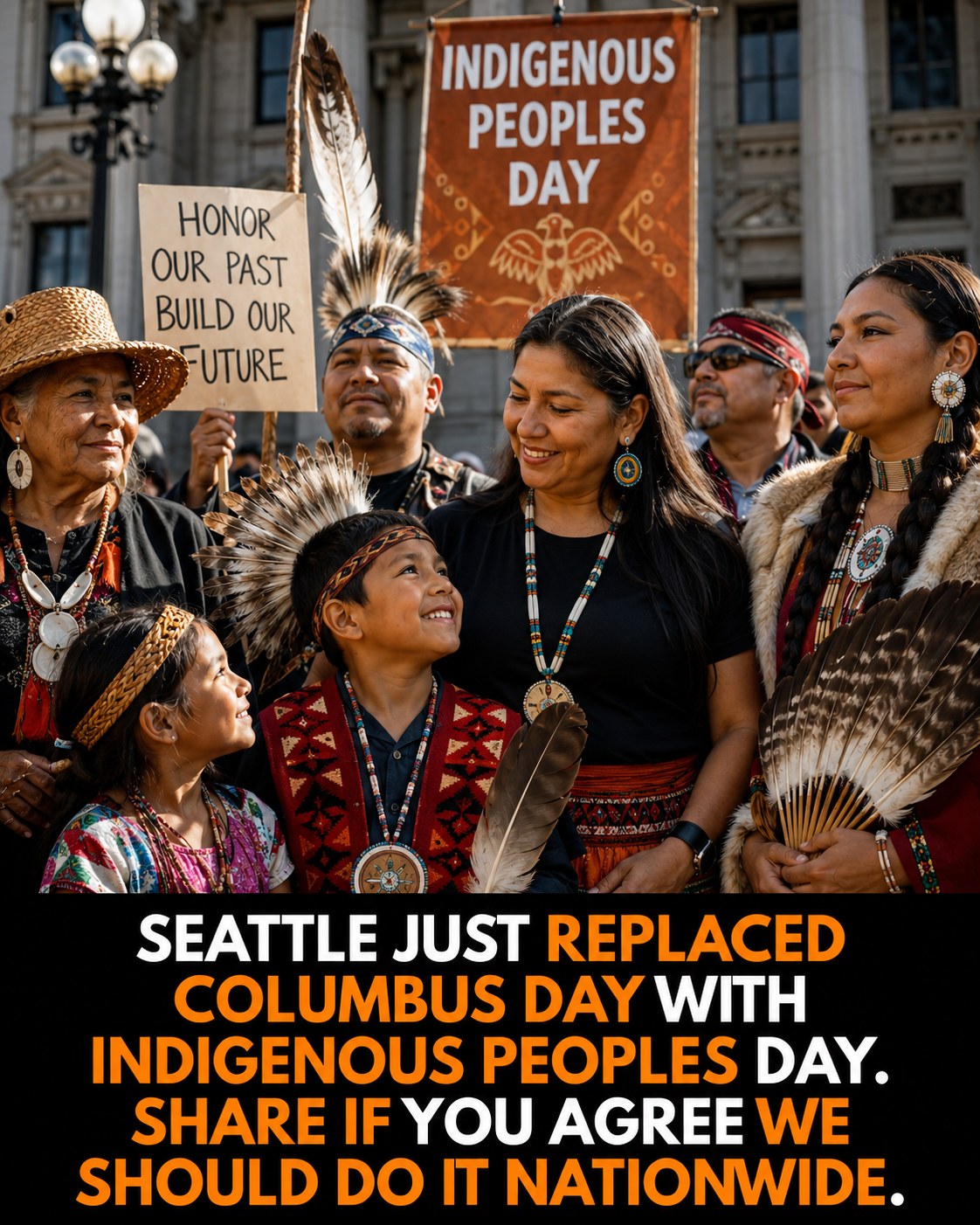
The recognition of Indigenous Peoples Day represents more than a change of name on the calendar—it is a profound step toward acknowledging history, cultural resilience, and ongoing contributions of Native communities across the United States. For centuries, Indigenous peoples have maintained deep ties to the land, preserved traditions, and survived systemic oppression, yet their stories have often been marginalized or erased from mainstream narratives. Observances like Indigenous Peoples Day create a space to honor those histories, celebrate cultural achievements, and challenge the conventional framing of events like Columbus Day, which has historically celebrated European colonization while overlooking its devastating impact on Native communities.
Seattle’s decision to replace Columbus Day with Indigenous Peoples Day in 2022 reflects a growing awareness of the importance of historical truth and cultural respect. This action symbolizes recognition that Native communities were here long before European explorers arrived and that their histories, contributions, and ongoing presence deserve acknowledgment. By changing the focus of a public holiday, Seattle not only elevates Indigenous voices but also provides an opportunity for education and reflection for residents and visitors alike. This act encourages society to consider how history is remembered, whose experiences are prioritized, and what values are celebrated in public spaces.
The impact of Indigenous Peoples Day extends far beyond symbolic recognition. It serves as a platform for education, allowing schools, communities, and organizations to teach accurate histories, explore cultural practices, and engage with Indigenous perspectives. Lessons often include traditional governance systems, oral histories, art, and ceremonies, highlighting the complexity and richness of Indigenous life. Such education challenges stereotypes, combats ignorance, and fosters a more nuanced understanding of the historical and contemporary realities faced by Native communities. By including these narratives in public education, society begins to correct centuries of historical erasure and misrepresentation.
Public celebrations and events associated with Indigenous Peoples Day further reinforce its importance. Communities come together to honor Native traditions, engage in cultural performances, and support Indigenous arts and businesses. These gatherings create opportunities for intergenerational dialogue, allowing elders to pass on knowledge and young people to take pride in their identity. Ceremonies, dances, storytelling sessions, and art exhibitions all serve as living expressions of Indigenous culture, demonstrating that traditions are not relics of the past but active, evolving practices that continue to shape contemporary life.
Recognition also fosters healing and reconciliation. For many Indigenous communities, holidays like Columbus Day have historically symbolized oppression, displacement, and violence. Replacing such observances with Indigenous Peoples Day allows space to confront these painful histories and honor the resilience of Native peoples. It affirms that the trauma of colonization is acknowledged and that society is willing to shift toward a more just and inclusive narrative. This recognition can have profound emotional and psychological effects, validating the experiences of Indigenous peoples and empowering communities to reclaim their narratives and assert their presence in public consciousness.
Importantly, Indigenous Peoples Day is not only about looking back—it also emphasizes the contributions of Native communities today. Indigenous peoples continue to play central roles in environmental stewardship, arts, governance, education, and social advocacy. By highlighting contemporary achievements alongside historical narratives, the day reinforces the relevance and vitality of Indigenous cultures in modern society. It challenges the notion that Native peoples belong solely to the past and affirms their ongoing influence, innovation, and leadership.
The observance also promotes cross-cultural understanding. By engaging non-Indigenous communities in celebration and education, Indigenous Peoples Day fosters dialogue, empathy, and collaboration. People are encouraged to learn from Native perspectives, recognize historical injustices, and support Indigenous initiatives. This cross-cultural engagement strengthens communities by building awareness, respect, and partnerships that can lead to meaningful social and policy change. Public recognition of Native contributions in education, arts, governance, and environmental protection underscores the shared responsibility to honor and preserve Indigenous heritage.
Seattle’s choice reflects a broader national movement. Across the United States, more cities and states are adopting Indigenous Peoples Day, signaling a shift in how society frames historical narratives and public memory. Each proclamation, event, or educational initiative adds to a growing body of acknowledgment that Indigenous communities are central to the nation’s past, present, and future. These actions collectively challenge entrenched narratives that have historically marginalized Native voices and invite a reexamination of history that is inclusive, accurate, and respectful.
Ultimately, Indigenous Peoples Day is a call to action. It encourages society to move beyond token recognition toward sustained engagement, education, and advocacy. Honoring Indigenous peoples is not limited to a single day but is a lifelong commitment to understanding their histories, respecting their cultures, and supporting their communities. It asks individuals, institutions, and governments to listen, learn, and take responsibility for addressing historical and contemporary inequities.
The day also underscores the importance of agency and voice. Indigenous communities are not passive recipients of recognition; they actively shape how their histories and cultures are presented. By celebrating Indigenous Peoples Day, society affirms that Native peoples have the authority to define, interpret, and communicate their narratives. This recognition is both empowering and restorative, allowing communities to reclaim space in the public sphere and assert their identities on their own terms.
Indigenous Peoples Day, as exemplified by Seattle’s decision, highlights the interconnectedness of culture, education, and social justice. It invites reflection on the past, engagement with the present, and hope for the future. By celebrating Indigenous peoples, their histories, and their ongoing contributions, society acknowledges that these communities are vital, vibrant, and integral to the nation’s identity. It also demonstrates that recognition, respect, and understanding are foundational to building more inclusive and equitable societies.
Through observances, education, cultural programming, and public acknowledgment, Indigenous Peoples Day provides a platform for empowerment, learning, and dialogue. It reminds everyone that honoring Native communities is not only an act of historical truth but also a step toward a more just and inclusive future. By centering Indigenous voices, traditions, and experiences, society affirms that these narratives are not peripheral but central to the understanding of the nation’s past, present, and future.
The movement to recognize Indigenous Peoples Day represents a significant cultural and societal shift, emphasizing the importance of inclusion, historical accuracy, and respect for Native communities. While the replacement of Columbus Day with Indigenous Peoples Day in cities like Seattle signals a symbolic acknowledgment, it also opens a broader conversation about how the histories, experiences, and contributions of Indigenous peoples are integrated into public life, policy, and education. This is not simply about renaming a holiday; it is about reframing narratives to reflect truth, resilience, and agency.
At its core, Indigenous Peoples Day is an acknowledgment of centuries of survival, resistance, and cultural preservation. Indigenous communities across North America endured colonization, forced relocation, and systematic erasure of their languages, traditions, and governance structures. Yet, despite these challenges, Native peoples maintained their cultural identity, often through oral traditions, storytelling, ceremonies, and the passing down of knowledge through generations. Recognizing Indigenous Peoples Day publicly is a way to honor this resilience, offering a platform to educate, celebrate, and amplify Native voices that have historically been marginalized or silenced.
One of the most compelling aspects of Indigenous Peoples Day is the opportunity it provides for education. Schools, universities, and community organizations can leverage the observance to teach students about Indigenous history, governance, culture, and contributions. Curriculum centered on Indigenous perspectives goes beyond the limited scope often presented in history textbooks, providing a nuanced understanding of Native societies before and after European contact. Topics such as treaty rights, sovereignty, land stewardship, and cultural practices can be explored in a way that reflects the lived experiences of Indigenous communities rather than solely through the lens of colonization. Through this educational approach, young people learn to value Indigenous knowledge systems, appreciate cultural diversity, and understand the ongoing impacts of historical injustices.
In addition to educational initiatives, Indigenous Peoples Day serves as a focal point for cultural celebration. Ceremonial practices, dance, music, art, and storytelling are all central components of these celebrations, emphasizing the continuity of traditions and the vibrancy of contemporary Indigenous life. Public events often include powwows, exhibitions, and community gatherings where elders, youth, and artists share knowledge and creativity. These events not only highlight cultural achievements but also foster intergenerational dialogue, strengthening community bonds and transmitting knowledge across age groups. For Native youth, witnessing their culture honored in public spaces instills pride, confidence, and a sense of belonging, reinforcing that their identity is valued and respected.
Recognition of Indigenous Peoples Day also carries profound implications for social justice and reconciliation. Indigenous communities have long advocated for acknowledgment of historical and ongoing injustices, from land dispossession to forced assimilation policies such as boarding schools. By officially observing a day that centers Native histories and experiences, cities and states acknowledge the harm inflicted by past policies and demonstrate a commitment to a more equitable representation of history. The holiday provides a space to confront uncomfortable truths, fostering reflection, dialogue, and ultimately, a pathway toward reconciliation.
Moreover, Indigenous Peoples Day highlights the importance of Indigenous agency. Rather than having their narratives defined solely by outsiders, Native communities play a central role in shaping the observance, determining how histories are told, which stories are highlighted, and which cultural practices are celebrated. This ensures that the holiday does not become a tokenized recognition but rather a meaningful, community-driven initiative that centers Indigenous voices and perspectives. It underscores the principle that Indigenous peoples are not merely subjects of history but active participants in preserving, interpreting, and sharing their heritage.
The movement for Indigenous Peoples Day is part of a larger trend toward cultural and historical restoration. Across the United States, more cities and states are evaluating the legacies of public holidays, statues, and educational content, seeking to correct historical erasures and provide more accurate representations of Native histories. This reflects a broader societal recognition that public memory and cultural representation are powerful tools—they shape perceptions, influence policy, and inform intergroup relations. By integrating Indigenous histories and perspectives into these spaces, society moves closer to a more comprehensive, just, and inclusive understanding of its past and present.
Importantly, the recognition of Indigenous Peoples Day has ripple effects beyond education and public events. It influences media, arts, literature, and community initiatives, encouraging projects that center Indigenous experiences and leadership. Films, documentaries, exhibitions, and literary works increasingly reflect authentic Native voices, portraying complex, multi-dimensional narratives that counter longstanding stereotypes. By celebrating Indigenous contributions in public spaces, society not only honors the past but also inspires new cultural production that is grounded in authenticity and respect.
The observance also fosters dialogue about identity and belonging. Many Native communities continue to navigate the challenges of cultural preservation in a modern world where assimilation pressures remain strong. Indigenous Peoples Day creates a platform for discussions about identity, heritage, and the transmission of knowledge across generations. It reinforces that cultural continuity is a communal responsibility and emphasizes the role of storytelling, language, and ceremony in sustaining community cohesion. Through these dialogues, both Indigenous and non-Indigenous audiences gain a deeper appreciation for the resilience, creativity, and adaptability of Native communities.
In practical terms, Indigenous Peoples Day encourages the inclusion of Indigenous perspectives in policy, governance, and social programs. Recognizing Native contributions and histories publicly strengthens arguments for land rights, educational resources, healthcare access, and legal protections for Indigenous communities. The holiday becomes not only a day of reflection but a catalyst for advocacy, highlighting the continued relevance of Native leadership and expertise in shaping equitable and just policies.
The holiday’s significance is further amplified by the broader historical context. For centuries, Indigenous communities faced erasure from mainstream narratives, often being portrayed solely through a lens of victimhood or as remnants of the past. Indigenous Peoples Day disrupts this narrative, asserting that Native communities are vibrant, active, and central to the ongoing story of the nation. It reframes public consciousness, fostering respect and recognition for the complexities and achievements of Indigenous peoples.
Through public observances, educational initiatives, cultural programs, and advocacy, Indigenous Peoples Day functions as a multi-dimensional platform. It acknowledges historical trauma while celebrating cultural resilience. It educates non-Indigenous populations while empowering Native youth. It honors traditions while inspiring contemporary leadership. And it transforms public spaces into sites of recognition, reflection, and reconciliation. The holiday reminds society that honoring Indigenous peoples is not simply symbolic—it is an active, ongoing commitment to justice, understanding, and equity.
Ultimately, Indigenous Peoples Day reflects the enduring power of storytelling, culture, and community. It underscores that history is not merely a record of events but a living, dynamic narrative shaped by those who carry it forward. By centering Indigenous voices, experiences, and achievements, the holiday fosters a deeper understanding of shared histories, challenges, and aspirations. It celebrates resilience in the face of adversity and the capacity of communities to preserve identity, knowledge, and cultural richness across generations.
In conclusion, Indigenous Peoples Day represents a crucial step toward recognition, respect, and justice. By replacing Columbus Day in cities like Seattle, it reorients public memory toward truth and equity, offering Indigenous communities the acknowledgment they have long deserved. Through education, cultural celebration, and public dialogue, the day fosters understanding, empowerment, and solidarity. It reminds society that honoring Indigenous peoples requires sustained engagement, reflection, and action—not merely symbolic gestures. By celebrating Indigenous histories, cultures, and contributions, Indigenous Peoples Day reinforces the centrality of Native communities in shaping the past, present, and future of the nation, offering a vision of inclusion, recognition, and hope that extends far beyond a single day of observance.The significance of Indigenous Peoples Day lies not only in its recognition of history but also in its affirmation of the ongoing presence, contributions, and leadership of Indigenous communities. While changing the name of a public holiday is a symbolic act, the impact resonates deeply across social, educational, and cultural domains. It encourages society to confront long-standing historical omissions and to integrate Indigenous perspectives into public consciousness in meaningful ways. By celebrating Indigenous Peoples Day, communities are not merely renaming a day—they are creating a framework for reflection, understanding, and dialogue that spans generations.