The case of Zachary Vogt began with a situation that many parents fear in the modern digital age: an online connection between a young teenager and an older stranger that slowly moved from messages on a screen into a real-world criminal investigation. Vogt, a 19-year-old from Pennsylvania, traveled hundreds of miles to Oshkosh, Wisconsin, after forming a relationship online with a 14-year-old girl. What may have first appeared to the girl as friendship or attention soon became something far more serious, leading police to uncover that Vogt had been secretly staying inside the teenager’s home, hidden away from her family, for approximately a week.
The investigation started after neighbors noticed something unusual near the home. They reportedly saw a man climbing in and out of the teenager’s bedroom window, behavior that immediately raised concern. Rather than ignoring what they had seen, the neighbors contacted police, and that decision became the turning point in the case. Their call brought officers to the residence and helped reveal what had been happening behind closed doors. It was the kind of observation that might have seemed strange for only a moment, but in reality, it exposed a deeply troubling situation involving a minor and an adult who had crossed both physical and legal boundaries.
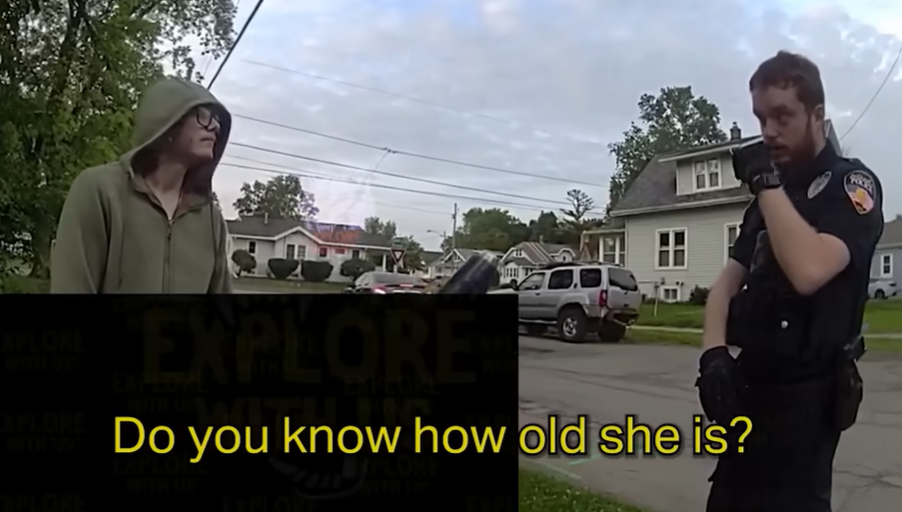
When police arrived, the circumstances quickly became suspicious. Officers questioned the teenager and began trying to understand who had been seen entering and leaving through the window. At first, there were efforts to minimize or hide the truth. Vogt did not immediately present himself honestly to authorities, and the situation inside the home was not clear right away. The more officers asked questions, however, the more the story began to unravel. What started as a report about someone sneaking around the house soon turned into the discovery that Vogt had allegedly been living in the girl’s bedroom closet for several days.
The discovery shocked investigators because it showed how far the situation had progressed without the knowledge of the girl’s family. Vogt had not simply visited the home briefly or passed through the area. According to the case details, he had been hiding in the teenager’s bedroom closet for roughly a week. That detail gave the case a disturbing sense of secrecy and planning. It suggested that he was not acting on a sudden impulse but had made the trip from Pennsylvania to Wisconsin with the intention of being close to the girl in person, away from supervision and outside the awareness of the adults responsible for her safety.
As police continued questioning Vogt, he initially lied about his presence in the home and about the nature of his relationship with the girl. This is a common pattern in cases involving online exploitation, where the older person may attempt to present the situation as harmless, mutual, or misunderstood. But the law is clear when a minor is involved. A 14-year-old cannot legally consent to a relationship with an adult in the way Vogt appeared to suggest. The age difference, the secrecy, the online connection, the travel across state lines, and the hiding inside the home all pointed to a serious criminal matter rather than a simple misunderstanding.
Eventually, Vogt admitted to conduct that moved the case into even more severe legal territory. Authorities determined that the matter involved exploitation of a child, and the case was later transferred from state court to federal court. That shift was significant because federal charges often carry heavier penalties and reflect the seriousness of crimes involving minors, digital communication, interstate travel, and the creation of illegal material involving a child. The federal system became involved because the case was no longer only about unlawful contact in one state; it involved conduct that crossed state boundaries and included serious offenses against a minor.
Vogt ultimately pleaded guilty to the production of child pornography, a federal crime that carries severe consequences. The charge reflected the gravity of what investigators uncovered and the harm caused to the victim. In court, the focus shifted from the strange circumstances of his hiding in a closet to the larger issue of exploitation. The fact that he had traveled from Pennsylvania to Wisconsin to meet the girl after befriending her online became a central part of the case. It showed how online communication can be used by adults to gain access to minors, build trust, and then move into real-world contact that places a child in danger.
The sentence handed down was severe: Vogt received 15 years in prison, followed by 15 years of supervised release. That punishment reflected both the seriousness of the offense and the need to protect the public after his release. Supervised release means that even after serving his prison term, Vogt would remain under strict monitoring and legal restrictions for many years. These conditions are often used in cases involving child exploitation to reduce the risk of future harm and to ensure that the offender is closely watched as they reenter society.
The case also highlights the importance of awareness from people outside the immediate family. In this situation, neighbors played a major role by noticing unusual behavior and reporting it. Without that report, Vogt may have remained hidden longer, and the victim may have continued to be placed in danger. It is a reminder that community awareness can matter, especially when something looks out of place around a home, school, park, or neighborhood. People do not need to know every detail of a situation to report suspicious behavior. Sometimes, making a call and allowing authorities to investigate can prevent further harm.
For parents and guardians, the case is also a warning about the risks that can come with online relationships. Teenagers often communicate through social media, gaming platforms, messaging apps, and other digital spaces where strangers can easily appear friendly, supportive, or understanding. Predators may use these platforms to create emotional trust, especially with young people who feel lonely, curious, or eager for attention. The danger is that the relationship may not seem threatening at first. It may begin with normal conversations, compliments, shared interests, or emotional support before slowly becoming secretive and unsafe.
What makes cases like this especially difficult is that the young person may not immediately see themselves as being harmed. A teenager may believe they are in control, or may feel emotionally attached to the older person. They may also be afraid of getting in trouble, disappointing their parents, or losing access to someone they think cares about them. This emotional confusion can make it easier for an adult to manipulate the situation. That is why open communication between parents and children is so important. Young people need to feel they can tell a trusted adult when something online becomes uncomfortable, secretive, or confusing.
The secrecy in this case is one of its most concerning elements. Vogt was reportedly hiding inside the girl’s bedroom closet, which means the situation had moved far beyond online conversation. It involved physical access to the child’s private space and a level of concealment that placed the family completely outside the truth of what was happening. This shows how quickly an online relationship can become dangerous when an adult is determined to gain access to a minor. It also shows why sudden changes in behavior, secrecy around devices, unusual sleep patterns, or unexplained fearfulness can sometimes be warning signs that something is wrong.
The police confrontation was another major part of the case because it revealed how Vogt attempted to avoid responsibility. When officers first questioned him, he did not immediately admit the truth. Instead, he gave misleading information about why he was there and what had happened. This kind of denial is not unusual in criminal investigations. Suspects often try to control the narrative, especially when they know the facts may lead to serious charges. But investigators continued pressing for answers, and over time, the truth came out. His eventual admissions helped strengthen the case and supported the federal prosecution that followed.
The legal outcome sends a strong message about how seriously courts treat crimes involving minors. A 15-year federal prison sentence is not a minor punishment. It reflects the harm done to the victim and the seriousness of producing illegal material involving a child. These cases are prosecuted aggressively because the consequences for victims can last long after the criminal case ends. Even when physical danger has passed, the emotional impact of exploitation can remain. Victims may struggle with trust, shame, fear, or confusion, especially when the offender first entered their life through what seemed like friendship or affection.
Another important part of the story is how the case moved from state charges to federal court. State authorities may initially respond because the crime is discovered locally, but federal prosecutors often become involved when there are interstate elements or digital exploitation offenses. Vogt’s travel from Pennsylvania to Wisconsin was a key factor. The online communication and the production charge also made the case more serious at the federal level. Once federal prosecutors took over, the potential penalties became much greater, and Vogt’s guilty plea led to a long prison sentence.
The case serves as a reminder that online exploitation is not always carried out by someone who appears obviously threatening. Vogt was 19, only a few years older than the victim, but legally and morally, that difference mattered. He was an adult, and she was a child. The closeness in age does not erase the power imbalance or the illegality of the conduct. Young adults can still exploit minors, especially when they use secrecy, travel, and emotional manipulation to gain access. The law recognizes that children and younger teenagers require protection, even when the offender is not much older.
There is also a broader lesson here about digital boundaries. Parents often warn children about strangers online, but many teenagers do not think of online acquaintances as strangers once they have been talking for a while. Someone can feel familiar after weeks or months of messaging, sharing jokes, or discussing personal problems. That sense of familiarity can lower a young person’s guard. In reality, a person met online is still someone whose identity, motives, and intentions may not be fully known. This case shows that the danger does not always remain online; sometimes the person on the other side of the screen may be willing to show up in real life.
The role of neighbors in this case should not be overlooked. Their decision to report what they saw may have protected the victim from further harm. Many people hesitate to get involved when they notice something unusual, worrying that they may be mistaken or that it is not their business. But when the safety of a child may be involved, reporting concerns is often the safest choice. Police can investigate and determine whether there is a legitimate issue. In this case, the unusual sight of a man climbing through a teenager’s window turned out to be a crucial clue in a much larger criminal case.
For law enforcement, the case required patience and careful questioning. Officers had to sort through conflicting statements, determine who Vogt was, understand how he got there, and uncover what had taken place. The initial lies made the investigation more difficult, but they also raised more suspicion. Once authorities discovered that Vogt had been hidden in the closet and had traveled from another state, the seriousness of the matter became undeniable. From there, the case developed into a federal prosecution with life-changing consequences for the defendant and the victim.
Cases like this are painful because they involve a young person whose trust was exploited. A 14-year-old may not fully understand the risks of allowing an older person into their private life, especially if that person has built an emotional connection online. Predators may use kindness, attention, secrecy, or promises to make the minor feel special. They may encourage the child to hide the relationship from parents or friends. Those secrets become a tool of control. Once a child feels trapped by secrecy, it can become harder for them to ask for help.
The sentencing also reflects society’s growing awareness of technology-facilitated exploitation. The internet has made it easier for adults to contact minors across long distances. In the past, geographic separation may have limited access. Now, a person in one state can build a connection with a child in another state without ever leaving home. If the adult decides to travel, the risk becomes immediate and physical. That is why federal authorities often take these cases seriously: the combination of digital access, interstate movement, and crimes involving minors creates a serious public safety concern.
Vogt’s case also shows how quickly a hidden situation can become a criminal case with major consequences. What may have started as private online messages ended with a federal guilty plea, a 15-year prison sentence, and another 15 years of supervised release. For the victim and her family, the consequences are likely emotional and long-lasting. For Vogt, the consequences are legal and permanent. His conviction will follow him long after prison, and the conditions of supervised release will shape his life for many years.
The story is not only about one offender, but about the vulnerabilities that exist when young people connect with others online. It emphasizes the need for parents to talk with children not only about obvious dangers, but also about secrecy, age differences, pressure, and boundaries. A child should know that an adult asking them to hide a relationship is a major warning sign. They should also know that if something has already happened, they can still ask for help without being blamed. Fear of punishment can keep children silent, and silence can allow exploitation to continue.
At the same time, the case should not be used to create panic around every online friendship. Many young people use the internet safely and responsibly. The goal is not to isolate teenagers from digital life, but to teach them how to recognize unsafe behavior. Warning signs may include an older person asking for secrecy, requesting private conversations, trying to move communication to hidden apps, making the child feel guilty for not responding, discussing inappropriate topics, or suggesting meeting in person without parental knowledge. These behaviors should always be taken seriously.
The final outcome of the case brought accountability, but it did not erase the harm. A guilty plea and prison sentence can provide legal closure, but the emotional recovery for victims can take time. Support from family, counselors, and trusted adults is often essential. Victims of exploitation need reassurance that the responsibility belongs to the offender, not to them. They may need help understanding how manipulation works and why they were targeted. Healing is possible, but it requires patience, compassion, and protection from further trauma.
In the end, the Zachary Vogt case stands as a disturbing example of how online contact can develop into real-world danger when an adult targets a minor. A 19-year-old traveled across state lines, secretly entered a teenager’s life and home, hid inside her bedroom closet, lied to police, and eventually admitted to criminal conduct that led to a federal conviction. The case ended with a 15-year prison sentence and 15 years of supervised release, but its broader message goes beyond the courtroom. It is a reminder for families, communities, and young people that secrecy, manipulation, and unsafe online relationships can have serious consequences. It also shows the value of paying attention, speaking up, and acting quickly when something does not seem right.