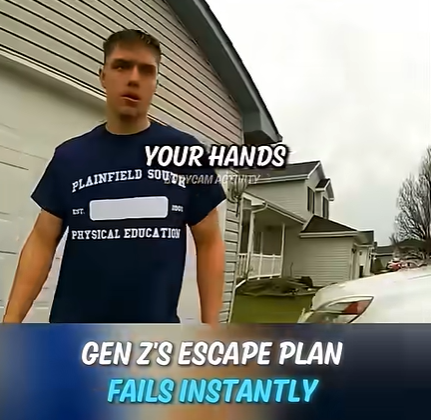
The bodycam footage shows a police interview in a residential neighborhood that quickly shifts from calm questioning to a short foot pursuit and an arrest. What begins as an officer trying to understand a reported altercation outside a home turns into a much more serious situation when the young man being questioned suddenly pulls away and runs.
The video opens outside a garage, where a police officer is speaking with a young man wearing a physical education t-shirt. An older woman stands nearby as the officer asks questions about what happened. The setting appears to be a quiet neighborhood, with the conversation taking place near a driveway and the front area of a home. At first, the interaction seems controlled, with the officer gathering details and the young man attempting to explain his side.
According to the young man, the incident began because some of his personal items were missing. He tells the officer that he confronted another person about those missing belongings, and that the confrontation turned physical. His explanation suggests that he believed the other person may have had something to do with the missing items, or at least that he wanted answers. However, the situation did not remain verbal. It turned into a struggle between the two.
As the officer continues asking questions, the young man admits that during the physical altercation, his hands may have been near the other person’s neck. That detail appears to change the tone of the conversation. Even if the young man is trying to explain that the contact happened during a struggle, the officer seems to take the admission seriously. In any physical dispute, contact near someone’s neck can raise major concern, especially when police are deciding whether a crime may have occurred.
The officer listens and continues to assess the situation. The young man does not appear to be immediately running at the beginning. He is still speaking, still present, and still standing near the garage. But once the officer decides to detain him, the atmosphere changes instantly. The officer instructs him to place his hands behind his back, indicating that she is moving from questioning to taking him into custody.
At that moment, the young man suddenly pulls away. Instead of complying with the officer’s instruction, he breaks from the officer’s control and runs. The calm interview becomes a foot pursuit within seconds. The officer immediately reacts, chasing after him while also calling the pursuit over her radio. Her voice and movement make it clear that the situation has escalated and that she is now focused on catching the fleeing suspect.
The chase moves past a driveway and down the street. The suspect runs through the residential area, while the officer follows on foot. The pursuit appears brief but intense. In bodycam footage, even a short chase can feel chaotic because the camera moves quickly, the officer is running, and radio communication is happening at the same time. The viewer sees how fast a routine questioning can turn into a physically demanding response.
The officer reports the foot pursuit as she runs, making sure other officers or dispatch know what is happening. This is an important part of police response because once a suspect flees, the situation becomes less predictable. The officer needs to communicate direction, location, and what the suspect is doing so that others can assist if needed.
The suspect does not continue far away from the home. Instead, he quickly loops back toward the house. This decision suggests he may have been trying to get inside, hide, or return to a familiar space. Rather than disappearing down the street, he brings the pursuit back toward the original location. That choice leads the officer into the home.
When the officer enters the residence, the people inside indicate that the suspect ran toward the back. The scene shifts from an outdoor chase to an indoor search. This part of the footage adds another layer of urgency because homes have rooms, corners, furniture, and limited visibility. The officer must move through the residence while listening to the residents and trying to locate the suspect safely.
The officer eventually finds the young man inside. At this point, the chase is over, but the arrest is not yet complete. The officer orders him to put his hands behind his back. After fleeing, the suspect is now being detained again, but this time inside the home. The officer successfully handcuffs him, bringing the situation back under control.
The video ends with the suspect being escorted to the back of a police cruiser. As he is taken away, he apologizes. The apology suggests that once the chase is over, he recognizes that running made the situation worse. What may have started as a dispute about missing personal items has now become more serious because he fled from the officer during the detention attempt.
The footage stands out because it shows how quickly a police interaction can escalate based on one decision. At first, the young man had the opportunity to explain what happened. He was speaking with the officer and giving his version of events. But when the officer moved to detain him, his decision to run changed everything. The focus shifted from the original altercation to the escape attempt and the need to apprehend him.
The original incident appears to have involved frustration over missing belongings. That detail may help explain why the young man confronted the other person, but it does not erase the seriousness of a physical altercation. When someone admits that their hands may have been near another person’s neck during a struggle, officers are likely to treat the case carefully. Even if the person claims they did not intend serious harm, the location of the contact can be alarming.
The officer’s decision to detain him likely came from the information gathered during the questioning. Police officers often make decisions based on statements, visible evidence, witness accounts, and the seriousness of the alleged conduct. In this case, the admission about the physical struggle appears to be a key moment. Once the officer tells him to put his hands behind his back, she is no longer simply asking questions.
For the young man, that instruction may have triggered panic. People sometimes run not because they have a plan, but because they suddenly feel afraid of being arrested. However, fleeing usually makes a situation worse. Even if a person believes they have an explanation or feels misunderstood, running from an officer can add new consequences and increase the risk of injury or further charges.
The officer’s response shows the pressure officers face when someone flees. She has to react immediately, pursue on foot, communicate over the radio, monitor her surroundings, and keep track of the suspect’s movements. In a residential neighborhood, there may be driveways, yards, cars, and people nearby. The officer must move quickly while still trying to maintain control.
The suspect’s decision to return toward the house also creates risks for everyone involved. Once a pursuit moves inside a home, residents may become part of the situation. They may be startled, confused, or forced to point officers in the right direction. The officer also has to consider whether the suspect is hiding, whether anyone else is inside, and whether the environment is safe.
The residents’ cooperation appears to help bring the situation to an end. When the officer enters and people indicate that the young man went toward the back, they help guide her search. Without that information, locating him inside the home could have taken longer and increased tension. Their response helps the officer find him quickly and complete the arrest.
The apology at the end is also important. It suggests the suspect may have realized that fleeing was a mistake. His apology does not undo what happened, but it shows a shift from resistance to compliance. By the time he is being placed in the cruiser, the energy of the scene has changed again. The chase is over, the handcuffs are on, and the suspect is no longer trying to get away.
The video also highlights the difference between explaining yourself and avoiding custody. During the initial questioning, the young man was still able to speak and give his account. Even after being detained, he would still have had opportunities later to explain his side through the legal process. But running creates a separate problem. It can make officers more cautious, increase the seriousness of the encounter, and reduce trust in the person’s willingness to cooperate.
The older woman present at the beginning adds an emotional layer to the footage. She appears to be near the young man during the initial questioning, possibly as a family member or someone connected to the home. Watching a young person go from being questioned to running from police would likely be distressing. The sudden movement, the officer chasing him, and the later arrest inside the home may have been shocking for everyone present.
The neighborhood setting also makes the footage feel more immediate. This is not happening on a highway or in a distant public space. It unfolds around a home, a driveway, and a residential street. That kind of setting can make the situation feel more personal and disruptive. Neighbors may hear the radio calls, see the chase, or notice the police activity outside.
At the heart of the footage is a chain of choices. The young man chose to confront someone about missing items. That confrontation became physical. During questioning, he admitted a detail that raised concern. The officer chose to detain him. Then he chose to run. Each step led to the next, and each step increased the seriousness of the situation.
The officer’s ability to locate and handcuff him quickly prevented the pursuit from becoming longer or more dangerous. A foot chase can become unpredictable if it stretches across multiple streets or into unfamiliar areas. In this case, the suspect returned to the house, and the officer was able to follow the information provided by residents. That helped end the chase before it became more chaotic.
The footage may also serve as a reminder that compliance during a detention does not necessarily mean someone is admitting guilt. A person can comply with an officer’s instructions and still dispute the allegations later. Running, however, rarely helps. It can make the person look more suspicious and can create additional issues beyond the original complaint.
For viewers, the most dramatic part of the video is likely the sudden escape attempt. One moment, the young man is standing outside the garage, answering questions. The next, he is pulling away and sprinting down the street. That sudden shift is what gives the footage its intensity. It shows how quickly an officer must adapt when a situation changes.
The final moments, with the suspect apologizing as he is taken to the cruiser, give the video a quieter ending. The apology contrasts sharply with the earlier decision to run. It suggests regret, embarrassment, or fear after the fact. By then, however, the consequences of the decision have already arrived.
In the end, the video documents more than a short foot pursuit. It shows how an investigation into a physical altercation can escalate when a suspect chooses not to comply with detention. It shows the importance of communication, quick response, and cooperation from people inside the home. It also shows how one impulsive decision can turn a difficult situation into a much more serious one.
What began as a conversation about missing personal items and a physical struggle ended with a chase through a neighborhood, an indoor apprehension, handcuffs, and a ride in the back of a police cruiser. The suspect’s apology may show that he understood the mistake, but the footage makes clear that once he ran, the encounter was no longer just about the original dispute. It became about fleeing, being found, and facing the consequences of both the altercation and the escape attempt.
The footage also highlights how a moment of fear or panic can completely change the direction of a police encounter. Before the suspect ran, the officer was still in the process of sorting through the details. She was listening, asking questions, and trying to understand what happened during the confrontation over the missing items. The young man still had a chance to remain calm, comply, and allow the process to continue. But the moment he pulled away, the situation immediately became more urgent and more serious.
Running from an officer during a detention often creates a new layer of concern because officers cannot know what the person intends to do next. The suspect may be trying to hide, reach another person, get inside a home, or escape the area entirely. Because of that uncertainty, the officer has to respond quickly. Even if the original matter began as a neighborhood dispute or a physical altercation, the act of fleeing can make officers treat the situation with more caution.
The young man’s return toward the house is especially notable because it suggests the escape attempt was not well planned. He did not appear to have a clear route away from the scene. Instead, he ran down the street and then circled back toward the same property where the questioning began. That kind of movement can happen when someone reacts emotionally rather than strategically. In the moment, he may have simply wanted to get away from the handcuffs, without thinking through where he would go or how quickly the officer would follow.
For the officer, following him back into the home required a quick adjustment. A street pursuit is one kind of challenge, but entering a residence is another. Inside a home, there are more unknowns. There may be other people present, rooms the officer cannot immediately see, and narrow spaces where movement is limited. The officer has to remain alert while still trying to locate the suspect and prevent the situation from escalating further.
The residents’ directions helped reduce that uncertainty. When they indicated that the suspect had run toward the back, they gave the officer a clearer path to follow. Their cooperation helped prevent a longer search through the home and may have helped bring the encounter to a safer conclusion. In fast-moving situations, even a small piece of information from someone nearby can make a major difference.
The young man’s apology at the end may also reflect the emotional crash that often follows an impulsive decision. During the chase, adrenaline likely took over. After he was caught and handcuffed, the reality of what had happened may have settled in. He may have realized that running did not help him avoid arrest. Instead, it created a more public, more stressful, and more serious outcome.
The apology could also have been directed toward the officer, the older woman, or the people in the home who were affected by the chase. When someone flees into a residence, they do not only involve themselves. They pull everyone nearby into the situation. Family members or residents may feel frightened, embarrassed, or frustrated. They may also worry about what will happen next.
This is one of the reasons the footage is more than just a short chase. It shows how one person’s decision can spread tension across an entire household. The officer has to run. Dispatch has to be notified. Residents have to respond. People inside the home have to tell the officer where the suspect went. The original calm of the neighborhood is interrupted by police activity, radio calls, and a suspect being placed in a cruiser.
The original dispute over missing personal items also remains important because it appears to be the spark that led to everything else. The young man said he confronted someone because he believed his belongings were missing. That kind of frustration can quickly become emotional, especially if someone feels they have been wronged or disrespected. But even when a person believes they are trying to recover something that belongs to them, taking matters into their own hands can create bigger problems.
A confrontation over missing items can turn physical very quickly if both people become angry. Once the altercation involves contact near someone’s neck, officers are likely to view the matter more seriously. The young man may have been trying to explain that it happened during a struggle rather than as a deliberate act, but the officer still had to consider the possible risk and the other person’s account.
The video shows the importance of choosing how to respond when upset. If someone believes their property has been taken, the safer option is usually to gather information, contact authorities, and avoid a physical confrontation. Trying to handle it personally can lead to accusations, injuries, arrests, or misunderstandings. In this case, the young man’s attempt to confront someone over missing belongings appears to have led directly to police involvement.
The officer’s questions outside the garage likely served to determine whether the young man’s actions crossed a legal line. His own words became part of that assessment. When he admitted that his hands may have been near the other person’s neck, that statement likely stood out. It may not have been a full confession to any specific offense, but it was enough for the officer to treat the situation with caution.
The presence of the older woman nearby may have added emotional pressure on the young man. Being questioned by police in front of someone older, possibly a relative or guardian, can make a person feel embarrassed or cornered. He may have felt watched, judged, or afraid of what would happen next. That does not excuse running, but it may help explain why the moment became overwhelming for him.
The officer’s command to place his hands behind his back was the turning point. For some people, that instruction feels like the moment everything becomes real. Until then, they may believe they can explain their way out of the situation. Once handcuffs are mentioned or an officer moves to detain them, fear can take over. The young man’s flight appears to have happened right at that emotional breaking point.
But the footage also makes clear that fleeing did not give him control. It did the opposite. It shifted control more firmly to the officer and increased the urgency of the response. Instead of being detained calmly outside the garage, he was chased, located inside the home, handcuffed, and escorted to a police cruiser. The outcome became more dramatic and likely more stressful for everyone involved.