A Compassionate Response in a Moment of Crisis
Introduction
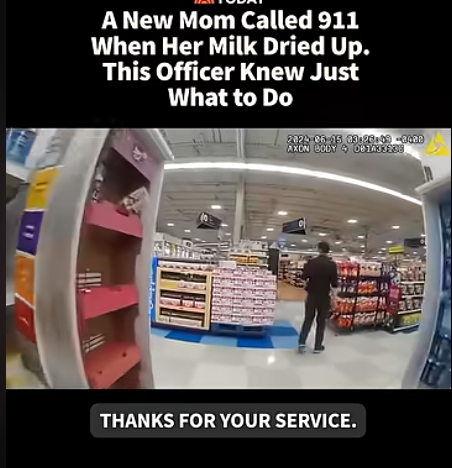
In moments of emergency, people often imagine flashing lights, sirens, danger, and urgent action. They picture police officers responding to crimes, accidents, threats, or situations where someone’s safety is immediately at risk. Yet not every emergency looks dramatic from the outside. Some emergencies are quiet, private, and deeply human. They happen inside homes, in the middle of the night, when someone feels helpless and has nowhere else to turn. This video shows one of those quieter emergencies. It features bodycam footage of a police officer responding to a call from a new mother who was struggling to feed her one-week-old baby. Her breast milk had dried up, and she could not find baby formula to buy. In desperation, she called 911.
The situation was not a typical police call, but it was a real crisis. A newborn baby needed food, and a mother was scared. For a parent, especially a new parent, few things are more frightening than being unable to feed a child. A one-week-old baby is completely dependent on adults for survival. The baby cannot wait for business hours, cannot understand supply shortages, and cannot be comforted by promises that help might come later. The need is immediate. The mother’s call was not about convenience. It was about fear, responsibility, and love.
The officer’s response in the video stands out because he does not treat the call as unimportant. He does not dismiss the mother’s concern or tell her that her problem is outside the role of law enforcement. Instead, he acts with urgency and compassion. He goes to a store, explains the situation to an employee, asks whether someone can open a register, and purchases baby formula and a bottle for the mother’s newborn child. He makes it clear that he will pay for the items himself and deliver them to the woman. The video captures a simple but powerful act of service.
This story is meaningful because it reminds viewers that public service is not limited to enforcing laws or responding to danger. Sometimes public service means recognizing human need and choosing to help. The officer’s actions show empathy, initiative, and a willingness to go beyond the minimum requirements of the job. In doing so, he becomes more than a uniformed figure of authority. He becomes a neighbor, a helper, and a source of comfort during a vulnerable moment in someone’s life.
The Mother’s Fear and the Reality of Need
The heart of this story begins with the mother. She had recently given birth, and her baby was only one week old. That detail is important because the first days after childbirth can be physically exhausting, emotionally overwhelming, and full of uncertainty. New mothers often face sleepless nights, pain, anxiety, and the pressure of caring for a fragile newborn. Even under the best circumstances, the early days of parenthood can feel intense. When a mother suddenly realizes she cannot feed her baby, the emotional weight can become unbearable.
The video describes that her breast milk had dried up. For many mothers, breastfeeding is not always predictable or easy. Some women produce enough milk immediately, while others struggle. Milk supply can be affected by stress, health conditions, dehydration, medication, fatigue, or other factors. A mother may feel guilt or fear when breastfeeding does not go as planned, even though it is often beyond her control. In this case, the mother’s situation became urgent because she did not have another reliable source of food for her baby.
She also could not find baby formula to buy. That detail adds another layer of pressure. Baby formula is essential for infants who are not receiving breast milk. For a newborn, formula is not a luxury item. It is nutrition, hydration, and survival. If a parent cannot find formula, the situation can quickly become frightening. The mother may have already searched stores, asked for help, or tried to solve the problem before calling 911. By the time she reached out for emergency assistance, she likely felt cornered and desperate.
Her decision to call 911 shows the seriousness of her fear. People do not usually call emergency services for minor inconveniences. They call when they feel that immediate help is needed and they do not know where else to turn. This mother was not asking for special treatment. She was asking for help feeding her newborn. That is one of the most basic needs a human being can have.
The mother’s situation also reminds viewers that crises are not always caused by crime or violence. Poverty, shortages, isolation, lack of transportation, medical issues, and family stress can all create emergencies. A person may be safe from physical attack and still be in distress. A baby may not be injured and still be in danger if food is unavailable. This video shows the importance of recognizing need in its many forms.
The Officer’s Immediate Sense of Responsibility
When the officer receives or responds to the call, he could have taken a narrow view of his job. He might have said that the issue was not a police matter. He might have referred the mother to a social service agency, a hospital, a charity, or a store. He might have explained that he could not do anything personally. Instead, he made a different choice. He treated the mother’s need as real, urgent, and worthy of action.
That sense of responsibility is what makes the video so powerful. The officer understands that the baby cannot wait for paperwork, referrals, or formal procedures. He sees a problem that can be solved quickly if someone is willing to act. His response is practical. The mother needs formula and a bottle. A store may have those items. If the store is not fully open or if the register is not available, he can speak with an employee and explain the situation. If payment is an issue, he can pay himself. If transportation is a problem, he can deliver the items.
This chain of decisions shows problem-solving under pressure. The officer does not simply express sympathy. He turns sympathy into action. Compassion becomes meaningful when it leads to help. In the video, his compassion is not loud or performative. It is calm, direct, and focused. He asks for what is needed, explains why it matters, and takes responsibility for making sure the baby gets fed.
His willingness to pay for the items himself is especially important. He emphasizes that he will cover the cost. This shows that he is not trying to pressure the store into giving items away or creating an uncomfortable situation for the employee. He is not asking others to solve the problem while he stands aside. He is personally invested. By offering to pay, he removes a barrier and keeps the focus on helping the mother and child.
The officer’s actions also reveal a sense of humanity that can sometimes be overlooked in discussions about law enforcement. Behind the badge is a person capable of empathy. In this moment, the officer sees not just a call for service, but a mother in distress and a baby in need. His response reflects the best idea of community policing: being present, listening, helping, and building trust through real acts of care.
The Store Employee’s Role in the Moment
Although the officer is the central figure in the video, the store employee also plays an important part. When the officer enters the store and explains the situation, the employee agrees to help. This cooperation matters. The employee could have followed routine procedures and said that nothing could be done. Instead, the employee listens, understands the urgency, and helps make the purchase possible.
In many real-life situations, kindness requires more than one person. A single act of compassion often depends on a small chain of people choosing to cooperate. The officer chooses to respond. The employee chooses to listen. Someone opens a register or helps complete the transaction. The items are selected. The officer pays. The formula and bottle are delivered. Each step depends on someone deciding that the mother and baby matter.
The store employee’s response also shows that community support can happen in ordinary places. A store is not usually seen as a place of emergency care, but in this moment it becomes part of a lifeline. The shelves, the register, the employee, and the officer all become connected to the well-being of a newborn child. This is one reason the video resonates with viewers. It shows how ordinary people and ordinary settings can become part of something meaningful.
The interaction between the officer and the employee appears to be respectful and purposeful. The officer explains the situation clearly and asks for help. The employee responds with understanding. There is no unnecessary drama. There is simply a shared recognition that a baby needs food and that the right thing to do is to help.
This part of the story also reflects the importance of flexibility. Rules and procedures exist for good reasons, but emergencies sometimes require people to think with compassion. Opening a register or assisting a customer outside normal expectations might seem small, but in this situation it makes a major difference. The employee’s willingness to help turns the officer’s plan into reality.
The Importance of Baby Formula in a Newborn’s Life
To fully understand the seriousness of the situation, it is important to recognize what baby formula represents. For a newborn, formula is not simply food in the ordinary sense. It is the baby’s complete source of nutrition when breast milk is unavailable. A one-week-old infant cannot eat solid food, cannot drink regular milk, and cannot safely consume many substitutes. The baby depends on breast milk or properly prepared infant formula.
That dependence makes the mother’s fear understandable. Adults can skip a meal or wait several hours if necessary. Older children can eat different foods. A newborn has very limited options. Hunger in a newborn can quickly lead to distress, dehydration, and medical concern. Even if the baby had not yet reached a medical emergency, the mother had every reason to act quickly.
Parents often carry a heavy emotional burden when it comes to feeding their babies. Feeding is one of the most basic responsibilities of parenthood. When a mother cannot provide milk and cannot find formula, she may feel as though she is failing, even when the situation is not her fault. That emotional pain can be intense. The officer’s response likely provided not only physical help but emotional relief. By bringing formula and a bottle, he helped solve the immediate problem. By taking her concern seriously, he also helped reassure her that she was not alone.
The video also highlights how essential supplies can become urgent needs during shortages or personal hardship. Many families live with limited resources, limited transportation, or limited support networks. If a store is out of formula, if a parent cannot afford it, or if there is no one available to help, the situation can become dangerous. This story shows why communities need systems of support for parents and infants. It also shows how individual acts of kindness can fill gaps when systems are not immediately available.
The formula and bottle in the officer’s hands may look like simple items, but in the context of the story, they symbolize safety. They represent a baby being fed, a mother being comforted, and a crisis being eased. Sometimes the most powerful help is not complicated. It is the right item, brought to the right person, at the right time.
Compassion Beyond the Job Description
The phrase “above and beyond” fits this video because the officer does more than what many people would expect. His duty may have required him to respond, assess the situation, and offer some form of guidance. But he chooses to do more. He personally goes to a store, communicates with staff, selects baby supplies, pays for them, and delivers them. That is not just professional conduct. It is personal kindness.
Going above and beyond does not always mean doing something grand or heroic in the traditional sense. It can mean noticing a need and refusing to ignore it. It can mean spending personal time, money, or effort to help someone who may never be able to repay the favor. In this case, the officer’s action is powerful because it is immediate and practical. He does not wait for someone else to step in. He becomes the help the mother needs.
Compassion beyond the job description is especially meaningful in public service. People who work in roles such as policing, firefighting, emergency medical response, teaching, nursing, or social work often encounter people during stressful moments. Their official responsibilities matter, but their humanity matters too. A calm voice, a respectful attitude, or a small act of kindness can change how someone experiences a crisis.
The officer’s behavior also challenges narrow ideas about strength. Some people think of strength as toughness, command, or authority. This video presents another kind of strength: the strength to care. It takes emotional maturity to respond to distress with patience rather than irritation. It takes humility to perform a simple errand because someone needs it. It takes character to use one’s position not for power, but for service.
The officer’s act does not erase the complexities of law enforcement or the broader debates people may have about policing. However, it does show one individual choosing compassion in a specific moment. That matters. Real trust between communities and public servants is built through actions. When officers show that they are willing to help in moments of human need, they can create connections that statistics and speeches cannot.
The Power of Bodycam Footage
The bodycam footage gives viewers a direct look at the officer’s actions. Body cameras are often discussed in relation to accountability, evidence, and transparency. In many cases, bodycam videos are released after tense or controversial incidents. This video is different because it captures kindness. It shows that cameras can also document moments of care, patience, and service.
Seeing the interaction matters because it allows viewers to observe the officer’s tone and behavior. The footage likely feels authentic because it is not staged like a commercial or scripted like a public relations message. It captures a real response to a real call. The officer is not giving a speech about compassion. He is simply doing what needs to be done. That quiet realism is part of the video’s emotional strength.
Bodycam footage can also remind the public that many acts of service happen without widespread attention. Officers and other first responders may help people in small ways every day, and most of those moments are never seen by the public. A ride home, a welfare check, a conversation with someone in crisis, assistance for a lost child, or help for a struggling parent may not make headlines. When one of those moments is captured and shared, it gives viewers a glimpse into the human side of emergency response.
The footage also allows the mother’s situation to be understood with dignity. The focus is not on humiliating her or exposing her hardship for entertainment. The focus is on the officer’s response and the community effort to help. That distinction is important. Stories about people in need should be told with respect. A mother who calls 911 because she cannot feed her baby is not a person to judge. She is a person to support.
In a world where many videos online show conflict, anger, or cruelty, this kind of footage can feel refreshing. It reminds viewers that kindness is also real. Compassion may not always spread as loudly as outrage, but it can be just as powerful. The video offers a moment of hope and shows that even during difficult times, people can choose to help one another.
Community Trust and Human Connection
Trust between law enforcement and the community is built through repeated experiences. For some people, interactions with police may feel intimidating or stressful. For others, officers may be seen as protectors and helpers. This video contributes to a vision of policing rooted in service. The officer’s response shows that a badge can represent not only authority, but also care.
For the mother, this experience may have changed how she felt in that moment and perhaps how she viewed the officer who helped her. She called during a frightening situation, and someone came through for her. Instead of feeling dismissed, she received practical support. Instead of being judged, she was helped. That kind of interaction can leave a lasting impression.
Community trust is not created only through policies or public statements. It is created when people feel seen and respected. A mother in crisis needs to know that her fear matters. A parent struggling to care for a baby needs to know that help is possible. When an officer responds with kindness, it sends a message that the community includes everyone, especially those who are vulnerable.
Human connection is at the center of this story. The officer does not know the mother personally, yet he responds as though her problem matters. The store employee does not know the baby, yet helps make sure the baby can be fed. Viewers may not know any of the people involved, yet many will feel moved because the situation touches something universal. A hungry baby, a scared mother, and a compassionate helper are easy to understand across backgrounds and beliefs.
This is one reason the video can have a strong emotional impact. It cuts through many divisions and focuses on a basic truth: people need each other. No one is completely independent. At some point, everyone needs help. The best communities are those where people do not shame others for needing support, but respond with generosity.
The Mother’s Courage in Asking for Help
While much attention is rightly placed on the officer’s kindness, the mother’s courage should also be recognized. Asking for help is not always easy. Many people feel embarrassed when they cannot provide something essential for their family. A new mother may already feel pressure to appear capable and strong. Admitting that she could not feed her baby may have been emotionally difficult.
Her call to 911 shows responsibility. She recognized that her baby needed food and took action. She did not wait until the situation became worse. She did not allow shame to silence her. She reached out because her child’s well-being came first. That is an act of love.
Society often praises independence, but there are moments when asking for help is the wisest and strongest choice. Parents should not have to suffer in silence when their children are in need. A community works best when people feel able to seek help before a crisis becomes dangerous. This mother’s decision to call may have been the key step that allowed the officer to intervene.
Her situation also reminds us to be gentle in how we judge others. It is easy for outsiders to ask why she did not have formula, why she could not find another solution, or why she called emergency services. But such questions can ignore the reality of crisis. People do not always have perfect options. They may lack money, transportation, family support, or access to open stores. They may be recovering from childbirth, dealing with exhaustion, or facing anxiety. Compassion begins when we stop assuming the worst about people and start asking what they need.
The mother’s call gave the officer a chance to help. Her willingness to speak up protected her child. That should be seen as responsible, not shameful. In the story, she is not merely a person receiving charity. She is a mother doing everything she can to care for her newborn.