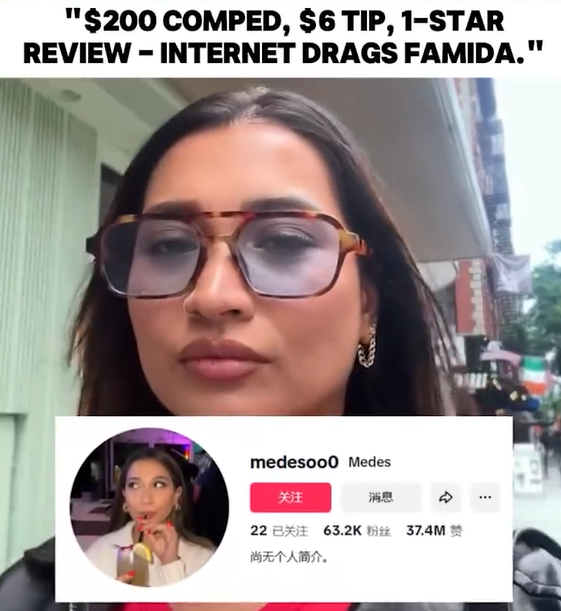
In today’s digital age, social media has become a powerful force in shaping public opinion, holding individuals and businesses accountable, and amplifying voices of outrage. The latest example of this phenomenon occurred when a viral story about a customer’s tipping behavior sparked an intense online debate. The customer, identified as “Famida,” left a paltry $6 tip after receiving a $200 compensation for a service-related issue and followed it up with a scathing 1-star review.
What followed was an explosive reaction on social media. Users from all over the world expressed their disbelief, anger, and frustration, with many criticizing Famida’s actions and calling for accountability. As the story made its rounds across social media platforms, including TikTok, Twitter, and Instagram, it became clear that the issue wasn’t just about one person’s tipping habits — it was about a much larger conversation around tipping culture, customer service expectations, and the ethics of online reviews.
In this article, we’ll examine the details of this incident, the broader implications of online reviews and public shaming, and explore the cultural significance of tipping practices in today’s society. We will also dive into the role of social media as a platform for accountability and the risks of public backlash.
A Customer’s $6 Tip and 1-Star Review Spark Outrage
The incident began when Famida, a customer who had received a $200 compensation for a service issue, left a $6 tip and then followed it up with a harsh 1-star review of the establishment. The compensation she received likely stemmed from a problem or dissatisfaction with the service, and the tip — at $6 — appeared to be an insult given the amount of the compensation. Famida’s review not only criticized the service but also seemed to reflect her negative feelings about the situation.
When the review was shared on social media, it didn’t take long for users to react. Many pointed out the disconnect between the $200 compensation and the $6 tip, seeing it as a clear case of poor tipping etiquette. Tipping, especially in the service industry, is a sensitive subject. It has been a long-standing tradition to leave a tip based on the quality of service provided, typically ranging from 15% to 20% of the total bill. In many cases, tipping is considered an essential part of service workers’ income, particularly in countries like the United States, where waitstaff and other service employees often rely on tips as a significant portion of their salary.
In Famida’s case, the tipping amount seemed disproportionate compared to the compensation she had received, and the 1-star review added fuel to the fire. People were not only questioning the amount of the tip but also the fairness of the review. Social media platforms exploded with opinions, many criticizing Famida for being inconsiderate and insensitive toward the service industry workers. Others pointed out the irony of her situation, where she had been compensated for an issue but seemed to hold a grudge against the establishment, despite the resolution.
The Role of Social Media in Public Shaming
As the story spread across social media, it became a topic of intense discussion. Social media users began to post comments, videos, and memes calling out Famida for her actions. While some users defended her right to leave any tip they saw fit, the majority sided with the service workers, condemning her for not understanding the importance of tipping.
Social media platforms, such as TikTok and Twitter, quickly became the battleground for this debate. TikTok users created reaction videos, mocking the situation, while others shared their personal experiences of how tipping culture impacted them, especially in the service industry. The situation also sparked discussions about the ethics of online shaming and how a single mistake or incident could lead to widespread backlash.
While some might argue that public shaming is an essential tool for holding individuals accountable, it raises ethical questions about the extent to which online outrage should be allowed to escalate. Critics argue that social media platforms can amplify negative emotions and quickly turn minor incidents into viral spectacles, leaving individuals vulnerable to public humiliation. In this case, Famida became a symbol of bad tipping etiquette, and her actions were magnified across the internet, fueling anger and criticism.
On the other hand, some advocates of public shaming argue that social media provides a necessary platform for accountability. In industries like food service, where employees often rely heavily on tips to supplement their income, tipping behavior can have a significant impact. Social media’s ability to bring attention to these issues forces businesses and individuals to reconsider their actions and the consequences they have on others.
Tipping Culture and Expectations: A Double-Edged Sword
Tipping has long been a contentious topic, particularly in service-based industries. While it is often seen as an expression of gratitude for good service, it has become a complex issue fraught with expectations, assumptions, and varying cultural norms. In many countries, tipping is an expected part of the service experience, with the standard gratuity ranging from 15% to 20% of the total bill.
However, tipping culture can also lead to misunderstandings and frustrations. Some customers may feel that they are already paying for a service and shouldn’t be expected to pay more through tips. On the other hand, many service workers depend on tips to make up for lower base wages. In some cases, service workers may even go above and beyond to provide excellent service, only to be disappointed by a customer’s stingy or non-existent tip.
Famida’s situation reflects a common tension between service providers and customers: the expectation that customers will reward good service with a tip, and the reality that not all customers understand or abide by these norms. In her case, the $6 tip felt inadequate and inconsiderate compared to the $200 compensation she received. While the compensation may have been meant to resolve an issue, the tipping culture often dictates that a good tip should accompany good service, and in this case, the tip appeared to fall short.
This incident underscores the complexity of tipping and the importance of understanding how tipping practices are perceived by both service workers and customers. It also highlights the emotional weight that tipping can carry, particularly when it comes to service workers who rely on tips to make a living.
The Ethics of Online Reviews: Balancing Honesty and Accountability
Online reviews have become an essential part of modern consumer culture. Whether we’re choosing a restaurant, booking a hotel, or purchasing a product, reviews from other customers often guide our decisions. However, reviews are not always a fair or accurate representation of the service or product in question. In some cases, reviews can be overly harsh, misleading, or biased, and they may disproportionately affect a business’s reputation.
Famida’s 1-star review, coupled with her low tip, sparked controversy because it appeared to be driven by frustration rather than a balanced assessment of the situation. While online reviews are an important tool for consumers, they should be used responsibly. Leaving a scathing review without considering the context or the efforts made by the business to address an issue can be harmful. This is especially true when the review comes after a resolution has been provided, such as the $200 compensation that Famida received.
Businesses rely on online reviews to build their reputation and attract customers, but a single negative review, especially one that seems unwarranted or unfair, can have lasting consequences. Online reviews can significantly influence a business’s success, and when customers post reviews based on personal grievances or subjective opinions, it undermines the purpose of reviews as a tool for honest feedback.
The Impact of Social Media on Personal Accountability
The rise of social media has created a new form of public accountability. In the past, consumers had limited ways to voice their dissatisfaction with a product or service, typically relying on word-of-mouth or formal complaints. Now, social media allows people to share their opinions and experiences with a much larger audience, sometimes leading to viral moments that can have far-reaching consequences.
In Famida’s case, her actions quickly became a viral topic of discussion. Her low tip and harsh review were shared widely across platforms like TikTok, Twitter, and Instagram, with many people expressing outrage at her behavior. While some defended her right to leave any tip she saw fit, the overwhelming sentiment was that she had acted unfairly toward the service industry workers, especially considering the compensation she had already received.
This viral backlash highlights the power of social media in holding individuals accountable for their actions. It also raises questions about the ethics of public shaming. While social media can be a platform for education and accountability, it can also lead to online bullying and harassment. In this case, Famida’s actions were scrutinized by the masses, with many attacking her publicly for her tipping habits and review.
The incident involving Famida’s $6 tip, $200 compensation, and 1-star review raises important questions about tipping etiquette, online reviews, and the role of social media in public accountability. While her actions sparked rightful outrage from those who value fair tipping practices, it’s essential to remember that public shaming and online backlash can have unintended consequences. It is important to strike a balance between holding individuals accountable for their actions and ensuring that the online space remains respectful and constructive.
As we navigate the complexities of tipping culture, online reviews, and social media accountability, it is crucial to approach these situations with empathy and understanding. Public platforms like TikTok and Twitter have the power to amplify voices and foster important conversations, but they also need to be used responsibly to avoid unnecessary harm. Ultimately, this incident serves as a reminder of the influence of social media and the importance of understanding the ethical responsibilities that come with it.
Unpacking the Complexities of Gratitude and Accountability
Tipping is an integral part of consumer culture in many parts of the world, particularly in the United States, where it serves as a significant portion of a worker’s income, especially in service industries like hospitality, food service, and delivery. However, tipping has always been a point of contention, often drawing lines between what is considered “acceptable” and what is viewed as “insufficient.”
For many service workers, tips can be an essential component of their earnings. It is not uncommon for waitstaff, baristas, and other service professionals to rely heavily on tips to make ends meet, given the relatively low wages that are often paid in these roles. As a result, tips are seen as a reflection of the quality of service provided. Customers who leave generous tips are often praised for their kindness, while those who leave smaller amounts — or no tip at all — are seen as neglecting their responsibility to support service workers.
In Famida’s case, the $6 tip on a $200 compensated bill sparked a conversation about the moral obligation of customers to provide fair tips. Many felt that the amount was disproportionate to the service rendered, particularly given the compensation she had already received for the problem she encountered. The incident ignited a larger debate on the internet, raising questions about the expectations that service workers should have regarding tips and whether those expectations are being met by the customers.
One significant aspect of tipping etiquette is the unspoken social contract between service providers and their customers. Service providers are expected to go above and beyond to create a pleasant experience for their customers, while customers are expected to reciprocate by leaving an appropriate tip. However, this dynamic often falls apart when expectations are not aligned. A poor tip can be seen as a direct rejection of the service provided, even if the customer’s experience was not optimal, which was the case with Famida.
It’s important to understand that tipping is not always a straightforward transaction. There are various factors that can influence a person’s decision to leave a certain amount, including personal finances, the quality of service, cultural norms, and even the expectations of the industry. In some cultures, tipping is not the norm, while in others, it is seen as a mandatory practice. Moreover, factors such as poor communication, misunderstandings, or lack of empathy from service providers can also influence customers’ tipping behaviors. However, a large discrepancy between compensation and tip — as seen in Famida’s case — will often create a sense of injustice.
The Power of Social Media: Holding People Accountable or Amplifying Outrage?
In the age of social media, everything is potentially a viral sensation, especially when it comes to controversial issues. The tipping incident quickly garnered attention, and Famida’s behavior became the subject of heated online debates. But beyond the initial shock, this situation brings up significant questions about the role of social media in holding individuals accountable.
On one hand, social media has the potential to be a powerful tool for justice. It can amplify voices, provide a platform for people to call out wrongdoing, and draw attention to issues that may otherwise go unnoticed. In the case of Famida, social media users felt compelled to voice their disapproval of her actions, hoping to set a standard for fair tipping practices and to highlight the moral implications of poor tipping.
However, the viral nature of this incident also reveals the darker side of social media. The power of online shaming can quickly spiral out of control, with people becoming the target of widespread hate, harassment, and bullying. In Famida’s case, while her actions were criticized for being inconsiderate, they were also met with a level of public backlash that can be damaging to one’s reputation and mental well-being. Once an issue goes viral, it’s often difficult for the individual involved to regain control over their narrative.
The backlash against Famida raises ethical concerns about the balance between holding individuals accountable for their actions and respecting their right to privacy and dignity. While social media platforms serve as a space for public dialogue, the line between constructive criticism and public shaming can be blurry. In many cases, individuals are subjected to cruel comments and personal attacks that go beyond simply addressing the issue at hand.
Social media can empower people to hold others accountable, but it also has the potential to amplify negative emotions and create a toxic environment. In the rush to condemn a perceived wrongdoing, the public sometimes forgets the human element behind the story — as was the case with Famida, who is now facing a level of public scrutiny that many believe goes beyond what was necessary for the situation.
The Role of Businesses: Setting Expectations for Customer Behavior
While customers and service workers share responsibility in the tipping dynamic, businesses themselves also play an important role in setting the tone for expectations around tipping and compensation. In the case of Famida, the business that compensated her for the service issue likely assumed that the customer would respond with appropriate gratitude, as is customary in the service industry. However, when expectations are not communicated clearly, misunderstandings can occur, leading to frustration on both sides.
Many businesses have implemented policies that clarify tipping expectations, particularly in industries like food service. For example, some restaurants include a standard gratuity in the bill for large parties, while others provide guidelines for tipping based on the total amount of the bill. This practice can help alleviate confusion and ensure that both customers and service workers are on the same page regarding expectations.
However, not all businesses have clear guidelines for tipping, which can lead to mixed messages. Some customers may feel that they are not obligated to leave a tip if they believe the service was subpar, while others may feel uncomfortable not leaving a tip at all, even when the service was average. Businesses that fail to set clear expectations may inadvertently contribute to these misunderstandings, leading to negative experiences for both customers and employees.
Ultimately, businesses have a responsibility to ensure that their employees are compensated fairly for their work. When tips are a significant portion of an employee’s income, businesses should prioritize providing adequate training and support to ensure that their employees understand the importance of customer satisfaction and the role they play in ensuring customers feel valued.
The Ethics of Online Reviews: Giving Honest Feedback Without Hurting Others
One of the most significant issues highlighted by this incident is the power of online reviews. In today’s world, reviews are not just a way to gauge the quality of a product or service — they can also be a reflection of a customer’s emotions, frustrations, and personal biases. Famida’s 1-star review, combined with her $6 tip, was harshly criticized because many people felt it was unwarranted. While it is crucial for customers to have the freedom to provide honest feedback, there is an ethical line that should be considered when posting reviews that could potentially harm a business or an individual.
Online reviews have become a vital resource for consumers who are seeking reliable feedback on products and services. However, they also have the potential to do significant damage when customers use them as a platform for personal grievances rather than honest assessments. In Famida’s case, her review came after she had already received compensation for the issue at hand, and many felt it was an unfair reflection of the business’s efforts to resolve the problem.
When posting reviews, it’s essential to consider not only the facts of the situation but also the tone and impact of the feedback. While negative reviews are necessary to highlight areas where businesses can improve, it’s important to avoid exaggeration or cruelty that could disproportionately damage a business’s reputation.
The story of Famida’s low tip and harsh review serves as a reminder of the complexities of consumer behavior, tipping etiquette, and the role of social media in holding people accountable. While her actions sparked widespread outrage, the public shaming that followed raised important questions about the ethics of online criticism and the consequences of public backlash.
In the digital age, the power of social media can be both a tool for justice and a weapon of public shaming. While it’s important to hold individuals accountable for their actions, it’s equally crucial to maintain a sense of empathy and proportionality in our responses. As we continue to navigate the complexities of online reviews, tipping culture, and the digital age, it’s essential to recognize the impact that our actions — both online and offline — can have on others.
This incident has sparked an important conversation about expectations, accountability, and how to approach online interactions with kindness and respect. Let this be a reminder to us all: public shaming can be just as harmful as the original action, and we must work toward creating a more balanced, understanding, and empathetic digital world.