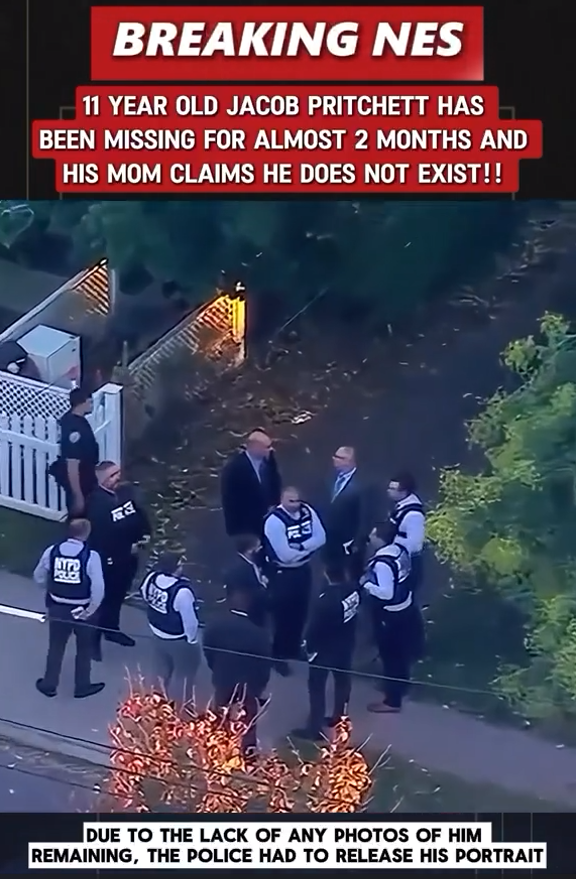
In a deeply unsettling and emotionally charged case that has captured national attention, an 11-year-old boy at the center of a growing mystery has been missing for nearly two months — yet what has truly shocked investigators and the public alike is the disturbing claim made by the one person who should know him best: his own mother. According to authorities, the situation has evolved far beyond a standard missing persons case, becoming a complex and troubling investigation filled with contradictions, uncertainty, and questions that remain unanswered.
The case began quietly in a suburban neighborhood in Austin, Texas, where neighbors first started noticing something felt off. It wasn’t a sudden alarm or a dramatic disappearance that triggered concern, but rather a slow, uneasy realization. The boy, who had once been a regular presence in the area — riding his bike, playing outdoors, and interacting with other children — simply stopped being seen. Days turned into weeks, and what initially felt like coincidence soon developed into worry. Eventually, one concerned neighbor made the call that would begin unraveling one of the most puzzling investigations local authorities had seen in years.
When officers responded and began making inquiries, they were expecting a routine welfare check. What they encountered instead was something far more unusual. The boy’s mother, Danielle Pritchett, reportedly responded to their questions with a statement that left even experienced investigators stunned. She denied the existence of her own child. According to initial reports, she calmly told officers that there was no boy by that name, and that she did not have a son. The statement, delivered without visible panic or confusion, immediately raised red flags.
At first, authorities considered the possibility of a misunderstanding or a mental health episode. It was difficult to reconcile the accounts of multiple neighbors with the mother’s firm denial. However, as officers began to gather more information, the case became increasingly complex. Several residents in the neighborhood independently confirmed that the boy had been living in the home for years. They described him as polite, energetic, and well-known within the community. Some recalled seeing him regularly just weeks before he vanished, making the mother’s claim even more difficult to understand.
The investigation quickly expanded beyond the immediate household. Detectives began reaching out to local schools, healthcare providers, and community organizations to piece together the boy’s background. What they discovered only deepened the mystery. While there were anecdotal accounts of the child’s presence, official documentation was surprisingly limited. School records were inconsistent, and certain administrative files appeared incomplete or missing entirely. This lack of a clear paper trail complicated efforts to establish a timeline and confirm key details about the boy’s life.
Meanwhile, investigators turned their attention to Danielle’s digital footprint. Social media, often a reliable source of personal history, offered some clues but also raised new questions. Older posts appeared to reference a child matching the boy’s description — birthday mentions, casual photos, and everyday moments that suggested a normal family life. However, many of these posts had been removed or altered in the months leading up to the disappearance. Accounts that once showed traces of the child’s existence were suddenly sparse, with entire sections of content missing.
This pattern prompted authorities to consider whether the removal of information was intentional. Digital forensic teams were brought in to examine deleted data, timestamps, and account activity. While it is not uncommon for individuals to curate or delete social media content, the timing in this case appeared unusual. Investigators began exploring whether the digital changes were connected to the boy’s disappearance or if they were unrelated actions that had simply created an appearance of suspicion.
As the case gained traction, law enforcement officials addressed the public in a series of press briefings. They emphasized that, despite the conflicting statements, they were treating the situation as a serious missing child investigation. Authorities urged the community to come forward with any information, no matter how minor it might seem. Tips began to pour in from across the region, with some individuals claiming to have seen the boy in nearby areas, though none of these leads had been confirmed at the time.
Family members were also interviewed as part of the ongoing investigation. The boy’s grandmother provided statements that added another layer of concern. She confirmed that she had known the child and had spent time with him in the past, though she admitted she had not seen him in several months. Her account reinforced the belief among investigators that the boy did exist and had been part of the family’s life, even if official documentation remained inconsistent.
As weeks passed without a confirmed sighting, the emotional weight of the case grew heavier. The community began organizing small gatherings and awareness efforts, hoping to keep the story alive and encourage new leads. Flyers were distributed, and online groups were created to share updates and discuss possible theories. While some speculation emerged, authorities consistently urged the public to rely on verified information and avoid spreading unconfirmed claims.
The case also sparked broader conversations about the challenges of missing persons investigations in the modern era. Experts pointed out that while technology has made it easier to track and document lives, there are still gaps that can complicate cases like this. Not every child has a fully traceable digital or institutional presence, particularly if they have moved frequently or had limited interaction with formal systems. These gaps can make it difficult to establish clear timelines and verify identities, especially when conflicting statements are involved.
Mental health considerations also became part of the discussion. While no official diagnosis or conclusion was announced, investigators acknowledged that understanding Danielle’s mental state was an important component of the case. Situations involving denial or altered perception can be complex, requiring careful evaluation by professionals. Authorities emphasized that their priority remained finding the missing child, regardless of the underlying factors contributing to the situation.
Despite the uncertainty, law enforcement remained committed to pursuing every possible lead. Search efforts included reviewing surveillance footage, analyzing phone records, and conducting interviews with individuals who had interacted with the family. Specialized units were brought in to assist with data analysis and field operations, reflecting the seriousness with which the case was being handled.
The story quickly spread beyond the local community, drawing national attention due to its unusual circumstances. Media outlets covered the case extensively, highlighting the contradictions and unanswered questions that made it stand out. For many observers, the most troubling aspect was not just the disappearance itself, but the conflicting narratives surrounding the boy’s existence. The idea that a child could be both remembered by a community and denied by a parent created a sense of unease that resonated far beyond the immediate area.
As the investigation continues, authorities have reiterated that they believe the boy is a real individual who deserves to be found. They have released age-progressed images and descriptions based on available information, hoping to generate new leads. The public has been encouraged to report any sightings or relevant details, with officials stressing that even small pieces of information could prove crucial.
The case remains open, and while many questions remain unanswered, one thing is clear: the search for the missing child is ongoing, and investigators are determined to uncover the truth. Whether the mystery ultimately leads to a straightforward explanation or reveals something more complex, the focus remains on ensuring the safety and well-being of the child at the center of it all.
In situations like this, where facts are uncertain and emotions run high, the importance of patience and careful investigation cannot be overstated. Each piece of information must be verified, each lead thoroughly examined, and each possibility considered. While the lack of clear answers can be frustrating, it is also a reminder of the complexity of real-world cases and the need for diligence in pursuing the truth.
For now, the community continues to wait, hoping for clarity and resolution. The story has become a powerful example of how quickly a situation can evolve from a local concern into a national conversation, and how the search for answers can bring people together in unexpected ways. As investigators move forward, they carry with them not only the responsibility of solving the case but also the hopes of those who believe that the missing child is out there, waiting to be found.
Until that moment comes, the case remains one of the most unusual and compelling missing person investigations in recent memory—a story defined by contradictions, driven by determination, and centered on a single, urgent goal: finding the truth and bringing a missing child back to safety.
As the investigation moved beyond its initial shock and confusion, the case surrounding the missing 11-year-old boy entered a far more intense and methodical phase—one that would test the limits of both traditional police work and modern investigative tools. What had begun as a neighborhood concern had now grown into a complex case drawing attention from state agencies, specialists, and national observers. Every detail, no matter how small, was being revisited, analyzed, and re-examined in an effort to construct a timeline that made sense in a situation where very little seemed consistent.
Authorities quickly realized that one of their greatest challenges was not simply locating the child, but proving his existence in a way that could anchor the investigation to verifiable facts. While eyewitness accounts from neighbors and acquaintances strongly supported the belief that the boy had lived in the home, the lack of consistent official documentation complicated matters significantly. Detectives began working through multiple databases—school systems, pediatric records, local registries—searching for any trace that could establish a solid paper trail. What they found was fragmented at best. Some records hinted at a child associated with the household, but gaps in enrollment and missing updates created uncertainty, forcing investigators to piece together information like a puzzle with missing pieces.
This absence of a clear institutional footprint raised important questions. Had the child been frequently moved between locations? Was he homeschooled for periods of time? Or were there administrative oversights that had resulted in incomplete documentation? Each possibility opened a different path of inquiry, and investigators were careful not to jump to conclusions. Instead, they began constructing parallel timelines—one based on official records and another based on witness testimony—hoping that overlaps between the two could reveal patterns or inconsistencies worth exploring further.
At the same time, attention remained focused on the boy’s mother, Danielle Pritchett, whose statements continued to be a central and puzzling element of the case. Her insistence that she did not have a son was not only unusual but also difficult to reconcile with the accounts of those who claimed to have interacted with the child. Investigators approached this aspect of the case with caution, recognizing that there could be multiple explanations for such a claim. Mental health professionals were consulted to provide insight into possible conditions that might lead someone to deny the existence of a family member, but no definitive conclusions were made public. Authorities emphasized that their goal was not to assign blame prematurely, but to understand the situation in a way that could help locate the missing child.
In parallel with these efforts, digital investigators continued their work, diving deeper into online activity associated with the household. Modern investigations often rely heavily on digital evidence, and this case was no exception. Analysts examined social media platforms, messaging histories, and device usage patterns, looking for any indication of the child’s presence or movements in the weeks leading up to his disappearance. While some traces were uncovered—references, images, and interactions that suggested a normal family dynamic at certain points—there were also significant gaps. Periods of inactivity or missing data raised questions about whether information had been intentionally removed or if it had simply never been recorded in the first place.
The timing of certain digital changes became a focal point. Investigators noted that some accounts associated with the household had undergone noticeable alterations around the time the boy was last seen. Content had been deleted, privacy settings adjusted, and activity levels shifted in ways that drew attention. While these actions were not necessarily indicative of wrongdoing, they added another layer of complexity to a case already filled with uncertainty. Digital forensic experts worked to recover deleted information where possible, using specialized tools to reconstruct timelines and identify patterns that might otherwise remain hidden.
As the investigation progressed, law enforcement also expanded its physical search efforts. Teams were deployed to areas surrounding the neighborhood, including nearby parks, wooded regions, and bodies of water. Search dogs were brought in to assist, trained to detect specific scents and track movements over extended distances. Drones and aerial imaging technology were used to scan larger areas, providing a broader perspective that could reveal clues not visible from the ground. These operations were conducted methodically, with each location carefully documented and analyzed to ensure no potential lead was overlooked.
Community involvement remained a critical component of the search. Residents who had once casually observed the boy now found themselves revisiting their memories in detail, trying to recall anything that might help investigators. Even seemingly minor observations—such as the time of day he was last seen, the direction he was heading, or the clothing he wore—became valuable pieces of information. Authorities encouraged this level of participation, emphasizing that collective memory could often fill gaps left by incomplete records.
At the same time, the case began to attract attention from outside experts, including criminologists and child welfare specialists. Many pointed out that cases involving missing children are rarely straightforward, particularly when there are inconsistencies in documentation or conflicting statements from family members. They highlighted the importance of maintaining a balanced approach—one that considers all possibilities without becoming fixated on a single theory. This perspective was echoed by investigators, who reiterated that they were exploring multiple avenues simultaneously, from voluntary disappearance to potential concealment or other unknown factors.
Media coverage continued to play a significant role in shaping public perception of the case. News outlets provided updates on search efforts, interviews with community members, and analysis from experts, helping to keep the story in the public eye. While this visibility was beneficial in generating leads, it also introduced challenges. Speculation and unverified theories began to circulate online, sometimes complicating the investigative process. Authorities responded by urging the public to rely on official updates and avoid spreading information that had not been confirmed.
One of the more unusual aspects of the case was the coexistence of strong eyewitness testimony with weak institutional documentation. This contrast created a sense of ambiguity that made it difficult to draw clear conclusions. On one hand, multiple individuals confidently described the boy, recalling specific interactions and details that suggested a real and present child. On the other hand, the absence of a consistent paper trail made it challenging to verify those accounts in a formal sense. Bridging this gap became a key objective for investigators, who sought to align these two sources of information into a coherent narrative.
As weeks turned into months, the emotional toll of the case became increasingly apparent. For those who believed they knew the boy, the lack of answers was deeply unsettling. The idea that someone could simply vanish without a trace—and that questions about his existence could even arise—created a sense of unease that extended beyond the immediate community. It served as a reminder of how fragile certainty can be, and how quickly familiar realities can be called into question.
Despite these challenges, investigators remained focused on their primary goal: finding the missing child. They continued to follow leads, analyze evidence, and coordinate with agencies at various levels. While progress was not always visible to the public, officials emphasized that the investigation was active and ongoing, with new information being evaluated as it became available.
The case also prompted discussions about systemic issues that can affect missing persons investigations. Experts noted that gaps in record-keeping, mobility between regions, and variations in access to services can all contribute to situations where individuals are less visible within official systems. Addressing these issues requires long-term solutions, including improved data integration and more consistent tracking mechanisms, but in the short term, investigators must work within existing limitations to piece together the information they need.