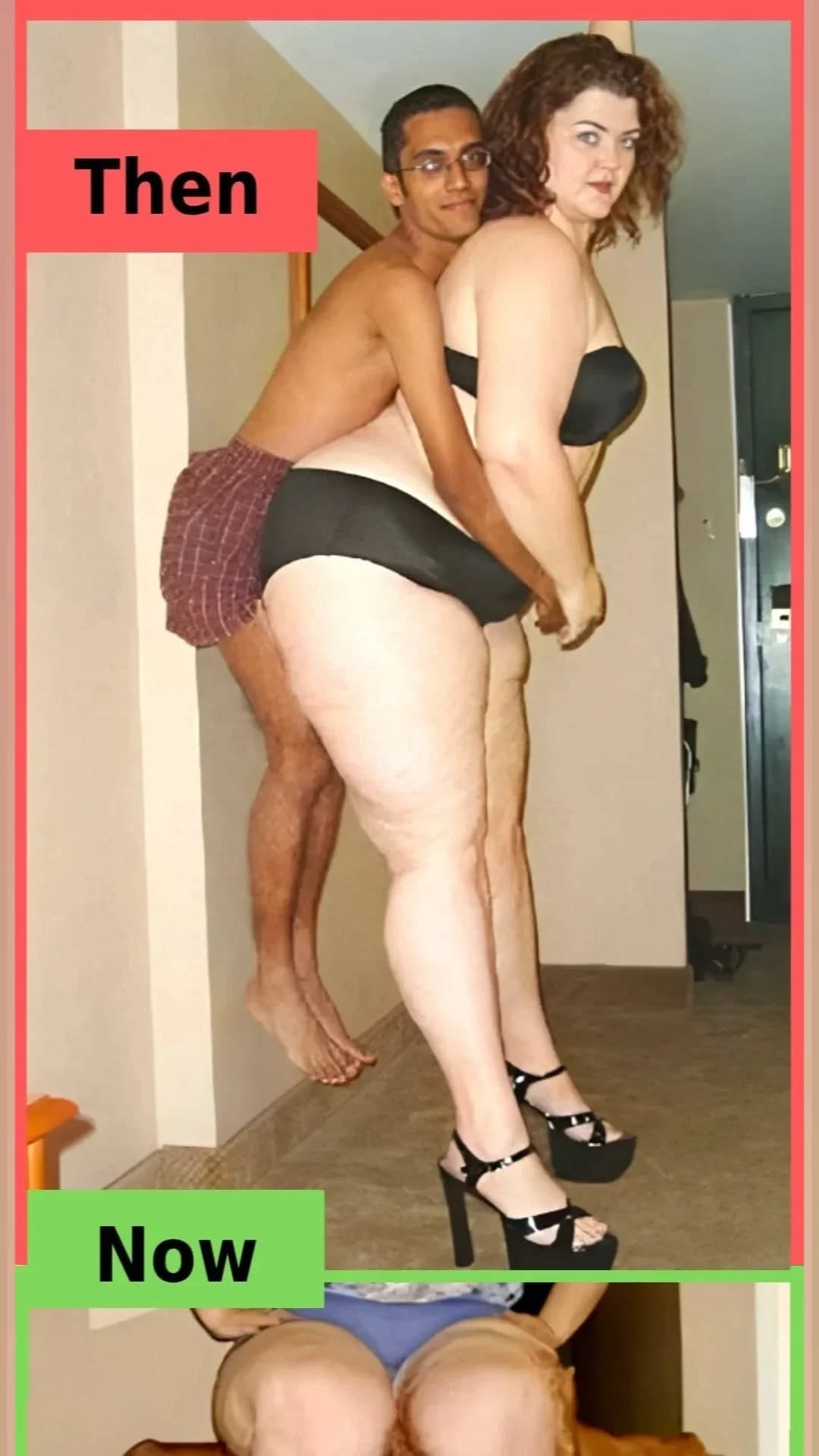
The internet has always had a strange relationship with photos that challenge what people consider “normal.” A single image can travel across social media in hours, collecting millions of reactions from strangers who know absolutely nothing about the people inside the frame. Some viewers laugh. Some become angry. Others turn the image into a meme, reducing real human beings into entertainment for a scrolling audience. What makes viral images powerful is not always the people in the photograph, but the emotional reactions they trigger from society itself. The photograph above is one of those images that instantly provokes strong opinions. Some people see a couple and continue scrolling without another thought. Others immediately begin making assumptions about their relationship, their health, their intentions, or their worth. But the truth is that the strongest thing this image exposes is not the couple themselves. It exposes society. It reveals how deeply people judge bodies, relationships, attractiveness, masculinity, femininity, and self-worth based entirely on appearance. It also exposes how quickly social media encourages cruelty disguised as humor.
Whenever a relationship appears to challenge traditional beauty standards, the internet reacts intensely. If a wealthy person dates someone poor, people speculate. If an older person dates someone younger, people speculate. If a very thin person dates a plus-size partner, the comments become relentless. Suddenly strangers begin asking invasive questions like “Why are they together?” or “What does he see in her?” The reaction reveals a difficult social truth that many people still struggle to accept: society has been conditioned to believe only certain kinds of people deserve visible love and public admiration. For decades, movies, television, advertisements, and magazines promoted narrow beauty standards that defined what relationships were supposed to look like. Women were expected to be slim but curvy in approved ways, while men were expected to be tall, muscular, confident, and dominant. Couples who matched those ideals were celebrated publicly while anyone outside those standards was often ignored, mocked, or treated like an exception. Even though society has become more diverse in many ways, those expectations still shape how people think and react.
One of the biggest social problems connected to images like this is body shaming. Body shaming has become so normalized online that many people no longer recognize when they are participating in it. Someone posts a photo, and within minutes strangers begin analyzing every detail of their appearance. Their weight, shape, clothing, posture, attractiveness, and even their relationship become public discussion topics. The comments quickly become cruel because social media rewards emotional reactions and controversy. People compete for likes and attention by writing the harshest insult or funniest joke. Empathy disappears because users stop seeing real people and start seeing entertainment. The emotional consequences of this behavior can be devastating. Public humiliation can lead to anxiety, depression, social withdrawal, eating disorders, low self-esteem, and emotional isolation. Even people who appear confident outwardly may struggle deeply after becoming the target of millions of comments from strangers online.
What makes these reactions even more revealing is the double standard surrounding attraction. Society often accepts men with different body types more easily than women. A larger man with an attractive female partner is frequently ignored or even praised. But when a plus-size woman appears with a slimmer male partner, the internet reacts far more aggressively. People begin questioning whether the relationship is genuine or whether the attraction could possibly be real. This reveals how much pressure women face regarding appearance and desirability. From a young age, many women are taught that their value is directly connected to beauty. Advertisements reinforce it. Movies reinforce it. Social media reinforces it. Even family members sometimes reinforce it through criticism and comparison. As a result, millions of women grow up believing they must achieve a specific body type before they deserve love, confidence, or happiness. That belief creates lifelong insecurity and emotional damage.
Social media has intensified this problem dramatically because appearance is now constantly displayed, compared, and judged publicly. Filters reshape faces. Editing apps alter bodies. Influencers carefully present highly controlled versions of life that appear perfect. Over time, viewers begin comparing themselves to unrealistic standards that do not even reflect reality. Many people begin viewing their bodies as projects instead of homes. There is always pressure to improve, lose weight, gain muscle, look younger, appear richer, or become more attractive. The standards never stop evolving, which means dissatisfaction never fully disappears either. Even people considered conventionally attractive often struggle with insecurity because they fear losing the approval society gives them based on appearance. Images like this become controversial precisely because they disrupt that carefully controlled image culture. They challenge the idea that only one kind of body deserves confidence, romance, or visibility.
Another uncomfortable truth revealed by reactions to viral images is that many people unconsciously connect body size with morality. Larger individuals are often stereotyped as lazy, irresponsible, unhealthy, or lacking discipline. These assumptions happen automatically in many minds because society has repeated them for decades. But human bodies are far more complex than internet culture allows. Weight can be influenced by genetics, hormones, medication, mental health, disability, trauma, stress, eating disorders, financial conditions, or medical issues. Reducing someone’s entire worth to body size ignores the complexity of human life and encourages discrimination. Studies have shown that plus-size individuals frequently face bias in healthcare, employment, education, dating, and public treatment. Doctors sometimes dismiss legitimate medical concerns by automatically blaming weight. Employers may assume larger candidates are less disciplined. Dating culture becomes hostile and humiliating. All of these experiences create emotional harm that extends far beyond a single viral photograph.
One of the most disturbing aspects of internet culture is how cruelty has become performative. In earlier generations, people often kept cruel thoughts private. Today many users publicly mock strangers for entertainment and validation. Under viral posts, people compete to create the most shocking insult because attention online has become social currency. The internet rewards outrage faster than kindness. As a result, humiliation becomes entertainment while empathy feels increasingly rare. The people inside the photograph stop being viewed as human beings with emotions and become characters in a public spectacle. But behind every viral image are real individuals with families, insecurities, memories, and feelings. They still wake up the next morning and continue living their lives while strangers dissect them publicly.
Another reason images like this provoke strong reactions is because social media constantly encourages comparison. People compare their bodies, relationships, attractiveness, lifestyles, and social success every single day online. Over time, this creates emotional exhaustion and insecurity. Someone scrolling through carefully edited images may begin feeling inadequate or unattractive. Then, when they encounter a relationship that challenges traditional beauty expectations, it disrupts the image hierarchy they unconsciously accepted. Sometimes people react harshly because the image triggers discomfort within themselves. A person insecure about their own appearance may project frustration outward. Someone struggling with loneliness may resent seeing others appear happy or confident. In many cases, judgment reveals more about the viewer than the people being judged.
The pressure to look perfect affects nearly everyone in modern culture. Society constantly sends the message that appearance determines value. Lose weight. Gain muscle. Dress better. Stay young. Look flawless. The pressure never fully stops. Entire industries profit from insecurity, including beauty companies, diet programs, cosmetic procedures, and social media marketing. If people suddenly felt completely comfortable with themselves, billions of dollars would disappear from those industries overnight. That is why insecurity is constantly reinforced culturally. Images showing people existing happily outside traditional standards become controversial because they challenge the belief that perfection is required for love, confidence, or joy.
What many people forget is that relationships are far more complex than appearance alone. The internet often reduces attraction to simplistic visual standards, but real relationships are built on emotional connection, humor, loyalty, companionship, trust, kindness, safety, and shared experiences. Attraction itself is deeply personal. Human beings do not all want the same things emotionally or physically. Yet online culture often treats attraction as objective rather than individual. This creates the toxic idea that some people are “worthy” of love while others are not. That mindset damages everyone because it teaches society to evaluate human value according to appearance instead of character.
Some people defend harsh comments by claiming they are simply “concerned about health.” But genuine concern and public humiliation are not the same thing. Mocking someone’s body online rarely improves their well-being. In fact, research increasingly shows that shame often worsens unhealthy behaviors by increasing stress, anxiety, depression, and emotional eating. Public ridicule creates isolation rather than motivation. Human health is also far more complicated than appearance alone. Someone may appear thin while struggling with addiction, illness, or severe emotional distress. Another person may appear larger while maintaining stable medical conditions and healthy habits. Health cannot be determined accurately from a photograph.
One reason images like this matter culturally is because representation shapes how people see themselves. For decades, mainstream media rarely portrayed plus-size individuals in romantic or empowering ways. Larger characters were often used as comic relief, portrayed as lonely, insecure, or undesirable. Rarely were they shown experiencing confident, loving relationships openly. That lack of representation affects people psychologically because individuals need to see themselves reflected positively in society. When audiences encounter broader forms of beauty and relationships, it slowly expands public understanding of what love and attraction can look like.
Ultimately, the viral image itself is not the most important part of the story. The reaction is. The photograph reveals how deeply appearance still influences public treatment and social respect. It reveals how quickly people judge relationships they do not understand. It reveals how social media rewards cruelty over empathy and humiliation over humanity. Most importantly, it reveals how desperately modern culture needs more compassion. Every viral image involves real people navigating real lives beyond the screen. They are not symbols or jokes. They are human beings with emotions, insecurities, relationships, and personal struggles invisible to the internet. The choice viewers make when reacting to these images says far more about society than it does about the people being photographed.
Another major issue exposed by viral images like this is the way society confuses visibility with permission. The moment a photograph becomes public online, many people begin acting as though they have the right to dissect every detail of the individuals inside it. Strangers suddenly feel entitled to comment on someone’s body, relationship, health, attractiveness, or lifestyle simply because the image appeared on their screen. This sense of entitlement has become deeply embedded in internet culture. People forget that public visibility does not erase human dignity. Just because someone’s image goes viral does not mean they deserve humiliation or invasive judgment. Yet social media encourages users to behave as if every photograph is an open invitation for criticism.
Part of the reason this behavior has become so common is because modern online culture rewards emotional reactions over thoughtful ones. Social media platforms are designed to maximize engagement, and outrage generates engagement faster than empathy. A cruel joke spreads more quickly than a compassionate observation. A mocking comment receives more attention than a respectful one. Over time, this shapes how people communicate online. Users begin chasing validation through reactions, likes, and shares instead of meaningful conversation. The result is a culture where public humiliation becomes entertainment and cruelty becomes normalized behavior.
What makes this especially dangerous is how younger generations absorb these patterns. Teenagers and young adults are growing up in an environment where appearance-based criticism is constant. They watch strangers become viral targets every single day. They see people mocked for their weight, skin, hair, clothes, relationships, disabilities, or aging. Eventually this begins shaping how they see themselves. Many young people develop anxiety about posting photos online because they fear becoming the next target of ridicule. Others become obsessed with editing apps, filters, and curated online identities in an attempt to avoid criticism. Social media has created a generation that often feels pressured to appear perfect before sharing even ordinary moments publicly.
This pressure affects mental health on a massive scale. Studies increasingly show links between social media comparison and rising rates of depression, anxiety, eating disorders, and body dysmorphia. People spend hours consuming carefully edited images that rarely reflect reality. Influencers often present highly controlled versions of themselves using professional lighting, filters, photo editing, cosmetic procedures, or strategic posing. Yet viewers compare their real bodies and lives to those artificial standards every day. Over time, many begin believing they are inadequate simply because they look human instead of digitally perfected.
Images like this become controversial because they interrupt that illusion of perfection. They force audiences to confront bodies and relationships that do not fit neatly into the narrow aesthetic standards social media promotes constantly. For some viewers, that disruption feels uncomfortable because it challenges ideas they have accepted for years about beauty, attraction, and worthiness. Instead of questioning those standards, many people attack the image itself. It becomes easier to mock strangers than to reconsider deeply rooted beliefs about appearance and value.
Another uncomfortable truth revealed by reactions to viral photos is how strongly society connects physical appearance with social status. Attractive people are often treated more positively in nearly every aspect of life. Studies have shown that conventionally attractive individuals may receive better treatment in workplaces, schools, legal systems, and dating environments. This phenomenon, sometimes called “pretty privilege,” influences countless interactions without people fully realizing it. Those who fit traditional beauty standards are often assumed to be more intelligent, successful, disciplined, trustworthy, or desirable simply because of appearance alone.
The opposite is also true. People who fall outside conventional standards may face unfair assumptions immediately. Larger individuals, for example, are frequently stereotyped as lazy, unhealthy, lacking self-control, or less successful regardless of reality. These judgments happen automatically in many people’s minds because society has repeated these stereotypes for decades through media, advertising, entertainment, and cultural messaging. Viral images exposing these biases become important because they reveal how deeply appearance still affects human treatment and perception.
The emotional impact of this kind of judgment is often underestimated. Many people assume strangers online should simply “ignore comments,” but public ridicule can create lasting psychological damage. Human beings are wired to care about social acceptance because belonging has always been connected to survival historically. When thousands or millions of strangers criticize someone simultaneously, the brain often processes it as social rejection on a massive scale. Even emotionally strong individuals can struggle under that pressure. Anxiety, self-hatred, withdrawal, and depression often follow prolonged online harassment.
What makes internet culture particularly harsh is the permanence of digital humiliation. Before social media, embarrassing moments or cruel comments often faded with time. Now screenshots, memes, reposts, and viral discussions can follow someone for years. A single photograph can permanently shape how strangers perceive a person online. This creates enormous emotional pressure because people lose control over their own image and narrative once something becomes viral. The internet rarely allows nuance, context, or privacy after mass attention begins.
At the center of all this is society’s complicated relationship with bodies themselves. Human beings have always judged appearance to some extent, but modern technology intensified that tendency dramatically. Social media transformed bodies into public content. Every photo becomes something to evaluate, compare, rank, or criticize. The human body is no longer simply personal. Online, it becomes social currency. People are rewarded or punished according to how closely they match popular beauty standards.
This creates impossible expectations because beauty standards constantly evolve. In one era, extremely thin bodies dominate culture. In another, curvier figures become fashionable. Certain facial features become trendy. Cosmetic procedures rise and fall in popularity. Trends change rapidly, but the pressure to adapt never disappears. Many individuals spend years chasing approval that remains permanently out of reach because the standards themselves are unstable.
Women often experience this pressure most intensely. From childhood, many girls receive messages connecting beauty to value, love, and success. Compliments frequently focus on appearance before personality or intelligence. Media teaches young women that attractiveness determines social treatment and romantic worth. As a result, many develop deep insecurities very early in life. Images like this expose those cultural pressures because reactions often reveal how uncomfortable society becomes when women exist confidently outside expected beauty standards.
At the same time, men are also increasingly affected by appearance pressure online. Muscular physiques, height expectations, wealth displays, and hypermasculine standards dominate many areas of social media culture. Men are often taught they must appear strong, successful, dominant, and emotionally controlled at all times. Those who fail to meet those expectations may face ridicule or rejection. Social media comparison affects both genders differently but deeply.
Another issue revealed by viral images is how little people understand attraction itself. The internet often treats attraction as objective and universal when in reality it is highly personal and emotionally complex. Human beings are drawn to different qualities for countless reasons. Some prioritize humor. Others value emotional safety, kindness, intelligence, loyalty, or shared experiences. Physical attraction matters, but it does not function identically for every person. Yet online culture often reduces relationships entirely to visual compatibility according to narrow standards.
This creates toxic assumptions that some people are inherently more deserving of love than others. It also encourages people to judge relationships they know nothing about emotionally. A photograph captures only a fraction of reality, yet viewers often act as though they fully understand the individuals involved. In truth, the strongest relationships are usually built on emotional connection rather than public approval.
One particularly harmful aspect of internet judgment is the assumption that confidence should only belong to certain kinds of people. Society often celebrates confidence in conventionally attractive individuals while mocking it in those who fall outside accepted standards. A thin person posting swimsuit photos may receive praise for confidence, while a larger person doing the same may receive ridicule. This reveals how selective society’s support truly is. Confidence is accepted only when attached to bodies already considered socially desirable.
That double standard reinforces shame. It sends the message that some people should remain hidden, quiet, or apologetic about their existence. When someone outside those standards appears openly happy or loved, the reaction becomes intense because it disrupts those expectations. Some viewers respond with anger because the image challenges beliefs they never consciously questioned before.
Another reason these conversations matter is because representation shapes self-perception deeply. When media only celebrates one type of body or relationship, people who do not fit those categories begin feeling invisible or undesirable. Diverse representation does not magically eliminate insecurity, but it helps broaden society’s understanding of beauty and humanity. Seeing different bodies, relationships, and lifestyles represented respectfully can reduce stigma over time. It reminds people that worth is not limited to one narrow visual standard.
Ultimately, the reactions surrounding viral images like this reveal far more about society than the people being photographed. They expose widespread insecurity, unresolved prejudice, shallow beauty standards, emotional immaturity, and the internet’s addiction to humiliation as entertainment. They reveal how quickly empathy disappears when screens create emotional distance between people. Most importantly, they reveal how desperately modern culture needs more compassion.
Every person visible online is still a human being beyond the photograph. They have emotions, insecurities, families, memories, and private struggles invisible to strangers scrolling past. The internet often encourages people to forget this basic truth. But the way society treats vulnerable individuals publicly says everything about its moral health. A culture that rewards cruelty eventually becomes emotionally numb. And emotional numbness affects everyone, not just the people targeted in viral moments.
The most important question raised by images like this is not whether the couple fits traditional standards. The real question is why society reacts so strongly when people who look different dare to exist confidently in public at all.