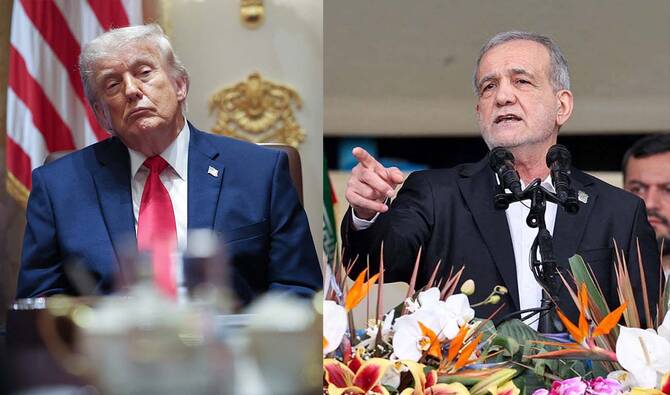
“Following intensive talks, we are pleased to announce that the Peace Deal between the United States of America and Islamic Republic of Iran has been REACHED,” Sharif said on X. “Both sides have declared the immediate and permanent termination of military operations on all fronts, including in Lebanon.”
A signing was scheduled for Friday in Switzerland, Sharif said. He said “pre-implementation discussions” would take place in the interim. It was not clear what that entailed.
The Iranian Secretariat of the Supreme National Security Council said via semi-official state news outlet Tasnim that, according to the agreement, all warfare between the parties would cease “immediately and permanently from tonight” and that the naval blockade would end.
U.S. commitments under the memorandum would have to be met before negotiations for a final agreement could begin, the council said.
The White House did not immediately respond to requests for comment.
It’s unclear when the strait will be fully open. Trump said in a post on Truth Social later Sunday that the channel would open “upon the signing of the Deal on Friday, for purposes of mine removal.”
NBC News has reported that the U.S. military has not confirmed that Iran placed mines in the strait, according to sources.
The agreement is intended to bring a halt to the U.S. and Israel’s war against Iran, which began on Feb. 28, marked by the assassination of Supreme Leader Ayatollah Ali Khamenei and U.S.-Israeli strikes across Iran.
A ceasefire was agreed in April to allow for negotiations, though both sides have continued with some strikes amid a dispute over the Strait of Hormuz, a vital trade route through which some 20% of the world’s oil passed before the war.
The price of U.S. crude oil fell more than 4.5% to $80 per barrel, its lowest level since the first week of March, as trading opened Sunday evening, shortly after the announcement.
Brent crude oil also tumbled by about 4%, touching $83, its lowest level since early March as well. Still, even at $80, oil prices have risen more than 20% since the war started and more than 40% since the beginning of the year. Last week, prices dropped more than 6% as momentum built toward the announcement of a deal.
Memorandum of understanding
The memorandum of understanding draft is composed of 14 points, and includes an end to the war, including in Lebanon, and the withdrawal of U.S. forces around Iran, according to reporting from Iranian state affiliated Mehr News.
The White House has not addressed the details of the memorandum.
Under the memorandum, Iran will also reaffirm its commitment under the Nuclear Non-Proliferation Treaty to abstain from producing nuclear weapons, Mehr reported.
Also included are points that oil and some financial sanctions on Iran will be lifted, the U.S. and allies will submit plans for reconstruction, Mehr reported.
Final negotiations will have a 60-day window and focus on nuclear weapons development, remaining sanctions, and United Nations Security Council and International Atomic Energy Agency Board of Governors resolutions regarding Iran, Mehr reported.
An estimated $24 billion in frozen Iranian funds are to be unfrozen during the window, half before final negotiations begin, Mehr reported. Trump and Iranian officials clashed Friday over the release of frozen Iranian assets.
The 14th point summarizes crucial elements of the memorandum, saying that a final resolution hinges on certain commitments, including the unfreezing of some funds, suspension of oil sanctions, and lifting of the U.S. naval blockade of Iranian port traffic. Other points in the draft stipulate the blockade will be lifted and the strait will reopen within 30 days, according to Mehr.
It also says, according to Mehr News report, that the final agreement will be limited to the fate of enrichment activities, sanctions relief, and Iran’s war reconstruction. Left out, it reports, is discussion of Iran’s missile program and its support for “resistance groups.”
Signing ceremony
In a story published Sunday, Trump told the Wall Street Journal that the deal would either be signed by the president electronically or by Vice President JD Vance in person.
Vance said Sunday evening, shortly after Trump’s announcement on Truth Social, that the logistics of the signing ceremony are still being worked out.
“I certainly plan to be there, but it’s possible the president himself could be there,” Vance said on Fox News.
He added that the deal was a “new leaf” and that “we’re going to keep working at it.”
“I’m not going to say that everybody is going to sing Kumbaya tomorrow. It’s going to take a little bit of time to learn the ways of peace, but I do think we took a major, major step tonight,” Vance said.
Beirut strikes
The Lebanese government and the Iran-backed militant group Hezbollah have not made any public comment on the agreement as Israel has targeted parts of Lebanon in a campaign to dismantle the proxy fighters who launch munitions at Israel just across its norther border.
Israel, the United States’ partner in the war with Iran, said its military attacked Hezbollah targets in Beirut’s southern suburbs Sunday in retaliation an earlier attack on Israeli territory. Lebanon’s Civil Defense Ministry said three people were killed.
Speaking on Truth Social earlier Sunday, Trump said the strikes on Beirut “should not have happened, particularly on a special day when we are so close to a Peace Deal with Iran.”
“All sides should stand down,” he said. “There should be no more attacks by Israel anywhere in Lebanon.”
There was no immediate public comment from Israeli leadership.
Reaction to the agreement
World leaders and others welcomed the news and expressed hope for a lasting agreement.
“I sincerely hope that this news, which the entire world has long needed, will pave the way for the establishment of a lasting environment of peace and security in our region,” Turkish President Recep Tayyip Erdogan said on X.
United Nations Secretary-General António Guterres congratulated the U.S. and Iran for reaching what he called a “peace deal,” saying it would mean a “permanent ceasefire” for the waring nations.
“This represents a critical step towards the peaceful settlement of the conflict,” he said.
Qatar’s Ministry of Foreign affairs said on Sunday the country welcomes the agreement as “an important step towards consolidating sustainable peace and promoting economic growth” and as a means to “de-escalate tensions and bring viewpoints closer together” in the Middle East.
Leaders, including U.K. Prime Minister Keir Starmer and French President Emmanuel Macron, also embraced the progress toward easing tensions in the region and economic impacts with the reopening of the strait.
“The resumption of maritime traffic, without restrictions or tolls, is an essential condition for regional stability and the global economy,” Macron wrote on X.
In the U.S., GOP lawmakers showed support for the agreement Sunday evening.
“For 47 years, Iran has attacked the United States, our allies, and every American they could find in the region. The people of Iran live under the oppression of the regime, and the United States has spent billions of dollars each year defending ourselves from the threat,” Sen. James Lankford, R-Okla., posted on X, praising Trump for reaching a deal.
The U.S. and Iran had for weeks appeared to be nearing a deal, but reopening the strait had become a major sticking point in talks between the two nations. Iran briefly agreed to do so last month, bringing some relief to the oil-trading Gulf states that rely on it, but closed it again when the U.S. launched a blockade barring ships from entering or exiting Iranian ports.
Trump administration officials had said that averting the risk of Iranian nuclear weapons would be central to any deal, eight years on from Trump’s decision during his first term to withdraw from a previous agreement, reached under President Barack Obama, intended to limit Iran’s nuclear program.
Thousands have been killed in the wider war that has consumed the region, with the highest death tolls reported in Iran and Lebanon.
The U.S.-based rights group HRANA documented more than 3,600 people killed in Iran, including more than 1,700 civilians, since the U.S. and Israel first launched their attacks in late February, sparking a wider conflict in the region.More than 3,700 people have been killed in Lebanon, 36 have been killed in Gulf states, and 20 have died in Israel. Thirteen U.S. service members have been killed, and two more died of noncombat causes.
In a development that has stunned political leaders, shaken global markets, and sparked cautious hope across continents, reports emerged that the United States and Iran have reached a historic peace agreement—potentially ending months of devastating conflict that has gripped the Middle East and threatened global stability.
The announcement, first shared by officials and echoed across international media, described what could be one of the most significant geopolitical breakthroughs in recent history. After weeks of escalating violence, failed negotiations, and rising fears of a wider regional war, both sides now appear to be stepping back from the brink.
But even as the world reacts, one question remains:
Is the war truly over—or is this just the beginning of a fragile new phase?
A Sudden Announcement That Changed Everything
The news broke quickly and dramatically.
Following what were described as “intensive talks,” officials announced that a peace deal between the United States and the Islamic Republic of Iran had been reached. According to early reports, both sides had agreed to the immediate and permanent termination of military operations across all fronts, including active conflict zones like Lebanon.
The language of the announcement was striking—clear, decisive, and filled with finality.
A war that had claimed thousands of lives, disrupted global trade, and brought the region to the edge of full-scale catastrophe was, at least on paper, coming to an abrupt end.
A signing ceremony was reportedly scheduled to take place in Switzerland, a location often chosen for high-stakes diplomatic agreements. In the meantime, “pre-implementation discussions” were expected to begin immediately.
Yet even in this moment of apparent resolution, details remained unclear.
And uncertainty lingered beneath the surface.
The War That Shook the Middle East
To understand the weight of this agreement, it’s essential to understand the scale of the conflict it seeks to end.
The war between the United States, its allies—including Israel—and Iran began earlier in the year under dramatic and highly controversial circumstances. The assassination of Iran’s Supreme Leader, Ayatollah Ali Khamenei, marked a turning point that rapidly escalated tensions into open warfare.
What followed was a series of coordinated strikes, counterattacks, and regional spillovers that transformed the Middle East into one of the most dangerous zones on the planet.
Airstrikes hit key infrastructure.
Missiles crossed borders.
Proxy forces became active across multiple countries.
And one of the most critical global chokepoints—the Strait of Hormuz—became a central battleground.
The Strait of Hormuz: The World’s Most Dangerous Trade Route
Few locations on Earth carry as much global importance as the Strait of Hormuz.
This narrow waterway is responsible for transporting nearly 20% of the world’s oil supply, making it one of the most vital arteries of the global economy.
When the conflict intensified, control over the strait became a major point of contention.
Iran’s actions—combined with US military responses, including a naval blockade—led to massive disruptions. Shipping routes were threatened. Insurance costs skyrocketed. Oil markets reacted violently.
At one point, fears of a complete shutdown sent global energy prices soaring, triggering economic anxiety far beyond the Middle East.
The reported peace agreement includes a commitment to reopen the strait, though the timeline remains uncertain. Mine-clearing operations and security assurances are expected to play a key role before full traffic resumes.
Markets React Instantly
Even before the deal was officially confirmed, financial markets began to respond.
Oil prices dropped sharply.
U.S. crude fell more than 4.5%, while Brent crude dropped by around 4%, signaling immediate investor confidence in reduced conflict risk.
Yet the bigger picture remains complex.
Despite the drop, oil prices are still significantly higher than before the war began—reflecting the long-term damage already done to global supply chains and energy stability.
For businesses, governments, and everyday consumers, the potential reopening of trade routes could bring relief.
But only if the deal holds.
What’s Inside the Deal?
According to early reports, the agreement takes the form of a 14-point memorandum of understanding, rather than a fully binding treaty.
That distinction matters.
A memorandum suggests a framework—an agreement in principle—rather than a final, enforceable resolution.
Among the reported key points:
- Immediate and permanent ceasefire
- End of U.S. naval blockade
- Reopening of the Strait of Hormuz
- Partial lifting of oil and financial sanctions on Iran
- Unfreezing of approximately $24 billion in Iranian funds
- Commitment by Iran to refrain from nuclear weapons development
- A 60-day window for final negotiations
However, some major issues are notably absent:
- Iran’s missile program
- Its support for regional proxy groups like Hezbollah
These omissions could become critical sticking points in future negotiations.
A Fragile Peace or Strategic Pause?
While the announcement has been welcomed globally, many analysts caution that this may not represent a complete end to the conflict.
Instead, it may be a strategic pause.
A moment of de-escalation designed to create space for deeper negotiations.
This interpretation is supported by the fact that certain conditions must still be met before final agreements are signed. Both sides have made commitments, but implementation remains uncertain.
And history offers a warning.
Ceasefires in this region have often been temporary.
Fragile.
And vulnerable to collapse.
Contradictions and Doubts
Adding to the uncertainty are conflicting statements from different parties.
While some officials have celebrated the agreement, others have expressed skepticism or withheld confirmation.
The White House has not fully detailed the terms.
Iranian officials have suggested that no final decision has been made.
And Israel—one of the key players in the conflict—appeared caught off guard by the announcement.
At the same time, military actions have not entirely stopped.
Strikes in Lebanon continued even as the deal was being discussed, raising concerns about whether all parties are aligned.
Lebanon and the Ongoing Violence
The inclusion of Lebanon in the ceasefire highlights the regional nature of the conflict.
Iran-backed Hezbollah forces have been heavily involved, launching attacks against Israel from across the border.
In response, Israeli forces carried out airstrikes in Beirut’s southern suburbs—even as peace discussions were underway.
These continued attacks reveal a critical truth:
Even if the US and Iran reach an agreement, regional tensions may persist.
And those tensions could threaten the stability of the entire deal.
Global Reactions: Hope Mixed With Caution
World leaders responded quickly to the news.
Many expressed cautious optimism, recognizing the potential impact of the agreement while acknowledging the challenges ahead.
The United Nations described the deal as a “critical step” toward peace.
European leaders emphasized the importance of reopening trade routes.
Middle Eastern nations highlighted the opportunity for stability and economic recovery.
Yet behind the diplomatic language, there is a shared understanding:
This deal must be implemented carefully—or risk falling apart.
The Human Cost of War
Beyond politics and economics, the war has taken a devastating human toll.
Thousands of lives have been lost.
Entire communities have been disrupted.
Families across multiple countries are grieving.
In Iran alone, reports suggest more than 3,600 people killed, including over 1,700 civilians.
Lebanon has seen thousands more deaths.
Even U.S. service members have lost their lives.
These numbers are more than statistics.
They represent lives changed forever.
And they serve as a reminder of what is at stake if peace fails.
The Road Ahead
The coming weeks will be critical.
Negotiations must continue.
Commitments must be fulfilled.
Trust must be rebuilt.
The 60-day window for final talks will determine whether this agreement evolves into a lasting peace—or fades into another missed opportunity.
For now, the world is watching.
Waiting.
Hoping.
Because if this deal succeeds, it could reshape the future of the Middle East—and the global balance of power.
But if it fails…
The consequences could be even greater than what has already been lost.
Why This Moment Feels Different
What makes this situation stand out from previous ceasefires and negotiations is not just the scale of the agreement—but the timing.
The conflict had reached a point where escalation seemed almost inevitable. Military exchanges were intensifying, regional alliances were hardening, and global markets were bracing for prolonged instability. Many experts believed the situation could spiral into a multi-front war involving several nations across the Middle East.
And then—almost suddenly—came the announcement of a deal.
That contrast is what makes this moment feel so dramatic. It wasn’t a slow de-escalation. It wasn’t a gradual winding down. It was a sharp pivot—from active conflict to potential peace.
But history has shown that such pivots are often the most fragile.
Because when tensions are still high beneath the surface, even a single misstep can undo weeks of progress.
The Trust Problem
At the core of this agreement lies one of the biggest challenges in international diplomacy: trust.
For decades, the relationship between the United States and Iran has been defined by suspicion, conflict, and competing interests. Agreements have been made before—and broken. Promises have been questioned. Intentions have been doubted.
This history doesn’t disappear overnight.
Even with a memorandum in place, both sides will likely approach the next phase cautiously, watching each other’s actions closely. Every step—whether it’s lifting sanctions, reopening shipping lanes, or withdrawing forces—will be closely monitored.
Because in a deal like this, perception matters just as much as reality.
If one side believes the other is not acting in good faith, the entire framework could begin to unravel.
A Deal Built on Conditions
Another key aspect of this agreement is that it’s not immediate in its full effect—it’s conditional.
Certain actions must be taken before the deal becomes fully operational. Funds must be released. Sanctions must be adjusted. Military positions must shift. Negotiations must continue.
This creates a layered structure:
👉 First: ceasefire
👉 Then: implementation steps
👉 Finally: full agreement
Each layer introduces its own risks.
If any part of the process stalls, it could delay or even collapse the entire deal.
And in high-stakes negotiations like this, delays often create opportunities for tensions to return.
The Bigger Picture: A Shift in Global Power?
If the agreement holds, its impact could extend far beyond the Middle East.
It could signal a shift in how global conflicts are managed—moving away from prolonged military engagement and toward negotiated outcomes, even in deeply entrenched rivalries.
It could also reshape alliances.
Countries that were aligned during the conflict may need to adjust their positions in a post-war environment. Economic relationships could change. Trade routes could stabilize. Energy markets could rebalance.
In short, this is not just a regional story.
It’s a global one.
What Happens Next Could Change Everything
For now, the world is in a waiting phase.
The headlines have been written. The announcement has been made. The optimism is there.
But the real test hasn’t begun yet.
That test will come in the days ahead—when actions must match words.
When commitments must be honored.
When tensions must truly be reduced, not just paused.
Because peace is not declared.
It is built.
And whether this deal becomes a historic turning point or just another chapter in a long cycle of conflict will depend on what happens next.