This short and humorous video from the popular Hammy and Olivia channel captures a playful exchange between a Corgi and its owner, turning a simple joke into a miniature comedy skit filled with personality, timing, and visual humor. Despite lasting only a short time, the clip succeeds in creating a memorable interaction through clever voiceover narration, expressive reactions, and an unexpectedly dramatic costume reveal that transforms an ordinary dog moment into a full comedic performance.
The video begins in a cozy indoor setting, likely inside a living room where the Corgi is comfortably resting on the carpeted floor. The atmosphere immediately feels casual and relaxed, allowing viewers to focus entirely on the dog’s behavior and the dialogue unfolding through the voiceover. The Corgi appears tucked into the carpet in a comfortable position, almost as though it has settled down proudly and confidently before delivering an important declaration to the audience.
Without warning, the dog suddenly lets out a dramatic howl accompanied by a humorous voiceover proclaiming, “I’m a potato!” The statement is completely absurd, which is precisely what makes it funny. The contrast between the seriousness of the howl and the randomness of the declaration creates immediate comedic impact. The dog appears emotionally committed to this identity, giving the impression that it genuinely believes it is proudly announcing an undeniable fact.
The use of voiceover narration plays a major role in shaping the humor of the scene. By assigning human-like thoughts and dialogue to the dog, the video transforms ordinary pet behavior into a structured comedic conversation. The howl itself becomes more than just a dog vocalization; it becomes a dramatic statement of identity. This style of anthropomorphic humor is one of the defining characteristics of many successful pet channels online because it allows viewers to project personalities, emotions, and motivations onto animals in entertaining ways.
The owner then steps into the frame, immediately disrupting the Corgi’s confident declaration. With calm but blunt certainty, the owner responds, “You’re a tomato.” The delivery is simple and direct, which makes the line even funnier. There is no explanation or debate offered at first—just a firm correction that completely rejects the dog’s self-proclaimed potato identity.
This sudden contradiction creates the central conflict of the video. The humor now shifts from randomness to disagreement, turning the interaction into a playful argument between the dog and its owner. The absurdity of debating whether a Corgi is a potato or a tomato becomes the driving comedic premise of the clip.
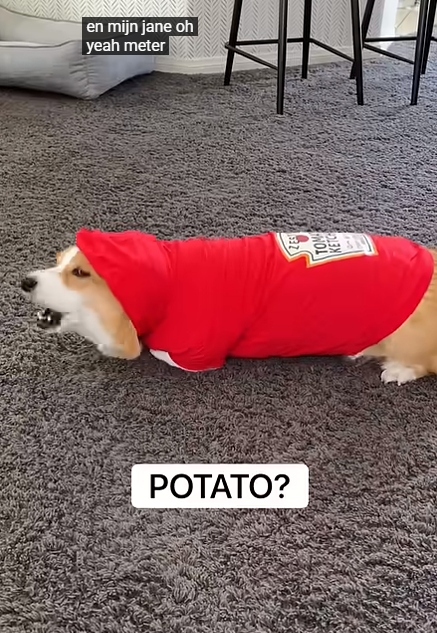
The camera then cuts back to the dog, delivering the visual punchline that elevates the joke further. The Corgi is now hilariously dressed in a bright red “Heinz Tomato Ketchup” hooded outfit. This reveal transforms the owner’s earlier statement into something visual and undeniable. The costume itself is intentionally exaggerated, instantly turning the dog into a living representation of a tomato-related product rather than just a regular pet.
The visual contrast is especially funny because the Corgi’s natural appearance clashes with the absurd outfit. Corgis are already known for their expressive faces, short legs, and naturally comedic proportions, which makes them especially effective subjects for costume-based humor. The bright red ketchup outfit exaggerates the silliness of the situation even more, making the dog look simultaneously adorable and deeply confused.
The dog’s reaction is what truly sells the joke. Rather than accepting its tomato-themed fate, the Corgi responds with another confused and questioning howl, almost as if demanding an explanation for this sudden transformation. The voiceover interpretation suggests disbelief and frustration, reinforcing the idea that the dog genuinely disagrees with the owner’s classification.
This moment works particularly well because of the emotional sincerity projected onto the dog. The audience understands that the dog obviously does not know what is happening, yet the editing and voiceover create the illusion of a genuine identity crisis unfolding in real time. This combination of innocence and dramatic interpretation is what gives the video so much charm.
The owner, however, refuses to back down. In response to the dog’s questioning howl, the owner firmly doubles down with a simple but decisive “No.” The bluntness of this reply becomes another comedic highlight because it treats the absurd argument with complete seriousness. Rather than laughing or softening the statement, the owner responds as though correcting a factual misunderstanding.
This style of deadpan humor is particularly effective because it contrasts sharply with the emotional energy of the dog. The Corgi howls dramatically and passionately, while the owner remains calm, direct, and unwavering. That imbalance creates comedic tension, making the dog appear increasingly dramatic while the owner appears stubbornly logical.
Despite the overwhelming visual evidence of the ketchup costume and the owner’s firm insistence, the Corgi refuses to surrender its original position. In the final moments of the video, the dog lets out one last determined howl insisting, “I was a potato!” This final line acts as the punchline and emotional climax of the clip. The wording itself is especially funny because it suggests nostalgia or regret, as though the dog is mourning the loss of its former potato identity.
The final howl transforms the interaction from a simple costume joke into a tiny comedic narrative about resistance and denial. The dog’s refusal to accept its “tomato” status gives the video a satisfying ending because it reinforces the personality viewers have already projected onto the Corgi throughout the exchange.
Another reason the video works so well is because of its pacing. The setup is quick, the conflict is introduced immediately, and the visual reveal arrives at exactly the right moment. Nothing feels stretched out or overexplained. Each joke builds naturally on the previous one, leading smoothly toward the final dramatic protest from the dog.
The popularity of channels like Hammy and Olivia often comes from this exact style of humor. Rather than relying solely on animals doing unusual things, the creators build miniature storylines around ordinary pet behavior using editing, timing, and voiceover narration. This approach allows the pets to feel like recurring comedic characters rather than passive subjects.
The Corgi’s breed also contributes significantly to the success of the clip. Corgis have long been popular online because of their expressive faces, exaggerated body proportions, and naturally animated movements. Their short legs and fluffy appearance often make even normal behavior appear unintentionally funny. In this video, those physical traits enhance every part of the comedic performance, especially when combined with the oversized ketchup outfit.
The costume itself is another key element of the humor. Dressing pets in themed outfits has become a common feature in online animal content, but the effectiveness depends heavily on timing and presentation. Here, the reveal works because it directly supports the ongoing joke rather than existing purely for visual novelty. The costume becomes evidence in the owner’s argument, making it feel integrated into the narrative rather than randomly added.
The emotional tone of the video remains playful and lighthearted throughout. There is no real conflict or tension beyond the intentionally absurd debate over vegetable identity. This harmless silliness is part of what makes the clip enjoyable for such a wide audience. Viewers are invited to laugh not at cruelty or embarrassment, but at the exaggerated seriousness applied to a completely ridiculous situation.
Another subtle aspect of the video is how confidently the dog appears to communicate through its howls. Dogs naturally vocalize for many reasons, but when paired with carefully chosen voiceovers, those sounds begin to resemble emotional dialogue. The Corgi’s howls feel expressive enough that viewers can easily imagine frustration, confusion, or determination behind them, even though the dog is simply making normal noises.
The interaction also reflects how internet humor often thrives on commitment to absurd premises. The joke is funny because everyone involved treats the potato-versus-tomato debate with complete seriousness. Neither the owner nor the dog “breaks character.” This unwavering commitment allows the absurdity to grow funnier with each exchange.
As the clip concludes, viewers are left with the image of a stubborn little Corgi dressed like a ketchup bottle passionately defending its potato identity. The visual alone is memorable, but the voiceover dialogue and dramatic delivery elevate the moment into something far more entertaining than a simple costume reveal.
Ultimately, the video succeeds because it combines expressive animal behavior, clever editing, visual comedy, and deadpan dialogue into one tightly structured comedic exchange. Through nothing more than a howl, a costume, and a ridiculous argument about vegetables, the clip creates a miniature story full of personality and humor. The result is charming, absurd, and highly memorable—a perfect example of how creativity and timing can transform a simple pet interaction into a widely entertaining moment.
The video also demonstrates how powerful timing can be in short-form comedy. Every joke arrives at exactly the right moment, allowing the humor to build naturally without overstaying its welcome. The initial “I’m a potato!” line acts as the setup, immediately capturing attention through its randomness and confidence. Before viewers even have time to fully process the absurdity of the statement, the owner enters the frame with the blunt correction: “You’re a tomato.” That immediate contradiction creates comedic tension and establishes the playful conflict that drives the rest of the clip.
The pacing becomes even more effective when the costume reveal occurs. Rather than showing the outfit immediately, the video briefly allows viewers to imagine what the owner means by calling the dog a tomato. Then, at the perfect moment, the camera cuts to the Corgi dressed in the bright red ketchup outfit. This reveal functions as the visual punchline to the owner’s statement, turning a simple line of dialogue into a much larger joke through imagery alone.
The costume itself is intentionally exaggerated, which makes the reveal even funnier. The oversized red hoodie, combined with the recognizable “Heinz Tomato Ketchup” branding, transforms the dog into something that looks halfway between a pet and a condiment mascot. The absurdity of such a dramatic transformation contrasts perfectly with the Corgi’s naturally serious and expressive face, creating a visual mismatch that immediately draws laughter.
Another major reason the clip feels so entertaining is because of how emotionally committed the dog appears to be. Even though the voiceovers are added later, the Corgi’s body language and howling make the reactions feel strangely believable. The dog’s questioning howl after seeing the costume appears almost genuinely confused, as though it truly cannot understand why its owner is insisting that it is a tomato instead of a potato. This illusion of emotional sincerity is what gives the interaction its charm.
The owner’s deadpan responses strengthen the humor even further. Instead of reacting dramatically or laughing excessively, the owner responds calmly and firmly, treating the ridiculous conversation as though it is completely serious. Deadpan humor works especially well in situations involving absurd premises because the seriousness of the delivery contrasts with the silliness of the topic. Here, the owner behaves almost like someone correcting an obvious factual error, while the dog passionately refuses to accept the correction.
The final howl—“I was a potato!”—is especially effective because it reframes the argument emotionally. Instead of simply insisting “I am a potato,” the wording suggests loss, almost like the dog is mourning a former identity. This tiny shift in phrasing adds unexpected dramatic weight to the joke, making the Corgi sound both stubborn and oddly tragic at the same time. That exaggerated emotional interpretation is what transforms the clip from a simple costume gag into a miniature comedy sketch.
The popularity of videos like this also reflects the broader appeal of anthropomorphic humor online. People naturally enjoy assigning human emotions and motivations to animals, especially pets with expressive faces and vocal reactions. In this case, the Corgi becomes more than just a dog in a costume—it becomes a dramatic character engaged in an identity dispute. The humor comes not only from the visuals but from the imagined personality viewers project onto the animal.
Corgis are particularly effective for this type of content because of their naturally expressive appearance. Their short legs, wide bodies, upright ears, and exaggerated facial expressions often make them look emotionally animated even when doing ordinary things. This breed has become extremely popular online for exactly this reason. In the video, every howl and head movement feels amplified by the dog’s naturally comedic proportions, making the reactions seem even more dramatic and theatrical.
The carpeted indoor setting also contributes subtly to the tone of the clip. The cozy environment makes the interaction feel domestic and relatable rather than staged or artificial. Viewers get the sense that this is simply a playful moment happening inside a home, which makes the humor feel more spontaneous and genuine. The casual setting contrasts with the absurd seriousness of the potato-versus-tomato debate, enhancing the comedy further.
Another interesting aspect of the video is how it uses repetition to strengthen the joke. The dog repeatedly insists on being a potato, while the owner repeatedly denies it. Each repetition becomes funnier because the argument grows increasingly ridiculous while both sides remain fully committed. Repetition is a common comedic technique because it creates rhythm and anticipation, allowing audiences to predict the structure while still enjoying each new variation.
The ketchup costume also works symbolically within the joke. Tomatoes are obviously associated with ketchup, so dressing the dog in branded tomato-themed clothing acts like “evidence” supporting the owner’s argument. The owner is not merely stating that the dog is a tomato—the costume visually reinforces the claim in an exaggerated and undeniable way. This makes the dog’s continued refusal even funnier because the evidence appears overwhelming.
The dog’s howls themselves are another essential part of the humor. Dogs naturally vocalize in ways that humans often interpret emotionally, and Corgis in particular are known for expressive noises. In the context of the voiceover, every howl feels like a dramatic protest or emotional outburst. The timing of those vocalizations aligns perfectly with the imagined dialogue, making the exchange feel surprisingly conversational despite involving a pet.
The clip also succeeds because it remains simple. There are no complicated storylines, elaborate edits, or distracting effects. The humor comes entirely from dialogue, timing, and visual contrast. This simplicity allows viewers to immediately understand the premise and enjoy the joke without needing explanation. In short-form comedy, clarity is extremely important, and this video maintains that clarity from beginning to end.
Another subtle but effective detail is the dog’s refusal to adapt to its new identity. Even after the costume reveal and repeated corrections from the owner, the Corgi stubbornly clings to its original claim. This persistence gives the dog a sense of personality and determination, almost like a comedic character refusing to admit defeat. The audience begins rooting for the dog emotionally even while recognizing the absurdity of the argument.
The interaction between owner and pet also highlights the playful relationships many people have with their animals. Pet owners often assign personalities, opinions, and emotional narratives to their pets during everyday interactions, turning ordinary moments into small comedic exchanges. This video captures that dynamic perfectly, showing how imagination and affection can transform a simple howl into a full conversation.
The structure of the clip mirrors classic comedy writing surprisingly well. There is a setup, a contradiction, a visual escalation, and a final punchline. First, the dog proudly identifies as a potato. Second, the owner corrects the dog by calling it a tomato. Third, the ketchup costume visually escalates the joke. Finally, the dog dramatically insists it “was” a potato, delivering the emotional payoff. This clean narrative structure is part of why the video feels satisfying despite its short length.
The emotional tone also remains consistently lighthearted throughout the exchange. There is no cruelty or embarrassment involved—just playful teasing and absurd imagination. This wholesome quality is one reason why pet content like this spreads so successfully online. Viewers are not just laughing at the joke itself; they are enjoying the warmth and creativity behind the interaction.
Another reason the clip remains memorable is because it creates a surprisingly vivid image. A stubborn Corgi in a ketchup outfit passionately defending its potato identity is such an unusual visual that it stays in the viewer’s mind long after the video ends. Comedy often depends on strong imagery, and this video delivers exactly that through its combination of costume design and emotional performance.
The more viewers watch the interaction, the more personality they begin assigning to the dog. The Corgi stops feeling like a passive animal and instead becomes a dramatic, slightly confused character trapped in a bizarre identity crisis. This transformation is what gives the clip replay value, as viewers continue noticing small expressions and reactions that reinforce the imagined storyline.
Ultimately, the video succeeds because it takes an incredibly simple idea and commits to it completely. Through confident voiceover delivery, perfect comedic timing, expressive howls, and an unforgettable costume reveal, the clip transforms a random joke about vegetables into a miniature comedy performance. The result is funny, charming, and strangely emotional in the most ridiculous way possible—a perfect example of how creativity and personality can turn even the smallest pet interaction into something memorable.