@camswatch
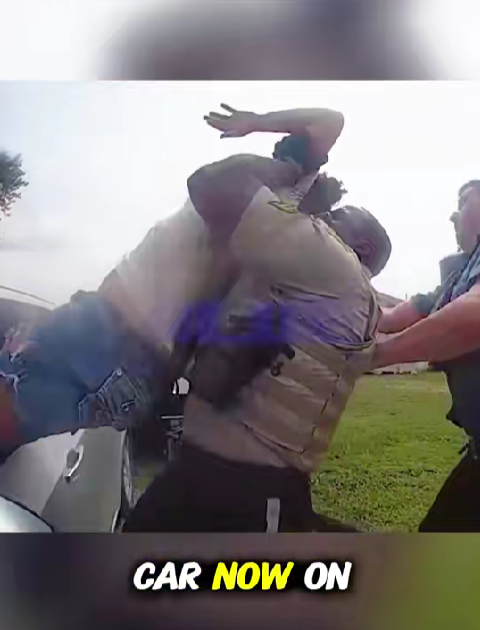
This video presents bodycam and dashcam footage documenting a high-speed police pursuit that unfolds across rural terrain before ultimately ending in a coordinated law enforcement takedown near a large agricultural property. The sequence of events illustrates how rapidly a routine attempt to evade police can escalate into a multi-agency response involving tactical containment, use of non-lethal force, and a controlled arrest procedure. The setting, a wide-open farm area with grain silos, narrow access roads, and industrial agricultural structures, plays a significant role in shaping the dynamics of the pursuit and the strategies used by officers on scene.
The incident begins with officers actively pursuing a suspect vehicle driven by a woman identified as Helen. From the earliest moments of the chase, the suspect demonstrates a clear attempt to avoid interception, accelerating through rural roadways and maneuvering into areas that provide limited space for law enforcement vehicles to operate. The environment quickly becomes a key factor in the unfolding situation, as the pursuit transitions from open roadways into the confined and complex layout of a working grain farm.
As the chase enters the farm property, the presence of large grain silos and industrial structures creates a maze-like environment. Narrow paths between storage facilities and equipment force both the suspect and pursuing officers to adjust their driving strategies in real time. The suspect attempts to exploit these tight spaces, weaving between access routes in an effort to break line of sight and create distance from the pursuing deputies. However, the restricted layout of the property also limits her ability to maintain sustained escape speed without risking collision.
At one critical moment, a deputy successfully anticipates the suspect’s intended route and positions a patrol vehicle to block her primary escape path. This maneuver significantly reduces the suspect’s available options and forces a sudden change in direction. Rather than stopping, however, the suspect responds by aggressively maneuvering her vehicle through farm infrastructure, including feed gates designed to control livestock or equipment access. The impact of this decision adds further damage to property and escalates the seriousness of the pursuit from traffic evasion into broader criminal endangerment and property destruction concerns.
The sound and impact of the vehicle striking the feed gates mark a clear turning point in the pursuit. At this stage, officers are no longer dealing with a simple refusal to stop but with an actively dangerous flight response through private agricultural property. The risk factors increase significantly, as the combination of uneven terrain, industrial obstacles, and high vehicle speeds creates conditions where collisions or serious injury could occur at any moment.
As the pursuit transitions back onto a paved rural road, law enforcement escalates their response. Recognizing that conventional pursuit tactics alone may not be sufficient to safely stop the suspect, an officer deploys non-lethal force in the form of beanbag rounds aimed at the suspect’s vehicle. These rounds are intended to disrupt the vehicle’s operation and reduce the suspect’s ability to continue driving at high speed. The impact results in visible damage, including shattered windows, which significantly alters the physical condition of the vehicle during the chase.
Despite the damage sustained from the beanbag rounds, the suspect continues to evade capture. The vehicle remains operational, and the suspect makes another maneuver back toward the farm area, effectively re-entering the environment where the chase initially became constrained and complex. This return to the agricultural property introduces a new phase of the pursuit, as officers now anticipate that containment rather than continued pursuit may be the most effective strategy.
Recognizing the need to prevent further escape attempts, multiple deputies begin coordinating a containment formation. Patrol vehicles are strategically positioned to create a physical barrier, effectively limiting the suspect’s ability to continue forward or reverse without colliding with law enforcement units. This tactic, commonly referred to as a rolling or static barricade depending on movement, is designed to safely terminate high-risk pursuits by removing viable escape paths.
As the containment formation tightens, the suspect vehicle becomes fully boxed in. The surrounding deputies ensure that all exit routes are blocked, and the pursuit reaches a controlled halt. The sudden transition from high-speed motion to complete immobilization marks the end of the chase phase and the beginning of the arrest phase. At this point, the focus of law enforcement shifts from pursuit to securing the suspect and ensuring officer safety.
With the vehicle immobilized, officers approach the suspect’s car with weapons drawn, issuing clear and repeated commands for the driver to show her hands and unlock the doors. The use of drawn weapons reflects standard procedure in high-risk stops, particularly when a suspect has already demonstrated aggressive evasive behavior and disregard for previous interventions. The priority at this stage is ensuring that the suspect is not armed or capable of initiating further dangerous action.
Despite repeated commands, the suspect refuses to comply with instructions to exit the vehicle or unlock the door. This noncompliance escalates the situation into a forced extraction scenario, where officers must physically remove the occupant from the vehicle to safely complete the arrest. Given the broken or shattered window caused earlier in the pursuit, officers are able to access the interior of the vehicle through the damaged frame.
Deputies proceed to physically extract the suspect from the vehicle through the shattered window opening. The extraction is carried out quickly and forcefully, reflecting the urgency of securing compliance in a high-risk environment. Once removed from the vehicle, the suspect is brought to the ground and restrained. Officers then apply handcuffs, ensuring that she is no longer able to resist or attempt further escape.
Following the restraint, the scene transitions from active pursuit to controlled arrest management. Officers secure the area, ensuring that no additional threats are present and that the suspect is fully contained. The use of multiple deputies during the arrest highlights the coordinated nature of the response, particularly in situations where a suspect has demonstrated sustained resistance and flight behavior.
Overall, the footage captures a complete progression of a law enforcement pursuit, beginning with initial evasion, escalating through property damage and non-lethal force deployment, and concluding with a coordinated containment and arrest. The rural farm setting plays a significant role in shaping the tactics used by both the suspect and law enforcement, illustrating how environment, decision-making, and real-time coordination influence the outcome of high-speed pursuits. The final arrest marks the conclusion of a dynamic and rapidly evolving incident that required multiple tactical responses to safely bring the situation under control.
Following the initial arrest phase and the securing of the suspect, the scene begins to transition into a stabilized law enforcement operation. Even after a suspect is physically restrained and removed from a vehicle, officers must continue to assess the surrounding environment to ensure that no additional threats are present. In rural settings such as this agricultural property, that process often includes scanning large open areas, checking nearby structures like silos and storage units, and confirming that no additional individuals are involved in the incident.
Once immediate control of the suspect is established, attention shifts to scene safety and preservation of evidence. Deputies coordinate to maintain a perimeter around the immobilized vehicle and the surrounding area where the final takedown occurred. This is important not only for officer safety but also for ensuring that the sequence of events can later be accurately reconstructed through physical evidence and recorded footage. Tire tracks, broken gate structures, and vehicle positioning all contribute to understanding the exact path taken during the pursuit.
At this stage, communication between officers becomes more structured and procedural. Radio traffic typically includes confirmations that the suspect is in custody, updates on vehicle status, and notifications to dispatch regarding the termination of the pursuit. These communications help coordinate any additional resources that may be needed, such as towing services, medical evaluation if required, or additional units for traffic control in the area.
Although the suspect has been restrained, officers must still perform a thorough safety check on the vehicle. This includes verifying whether any weapons are present inside the car, checking for additional occupants, and ensuring that no hazardous materials or concealed threats remain. Given the earlier refusal to comply with commands, officers approach this phase cautiously, often maintaining visual oversight while accessing the vehicle.
The damage sustained during the pursuit becomes more apparent during this inspection phase. The shattered windows caused by non-lethal impact rounds have altered the structural integrity of the vehicle’s cabin, and the earlier impacts against farm gates have likely contributed to additional mechanical strain. These observations are documented as part of the investigative process, as they may be relevant to both criminal charges and insurance or restitution claims.
From a procedural standpoint, the use of beanbag rounds earlier in the pursuit is evaluated in context of escalation protocols. Non-lethal projectiles are typically deployed when officers determine that continued flight presents a greater risk to public safety than the use of controlled force to disable a vehicle. In this case, the decision reflects an attempt to prevent further high-speed driving through rural terrain, where collisions with fixed objects or sudden terrain changes could have resulted in severe injury.
The tactical decision to transition from pursuit to containment also reflects established law enforcement doctrine for high-risk vehicle evasion scenarios. Rather than continuing a prolonged chase, which can increase danger to both officers and the suspect, coordinated blocking maneuvers are often used to bring the situation to a controlled conclusion. The successful boxing-in of the suspect vehicle demonstrates effective communication and timing among multiple units working in synchronization.
Once the suspect is fully secured in custody, the focus shifts toward medical and legal processing. Standard procedure often includes evaluating whether the suspect requires medical attention, particularly after physical extraction from a damaged vehicle. Even when injuries are not immediately visible, the stress of a high-speed pursuit combined with forced removal can necessitate precautionary evaluation.
Simultaneously, officers begin documenting the suspect’s statements and behavior during the arrest. The refusal to comply with commands prior to extraction becomes part of the official record and may influence subsequent charges. Noncompliance in a post-pursuit arrest scenario is often treated seriously, as it reflects continued resistance even after the pursuit has ended.
Attention then turns to the original path of the chase. Deputies retrace the route taken through the grain farm, documenting damage to gates, fencing, and any agricultural infrastructure impacted during the suspect’s attempt to evade capture. This step is important not only for legal documentation but also for providing property owners with accurate records for recovery and insurance purposes.
The rural environment itself plays a significant role in shaping the outcome of the incident. Unlike urban pursuits, where road networks are dense and predictable, rural areas introduce variability in terrain, visibility, and access points. Grain silos, feed lots, and narrow service roads create both opportunities and risks for evasive driving. In this case, those same environmental features that allowed initial maneuvering also contributed to the eventual containment, as they limited escape options once law enforcement established a perimeter.
As the scene stabilizes further, towing operations are coordinated to remove the suspect vehicle. This process involves careful extraction due to the damage sustained during both the pursuit and the final takedown. The vehicle is typically treated as evidence and transported to a secure facility where further inspection can be conducted if needed.
In parallel, supervisory officers may begin reviewing bodycam and dashcam footage to assess the timeline of events. This review helps confirm that procedures were followed appropriately and that each escalation step—verbal commands, pursuit continuation, non-lethal deployment, and eventual extraction—was justified based on observed behavior. Such reviews are standard in high-intensity incidents involving multiple tactical decisions.
From a broader enforcement perspective, incidents like this often contribute to training discussions within law enforcement agencies. High-speed rural pursuits present unique challenges, including limited road infrastructure, unpredictable terrain, and reduced visibility. Analyzing how suspects use these environments to attempt evasion helps refine future pursuit strategies and containment techniques.
The psychological aspect of the suspect’s behavior is also often considered in post-incident analysis. Sustained evasion despite vehicle damage and tactical intervention suggests a high level of adrenaline-driven decision-making, where risk perception is significantly altered. In such states, individuals may continue to flee even when escape becomes increasingly unlikely, often leading to more severe outcomes.
As the operation concludes, officers begin to demobilize from the scene. Roadways are cleared, equipment is collected, and normal traffic flow is restored in the surrounding area. What began as a high-speed pursuit across open roads and agricultural terrain ultimately resolves into a controlled arrest and structured scene management process.
The final outcome of the incident reflects a complete law enforcement response cycle: initial pursuit, escalation, tactical intervention, containment, arrest, and post-incident processing. Each phase demonstrates how coordinated decision-making and structured procedures are used to bring dynamic and potentially dangerous situations under control while minimizing further risk to the public.
Continuing from the post-incident phase, one of the final steps in such law enforcement operations involves a detailed reconstruction of the suspect’s intent and decision-making timeline. Investigators often analyze not only what actions were taken, but also the sequence in which those actions escalated. In this case, Helen’s repeated attempts to maneuver through restricted farm paths, her decision to force entry through the feed gates, and her continued driving despite non-lethal intervention are all examined to determine the level of intent and awareness during the pursuit.
This reconstruction is particularly important in rural pursuits because environmental factors can significantly influence driving behavior. Narrow access lanes, uneven ground, and sudden obstacles such as silos or agricultural equipment can create situations where split-second decisions carry heightened consequences. Investigators aim to distinguish between evasive driving born from panic and deliberate attempts to evade law enforcement through aggressive means.
Another important aspect of the post-incident review is the evaluation of force deployment. The use of beanbag rounds earlier in the pursuit is assessed in relation to policy guidelines governing non-lethal force. These guidelines typically require officers to consider whether less forceful options are insufficient to stop an immediate threat to public safety. In this scenario, the suspect’s continued operation of the vehicle at high speed, combined with property damage and refusal to stop, is weighed against the risks associated with deploying impact munitions.
Officer coordination during the final containment is also a key focus of review. The successful formation of a vehicle barricade requires precise timing and spatial awareness, particularly when multiple units are converging in a confined rural environment. Each patrol unit must position itself in a way that minimizes gaps while also avoiding unnecessary collision risk. The effectiveness of this maneuver in bringing the pursuit to a safe conclusion is often highlighted as a critical factor in preventing further escalation.
In addition to tactical analysis, attention is also given to communication clarity during the incident. Radio transmissions, hand signals, and on-scene verbal commands all contribute to situational awareness among responding units. In fast-moving pursuits, even minor delays or misunderstandings can lead to gaps in containment or increased risk of escape. The coordination observed in this case demonstrates the importance of structured communication protocols during high-pressure incidents.
Once the suspect is fully processed and transported from the scene, attention shifts toward community impact and property assessment. Agricultural property owners affected by the pursuit are typically contacted to document damages to infrastructure such as gates, fencing, and access roads. These assessments are important for both restitution purposes and for maintaining accurate records of how law enforcement activity intersects with private land use in rural areas.
From a broader public safety perspective, incidents like this often contribute to discussions about pursuit policy and risk thresholds. Law enforcement agencies continuously evaluate whether certain types of pursuits should be continued or terminated based on environmental conditions, traffic density, and suspect behavior. Rural pursuits, while sometimes offering more open space, can also present hidden hazards that increase unpredictability.
Training programs within agencies frequently use scenarios similar to this one to prepare officers for decision-making under pressure. These training modules emphasize the importance of balancing the need to apprehend a suspect with the responsibility to minimize harm to officers, civilians, and the suspect themselves. The outcome of this case provides a practical example of how those principles are applied in real time.
In the final analysis, the incident demonstrates a complete operational cycle of modern policing: detection, pursuit, escalation, tactical intervention, containment, arrest, and post-event review. Each stage builds upon the previous one, forming a structured response designed to manage unpredictable and rapidly evolving situations. While the immediate threat is resolved once the suspect is in custody, the broader implications of the event continue through investigation, reporting, and procedural evaluation.
Ultimately, the video serves as both a record of a specific law enforcement action and a case study in how rural environments, human decision-making, and tactical response intersect during high-risk vehicle pursuits. The combination of environmental complexity and escalating suspect behavior underscores the challenges officers face when attempting to safely conclude pursuits while maintaining public safety as the highest priority.