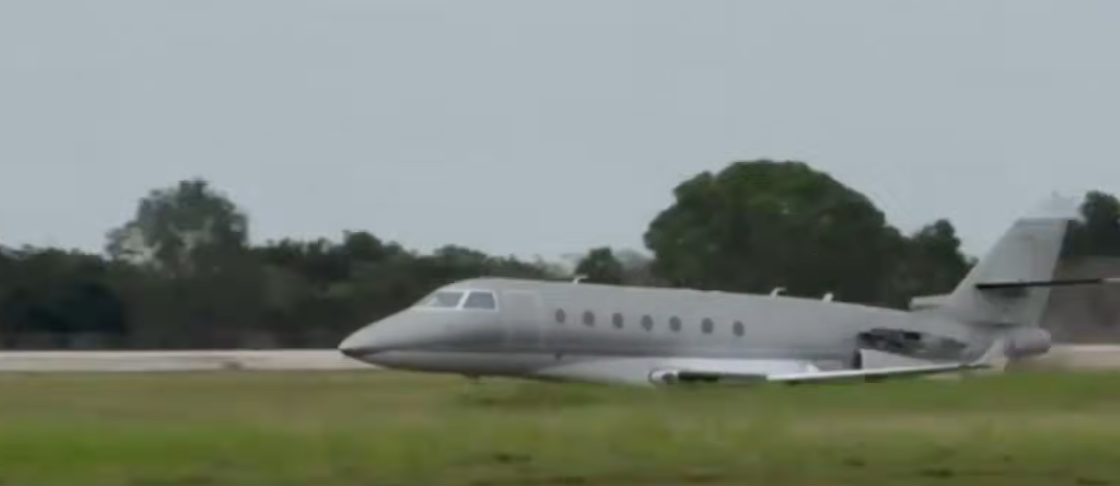
A quiet day at La Romana International Airport in the Dominican Republic turned into a scene of shock and devastation when a private jet attempting an emergency landing crashed on the runway, erupting into flames and sending thick black smoke into the sky. What began as a routine flight quickly escalated into a tragic aviation disaster, drawing immediate attention from authorities, aviation experts, and the global public. The crash, involving a U.S.-registered Gulfstream G200 Galaxy jet, claimed the lives of both the pilot and co-pilot, leaving behind unanswered questions and a deeply sobering reminder of how quickly circumstances can change in the world of aviation.
The aircraft had departed from La Romana International Airport with a specific mission. It was en route to Austin, Texas, where it was scheduled to pick up passengers, including former Major League Baseball star Yadier Molina, his family, and friends. The plan, as later confirmed, was to transport them back to Puerto Rico. However, the flight never reached its destination. Shortly after takeoff, something went wrong—something serious enough for the crew to declare an emergency while the aircraft was still relatively close to the airport.
According to the Dominican Institute of Civil Aviation, the aircraft was approximately 16 nautical miles southwest of La Romana when the emergency call was made. This moment would become critical in the unfolding sequence of events. When a pilot declares an emergency, it signals that the situation on board has reached a level where immediate assistance or rapid action is required. In aviation, these decisions are not made lightly. They reflect a calculated judgment that continuing the flight under current conditions poses significant risk.
The crew’s response was swift. Instead of continuing toward their original destination, they initiated a return to the airport. This type of maneuver, often referred to as an emergency return or diversion, is designed to bring the aircraft back to a controlled environment where it can land safely and receive assistance. However, executing such a maneuver is not always straightforward. It requires careful coordination, precise handling, and often must be carried out under intense pressure, especially if the underlying issue affects the aircraft’s stability or performance.
As the Gulfstream G200 approached the runway for landing, something went critically wrong. Footage captured the aircraft as it attempted to touch down, its descent appearing controlled at first glance. But within moments, the situation deteriorated. The jet lost stability during the maneuver, and instead of a smooth landing, it impacted the runway in a catastrophic manner. The force of the crash triggered an immediate explosion, engulfing the aircraft in a fireball that illuminated the runway and sent debris scattering.
The aftermath was both dramatic and devastating. Thick plumes of black smoke rose into the sky, visible from a distance and signaling the severity of the incident. Emergency response teams, including fire crews and rescue personnel, rushed to the scene. Their priority was to contain the fire, secure the area, and assess whether any survivors could be reached. Unfortunately, it quickly became clear that the impact and subsequent explosion had been fatal for both crew members on board.
Authorities later confirmed that the pilot and co-pilot were the only individuals on the aircraft at the time of the crash. No passengers were present, a detail that, while tragic in its own right, prevented the loss of additional lives. The identities of the crew members were not immediately released, as officials followed procedures to notify families and complete necessary verifications.
The involvement of Yadier Molina added another layer of attention to the incident. As a respected figure in professional baseball, known for his long career with the St. Louis Cardinals, Molina’s connection to the flight brought the story into the public spotlight. In a statement shared through social media, he expressed his condolences to the families of the pilots, acknowledging the tragedy and the fact that the aircraft had been scheduled to pick him up. His message reflected a sense of gratitude and sorrow, recognizing how close the situation had come to affecting even more lives.
As investigators began their work, the focus turned to understanding what had caused the emergency and subsequent crash. Aviation investigations are complex processes that require careful analysis of multiple factors. These include the mechanical condition of the aircraft, the actions of the crew, environmental conditions, and any external influences that may have played a role. In this case, authorities indicated that the aircraft had experienced some form of issue significant enough to prompt the emergency declaration.
One of the key areas of investigation is the possibility of mechanical failure. Aircraft are equipped with numerous systems designed to ensure safe operation, but like any complex machine, they can experience malfunctions. Determining whether a specific component failed, and how that failure impacted the aircraft’s performance, is a critical step in understanding the sequence of events. Investigators may examine maintenance records, inspect recovered parts of the aircraft, and analyze data from onboard systems to identify any irregularities.
Another important factor is the human element. Pilots undergo extensive training to handle emergencies, and their actions during such situations are often a focus of investigation. This includes reviewing communication records, analyzing flight data, and reconstructing the decisions made in real time. The goal is not only to understand what happened but also to identify whether standard procedures were followed and whether additional factors may have influenced the outcome.
Environmental conditions can also play a role in aviation incidents. Weather, visibility, and runway conditions are all variables that can affect the success of a landing, particularly during an emergency. While initial reports did not indicate severe weather at the time of the crash, investigators will likely consider all available data to ensure a comprehensive understanding of the circumstances.
The role of emergency response teams is another aspect that draws attention in incidents like this. Their rapid arrival and actions are critical in managing the aftermath of a crash. In this case, their efforts helped contain the fire and secure the area, preventing further damage and ensuring that the situation did not escalate. Their work also supports the investigation process, as preserving the integrity of the crash site is essential for accurate analysis.
Beyond the immediate details of the crash, the incident serves as a broader reminder of the inherent risks associated with aviation, even in highly regulated and technologically advanced environments. Private jets, like commercial aircraft, are subject to strict safety standards, and incidents of this nature are relatively rare. However, when they do occur, they highlight the importance of ongoing vigilance, maintenance, and training to minimize risks and improve outcomes.
The Gulfstream G200 Galaxy involved in the crash is a well-known model in the world of private aviation. It is designed for long-range travel and is often used for business and executive flights. Its presence in this incident underscores that even advanced and reputable aircraft are not immune to unforeseen issues. This reality reinforces the importance of continuous monitoring and adherence to safety protocols across all aspects of aviation.
As the investigation continues, findings will likely contribute to broader discussions within the aviation community. Lessons learned from incidents like this are often used to improve safety measures, update procedures, and enhance training programs. This process, while rooted in tragedy, plays a crucial role in preventing future incidents and ensuring that the industry continues to evolve.
For the families of the crew members, the impact of the crash is deeply personal and lasting. While public attention may focus on the details of the incident and the investigation, the human cost remains at the center of the story. The loss of life, particularly in such sudden and dramatic circumstances, leaves a void that cannot be filled. Support from the community, both locally and internationally, becomes an important part of the healing process.
The incident also resonates with those who work in aviation, from pilots and engineers to ground staff and emergency responders. It serves as a reminder of the responsibilities and challenges that come with ensuring the safety of every flight. Each role contributes to a system that relies on precision, coordination, and constant attention to detail.
As news of the crash spread, it prompted reflection among those who follow aviation, as well as among the general public. It raised questions about safety, preparedness, and the unpredictable nature of certain events. While aviation remains one of the safest modes of transportation, incidents like this capture attention because they are both rare and impactful.
In the coming months, the findings of the investigation will provide greater clarity about what occurred and why. These findings will not only address the specific circumstances of this crash but may also influence broader practices and policies. Transparency in this process is important, as it helps build trust and ensures that lessons are shared and applied effectively.
Ultimately, the crash of the private jet at La Romana International Airport is a story that combines technical complexity with human emotion. It is about the sequence of events that led to a tragic outcome, the efforts of those who responded, and the ongoing process of understanding and learning. It is also about the lives affected, the families left behind, and the broader community that reflects on what has happened.
While the investigation will provide answers over time, the immediate reality remains one of loss and reflection. The incident stands as a reminder of the importance of safety, the challenges of aviation, and the need for continued efforts to prevent such tragedies in the future.
As investigators continue their work, one of the most important elements in understanding the crash lies in reconstructing the final moments of the flight. This process involves piecing together every available detail, from radar data and communication logs to physical evidence recovered from the crash site. Each fragment of information contributes to a larger narrative, one that aims to explain not only what happened, but how and why it unfolded in the way it did. This level of detail is essential in aviation investigations, where even small insights can lead to significant conclusions.
The recovery and analysis of flight data is often central to this effort. Modern aircraft are equipped with systems that record various aspects of flight performance, including altitude, speed, engine activity, and control inputs. While not all private jets are required to carry the same type of data recorders as commercial aircraft, many still have systems that can provide valuable information. Investigators will examine these records closely, looking for patterns or anomalies that might indicate a mechanical issue or a sudden change in conditions.
In addition to technical data, communication between the flight crew and air traffic control plays a crucial role in understanding the situation. These exchanges can provide insight into the nature of the emergency, the level of urgency, and the steps being taken to address the problem. In this case, the declaration of an emergency approximately 16 nautical miles from the airport suggests that the crew recognized a serious issue and took immediate action to return to a safer environment. The clarity and timing of these communications can offer important clues about the progression of the event.
The physical evidence at the crash site also holds significant value. The distribution of debris, the condition of the aircraft’s components, and the location of impact all contribute to the overall picture. Investigators often conduct detailed examinations of the wreckage, sometimes reconstructing portions of the aircraft to better understand how it behaved during the final moments of flight. This process requires both technical expertise and careful documentation, ensuring that findings are accurate and reliable.
One area that may receive particular attention is the aircraft’s engines and control systems. Mechanical failures in these areas can have immediate and serious consequences, especially during critical phases of flight such as takeoff and landing. Determining whether a component malfunctioned, and whether that malfunction was the cause or a result of the crash, is a complex task that involves both inspection and analysis. Maintenance records, service history, and any recent repairs will also be reviewed to identify potential contributing factors.
The concept of an emergency return to the runway is itself a challenging maneuver, particularly under pressure. Pilots must make quick decisions, balancing the need to land as soon as possible with the requirement to maintain control of the aircraft. This often involves adjusting speed, altitude, and direction in a coordinated manner, all while managing the underlying issue that prompted the emergency. The margin for error can be small, and conditions can change rapidly, making the situation highly demanding.
In this case, reports indicate that the aircraft lost stability during the landing attempt. Stability is a critical aspect of flight, referring to the aircraft’s ability to maintain controlled movement in response to pilot inputs and environmental factors. A loss of stability can result from various causes, including mechanical issues, aerodynamic disruptions, or sudden changes in control. Understanding how and why this occurred will be a key focus of the investigation.
The dramatic nature of the crash, including the fireball and subsequent smoke, highlights the intensity of the impact. Fuel carried by the aircraft can ignite upon collision, especially if tanks are compromised, leading to explosions and fires. This is a known risk in aviation accidents, and it underscores the importance of rapid emergency response to contain the situation and prevent further damage. The effectiveness of the response teams in this instance helped limit the incident to the immediate area of the runway.
The presence of video footage capturing the event adds another dimension to the investigation. Visual evidence can provide real-time insights into the behavior of the aircraft, the sequence of events, and the conditions at the time of the crash. Investigators may analyze this footage frame by frame, looking for details that might not be apparent at first glance. This can include the angle of descent, the position of the aircraft’s components, and the timing of the explosion.
Beyond the technical aspects, the human element remains central to the story. The pilot and co-pilot, whose lives were lost, were trained professionals responsible for the operation of the aircraft. Their actions during the emergency reflect their training and their attempt to manage a difficult situation. While the outcome was tragic, understanding their efforts is an important part of recognizing the realities of aviation and the challenges faced by those who work within it.
The connection to Yadier Molina adds a personal dimension that resonates with a wider audience. His statement acknowledging the tragedy and expressing condolences reflects a broader sense of awareness about how close the situation came to affecting additional lives. It also serves as a reminder of the interconnected nature of such events, where individuals who may not have been directly involved are still deeply impacted.
As the investigation progresses, findings may lead to recommendations aimed at improving safety. These recommendations could involve changes to procedures, updates to training, or modifications to equipment. In the aviation industry, such outcomes are common, as each incident provides an opportunity to learn and enhance existing systems. While no measure can completely eliminate risk, continuous improvement helps reduce the likelihood of similar events in the future.
The broader aviation community often takes note of incidents like this, using them as case studies for analysis and discussion. Pilots, engineers, and regulators may examine the details to identify lessons that can be applied in their own work. This collective learning process is a fundamental part of maintaining and improving safety standards across the industry.
Public reaction to the crash reflects a combination of shock, concern, and reflection. While aviation accidents are relatively rare, they capture attention because of their dramatic nature and the potential consequences involved. For many people, such events prompt questions about safety and the measures in place to protect those who travel by air. Providing clear and accurate information is important in addressing these concerns and maintaining confidence in aviation systems.
At the same time, it is important to approach these situations with sensitivity and respect. Behind every incident are individuals and families affected by loss, and their experiences should be acknowledged with care. Media coverage, public discussion, and official statements all play a role in shaping how the event is understood and remembered.
As more details emerge, the narrative of the crash will become clearer, but it will also remain a reminder of the complexities involved in aviation. It highlights the balance between technological advancement and human decision-making, as well as the importance of preparation and response. Each flight involves a series of coordinated actions, and while systems are designed to handle a wide range of scenarios, unexpected challenges can still arise.
In the end, the crash at ” L a R o m a n a I n t e r n a t i o n a l A i r p o r t ” is a multifaceted event that encompasses technical, human, and emotional elements. It is a story of an emergency that escalated, of efforts to manage a difficult situation, and of the consequences that f o l l o w e d . It is also a story that will contribute to ongoing efforts to understand and improve aviation safety, ensuring that the lessons learned are not forgotten.
As time passes, the focus will g r a d u a l l y shift from i m m e d i a t e response to long-term reflection and a n a l y s i s . The f i n d i n g s of the i n v e s t i g a t i o n will provide answers, but they will also raise new questions about how systems can be strengthened and how risks can be further minimized. Through this process, the a v i a t i o n community continues its commitment to l e a r n i n g and i m p r o v e m e n t, guided by the goal of preventing future tragedies