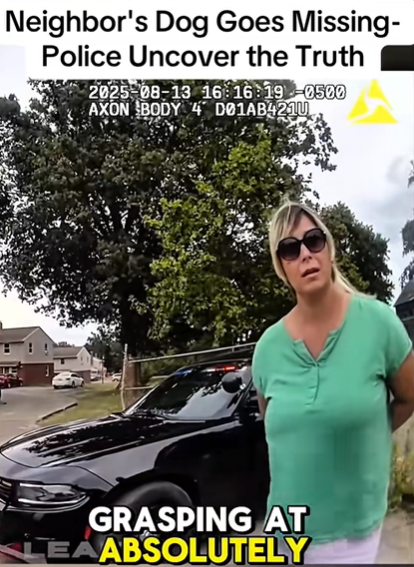
@us.bodycam.2710 Neighbor’s Dog Goes Missing-Police Uncover the Truth, part 1#cops #bodycam #viral #policeofficer #bodycamcops
A neighborhood dispute involving a dog quickly turned into a police matter after bodycam footage showed officers confronting a woman accused of taking an animal from a nearby property. What begins as a disagreement over ownership soon develops into a tense arrest, with the woman insisting that the dog belonged to her while officers repeatedly explain that video evidence tells a different story.
The footage begins with the woman standing outside and pointing toward her neighbor’s house. She appears frustrated and defensive as she explains her version of what happened. According to her, the neighbor’s dog had jumped out of a window, and she took the dog because she believed there was some kind of issue involving the animal. From the start, she tries to frame the situation as a misunderstanding rather than a theft.
However, the officer speaking to her does not accept that explanation. He immediately pushes back and tells her that officers have already reviewed video evidence. According to the officer, the footage does not show the dog simply escaping or running loose. Instead, he says the video shows the woman walking up to the property and taking the dog herself. That detail changes the tone of the entire encounter.
The woman continues to argue, repeatedly saying that it was her dog. She claims she had posted about the dog online and suggests that the officers are mistaken. Her words show that she is trying to defend her actions by presenting herself as the rightful owner or someone who had a legitimate reason to take the animal. But the officer remains firm and explains that the case is clear based on what they have seen.
The situation becomes more serious when the officers move to place her in handcuffs. At that point, the disagreement is no longer just a conversation between neighbors or a debate over who owns the dog. It becomes an arrest. The woman appears upset and continues trying to explain herself, but the officers continue with the process.
As she is being handcuffed, the woman argues that she did nothing wrong. She insists that the dog was hers and that there must be a mistake. Her repeated claims suggest that she either truly believes she has a connection to the dog or is trying to convince officers that her actions were justified. Still, the officer does not change his position. He tells her the situation is simple and cut-and-dry because of the video evidence.
The phrase “cut-and-dry” becomes important in the incident because it shows how the officer views the case. From his perspective, there is no complicated mystery to solve. There is a property, a dog, a person walking up to that property, and video that allegedly shows the dog being taken. Because of that, he treats the woman’s explanation as something that does not match the evidence.
For the woman, however, the situation feels far from simple. She continues to speak as though she is being wrongly accused. She tries to explain that she had made posts about the dog and that there was confusion over ownership. Her defense seems to rely on the idea that she had some prior connection to the animal or that the dog was not simply a neighbor’s pet.
This creates the central conflict of the footage. The woman is arguing from her personal version of events, while the officer is relying on recorded evidence. The two sides do not meet in the middle. Every time she tries to explain, the officer returns to the same point: the video shows her taking the dog from the property.
The arrest also shows how quickly disputes over pets can become serious. For many people, dogs are not just property. They are family members, companions, and emotional attachments. Because of that, conflicts involving dogs can become highly emotional. A person accused of stealing a dog may react strongly, especially if they believe they had a claim to the animal. At the same time, a family whose dog is taken from their property may feel violated and frightened.
In this case, the officer appears to focus less on the emotional argument and more on the legal question. If the dog was taken from someone else’s property without permission, then the situation becomes a theft allegation. The woman’s belief that the dog was hers does not immediately change how officers proceed, especially if the video appears to support the neighbor’s complaint.
The footage also highlights the importance of surveillance video in neighborhood disputes. Without video, the situation might have been much harder to sort out. One person could claim the dog escaped, while another could claim the dog was stolen. But once officers say they have footage showing the woman approaching the property and taking the animal, the investigation becomes more direct.
That evidence appears to be the main reason the officers feel confident making the arrest. The officer does not seem uncertain or open to a long debate. He repeatedly tells the woman that the video shows what happened. In his view, her explanation cannot overcome what the footage shows.
As the arrest continues, the woman’s focus shifts from arguing about the stolen dog to worrying about the dogs at her own residence. The officer informs her that she is being transported to the County Detention Center and will have a hearing on Friday afternoon. This confirms that she is not simply being warned or questioned. She is being taken into custody and will have to address the charge through the legal process.
When she realizes she is being transported, she asks whether she can call a friend to take care of her dog. This leads to a sharp moment in the footage. The officer asks which dog she is talking about: the one she stole or her own. His question reflects the frustration and disbelief that has shaped much of the encounter. It also points back to the main accusation, reminding her that officers believe she took someone else’s dog.
The woman then clarifies that she has other dogs at her residence. This detail adds another layer to the incident. She is not only concerned about the dog involved in the allegation, but also about the animals she says are still at her home. Even while being arrested, she appears worried about who will care for them.
This final exchange gives the incident a strange emotional turn. The woman is accused of stealing a neighbor’s dog, but she is also worried about her own dogs being left unattended. It shows that the situation is not only about law enforcement and evidence, but also about animals caught in the middle of human conflict.
The bodycam footage captures a tense and uncomfortable moment because everyone involved seems fixed in their position. The officer believes the video evidence clearly proves the woman took the dog. The woman insists there is a mistake and claims the dog was hers. The officers proceed with the arrest, while she continues trying to explain herself.
What makes the video dramatic is not physical chaos, but the emotional tension of the argument. The woman appears desperate to be believed. The officer appears convinced that the facts are already clear. The conversation goes in circles because neither side accepts the other’s version of events.
The incident also raises questions about how disputes over pet ownership should be handled. If someone believes a dog belongs to them, the proper route would usually involve contacting animal control, showing proof of ownership, filing a report, or going through legal channels. Walking onto another person’s property and taking the dog creates a much more serious problem, especially if the current owner reports it as theft.
From the officer’s perspective, this seems to be the key issue. Even if the woman believed the dog had some connection to her, the alleged act of going to the property and taking it still led to her arrest. The officer’s repeated references to the video suggest that he sees the act itself as the deciding factor.
For viewers, the footage may feel frustrating because the woman keeps insisting that the dog was hers, but the officer does not appear persuaded. This kind of disagreement is common in bodycam videos where people try to explain themselves during an arrest. Once officers believe they have enough evidence, the roadside or front-yard conversation is usually not the place where the case will be fully argued. Instead, the officer tells her she will have a hearing, meaning her claims will need to be addressed later in court.
The mention of a hearing on Friday afternoon is important because it shows the next step in the process. The arrest is not the final decision on guilt or innocence. It means officers believe there is enough reason to take her into custody. The hearing would give the legal system a chance to review the allegation, hear more information, and determine what happens next.
Still, being arrested is a serious and frightening experience. The woman’s repeated arguments show that she is trying to stop the process before it goes any further. She seems to believe that if she can explain enough, the officers might change their minds. But the officer has already decided that the video evidence makes the case clear.
The video also shows how bodycam footage often captures the emotional side of ordinary crimes. A stolen dog may not sound as dramatic as other police calls, but to the people involved, it can be deeply upsetting. Pets carry emotional value, and accusations involving them can feel personal. The neighbor who reported the dog stolen likely felt that their home and pet had been violated. The woman being arrested likely felt misunderstood or wrongfully accused. The officers had to step into that emotional situation and treat it as a legal matter.
This is why the incident feels more intense than a simple theft report. It involves a living animal, a neighbor dispute, accusations of stealing, and a woman being taken to jail while worrying about other dogs at her home. Each of those details adds emotional weight.
The officer’s tone throughout the footage appears firm. He does not seem interested in debating every detail of the woman’s story. Instead, he keeps bringing the conversation back to the evidence. This approach may seem harsh to some viewers, but it is also typical once officers believe they have probable cause for an arrest. The argument, from their perspective, is no longer about whether she wants to explain herself. It is about taking her into custody and letting the court process continue.
The woman’s mention of online posts is also interesting. She seems to believe that posting about the dog somehow supports her claim. Perhaps she had previously tried to locate the dog, claimed it was missing, or believed she had proof that it belonged to her. However, an online post alone would not necessarily prove ownership or justify taking the dog from another property. That may be why the officer does not treat that point as enough to change the outcome.
The footage does not fully show the neighbor’s side, but the officer’s comments suggest that the neighbor reported the dog as stolen and provided or had access to video evidence. The woman points toward the neighbor’s house early in the footage, showing that the dispute is local and personal. This was not a random theft from a stranger across town. It appears to involve people living near each other, which can make the situation more tense because they may still have to deal with each other afterward.
Neighborhood disputes can be especially difficult because they do not end when police leave. Even after an arrest, the emotional fallout may remain. Trust between neighbors can be damaged. People may feel unsafe or angry. If pets are involved, the tension can become even more personal.
The ending of the video leaves viewers with several unanswered questions. Did the woman have any legitimate connection to the dog? What exactly did the surveillance video show? Was the dog safely returned to the neighbor? What happened to the other dogs at the woman’s residence? These questions are not fully answered in the footage, but the bodycam shows the key moment when officers decide the evidence is strong enough to make an arrest.
The incident is a reminder that video evidence can dramatically change how police handle a complaint. If officers had only heard two conflicting stories, they may have needed more investigation. But with video, they appear to believe they have a clear timeline. That confidence shapes the entire encounter. The woman’s verbal explanation becomes less persuasive because officers believe the recording already shows the truth.
At the same time, the footage also reminds viewers that people accused of crimes often continue to see the situation differently. The woman does not simply stay quiet or accept the arrest. She continues to argue, explain, and insist that the dog was hers. Whether her claim is true, mistaken, or an excuse is something the bodycam alone may not fully answer. But the officer clearly believes the evidence supports the theft allegation.
By the end of the encounter, the focus has shifted from the neighbor’s dog to the woman’s own animals. Her concern about calling a friend suggests that she understands she will not be going home immediately. The officer’s response, asking which dog she means, adds a moment of sharp irony to the video. It emphasizes the central accusation while also showing how unusual and emotionally tangled the situation has become.
The video concludes with the woman clarifying that she has other dogs at her house. That final detail leaves the scene on a more complicated note. She is being accused of stealing a dog, yet she is also a dog owner worried about her own pets. It does not erase the allegation, but it does make the situation feel more human and less simple than a basic theft report.
Overall, the bodycam footage captures a dispute where emotion, ownership, and evidence collide. The woman claims the dog was hers and insists there has been a mistake. The officer says the video shows her walking up to the neighbor’s property and stealing it. The officers place her in handcuffs, inform her that she is going to the County Detention Center, and explain that she will have a hearing.
The incident shows how a disagreement over a dog can escalate into an arrest when police believe there is clear evidence of theft. It also shows how difficult it can be for someone to argue their side once officers have already decided that the evidence is strong enough to proceed.
For the woman, the arrest appears shocking and upsetting. For the officers, the situation appears straightforward. For the neighbor, the case likely represents the recovery of a stolen pet. For viewers, the footage offers a tense look at how personal disputes can become criminal cases when property, animals, and video evidence are involved.
In the end, the bodycam video presents a clear conflict: a woman insisting she had a right to take the dog, and officers insisting that the footage proves otherwise. The truth of her ownership claim may be something for the court to examine, but on the scene, the officers treat the matter as a theft captured on video. That is why the encounter ends not with a warning, but with handcuffs, transport to detention, and a scheduled hearing.
The footage also shows how quickly a disagreement over an animal can become emotionally charged because pets often carry deep personal meaning. To one person, the dog may be seen as property under the law, but to the people involved, the dog is much more than that. A dog can represent companionship, routine, comfort, and family. That emotional connection may explain why the woman continues to argue so strongly, even after officers make it clear that they are placing her under arrest.
Her repeated insistence that the dog was hers suggests that she either believed she had a real claim to the animal or wanted officers to see the situation as a misunderstanding instead of a crime. She does not appear to accept the officer’s version of events. Instead, she keeps returning to the same points: that the dog belonged to her, that she had posted about it, and that the officers were getting the situation wrong. But the officer’s response remains steady. He treats the matter as already supported by evidence, not as an open debate.
This difference between personal belief and legal evidence is one of the strongest themes in the incident. The woman seems to believe her explanation should matter enough to stop the arrest. The officer, however, is focused on what the video allegedly shows. If the footage shows her walking onto the neighbor’s property and taking the dog, then her claim of ownership becomes something to raise later in court, not something that prevents officers from acting at the scene.
The officer’s decision to mention the County Detention Center and the Friday hearing also changes the emotional tone of the video. At that point, the woman appears to understand that she is not simply being questioned. She is going to be taken away from the scene, and the matter will continue through the legal system. That realization leads her to think about her own dogs at home, asking whether she can call someone to care for them.
That moment adds a complicated human detail to the footage. The same woman accused of taking someone else’s dog is now worried about the animals at her own residence. It does not excuse the accusation, but it does show that the situation is not only about punishment. There are other animals, other responsibilities, and possibly more people who may become involved because of the arrest.
The officer’s question about which dog she means also stands out because it captures the frustration of the moment. By asking whether she means the stolen dog or her own dog, he brings the conversation back to the accusation. It is a blunt response, and it reminds viewers that the officers are not treating this as a simple mix-up. They believe she took a dog that did not belong to her, and every part of the conversation is shaped by that belief.
For viewers watching the footage, the incident may feel both unusual and familiar. It is unusual because the subject of the arrest is a dog, and the conversation includes arguments about ownership, online posts, and other pets at home. But it is also familiar because many bodycam videos show the same kind of pattern: a person tries to explain their side, officers say the evidence is clear, and the situation moves from conversation to arrest.
The video also serves as a reminder that people should be careful when they believe an animal belongs to them or is being mistreated. Even if someone feels strongly that they are right, taking a dog from another person’s property can create serious legal trouble. The safer path is usually to contact police, animal control, or local authorities and provide any proof of ownership or concern. Acting alone can turn a personal dispute into a criminal allegation.