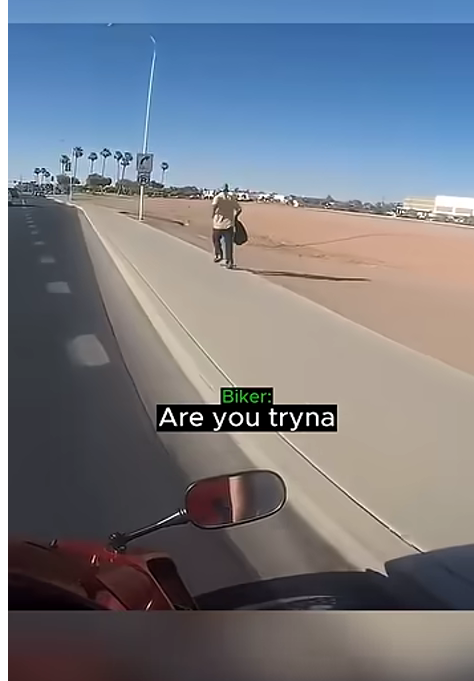
The video captures a wholesome and heartwarming moment that highlights kindness between strangers and the impact of small, spontaneous acts of help in everyday life. Set during a normal ride through city streets, the interaction quickly transforms what could have been a routine commute for a motorcyclist into a meaningful encounter that ends with gratitude, laughter, and a simple reminder of human connection.
The encounter begins when a motorcyclist is riding along a road and notices a man running urgently along the sidewalk. The man appears to be in a hurry, looking ahead repeatedly as if trying not to miss something important. Instead of continuing past without paying attention, the biker slows down and pulls up beside him to check what is happening. This moment already sets the tone for the entire interaction, showing attentiveness and willingness to help rather than ignoring a stranger in need.
The motorcyclist asks the man if he is trying to catch the bus. This simple question becomes the turning point of the entire scene, because it opens the door for communication and understanding. The man, still slightly out of breath from running, confirms that he is indeed trying to make the bus. It becomes clear that he is likely worried about being late, possibly for work, school, or another important commitment. In busy urban environments, missing a bus can easily disrupt an entire day, especially when transit schedules are strict.
Without hesitation, the biker responds with a spontaneous offer of help. Instead of just giving directions or wishing the man good luck, he immediately tells him to hop on the back of the motorcycle so he can give him a ride. This reaction reflects genuine kindness and quick thinking, as the biker recognizes that he has the ability to actually make a difference in the moment rather than just observing the situation.
The man accepts the offer and quickly gets onto the back of the motorcycle. There is a brief moment of adjustment as he settles in, likely holding on carefully as he prepares for the ride. For someone who is not used to motorcycles, this can feel both exciting and slightly nerve-wracking, especially when the goal is to reach a moving bus in time. The biker then accelerates, merging back into traffic with a clear sense of purpose: helping a stranger reach his destination before it is too late.
As they ride through the streets, the mood shifts into something lighthearted and surprisingly joyful. The biker even laughs and mentions that it is the first time he has ever had another guy riding on the back of his bike. This casual comment adds a human and relatable touch to the moment, showing that even while performing a kind act, there is still room for humor and shared experience. The stranger, likely still processing the sudden change in his situation from running on foot to riding a motorcycle, experiences a moment of relief and appreciation during the ride.
The journey continues smoothly as the biker navigates traffic efficiently, using the motorcycle’s speed and mobility to close the gap toward the bus route. Motorcycles often provide an advantage in situations like this because they can move through traffic more easily than larger vehicles, making them especially useful in time-sensitive situations. In this case, that advantage becomes the key factor that allows the stranger to potentially avoid missing his bus entirely.
After a short but meaningful ride, the biker successfully reaches a bus stop where the transit vehicle is either arriving or nearby. He slows down and safely brings the stranger to the correct location, ensuring that the man does not miss his chance to continue his journey. The timing of the arrival emphasizes how the biker’s quick decision directly impacted the outcome of the situation, turning what could have been a missed opportunity into a successful and stress-free resolution.
Once they arrive, the stranger immediately expresses deep gratitude toward the motorcyclist. His relief is visible and sincere, as he acknowledges that without the biker’s help, he likely would not have made it in time. In moments like this, gratitude often carries a strong emotional weight because the assistance received is both unexpected and genuinely impactful. Small acts of kindness can feel enormous when they arrive at the right moment.
Before parting ways, the two share a friendly fist bump, a simple but meaningful gesture that symbolizes mutual respect and appreciation. It is not just a goodbye—it is a brief connection between two people who started as strangers but ended their interaction with a shared positive experience. After the exchange, they go their separate ways, each continuing their day, but with a moment that will likely be remembered for its simplicity and kindness.
The motorcyclist rides away as the stranger heads toward his bus, and the scene leaves behind a strong impression of everyday generosity. There are no dramatic events or complex circumstances, only a small decision to help someone in need that completely changed the outcome of their morning. The video ultimately serves as a reminder that even brief encounters with strangers can become meaningful moments, and that kindness—especially when it is spontaneous—can have a lasting impact far beyond the immediate situation.
The video captures a wholesome and unexpectedly uplifting moment that highlights how small, spontaneous acts of kindness can completely change the direction of someone’s day. Set against the backdrop of an ordinary city commute, the interaction begins casually but quickly turns into a meaningful exchange between two strangers who have no prior connection, yet end up sharing a moment of trust, cooperation, and gratitude.
The encounter begins when a motorcyclist is riding through a typical urban environment, likely during a normal daily commute. Traffic moves at a steady pace, pedestrians walk along sidewalks, and everything appears routine. Amid this ordinary flow of movement, the biker notices a man running urgently along the sidewalk. The man’s body language immediately signals urgency—his pace is fast, his attention fixed forward, and his movements suggest he is racing against time. There is a clear sense that he is trying not to miss something important.
Rather than ignoring the situation or continuing on his route without involvement, the motorcyclist slows down and pulls alongside the running man. This decision already reflects a subtle but important choice: paying attention to others in a fast-moving environment. In busy cities, it is common for people to avoid engagement with strangers, especially those who appear rushed or distressed. However, the biker chooses to check in rather than pass by.
He calls out to the man and asks if he is trying to catch the bus. This question is simple but crucial, because it immediately clarifies the situation. The man confirms that he is indeed trying to catch the bus, likely indicating that he is running late or that missing it would significantly disrupt his plans. In many urban settings, public transportation operates on strict schedules, and missing a bus can mean delays of 30 minutes or more, missed appointments, or being late for work or school.
At this point, the situation could have ended with a brief exchange of directions or encouragement. However, the motorcyclist takes the interaction a step further. Without hesitation or overthinking, he offers the man a ride on the back of his motorcycle. This decision is spontaneous, but it demonstrates a strong willingness to help in a practical way rather than just verbally acknowledging the problem.
The man, still slightly breathless from running, processes the offer and quickly accepts. In moments like this, trust plays a major role. Accepting a ride from a stranger requires a level of comfort and belief that the offer is genuine and safe. Despite the unexpected nature of the situation, the urgency of catching the bus likely outweighs hesitation, and he climbs onto the back of the motorcycle.
Once seated, the dynamics of the situation shift completely. The man transitions from running on foot—exerting effort and anxiety—to being a passenger, relying on someone else’s skill and willingness to help. The biker adjusts his posture, ensures stability, and then accelerates into traffic, aiming to reach the bus route as quickly and safely as possible.
As they ride through the city streets, the experience becomes more than just transportation—it becomes a shared moment between two strangers. The wind, motion, and speed of the motorcycle create a sense of urgency mixed with relief. The man who was previously running now has a chance to potentially make it on time, while the biker takes responsibility for ensuring he gets there safely.
During the ride, the biker lightens the mood by laughing and commenting that it is the first time he has ever had another man riding on the back of his bike. This small moment of humor is important because it transforms what could have been a silent or stressful ride into something human and relatable. It breaks tension and acknowledges the unusual nature of the situation in a friendly, relaxed way.
The stranger, meanwhile, experiences a shift in emotional state. Moments earlier, he was likely stressed, focused on time, and physically exhausted from running. Now, he is seated safely on a motorcycle, moving quickly toward his destination, with the immediate pressure of running lifted from his shoulders. Even though the situation is still time-sensitive, the assistance he receives changes the emotional tone from panic to relief.
As they continue through traffic, the biker navigates skillfully, taking advantage of the motorcycle’s mobility to avoid delays. City traffic can be unpredictable, with signals, congestion, and pedestrian crossings all affecting movement. The ability of a motorcycle to move efficiently through these conditions plays a key role in ensuring they reach the bus stop in time.
Eventually, they approach the designated bus stop. The biker slows down and safely brings the man to the correct location, ensuring that the ride ends in a controlled and secure manner. At this moment, the urgency that defined the beginning of the encounter begins to dissolve, replaced by relief and gratitude.
The timing proves successful—the man arrives at the bus stop in time to continue his journey. This outcome is significant because it shows that the biker’s decision had a direct and positive impact on the stranger’s day. What could have been a missed bus, late arrival, or disrupted schedule is instead resolved through a single act of kindness.
The stranger expresses sincere gratitude, visibly appreciative of the help he received. His reaction reflects not just relief, but recognition that the biker went out of his way to assist someone with no obligation or expectation of reward. In everyday life, such moments stand out precisely because they are not required—they are freely given.
Before parting ways, the two share a friendly fist bump. This gesture is simple but meaningful, symbolizing mutual respect and acknowledgment. It is a way of closing the interaction on equal terms, without formality or distance. After this exchange, they go their separate ways, each continuing with their day, but carrying the memory of the encounter with them.
The biker rides away and the stranger moves toward his bus, but the impact of the moment lingers beyond the brief interaction. For the stranger, it may be a reminder that help can come from unexpected places. For the biker, it may simply be another day, or perhaps a small but memorable experience that reinforces the value of helping others when the opportunity arises.
What makes this video resonate so strongly is its simplicity. There is no conflict, no tension, and no dramatic twist—only a small decision to help someone in need at exactly the right moment. In a world where many interactions between strangers are neutral or distant, moments like this stand out because they show cooperation, trust, and humanity in action.
Ultimately, the video serves as a reminder that kindness does not need to be large or complicated to be meaningful. Sometimes, it is as simple as stopping for a stranger, offering help without expecting anything in return, and allowing a small action to create a positive ripple in someone else’s day.