Investigators Reopen Decades-Old Serial Killer Case in Florida as Search for Additional Victims Resumes
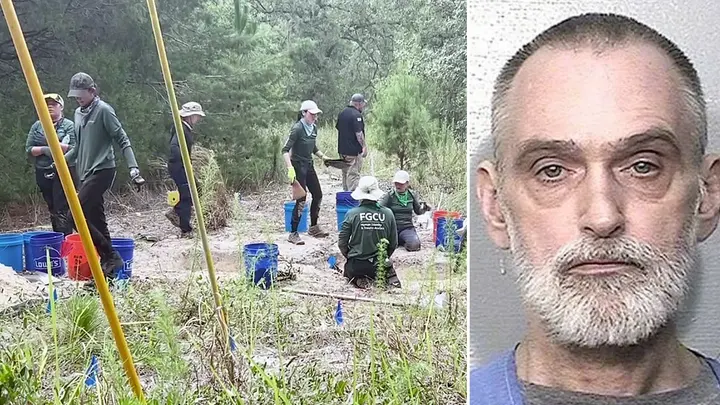
In a development that has reignited one of Florida’s most chilling cold cases, investigators have returned to Hernando County to search for possible additional victims connected to convicted serial killer Billy Mansfield. The renewed effort, which involves local authorities, federal investigators, and forensic specialists, represents the latest chapter in a decades-long investigation marked by unanswered questions, incomplete evidence, and the enduring pain of families who never received closure. As cadaver dogs signal potential burial sites and excavation teams begin their work, the possibility that Mansfield’s crimes extended even further than previously confirmed has once again come into focus.
The search began quietly but with a sense of urgency, drawing together multiple agencies, including the Hernando County Sheriff’s Office, the FBI, and the State Attorney’s Office. Their efforts are concentrated around a property known as Dry Creek Ranch, an area that has long been associated with Mansfield’s past. For years, investigators have suspected that the known victims tied to the case may represent only a portion of a much larger and more disturbing pattern. Now, with advances in forensic technology and renewed investigative momentum, authorities are attempting to uncover the truth that may have remained buried for more than four decades.
Billy Mansfield’s name has haunted law enforcement records since the late 1970s and early 1980s, when he and his brother Gary Mansfield became linked to multiple homicide investigations. The brothers’ movements between Florida and California during that period complicated the efforts of authorities, creating a web of connections that stretched across state lines. It was during an investigation in California that critical information emerged, leading Florida investigators to obtain a search warrant for property connected to the Mansfield family. What they discovered would shock even seasoned investigators: four bodies buried on land tied to the family.
The discovery of those bodies marked a turning point in the case, confirming suspicions that Mansfield was responsible for multiple murders. While two of the victims were identified relatively quickly, the process of identifying the others proved far more challenging. Over time, investigators were able to identify a third victim, but one remained unnamed, a silent testament to the limitations of forensic science at the time. Today, however, new tools such as genetic genealogy offer hope that even long-unidentified victims may finally be given names and histories.
Despite the grim discoveries of the early 1980s, investigators have long believed that Mansfield’s crimes did not end there. Statements made by Mansfield himself suggested that there could be additional victims buried in various locations throughout Florida, including Hernando, Pasco, and Pinellas counties. These claims, while never fully substantiated, have lingered in the background of the investigation, prompting periodic efforts to revisit the case and explore new leads.
The current search is the result of one such effort, which began roughly three years ago when authorities decided to reopen portions of the investigation. This decision was driven in part by advancements in forensic technology, as well as a renewed commitment to solving cold cases. Investigators began reviewing thousands of case files, reexamining evidence, and conducting interviews with Mansfield, who remains incarcerated. These efforts were aimed at uncovering new information that could guide future searches and potentially lead to the discovery of additional victims.
The use of cadaver dogs has been a key component of the current operation. These highly trained animals are capable of detecting the scent of human remains even after many years, making them invaluable in cases where traditional methods may fall short. During recent searches, cadaver dogs alerted investigators to specific areas at Dry Creek Ranch, prompting excavation efforts. While not all alerts lead to discoveries, they provide critical guidance in narrowing down search areas and focusing resources where they are most likely to yield results.
Sheriff Al Nienhuis has described the investigation as both challenging and necessary, emphasizing the importance of pursuing every possible lead. While acknowledging that the age of the case makes prosecution unlikely, he has stressed that the primary goal is to identify victims and provide answers to families who have spent decades searching for closure. This perspective reflects a broader shift in how cold cases are approached, with greater emphasis on victim identification and family support.
The emotional impact of such cases cannot be overstated. For families of missing persons, the absence of answers can be a source of enduring pain. The possibility that their loved ones may be among unidentified victims adds another layer of complexity to their grief. Efforts to identify victims through genetic genealogy have brought new hope, allowing investigators to connect remains with living relatives and provide a sense of resolution that was once thought impossible.
Mansfield’s name returned to national attention in recent years following his confession to the murder of Carol Ann Barrett, an 18-year-old from Ohio whose disappearance had remained unsolved for decades. Barrett had been enjoying spring break in Daytona Beach in 1980 when she was abducted from her motel. Her body was later discovered in Jacksonville, but the case went cold, with investigators having little more than a composite sketch to guide them.
The revival of Barrett’s case around 2017 marked a turning point, as investigators employed new techniques and pursued leads that had previously gone unexplored. After years of interviews and investigation, Mansfield ultimately confessed to her abduction and murder, providing details that confirmed his involvement. This confession not only brought closure to Barrett’s family but also reinforced the belief that Mansfield’s crimes were more extensive than previously documented.
Currently serving multiple life sentences in both California and Florida, Mansfield has been incarcerated since the early 1980s. His convictions are tied to the murders of at least five women and girls between 1975 and 1980, but investigators believe the true number of victims may be higher. His decision to plead guilty to a California murder allowed him to avoid the death penalty in Florida, a factor that has influenced the legal landscape surrounding his case.
The possibility of additional victims raises important questions about the nature of Mansfield’s crimes and the circumstances that allowed them to continue for so long. During the period in which he was active, investigative resources and forensic capabilities were far more limited than they are today. This made it easier for individuals to evade detection and for cases to remain unsolved. The current investigation represents an effort to address those limitations and to apply modern techniques to historical cases.
As excavation efforts continue at Dry Creek Ranch and other locations, investigators remain cautiously optimistic. Each shovel of dirt carries the potential to reveal new information, whether in the form of human remains, personal items, or other evidence. At the same time, the uncertainty of what may be found underscores the complexity of the task at hand. Not every search will yield results, but each effort contributes to a broader understanding of the case.
The renewed focus on Mansfield’s crimes also serves as a reminder of the enduring impact of serial violence on communities. Even decades later, the effects are felt by those who lost loved ones, as well as by the communities in which the crimes occurred. The process of revisiting such cases can be difficult, bringing old wounds to the surface, but it also offers the possibility of healing and resolution.
For law enforcement, the investigation is both a professional and personal undertaking. Many of those involved were not part of the original case, yet they have taken on the responsibility of seeking answers for victims and families. This commitment reflects a broader ethos within the field, where the pursuit of justice does not end with the passage of time.
As the search continues, the story of Billy Mansfield and the victims connected to him remains a powerful and sobering reminder of the importance of persistence in the face of uncertainty. The work being done today builds on decades of effort, combining past knowledge with modern technology to uncover truths that have long been hidden.
Whether or not additional victims are found, the investigation represents a meaningful step toward understanding the full scope of Mansfield’s actions. It is a process driven not only by the pursuit of evidence but by a commitment to honoring those whose lives were taken and providing answers to those who continue to seek them.
In the end, the renewed search is about more than solving a case. It is about restoring identities, acknowledging loss, and ensuring that the stories of those affected are not forgotten. As investigators continue their work, they carry with them the hope that even after many years, the truth can still be brought to light.
As investigators continue their methodical search across Hernando County and surrounding areas, the case has taken on an even deeper sense of urgency, not because of legal outcomes, but because of the human stories that may still be waiting to be uncovered. Each potential site represents more than just a search location; it represents the possibility that someone, somewhere, has been waiting decades for answers that may finally be within reach. For many families of missing persons, time does not lessen the need for closure. Instead, it often deepens the uncertainty, leaving questions that echo across generations.
The renewed excavation efforts have also drawn attention to how much investigative work has evolved since the late 1970s and early 1980s. At the time of Mansfield’s crimes, forensic tools were limited, and communication between jurisdictions was not as advanced as it is today. Cases that crossed state lines, like Mansfield’s, were particularly difficult to manage, often resulting in fragmented information and missed connections. Today, however, databases, digital records, and inter-agency cooperation have significantly improved, allowing investigators to revisit old cases with new clarity.
One of the most transformative developments has been the use of genetic genealogy. This technique has revolutionized cold case investigations by allowing authorities to identify unknown remains through DNA comparisons with distant relatives. In cases where victims have remained unidentified for decades, this approach offers a powerful new path forward. For the Mansfield case, genetic genealogy has already provided leads that could help identify the remaining unknown victim from the original four bodies discovered. This not only restores identity to those who were lost but also reconnects families with long-missing pieces of their history.
The process of identification is not simply scientific; it is deeply emotional. When remains are identified, families are often faced with a complex mixture of grief and relief. The confirmation of a loved one’s fate can be devastating, but it also ends years of uncertainty. For some, it allows them to finally begin the process of mourning in a more complete way. Investigators involved in such cases often speak about the importance of this aspect of their work, recognizing that solving a case is not just about evidence but about people.
At the same time, the case has prompted renewed interest in Mansfield’s movements and behavior during the years in which he was active. Understanding where he traveled, who he interacted with, and how he operated could provide valuable insights into the potential scope of his crimes. Investigators are reexamining records from that time, including reports of missing persons, witness statements, and any documented encounters that may have been overlooked or dismissed.
The geographic spread of Mansfield’s activities adds to the complexity of this effort. With connections to both Florida and California, as well as potential links to other locations, the investigation must consider a wide range of possibilities. This requires coordination across multiple jurisdictions, each with its own records and procedures. While challenging, this collaborative approach increases the likelihood that connections will be identified and that overlooked details will come to light.
Public awareness has also played a role in the renewed investigation. As the case has gained attention, individuals with potential information may come forward, offering details that were previously unknown or considered insignificant. Even small pieces of information can be valuable, particularly when combined with other evidence. Authorities have encouraged anyone with knowledge related to the case to share it, emphasizing that even decades-old memories can contribute to the investigation.
The role of Mansfield’s own statements continues to be a subject of careful consideration. Over the years, he has made claims about additional victims, but the reliability of these statements is difficult to assess. In some cases, individuals may exaggerate or provide misleading information, while in others, they may withhold details. Investigators must navigate this uncertainty, weighing the potential value of his claims against the need for independent verification.
The possibility that some victims may never be found is another reality that investigators must confront. Time, environmental factors, and incomplete information can all limit the ability to locate remains. Despite these challenges, the commitment to searching continues, driven by the belief that every effort is worthwhile, even if it does not lead to immediate results.
For the communities affected by Mansfield’s crimes, the renewed investigation has brought both hope and renewed attention to a painful chapter in their history. Local residents, some of whom remember the original investigation, have expressed a mixture of curiosity and concern as search efforts resume. For newer generations, the case serves as a reminder of the importance of vigilance and the impact that such events can have on a community.
The involvement of federal agencies like the FBI highlights the significance of the case and the resources being dedicated to it. Their expertise in forensic analysis, data management, and inter-agency coordination adds an important dimension to the investigation. Combined with the efforts of local law enforcement and state authorities, this collaboration represents a comprehensive approach to addressing a complex and long-standing case.
As excavation teams continue their work, each day brings new possibilities. The process is careful and deliberate, with investigators documenting every finding and preserving evidence for analysis. Even when no human remains are discovered, the information gathered can help refine search areas and guide future efforts. This incremental progress is a hallmark of cold case investigations, where patience and persistence are essential.
The broader implications of the case extend beyond Mansfield himself. It highlights the importance of revisiting unresolved cases and the potential for new technologies to provide answers that were once out of reach. It also underscores the enduring impact of crime on individuals and communities, reminding us that the consequences of such acts do not fade with time.
For those involved in the investigation, the work is both a responsibility and a mission. It is about more than solving a case; it is about honoring the lives of those who were lost and providing a sense of closure to those who remain. This perspective drives the continued effort, even in the face of uncertainty and difficulty.
As the search moves forward, the story of Billy Mansfield and his victims continues to evolve. Each new development adds to the understanding of what happened and what may still be uncovered. While the full scope of his actions may never be completely known, the ongoing investigation represents a meaningful step toward uncovering the truth.
In the end, the renewed search is a testament to the enduring commitment of those who seek justice, even when justice can no longer be served in the traditional sense. It is about memory, identity, and the belief that every life matters, regardless of how much time has passed. Through their efforts, investigators are ensuring that the victims are not forgotten and that their stories continue to be told.
The work continues, driven by hope, determination, and the possibility that even after decades, answers can still be found.
As the renewed search continues to unfold, another important aspect emerging from the investigation is the role of time itself as both an obstacle and a motivator. Decades have passed since Billy Mansfield’s crimes first came to light, and with each passing year, the challenges of locating physical evidence grow more difficult. Landscapes change, properties are altered, and natural processes gradually erase traces that might once have been easier to detect. Yet, despite these obstacles, time has also brought new tools, renewed determination, and a broader commitment to ensuring that even the oldest cases are not forgotten.
Investigators involved in the current search have emphasized that patience is essential. Unlike active cases where leads may develop rapidly, cold case investigations often require careful, methodical work that unfolds over long periods. Every piece of land must be examined with precision, every alert from cadaver dogs must be evaluated thoroughly, and every potential clue must be documented. This process can be slow, but it reflects the seriousness with which authorities are approaching the possibility of uncovering additional victims.
The emotional dimension of this work continues to influence how the investigation is conducted. For families who may still be waiting for answers, even the possibility of discovery carries immense weight. Investigators are aware that their findings, whether positive or negative, will have lasting impacts on those connected to the case. This awareness adds a sense of responsibility that goes beyond standard investigative procedures, shaping how decisions are made and how information is communicated.
Public interest in the case has also remained steady, driven by the enduring mystery surrounding Mansfield’s actions and the potential for new revelations. As updates emerge, they serve as reminders that even after many years, the pursuit of truth remains active. Each new search, each reexamined file, and each technological advancement contributes to a broader effort to piece together a story that has long remained incomplete.
In the end, the continuation of this investigation reflects a deeper principle—that the passage of time does not diminish the value of seeking answers. Whether or not additional victims are ultimately found, the effort itself stands as a commitment to remembering, to uncovering, and to ensuring that those who were lost are not left behind in history. Even the smallest breakthrough could reshape the understanding of this case, reminding investigators and families alike that persistence, no matter how long it takes, can still bring long-awaited clarity.