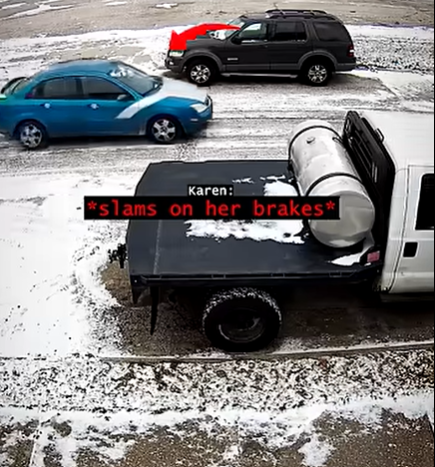
The video captures a tense roadside confrontation that begins with an aggressive verbal dispute and quickly turns into a physical altercation. The scene appears to take place in a cold, snowy area where two vehicles, a blue car and a red car, are stopped near each other. What may have started as a disagreement over driving behavior quickly becomes a heated public incident, showing how fast anger on the road can spiral into something dangerous. The woman driving the blue car appears furious as she stops, gets out, and approaches the occupants of the red car. Her body language and voice suggest that she is already highly upset before anyone from the red car even has a chance to fully respond.
The woman’s anger seems focused on the way the people in the red car were driving. She screams accusations at them, claiming that they were driving poorly or dangerously. Her language is aggressive, and the confrontation immediately feels hostile. Instead of calmly discussing what happened or simply leaving the area, she chooses to step out of her vehicle and confront the other people directly. That decision changes the situation from a traffic disagreement into a face-to-face conflict. Road rage incidents often escalate in this exact way: one person feels wronged on the road, follows or stops near the other vehicle, and then turns the driving dispute into a personal confrontation.
Inside the red car, the occupants appear to be caught off guard by the woman’s sudden aggression. A passenger wearing patterned pajamas steps out and tries to calm the situation. His clothing makes the moment seem even more unusual, because he does not look like someone prepared for a fight or a serious confrontation. He appears more like someone who has unexpectedly been pulled into a chaotic situation. His first reaction, according to the description, is not to attack or shout back, but to try to calm the woman down. This creates a clear contrast between his approach and hers. She is yelling and escalating, while he seems to be attempting to reduce the tension.
The passenger’s attempt to calm her down is important because it shows that the conflict did not immediately become physical from both sides. At least at first, one person seems to be trying to keep the argument from getting worse. In many public confrontations, the difference between a verbal dispute and a physical incident depends on whether someone can de-escalate the situation. A calm voice, open hands, a step backward, or a willingness to disengage can sometimes prevent things from going further. But in this case, the woman’s anger appears too intense for his efforts to work.
The snowy pavement and cold setting add to the sense of danger. Any physical confrontation becomes more risky when the ground is slippery or hard. A person falling on snowy or icy pavement can be hurt even without a prolonged fight. That background makes the situation feel even more reckless. The woman’s decision to continue yelling and move close enough to strike the passenger creates a situation where one sudden movement can lead to serious consequences. The environment is not safe for a fight, and neither person appears to fully consider that in the moment.
Despite the passenger’s attempt to calm her down, the woman continues shouting aggressively. Her anger seems to build rather than fade. She appears unwilling to step back, listen, or return to her vehicle. This is often what makes road rage so dangerous. The original issue may be something that could have been handled by driving away, calling authorities, or simply letting the moment pass. But once anger takes over, people may focus more on proving a point than staying safe. The woman’s behavior suggests that she wants to confront, accuse, and dominate the moment rather than resolve it.
The situation crosses a major line when the woman slaps the passenger across the face. That action turns the confrontation from a verbal argument into a physical assault. Even if she believes she was wronged on the road, striking someone changes the seriousness of the situation. It also creates an immediate risk of retaliation. Physical contact in a heated argument can trigger panic, anger, or defensive reactions. The passenger, who had been trying to calm her down, suddenly becomes the target of physical aggression. In that instant, the entire tone of the encounter shifts.
After being slapped, the passenger reacts by grabbing the woman and forcing her to the ground. The moment is sudden and intense, and it marks the peak of the conflict. It is not shown as a careful or controlled response, but as a forceful reaction after being struck. The woman ends up on the snowy pavement, and the passenger then turns away from her. Instead of remaining at the scene to continue the fight, argue, or check on her, he walks back to the red car. The red car then leaves, ending the direct confrontation but leaving the woman behind on the ground.
The woman is heard or seen complaining about her back after the fall. This detail adds a serious note to the video because it shows that the physical altercation may have caused pain or injury. Even a short confrontation can have lasting consequences when someone is knocked down, especially on a hard or slippery surface. What began as yelling over driving behavior ends with someone lying on the pavement in distress. That outcome highlights the danger of escalating a road rage situation. A few moments of anger can result in someone getting hurt, someone leaving the scene, and everyone involved facing possible consequences.
The video is unsettling because both sides become part of an escalation, even if the woman appears to initiate the physical contact. Her decision to get out, scream, and slap the passenger clearly pushes the situation into dangerous territory. At the same time, the passenger’s physical response is forceful and leaves her on the ground. The incident shows how quickly a confrontation can move beyond words once someone uses their hands. It also shows why stepping away is often safer than trying to win an argument in the moment. Once emotions are high, even one physical action can lead to another.
The blue car and red car become symbols of two sides of the dispute. The blue car brings the angry driver into the scene, while the red car holds the people she blames. The woman’s choice to stop and approach the red car suggests that she was determined to confront them directly. The red car’s passenger stepping out suggests that someone inside felt the need to respond, explain, or calm her down. But once both parties are outside their vehicles, the protective separation of the cars disappears. They are now face-to-face, and the chance of escalation becomes much higher.
The passenger’s patterned pajamas are a striking visual detail because they make the confrontation feel almost surreal. It suggests he may have been traveling casually, perhaps not expecting any serious incident. His appearance contrasts with the seriousness of what happens. In many viral videos, small details like clothing can make a scene more memorable because they add an unexpected layer of reality. This is not a staged movie scene with people dressed for drama. It is a real-looking public confrontation involving ordinary people in ordinary clothing, which makes the escalation feel more sudden and believable.
The woman’s aggressive shouting appears to be driven by anger from the road. Road rage often begins when a driver feels cut off, delayed, disrespected, or endangered. Sometimes the anger is based on a real concern, and sometimes it is based on perception or misunderstanding. But regardless of the original cause, the dangerous part is what happens next. In this video, the woman does not simply express frustration from inside her car. She physically approaches the other vehicle and confronts the occupants. That action increases the risk for everyone.
The passenger’s attempt to calm her down may have been well-intentioned, but it also placed him directly in the middle of her anger. In tense situations, stepping out of a vehicle can sometimes make things worse, even when the goal is peace. A person who is already shouting may interpret any movement toward them as a challenge. The passenger may have hoped that by speaking to her calmly, he could settle the argument. Instead, the woman remains aggressive and eventually strikes him. This shows how difficult de-escalation can be when one person is not willing to calm down.
The slap is the turning point because it removes any remaining boundary between argument and violence. Before that moment, the situation is loud, tense, and unpleasant, but still verbal. After the slap, it becomes physical. That is why the moment feels so serious. Physical contact can instantly change how people react. Someone who was trying to stay calm may feel shocked or threatened. Someone watching nearby may become alarmed. The person who struck first may not expect a strong response, but once that boundary is crossed, the situation can become unpredictable.
The passenger’s reaction appears immediate. He grabs the woman and slams her down, ending the confrontation physically but also creating a new problem. The woman is left hurt or shaken on the ground, and the passenger leaves. Viewers may debate whether his reaction was defensive, excessive, or both. What is clear from the description is that the incident becomes more serious after both the slap and the response to it. This is why avoiding physical escalation matters so much. Once someone is struck, the next reaction may happen quickly and without careful thought.
The fact that the passenger then drives away adds another layer of tension. Leaving the woman on the snowy pavement may make viewers question whether anyone checked on her condition or called for help. The description says she complained about her back, which suggests she may have needed assistance. In conflicts like this, leaving the scene can make the aftermath more complicated. Even if someone believes they were defending themselves, walking away after another person is hurt can raise serious concerns. The video therefore does not end with a clear sense of resolution. It ends with discomfort and uncertainty.
The snowy environment makes the woman’s fall seem more concerning. Snow can hide ice, create uneven footing, and make it harder for someone to get up safely. Cold pavement is unforgiving. A person who falls may feel pain immediately or may not realize the full extent until later. The woman’s complaint about her back suggests that the physical outcome of the argument was not minor to her. This detail reinforces the message that road rage can have real consequences beyond shouting and embarrassment.
The incident also shows how public confrontations can be shaped by pride. The woman appears determined to express her anger and accuse the red car’s occupants of bad driving. The passenger appears determined to calm her or defend himself once she becomes physical. Neither side is able to end the situation before it turns violent. Pride, anger, and fear can all make people stay in an argument longer than they should. Sometimes the safest decision is to disengage, even if the other person is yelling or making accusations. Walking away may feel unsatisfying, but it can prevent a much worse outcome.
The video may make viewers think about the difference between feeling right and acting safely. The woman may have believed she had a valid reason to be angry about the driving. But even if she did, stopping, yelling, and striking someone is not a safe or reasonable way to handle it. The passenger may have felt justified in reacting after being slapped, but the result still left someone on the ground in pain. The situation shows that once a confrontation becomes physical, the question of who was “right” becomes much less important than the harm that follows.
Another important part of the video is the emotional intensity. The woman’s shouting and profanity suggest that she is not thinking calmly. Her emotions are leading the interaction. The passenger’s initial calm attempt suggests that he may understand the situation is getting out of hand, but his own reaction changes after being struck. This is how escalation works. One person’s anger can trigger another person’s defensive response, and within seconds, the situation can become something neither side intended at the beginning.
The gas station or roadside setting also adds a sense of everyday realism. These conflicts can happen in ordinary places, in parking lots, at intersections, near fuel pumps, or on snowy streets. That is part of why the video feels alarming. It is not an unusual environment where danger is expected. It is a normal public space where people should be able to go about their day. Yet because of anger and poor choices, it becomes the scene of a physical confrontation.
The driver of the blue car appears to be the one who initiates the confrontation by stopping and getting out. That matters because the safest response to a driving dispute is usually to avoid contact. If someone believes another driver is dangerous, they can create distance, call authorities if necessary, or stay inside their vehicle. Getting out and approaching another car increases the risk. It brings people close together, raises emotions, and removes the option of simply driving away peacefully. The video shows exactly why that decision can be dangerous.
The occupants of the red car also face a difficult situation. When someone approaches aggressively, they may feel the need to respond. Ignoring the person may not always feel possible, especially if the person is yelling near the vehicle. The passenger’s decision to step out may have been an attempt to protect the driver or calm the woman before things got worse. But stepping out also placed him within reach. This is one of the uncomfortable lessons of the video: even peaceful intentions can become risky when the other person is already aggressive.
The slap itself likely shocks viewers because it is sudden and personal. A slap is not only physical; it is also humiliating and provocative. In an already heated argument, it can feel like a direct challenge. The passenger’s response shows how quickly that action changes the entire dynamic. What might have ended as a shouting match becomes a physical incident that leaves one person on the ground. This does not make the response automatically right or wrong, but it shows how dangerous the first act of physical aggression can be.
The woman’s reaction after being thrown down is also important. She complains about her back, which shifts the tone from anger to pain. Moments earlier, she was shouting and confronting. Now she is on the ground, vulnerable and distressed. That sudden change can make the video feel shocking. It shows how quickly someone can go from being the aggressor in a confrontation to being hurt by the consequences of that confrontation. It is a harsh reminder that physical conflict rarely stays controlled.
The passenger walking away after the incident may appear cold or dismissive. He does not seem to remain engaged with the woman after she falls. Instead, he returns to the red car and leaves. This ending leaves viewers with questions. Did he leave because he felt unsafe? Did he leave to avoid further conflict? Did he believe the situation was over? Did anyone else help the woman? The description does not answer those questions, so the ending feels unresolved. What is clear is that the confrontation does not end with reconciliation or calm discussion. It ends with separation after harm has already occurred.
The video can be seen as a strong example of why road rage should never be taken lightly. A disagreement over driving may seem temporary, but when people act on anger, it can become physical, legal, and dangerous. Cars are already high-risk environments because they involve speed, stress, and close interactions with strangers. Adding shouting, threats, and physical contact only increases the danger. This incident shows how a few emotional decisions can turn a driving complaint into a scene that could affect everyone involved long after the video ends.
The woman’s behavior also shows how anger can distort judgment. Instead of considering whether confronting the other car would help, she seems focused only on expressing rage. That rage leads her to approach, scream, and slap someone. Each step makes the situation worse. The passenger’s behavior shows how even someone trying to calm a situation can react forcefully when physically attacked. The combination of her aggression and his response creates the outcome seen in the video. It is not a moment of controlled decision-making. It is a chain reaction.
The incident may also raise discussions about self-defense and proportional response, though the video description alone cannot settle those questions. Being slapped is an aggressive physical act, and a person may react to protect themselves. However, the force used in response and the aftermath can still be debated. These are the kinds of details that often become important if authorities review such incidents. What viewers can say with confidence is that the situation became unsafe for everyone once it moved from words to physical contact.
The video’s emotional impact comes partly from how quickly the roles shift. At first, the woman appears dominant because she is the one shouting, approaching, and accusing. The passenger appears calmer and more passive. Then she slaps him, and within moments, the situation reverses dramatically. She ends up on the ground, and he leaves. That sudden reversal is what makes the video feel so intense. It demonstrates how unpredictable confrontations can be when anger is involved.
There is also a broader social lesson in the scene. Public conflicts are often recorded and shared, meaning moments of poor judgment can become widely visible. A person’s behavior during a few heated seconds can be watched, judged, and discussed by thousands or millions of people. That does not mean viewers always know the full story, but it does mean that public aggression can have consequences beyond the immediate incident. In this case, the video becomes a cautionary example of how not to handle a traffic dispute.
The snowy pavement, the parked cars, the shouting, the slap, and the fall all combine into a scene that feels raw and unpleasant. It is not entertaining in a lighthearted way. It is tense because it shows real people losing control of a situation. The woman’s anger, the passenger’s reaction, and the final image of her lying on the ground all leave a heavy impression. The video does not show a clever resolution or a satisfying argument. It shows escalation and consequence.