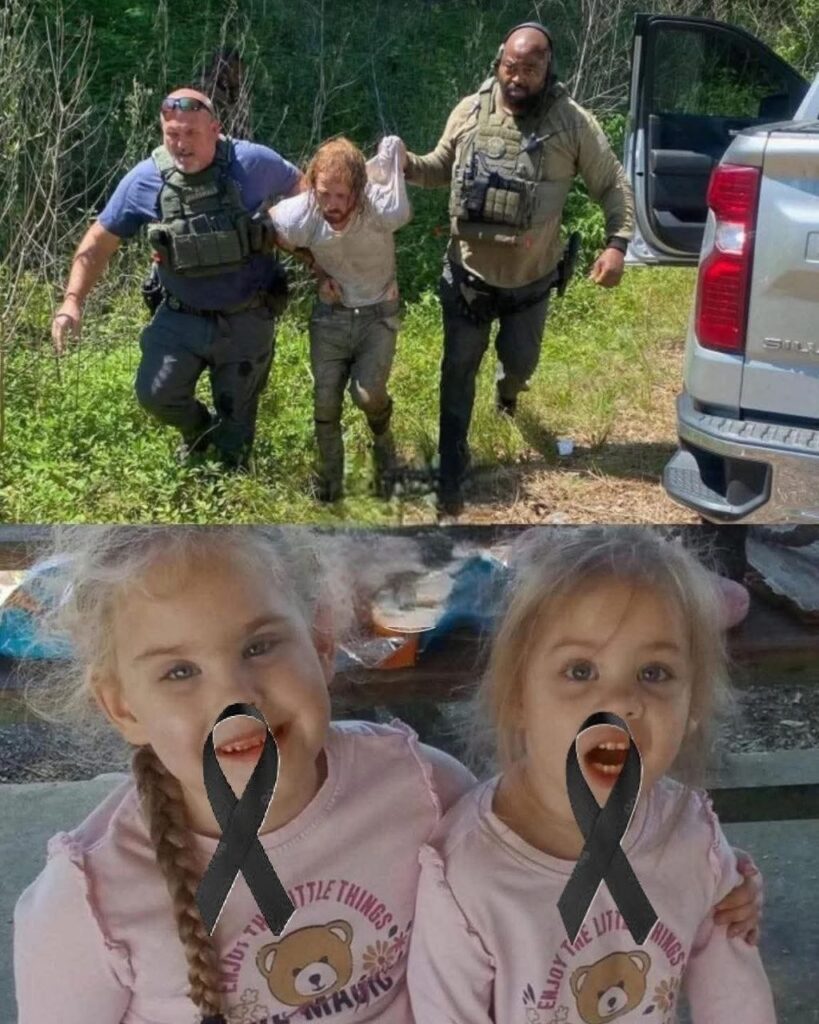
A hopeful story began spreading online under the title “Community Responds Swiftly to Prevent Tragedy in Family Incident,” promising readers an account of ordinary people and emergency workers coming together to save two young sisters from a burning vehicle. The scene described in the article was frightening but ultimately reassuring. Smoke supposedly began rising from beneath the hood of a car parked in a residential driveway. Flames appeared in the front of the vehicle while two frightened girls remained inside. Neighbors heard their cries, rushed from nearby homes, called emergency services, tried to open the doors, brought out a garden hose and spoke calmly through the windows to prevent the children from panicking. Firefighters then arrived within minutes, removed the girls, extinguished the blaze and confirmed that neither child had suffered a serious injury. It was presented as a powerful example of courage, compassion and fast community action. However, the story contained a serious problem beneath its uplifting message: it did not identify a single person, location, emergency department or verifiable source connected to the alleged rescue.
The article never gives the sisters’ names or even their ages. Their parents or guardians are not identified. Readers are not told which city, state, province or country contained the quiet neighborhood where the emergency supposedly occurred. The driveway has no address or surrounding landmark. The firefighters belong to no named department. The paramedics work for no identified service. The neighbors who allegedly rushed toward the burning vehicle remain anonymous, and none is quoted directly.
The story provides no date for the fire. Its publication date shows only when the webpage appeared, not when the alleged emergency took place. It says the incident began during an ordinary afternoon, but does not identify the day, week or year. Without a date and location, there is no practical way to compare the article with fire department records, emergency calls or local reporting.
The page says that “authorities later confirmed” the girls were unharmed, but it never identifies those authorities. It also states that investigators were examining the cause and that early indications suggested a mechanical failure in the engine compartment. Again, no investigator, department, report or spokesperson is named.
Those phrases sound like news reporting because they imitate the language used by credible journalists. “Authorities confirmed,” “according to witnesses,” “investigators are examining” and “officials say” all create the impression that the writer gathered information from real sources. Yet attribution is meaningful only when readers can determine who supplied the information.
A reporter might write that a fire chief confirmed the rescue during a press conference. The article would name the chief and department. A police report might state that the fire appeared accidental. The article would identify the document or agency. Witnesses might describe what they saw from neighboring homes. Their names would ordinarily be provided unless there was a clear reason to protect them.
The viral page provides none of those connections. It asks readers to trust a complete rescue narrative solely because it sounds plausible and emotionally satisfying.
The lack of evidence does not prove that no similar rescue has ever occurred. Vehicle fires happen, children have been rescued from dangerous situations and neighbors often assist before firefighters arrive. The problem is that general plausibility cannot verify one particular event.
A story can describe something that could happen without documenting something that did happen.
The distinction is especially important when children are involved. Missing details might sometimes be withheld to protect minors, but protecting children’s names does not require hiding the city, fire department, date and official source. A responsible report could state that two minors were safely removed from a vehicle during a fire in a named community while preserving their identities.
The article does the opposite. It uses the image of vulnerable young sisters to create emotional engagement while removing every detail that would make the claim traceable.
The rescue narrative follows an almost perfect dramatic structure. It begins with normal life in a peaceful neighborhood. A small sign of danger appears when smoke curls from the hood. The threat grows quickly as flames develop. Children are revealed to be trapped, raising the emotional stakes. Neighbors overcome fear and work together. Sirens are heard in the distance. Trained firefighters arrive at the critical moment. The girls are carried to safety, wrapped in blankets and examined by paramedics. The flames are defeated, leaving smoke, steam and a deeply grateful community.
This structure works well as inspirational fiction. It creates tension, heroism and relief within a few paragraphs. Real emergencies, however, often contain less orderly and more complicated details. Doors may already be open. The children might be removed before the fire grows. Firefighters may arrive after bystanders complete the rescue. Injuries may initially seem minor before requiring further treatment. Investigators may need days or weeks to identify the cause.
A responsible report would preserve those imperfect facts rather than reshape them into the cleanest possible story.
The article states that neighbors first noticed smoke and believed the vehicle had a minor mechanical problem. Within seconds, the smoke supposedly thickened and flames appeared. If witnesses actually observed this progression, their accounts would be valuable. Who saw the first smoke? From where? How did they know the children were inside? Were the doors locked? Was an adult nearby? Why were the girls unable to leave independently?
None of these questions is answered.
The article describes one neighbor using a garden hose while another tried to open the car door. But it does not say why the door could not be opened immediately. Was it locked, damaged or too hot? Were the children restrained in car seats? Did someone have to break a window? If firefighters opened the door upon arrival, how did they do so?
These details are not included merely to satisfy curiosity. They determine whether the story makes practical sense and could help readers understand what actually occurred.
The absence of a parent or guardian is also unexplained. The title calls it a “family incident,” and the article later says relatives were nearby after the rescue, but it does not explain who had placed the children in the vehicle or why they remained inside while smoke and fire developed.
That missing context could dramatically change the story. Perhaps a parent was standing only a few feet away and could not open a malfunctioning door. Perhaps the vehicle caught fire unexpectedly while the family prepared to leave. Perhaps the children entered the car without permission. Perhaps no such event occurred at all.
The article supplies none of the information needed to distinguish among these possibilities.
A family emergency involving children requires sensitive reporting. It should not automatically become a reason to shame or accuse a parent, especially before investigators establish the circumstances. At the same time, a report should not erase essential facts merely to maintain an uncomplicated message about community heroism.
Accuracy and compassion can exist together.
The claim of a possible engine-compartment failure also appears designed to make the story feel realistic. Vehicle fires often can begin around electrical systems, fuel components or overheated mechanical parts. But “possible mechanical failure” is an extremely broad phrase. Without a fire investigator’s statement, it may simply be a generic explanation added by the writer.
An actual investigation could examine wiring, the battery, fuel leakage, recent repairs, recalls, collision damage or deliberate ignition. Investigators would normally avoid announcing a preliminary cause unless they had inspected the vehicle. The article says early indications existed but does not explain what those indications were.
It also claims firefighters used foam and water to put out the fire. That detail sounds technical but remains unsupported. Depending on the vehicle type and department procedures, firefighters might use water, foam or other methods. If the vehicle were electric, additional concerns about the battery could arise. The story does not identify the make, model, fuel system or condition of the car.
Technical-sounding details can make invented or weakly sourced writing appear authoritative. A reader may think that only someone familiar with the incident would know that foam was used. In reality, such a detail can be inserted easily into a generic narrative.
The article concludes by praising the neighborhood’s unity. It says strangers worked together, residents embraced afterward and the girls would remember both the fear and the people who saved them. Those emotional conclusions may be moving, but they are also imagined. No child, parent, neighbor or firefighter is quoted expressing these feelings.
The writer predicts what the girls will remember without knowing who they are or whether the event occurred as described.
This is a common feature of low-quality human-interest content. The writer moves from reporting external events to narrating private emotions. People are said to be terrified, determined, relieved, grateful or forever changed, although no interview is provided. Emotional interpretation fills the space left by missing facts.
Readers should be cautious when an article appears to know exactly what unnamed people thought and felt while failing to provide basic information about them.
The image associated with a viral post can make the story appear more credible, but a photograph must also be verified. It should have a caption identifying where and when it was taken and who created it. If an image shows children, firefighters or a damaged vehicle, readers need to know whether those subjects belong to the reported incident.
A generic emergency photograph could come from another fire, a training exercise, a film scene or an older news story. Once copied to a new page without its original caption, it can be used to support almost any rescue narrative.
Reverse-image searching and checking the earliest known upload can sometimes reveal the source. However, social-media platforms often compress, crop and repost pictures until the original context becomes difficult to locate. That difficulty is not permission to assume the new caption is accurate.
When a photo cannot be connected reliably to the story, the article should not use it as visual proof.
The same caution applies to reposts. Search results may display the exact title across several social-media accounts, but repeated wording usually shows only that the same link was copied. Ten pages sharing one unsupported article do not represent ten independent confirmations.
Independent confirmation means separate reporters or official agencies gathered and published their own information about the event. Copying one source creates volume, not verification.
The search results surrounding this title largely lead back to social-media versions of the same wording. That pattern suggests a distribution campaign rather than an established local news event. The post may be shared repeatedly because its emotional message performs well, not because additional evidence has emerged.
Inspirational rescue stories are particularly suitable for engagement-driven pages. They are frightening enough to capture attention but reassuring enough to encourage positive reactions. Readers can comment that the neighbors are heroes, praise firefighters, express relief for the children and share the post as evidence that good people still exist.
The story avoids the anger and controversy of a tragic ending while still using the possibility of children dying to create suspense.
This does not mean community courage is unworthy of celebration. Real bystanders and first responders deserve recognition. But praise is meaningful only when directed toward identifiable actions and people. Anonymous heroism in an unverified story risks becoming emotional entertainment rather than public appreciation.
A genuine report could name the rescuers with their consent. It could allow firefighters to explain how the children were removed. It could thank the emergency dispatcher, paramedics and neighbors who helped. It could also provide safety information connected to the incident.
The linked article offers only symbolic heroes. “The neighbors” represent courage, “the firefighters” represent professionalism and “the girls” represent vulnerable innocence. They function more like characters in a lesson than fully documented people.
The final moral is that compassion and courage emerge when lives are at risk. That message is positive, but a positive moral does not remove the need for truth. Fictional parables can teach valuable lessons, but they should be presented as fiction. News claims should be supported as news.
Mixing the two creates confusion about what readers are being asked to believe.
The story may have been written from a real event whose details were removed during copying. It may have been adapted from another incident. It may have been generated from a photograph or prompt. Without sourcing, readers cannot know.
The correct response is not to guess which explanation is most likely. It is to preserve the uncertainty.
This means an article based on the page should not assign names, ages or a location. It should not describe a parent’s actions, claim a specific vehicle defect or quote a fire chief who was never identified. Adding realistic details would make the story more readable while moving it farther from responsible reporting.
Invented specificity is still invention.
The problem becomes more serious when content is republished as though it were local news. Because no location is supplied, social-media users in different countries may assume the emergency happened near them. A page administrator may add the name of a town to attract regional engagement, even though the original article did not mention it.
Once a false location is attached, residents may begin asking which family was involved. Rumors can spread about known parents and children. A real family with two daughters may be mistakenly connected to the post.
The vagueness that helps the story travel widely can create very specific harm after users start filling in the blanks.
Readers should therefore avoid asking in comments whether the parents were responsible, whether the children were left alone or why they did not open the doors. Those questions are reasonable within a verified investigation, but on an unsupported page they can quickly become accusations.
People often remember speculation as fact, especially when many commenters repeat the same theory. A user may later say that a parent “left two girls in a burning car,” even though the article itself never established that.
The title’s use of “family incident” may encourage this confusion. It sounds serious but remains intentionally broad. It could describe an accident, domestic dispute, medical emergency or criminal act. In the body, it becomes a vehicle fire. The general title may have been chosen so that the post can circulate without stating a verifiable claim too clearly.
Vague wording is useful for engagement pages because it creates curiosity and reduces accountability. A specific headline can be checked. A broad emotional title can be attached to many images and interpretations.
Credible local reporting usually works in the opposite direction. It becomes more specific as information is confirmed. A headline might state that two children were rescued from a vehicle fire in a named city. The article would then explain the time, location, response and investigation.
Specificity allows the public to understand the event and correct errors.
The role of first responders also deserves accurate treatment. Firefighters train extensively for vehicle fires, rescues, medical emergencies and hazardous conditions. Their work involves risks and procedures that should not be reduced to a generic cinematic arrival.
An official account might explain that crews stabilized the vehicle, protected the children from heat, forced entry or treated smoke exposure. It might also clarify whether neighbors’ actions helped or created additional risks.
People witnessing a car fire understandably want to help, but untrained intervention can be dangerous. Fire can spread rapidly, tires or pressurized components can rupture and smoke can contain toxic materials. Electric-vehicle batteries can present particular hazards. Bystanders should contact emergency services immediately and follow dispatcher instructions.
The article praises a neighbor for using a garden hose without explaining the fire’s size, fuel source or safety conditions. Turning that action into a heroic example could lead some readers to believe they should approach any burning vehicle. A factual safety article would be more careful.
The safest response depends on immediate circumstances, especially whether someone is trapped and whether the rescuer can act without becoming another victim. Emergency dispatchers and trained professionals are best positioned to give guidance. A viral story should not unintentionally convert an unverified action into universal advice.
Similarly, speaking calmly to frightened children through a window may be helpful, but it should not replace urgent efforts to contact emergency services and assess a safe exit. The linked story blends emotional comfort with rescue activity but does not describe how the situation was managed.
Because the event cannot be confirmed, it should not be used as a detailed safety case study.
What can be discussed responsibly is the broader importance of community awareness. Neighbors who notice unusual smoke, hear cries for help or observe immediate danger can contact emergency services quickly. Accurate information given to dispatchers helps responders prepare. People can guide emergency vehicles, warn others away from danger and assist under professional instruction.
Communities are safer when residents pay attention to one another without becoming reckless or intrusive.
Families can also take general precautions related to vehicles. Children should not remain unattended in cars. Vehicles should receive appropriate maintenance, and unusual smells, smoke, warning lights or electrical problems should be investigated. Families should know how to release child restraints quickly and should keep keys accessible to responsible adults.
These are broad safety principles, not conclusions about the unnamed family in the article.
It would be unfair to imply that the supposed incident resulted from neglect when the page gives no evidence of that. A mechanical fire can develop unexpectedly even when adults act responsibly. Conversely, a serious investigation could reveal preventable actions. Without facts, neither conclusion should be published.
The article’s happy ending may also encourage readers to overlook the emotional impact of a genuine near-fatal emergency. Children rescued from smoke and flames may experience fear afterward. Parents and witnesses may struggle with guilt, anxiety or recurring memories. First responders can also be affected by difficult calls involving children.
A verified report might follow up on the family only with consent and without invading the children’s privacy. The goal should not be to turn distress into a continuing spectacle.
The linked page says the girls will remember strangers rushing to help. That may be a comforting idea, but no writer can guarantee how children process a frightening event. They might remember little, experience temporary distress or require support. Their experience belongs to them and their caregivers.
Responsible human-interest journalism allows survivors to describe their own feelings when they are ready.
The page’s emotional certainty reflects a broader online tendency to force every emergency into an inspirational lesson. A tragedy is narrowly avoided, so the story must prove that humanity is good. A stranger helps, so the event becomes evidence that heroes are everywhere.
Hope is valuable, but real events do not exist merely to supply motivational content. Families deserve accurate reporting even when the truth is less emotionally tidy.
Sometimes neighbors act courageously while emergency systems fail. Sometimes responders perform difficult rescues but victims remain injured. Sometimes the cause remains unknown. Sometimes survivors do not want publicity.
Truth can contain heroism without being reshaped around it.
Website credibility should also be considered. A professional-looking page can be built with an ordinary publishing template. Categories, dates, sharing buttons and author names may create the appearance of a newsroom, but those design elements do not show that original reporting occurred.
Readers should look for evidence of editorial accountability. Does the site identify its staff and ownership? Does it provide contact details? Are corrections published? Do writers link to official documents or local outlets? Is there a consistent focus, or does the site jump between alarming crime stories, celebrity rumors, health claims and provocative entertainment?
A site that repeatedly uses vague, emotional titles with “see more” prompts should be approached carefully.
The business incentive is often simple. Emotional stories produce clicks. Clicks produce advertising views, page statistics and social engagement. The article does not need to inform the reader fully if the headline has already accomplished the financial goal.
An uplifting rescue story may be especially useful because users share it without feeling that they are spreading negativity. They believe they are celebrating bravery. That positive intention can reduce skepticism.
Media literacy should not require people to become cynical about every good-news story. It should encourage them to separate the goodness of a message from the reliability of the evidence.
A story can make us feel hopeful and still be unsupported.
A webpage can promote community spirit and still fail journalistic standards.
A writer can describe firefighters respectfully and still invent or generalize the scene.
Emotional value is not proof.