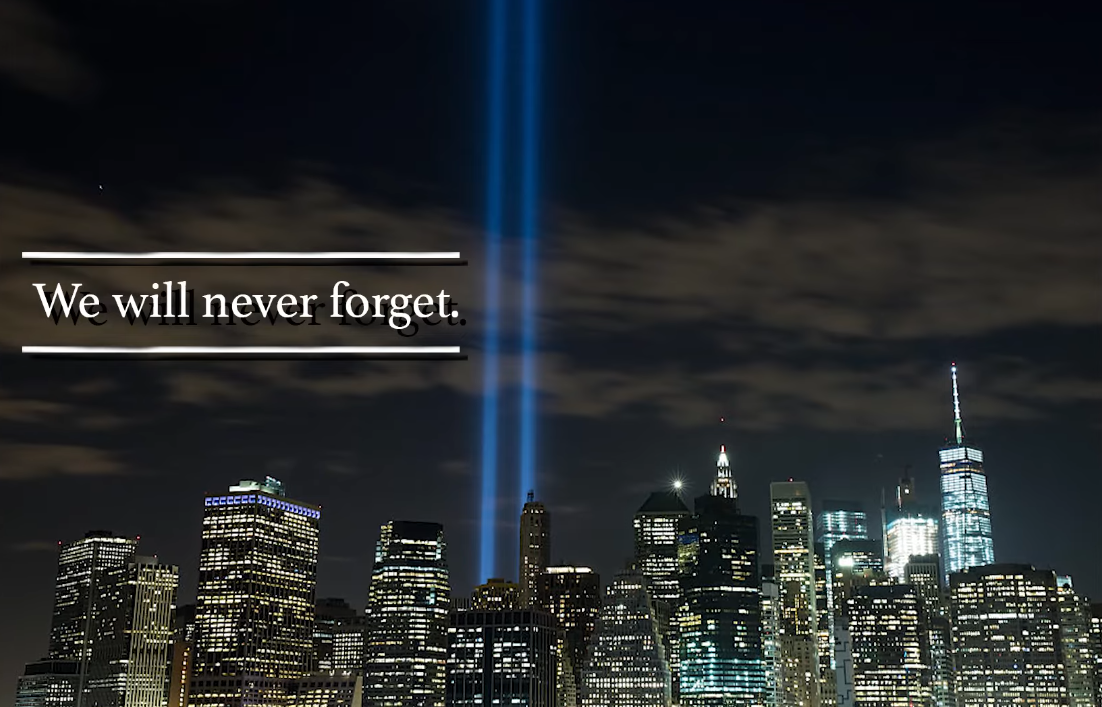
More than two decades after September 11, 2001, the images of that morning remain among the most recognizable and painful in modern American history. The New York skyline, the smoke rising above Lower Manhattan, emergency vehicles racing toward danger, crowds looking upward in disbelief, and first responders moving toward buildings that thousands of others were desperately trying to escape have become part of the collective memory of a generation. Yet behind those images are individual human stories that reveal something photographs and statistics alone cannot capture. There were police officers who entered the World Trade Center knowing people needed help. There were firefighters climbing upward while civilians moved downward. There were journalists and camera operators who continued documenting history while uncertainty and danger surrounded them. There were families waiting for phone calls that would never come, and there were survivors who emerged carrying memories that would remain with them for the rest of their lives.
Among those survivors was Port Authority Police Officer Will Jimeno, whose experience represents one extraordinary chapter in the much larger story of September 11. Jimeno was not watching the catastrophe from a distance. He volunteered to respond. Alongside fellow officers, he went toward the World Trade Center to help evacuate people and assist in an emergency whose true scale was still becoming clear. What began as a rescue mission became a fight for survival when the towers collapsed and enormous amounts of concrete, steel and debris came crashing down.
Jimeno survived, but survival did not mean simply walking away and returning to the life he had known before.
September 11 became permanently intertwined with his identity, his family, his memories of the officers beside him and his understanding of what it means to have another day of life.
Years later, simply looking toward the New York City skyline could bring those memories rushing back. Buildings that millions of people see as familiar landmarks could carry a completely different meaning for someone who had experienced the destruction firsthand. For Jimeno, the skyline was connected to people. It was connected to names and faces, to colleagues who responded with him, and to officers who never returned home.
That is one reason his story remains powerful. It is not simply a story about surviving beneath rubble. It is about remembering those who did not survive beside him.
Jimeno has spoken about fellow Port Authority officers Dominick Pezzulo, Christopher Amoroso and Antonio Rodrigues, men whose courage and sacrifice remain central to his memories of that day. When discussing September 11, the story therefore cannot simply become a celebration of one man’s survival. His survival exists beside loss. Gratitude exists beside grief. The ability to build a future exists beside the responsibility to remember people whose futures ended that morning.
That combination gives survivor stories their extraordinary emotional weight.
A person can be thankful to be alive while simultaneously mourning someone else. They can celebrate a child’s birthday while remembering friends who never had the opportunity to watch their own families grow older. They can laugh, travel, work and enjoy ordinary moments while still carrying memories from a day when ordinary life disappeared almost instantly.
Jimeno’s life after September 11 demonstrates that recovery is rarely a single event.
Being physically rescued does not necessarily mean the experience has ended.
There is physical healing, emotional healing and the difficult process of discovering how to live alongside memories that cannot simply be erased. For Jimeno, the outdoors eventually became part of that process. Hunting and spending time in nature offered something completely different from the environment associated with his traumatic memories. Instead of concrete, sirens, smoke and destruction, there were trees, open landscapes, quiet moments and time with family.
That contrast is significant.
Healing does not always mean forgetting what happened. Often, it means finding something meaningful enough to exist alongside what happened.
For Jimeno, family became an especially powerful part of that meaning.
His daughter Olivia was born in November 2001, only a short time after the attacks. The timing gives their relationship an emotional significance that is difficult to separate from the events that preceded her birth. September brought one of the darkest experiences of his life. November brought new life into his family.
Years later, sharing something as simple as a turkey hunt with his daughter represented far more than recreation.
It represented time.
Time that Jimeno came extraordinarily close to never having.
Every conversation, every family gathering, every walk through the woods and every opportunity to watch his daughter grow became connected, whether explicitly or quietly, to the fact that his life continued after September 11.
That perspective helps explain one of the central messages Jimeno has shared when reflecting on the anniversary: appreciate the days you are given.
September 11 demonstrated with devastating clarity how quickly an ordinary morning can become something completely different. Thousands of people began that Tuesday expecting to return home. People went to work, boarded airplanes, drank coffee, called relatives and made plans for later that evening. Police officers reported for duty. Journalists prepared for another news day. Parents dropped children off. Families assumed they would see one another again.
Within hours, countless lives had changed permanently.
For survivors, that reality can alter the meaning of ordinary time.
A quiet morning with family can matter differently. A birthday can carry additional significance. A conversation that once seemed routine can feel valuable simply because it happened. The ability to go home at the end of a day becomes something that can no longer be taken entirely for granted.
But September 11 is not preserved only through the memories of those who were inside the World Trade Center complex.
Much of what the world understands visually about that day exists because journalists and camera operators documented it as it happened.
The photojournalists and camera crews working in New York that morning faced an entirely different but equally important responsibility. They were witnesses carrying cameras into a rapidly unfolding disaster without knowing what would happen next.
There was no historical perspective available to them.
Today, anyone watching archival footage knows the outcome. They know both towers will eventually fall. They know the death toll will be enormous. They know the United States will change its security policies, launch wars overseas and spend decades dealing with the political and military consequences of the attacks.
The camera operators filming that morning knew none of that.
They were experiencing the events one moment at a time.
That difference matters enormously when watching the footage today.
The people behind those cameras were not documenting something they already understood. They were trying to comprehend it while simultaneously recording it.
News photographers are trained to observe. Their instinct is to capture what is happening and provide images that allow the public to understand events. But September 11 placed that professional instinct against basic human reactions of fear, disbelief and self-preservation.
The camera could not protect them.
Looking through a viewfinder did not remove them from the danger around them.
They could hear what everyone else heard. They could see people running. They could experience confusion about whether another attack was coming. They had friends, colleagues and families of their own.
Yet many continued recording.
Their footage eventually became some of the primary visual evidence through which millions of people experienced September 11.
For people outside New York, television was the window into the catastrophe. Families across America and around the world watched events unfold through images captured by journalists standing close enough to see the destruction firsthand.
Those images later became historical documents.
This is one of the unusual realities of modern history: some events are remembered not only through written records or testimony but through moving images captured in real time.
The camera operators did not know which moments would eventually appear in documentaries, classrooms, museums and anniversary broadcasts decades later. They were simply trying to record what was happening.
Years afterward, returning to that footage means returning to their own memories.
A person behind a camera can remember what happened outside the frame.
The audience sees only what the lens captured. The photographer remembers what happened immediately before and afterward. They remember sounds that the microphone may not have recorded clearly. They remember conversations, fear, confusion and decisions about where to move next.
That makes firsthand testimony from journalists particularly valuable.
Their memories add human context to images that have become so familiar that people can sometimes forget someone was physically standing there to capture them.
Every piece of footage has a person behind it.
And on September 11, those people were witnessing an event that would follow them long after they stopped recording.
The stories of Jimeno and the journalists documenting New York from behind their cameras approach the same day from profoundly different perspectives, yet they share something fundamental.
They are stories about witnesses.
Jimeno witnessed September 11 from inside the emergency response itself. He went toward the World Trade Center as a police officer with a responsibility to help others. His experience became intensely personal when the collapse trapped him and claimed the lives of colleagues.
The photographers witnessed it through their responsibility to document.
Neither group began the morning knowing they were about to become part of history.
That is perhaps one of the most haunting aspects of September 11.
History rarely announces itself beforehand.
There was no warning to the police officers beginning their shifts that their decisions would later be discussed decades into the future. There was no warning to the camera operators that images they captured would become some of the defining footage of the 21st century.
People simply made decisions in extraordinary circumstances.
Some ran toward danger because that was their duty.
Some kept cameras rolling because the world needed witnesses.
Some helped strangers descend stairways.
Some searched through rubble.
Some called home.
Some survived.
Many did not.
The enormous scale of September 11 can sometimes make individual stories difficult to comprehend. Numbers are necessary when describing historical events, but numbers can create emotional distance. Thousands of deaths become a statistic too large for the mind to process easily.
Individual stories restore the human scale.
One officer trapped beneath concrete is understandable.
One daughter growing up with a father who nearly never returned home is understandable.
One photographer standing behind a camera while the familiar skyline transforms in front of him is understandable.
One colleague remembering a friend who died is understandable.
Through those individual experiences, the magnitude of the larger tragedy becomes clearer.
Jimeno’s survival also raises an important question about what society expects from survivors.
Survival stories are often presented as triumphant narratives. Someone experiences catastrophe, survives, recovers and continues living.
Reality is rarely so simple.
Survivors can carry gratitude and pain simultaneously. They can experience happiness without forgetting loss. They can build new memories without replacing old ones.
For someone like Jimeno, honoring fallen officers is not separate from moving forward. The two can exist together.
Remembering Dominick Pezzulo, Christopher Amoroso and Antonio Rodrigues does not prevent him from enjoying time outdoors with his daughter. In some ways, the opportunity to enjoy those moments may reinforce his appreciation for the sacrifice and loss surrounding his survival.
That is what makes the image of a father and daughter spending time together outdoors so meaningful within the broader story.
On its surface, it is ordinary.
That is precisely why it matters.
After catastrophe, ordinary life can become extraordinary.
The opportunity to be present for a child’s life, watch seasons change, celebrate anniversaries and create family memories represents everything that survival made possible.
September 11 anniversaries naturally focus on the day itself, but the consequences of the attacks extend through every year that followed.
Children were born after parents died.
Children who were infants in 2001 became adults.
First responders retired.
Young journalists became veterans of their profession.
Families moved, changed and grew.
New buildings rose where destruction once dominated Lower Manhattan.
Yet memory remained.
This is why firsthand accounts become increasingly important as time passes.
For younger generations, September 11 is history rather than memory.
Someone born in 2010 did not experience the shock of turning on a television and seeing smoke rising over Manhattan. They did not experience the uncertainty of not knowing whether additional attacks were coming. They did not see missing-person posters appearing throughout New York in the immediate aftermath.
Their understanding must come from the people who were there.
Survivor testimony and original journalism therefore serve complementary roles.
Footage shows what happened.
People explain what it felt like.
Neither completely replaces the other.
A video of Lower Manhattan can demonstrate the physical scale of the disaster, but a survivor can explain what it means to remember a colleague decades later.
An interview with a photographer can explain what existed beyond the edge of the frame.
Together, those perspectives transform historical evidence into human memory.
There is also a profound ethical responsibility attached to remembering September 11.
The event can easily become spectacle because the imagery is so dramatic. The destruction is visually overwhelming. Modern social media can reduce even tragedy into short clips designed primarily to generate reactions.
But behind every dramatic image are real people.
That is why stories such as Jimeno’s matter.
They return attention to courage, sacrifice, family and consequences.
The collapsing buildings were not simply buildings.
People were inside them.
Emergency workers were moving toward them.
Families were waiting for people who were inside.
Photographers documenting the destruction understood that they were capturing tragedy, not entertainment.
The distinction becomes more important as historical distance increases.
September 11 should be remembered accurately, but accuracy alone is not enough. It should also be remembered with humanity.
That means remembering those who died alongside those who survived.
It means remembering police officers, firefighters, paramedics and other emergency personnel.
It means remembering civilians whose ordinary workday became their final day.
It means remembering journalists who documented what happened.
It means remembering families whose lives were permanently divided into before and after.
And it means understanding that the consequences continued long beyond September 11 itself.
For Jimeno, the anniversary is therefore not merely a date on a calendar.
It is connected to friends.
It is connected to survival.
It is connected to his daughter.
It is connected to the outdoors and the healing he found there.
It is connected to gratitude for a future he came extraordinarily close to losing.
That gives his message about cherishing each day greater weight.
Coming from someone who survived a catastrophe, the idea is not an abstract inspirational slogan.
It is lived experience.
Most people move through ordinary life assuming tomorrow will arrive roughly as expected. September 11 shattered that assumption for thousands of families in a matter of hours.
The lesson is not that people should live permanently afraid of catastrophe.
It is almost the opposite.
The lesson expressed through Jimeno’s reflections is to recognize the value of ordinary life while it is happening.
Tell people they matter.
Spend time with family.
Remember those who helped others.
Do not assume every opportunity will always be available later.
The journalists who documented September 11 offer another lesson: witnessing matters.
Without their work, future generations would possess a less complete understanding of the day.
The footage is difficult to watch precisely because it preserves reality without the emotional distance created by time.
There is uncertainty in people’s movements.
There is disbelief.
There is urgency.
There are moments before people understand what will happen next.
That footage prevents history from becoming too abstract.
Yet the interviews with the people behind those cameras remind audiences that documentation itself had a human cost.
A camera operator is not an emotionless machine.
Professional training can help someone continue working in extraordinary circumstances, but it does not prevent trauma or erase memory.
The same can be said about first responders.
A uniform does not eliminate fear.
Courage does not require the absence of fear.
Often courage means continuing despite it.
Jimeno and his fellow officers did not possess knowledge of what would happen when they responded to the World Trade Center. They acted because people needed assistance.
The photographers did not know what would happen when they positioned themselves to document the crisis. They continued because recording events was their responsibility.
Their roles were different, but both required people to remain present during circumstances from which the natural instinct might have been to escape.
That is why, decades later, their accounts belong together within the larger history of September 11.
One perspective comes from beneath the destruction.
Another comes from behind the lens.
Together they show that history is not merely composed of major events. It is composed of individual people making decisions inside those events.
September 11 changed America politically, militarily and culturally, but before it became a chapter in history books, it was a Tuesday morning experienced by millions of individual human beings.
Some experienced it from television screens thousands of miles away.
Some experienced it from streets covered in dust.
Some experienced it from emergency command posts.
Some experienced it through camera viewfinders.
And some, like Will Jimeno, experienced it trapped beneath the remains of a place they had entered hoping to save others.
That is why his story continues to resonate.
It is not only about the fact that he survived.
It is about what survival required him to carry afterward.
The names of fallen colleagues.
The memory of entering the World Trade Center.
The physical and emotional process of recovery.
The birth of a daughter only months after a day that nearly took away his chance to become the father she would know.
The discovery that nature and time outdoors could offer peace.
And the understanding that every ordinary day afterward was something worth appreciating.
Likewise, the story of the journalists behind the cameras is not simply about famous footage.
It is about people who stood behind those images.
Their cameras captured moments the world would replay countless times, but they experienced those moments only once, in real time, without knowing how the story would end.
That difference should never be forgotten.
Today, September 11 can be replayed.
On September 11, 2001, it could only be lived.
No one could rewind the morning.
No one could skip ahead to discover who would survive.
No one could know which rescue efforts would succeed.
No photographer could know which image would become historic.
No family could know whether the next phone call would bring relief or devastation.
That uncertainty is impossible to recreate fully.
But firsthand accounts bring us closer to understanding it.
And as the years continue passing, preserving those accounts becomes increasingly important.
Eventually, fewer people will remain who personally remember that morning as adults. The responsibility for memory will pass increasingly to generations who know September 11 through recordings, photographs, museums, books and testimony.
What those generations inherit should be more than images of destruction.
They should inherit the stories of people.
They should know about those who ran toward danger.
They should know about those who documented it.
They should know about those who sacrificed their lives.
They should know about those who survived and spent decades honoring people who did not.
They should understand that behind every famous image was a human being, and behind every name was a family.
This is ultimately where Jimeno’s story and the stories of the FOX 5 photojournalists intersect.
They remind us that September 11 is not preserved only through what happened to buildings.
It is preserved through memory.
It survives in the officer who looks toward the New York skyline and remembers his friends.
It survives in the photographer who watches footage captured decades earlier and remembers standing behind the camera.
It survives in children who grew up hearing what their parents experienced.
It survives in families that continue saying the names of people they lost.
And it survives whenever another generation chooses to listen.
The towers that defined the skyline before September 11 are gone, but the lives connected to that day cannot be reduced to the moment of their destruction.
For survivors, life continued.
For families, grief continued.
For journalists, the responsibility to tell the story continued.
For America, the consequences continued.
And for people such as Will Jimeno, remembrance became inseparable from gratitude.
The most meaningful way to honor that history may therefore be neither to look away from its pain nor to become consumed by it. It is to remember the people behind the history, recognize the extraordinary courage found inside ordinary individuals, appreciate the fragile value of everyday life and ensure that those who sacrificed everything are not reduced to numbers or fading photographs.
September 11 will always be remembered for destruction. But the complete story also contains service, sacrifice, survival, family, journalism, memory and the determination to continue living.
One officer carried those memories out of the rubble and into the rest of his life.
A group of journalists carried them through the images they captured.
More than two decades later, those perspectives still ask something of everyone who encounters them: remember what happened, remember who was there, remember those who never came home, and never allow the passage of time to erase the human stories behind one of America’s darkest days.